
A capsule wardrobe is more than a trend—it’s a practical solution to daily dressing stress. By focusing on a limited number of high-quality, interchangeable pieces, you simplify your mornings, reduce decision fatigue, and eliminate fashion waste. The challenge? Building one affordably and sustainably. Enter Amazon Basics: a line designed for durability, comfort, and neutral versatility. While not traditionally associated with style, Amazon Basics offers surprisingly functional wardrobe staples that, when selected thoughtfully, can form the foundation of a minimalist yet fully expressive closet.
This guide walks through how to curate a complete capsule wardrobe using exclusively Amazon Basics items. From defining your personal aesthetic to selecting core pieces and maintaining cohesion across seasons, every step is grounded in real-world usability. Whether you're streamlining for work, travel, or everyday life, this approach proves that simplicity doesn’t mean sacrificing style—or breaking the bank.
Understanding the Capsule Wardrobe Philosophy
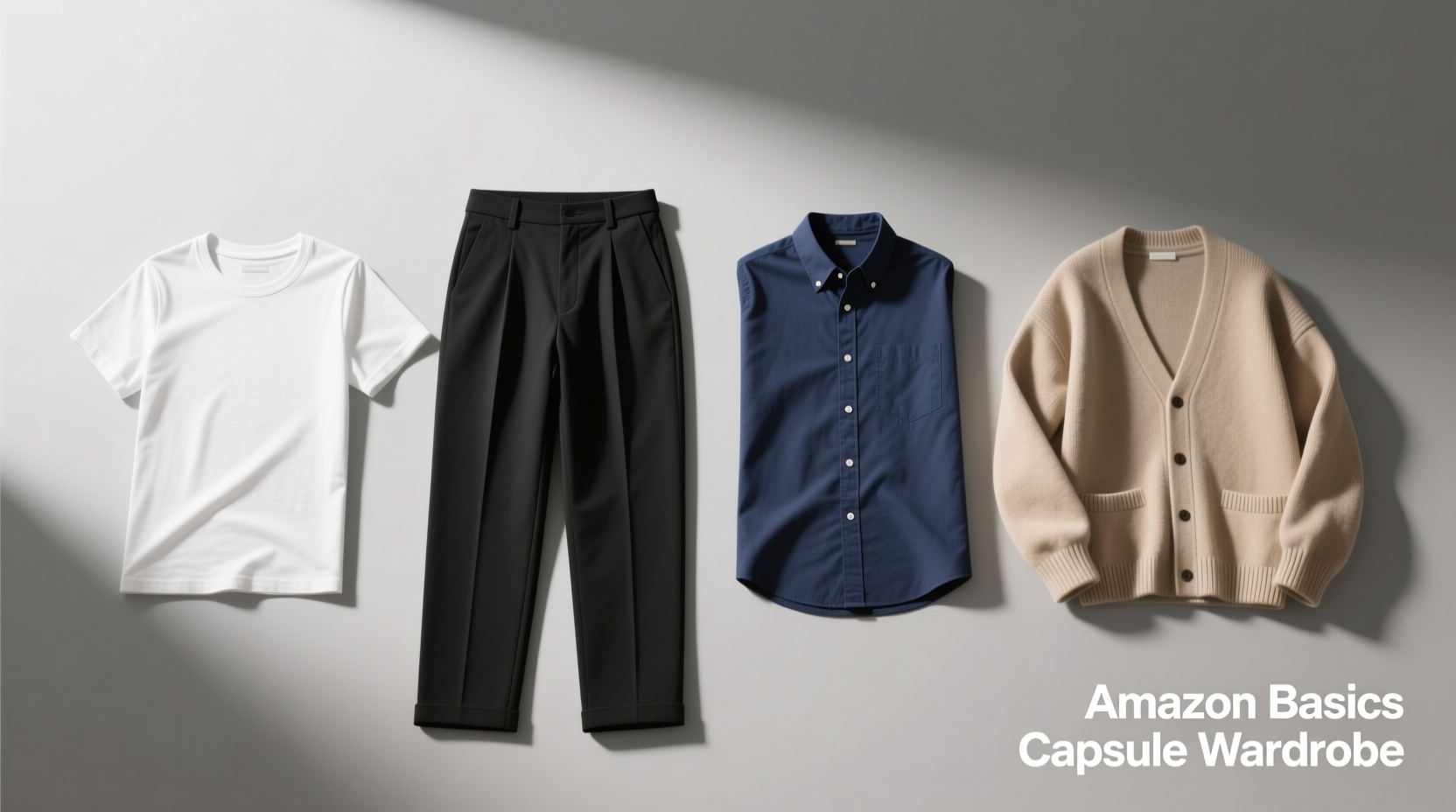
The concept of a capsule wardrobe originated in the 1970s with London boutique owner Susie Faux, who advocated for a curated collection of timeless garments that could be mixed and matched effortlessly. Designer Donna Karan later popularized it with her “seven easy pieces” philosophy. At its core, a capsule wardrobe emphasizes quality over quantity, versatility over trends, and intentionality over impulse buying.
A typical capsule includes 30–40 items total—clothing, outerwear, and shoes—that last for a full season. These pieces must coordinate across multiple outfits while reflecting your lifestyle and climate. The goal isn't deprivation but liberation: fewer clothes, more confidence in what you wear.
Amazon Basics aligns with this philosophy in unexpected ways. Its product range focuses on essential styles in solid colors, made from breathable, machine-washable fabrics like cotton, modal, and polyester blends. Though marketed as utilitarian, these garments provide a blank canvas for building a cohesive, low-maintenance wardrobe. With careful selection, they become the quiet heroes of your closet—reliable, affordable, and endlessly combinable.
Step-by-Step Guide to Building Your Amazon Basics Capsule
Creating a successful capsule requires planning, patience, and precision. Follow this six-step process to build a functional, seasonally appropriate wardrobe using only Amazon Basics.
- Define Your Lifestyle Needs: Are you mostly working from home, commuting to an office, or balancing casual and semi-formal events? Identify your top three daily scenarios (e.g., remote work, errands, weekend outings) to determine the necessary garment types.
- Choose a Color Palette: Stick to a base of neutrals—black, white, gray, navy, beige—that all mix seamlessly. Add one accent color if desired (like burgundy or olive) for subtle variety. Avoid prints; solids ensure maximum compatibility.
- Select Core Categories: Focus on five key categories: tops, bottoms, layers, outerwear, and footwear. Each category should contain 3–5 items depending on frequency of use.
- Shop Strategically on Amazon: Use filters to sort by color, size, fabric, and customer rating. Prioritize items with at least 4-star reviews and over 1,000 ratings for proven durability.
- Limit Quantity, Maximize Mixability: Every new item should pair with at least three existing pieces. If it doesn’t, reconsider the purchase.
- Test and Refine Over Two Weeks: Wear only your capsule items daily. Note gaps (e.g., too cold for evenings) and redundancies (e.g., three identical tees). Adjust accordingly before finalizing.
Essential Amazon Basics Pieces for a Complete Capsule
The strength of Amazon Basics lies in its consistency. Once you find a fit and fabric you like, you can reliably reorder without surprises. Below is a breakdown of recommended items across categories, all available under the Amazon Basics brand.
| Category | Recommended Items | Quantity | Why It Works |
|---|---|---|---|
| Tops | Crewneck T-shirts (cotton), Long-sleeve Tees, Polo Shirts | 5–7 | Available in core colors; breathable fabric ideal for layering or standalone wear. |
| Bottoms | Chino Pants, Stretch Jeans, Joggers | 3–4 | Classic cuts that transition from casual to smart-casual; stretch options add comfort. |
| Layers | Fleece Quarter-Zip, Lightweight Hoodie, V-Neck Sweater | 3 | Perfect for temperature regulation; sleek enough to wear under jackets. |
| Outerwear | Water-Resistant Jacket, Packable Puffer Vest | 2 | Functional protection without bulk; easily stowed when not needed. |
| Footwear | Comfort Walking Shoes, Slip-On Loafers | 2 pairs | Durable soles and neutral tones match all bottom colors. |
| Underwear & Socks | Boxer Briefs, Ankle Socks, Crew Socks | 10+ each | High-value packs ensure rotation without frequent laundry dependency. |
For women, adapt the list with Amazon Basics’ women’s tees, leggings, button-down shirts, and cardigans. Men and non-binary individuals can mix unisex and gender-specific lines freely—the emphasis remains on cut, color, and coordination.
“Minimalism isn’t about owning nothing. It’s about owning only what serves you.” — Joshua Fields Millburn, The Minimalists
Real Example: A 30-Day Capsule Challenge
Sarah, a 32-year-old project manager in Portland, Oregon, decided to test a 35-item Amazon Basics capsule during spring. Her lifestyle included hybrid work (three days in-office, two remote), weekly gym visits, and occasional dinners out. She defined her palette as charcoal, heather gray, white, and deep blue.
She began by clearing her closet and listing everything she wore regularly. Then, she replaced worn-out items with Amazon Basics equivalents: six crew tees, two long-sleeve shirts, a quarter-zip fleece, chino pants in black and navy, dark stretch jeans, joggers, a water-resistant jacket, loafers, and walking shoes. She added a single silk scarf in cobalt to elevate outfits for client meetings.
Over 30 days, Sarah created 42 unique outfits using just 32 items. She reported saving nearly 90 minutes per week on outfit decisions and reduced laundry frequency by rotating effectively. Most notably, she spent less than $250 replacing her entire core wardrobe—far below the average American’s quarterly clothing spend.
Her only adjustment was adding a lightweight turtleneck after realizing evenings were cooler than expected. Otherwise, the system worked seamlessly.
Do’s and Don’ts When Building with Amazon Basics
To maximize value and longevity, follow these guidelines when sourcing Amazon Basics apparel.
| Do’s | Don’ts |
|---|---|
| Check fabric content—prioritize cotton blends for breathability and softness. | Assume all sizes run consistently—always read recent reviews for fit notes. |
| Buy multipacks of underwear and socks to reduce cost per unit. | Purchase based solely on price—lowest cost may mean thinner fabric or poor stitching. |
| Use Prime’s free returns to test fit risk-free. | Ignore care instructions—some items shrink in high heat despite being labeled machine washable. |
| Stick to one silhouette per category (e.g., slim-fit chinos only) for visual harmony. | Add trendy cuts like cropped or oversized fits—these limit pairing options. |
Frequently Asked Questions
Can a capsule wardrobe really work with only Amazon Basics?
Yes—provided you focus on fit, color coordination, and fabric quality. Amazon Basics excels in foundational garments. While it lacks statement pieces, those aren’t necessary in a capsule. The goal is interchangeability, not showiness. With smart selection, you can achieve a polished, cohesive look suitable for most environments.
How do I handle seasonal changes without expanding my wardrobe?
Rotate only 4–6 items between seasons. In summer, swap fleece layers for short-sleeve tees and replace jeans with chino shorts (also available in Amazon Basics). In winter, add a thermal long-sleeve base layer and a heavier jacket. Keep core colors consistent year-round to maintain mixability.
What if I get bored wearing the same clothes?
Boredom often stems from lack of styling variation, not the clothes themselves. Try changing accessories (belts, watches, scarves), footwear, or layering sequences. For example, a tee under a button-down with rolled sleeves feels different than the same tee worn alone. Psychological studies show that perceived variety increases satisfaction—even with limited physical options.
Final Checklist: Launch Your Amazon Basics Capsule
- ✅ Define your lifestyle dress code (casual, business, hybrid)
- ✅ Choose a 3–4 color neutral palette
- ✅ Audit current wardrobe and donate unused items
- ✅ Build shopping list by category (tops, bottoms, etc.)
- ✅ Order samples in different sizes to test fit
- ✅ Finalize 30–40 core items with high mix potential
- ✅ Implement a two-week trial period using only capsule pieces
- ✅ Adjust based on real-world feedback (too hot, too formal, etc.)
- ✅ Set seasonal refresh reminders (every 3 months)
- ✅ Track savings and time gained for motivation
Conclusion: Start Simple, Stay Stylish
Building a capsule wardrobe from Amazon Basics isn’t about settling for basic clothes—it’s about elevating the basics into a smarter way of living. You gain clarity, save money, and reclaim time otherwise lost to indecision and disorganization. The uniform-like consistency reduces mental load, letting you focus on what matters beyond your closet door.
Your wardrobe should serve you, not distract you. By anchoring it in reliable, affordable staples, you create space—for creativity, productivity, and peace of mind. Start small. Pick five core items. Wear them intentionally. See how much simpler life feels.




 浙公网安备
33010002000092号
浙公网安备
33010002000092号 浙B2-20120091-4
Comments
No comments yet. Why don't you start the discussion?