
A well-curated capsule wardrobe simplifies daily dressing, reduces decision fatigue, and promotes sustainable fashion. When built around neutral colors and thoughtful textures, it becomes even more powerful—offering seamless coordination, timeless appeal, and elevated sophistication. Neutrals like beige, gray, ivory, charcoal, camel, and black form a cohesive base that transcends seasons and trends. Combined with varied textures such as wool, cotton, linen, cashmere, and silk, they add depth without sacrificing harmony.
This approach is not about minimalism at the cost of personality, but about intentional curation. It’s choosing quality over quantity, focusing on pieces that work together effortlessly while expressing quiet confidence through subtlety. Whether you live in a city apartment or a rural cottage, this method adapts to your lifestyle, climate, and personal aesthetic—without relying on bold patterns or seasonal fads.
The Power of Neutrals and Texture
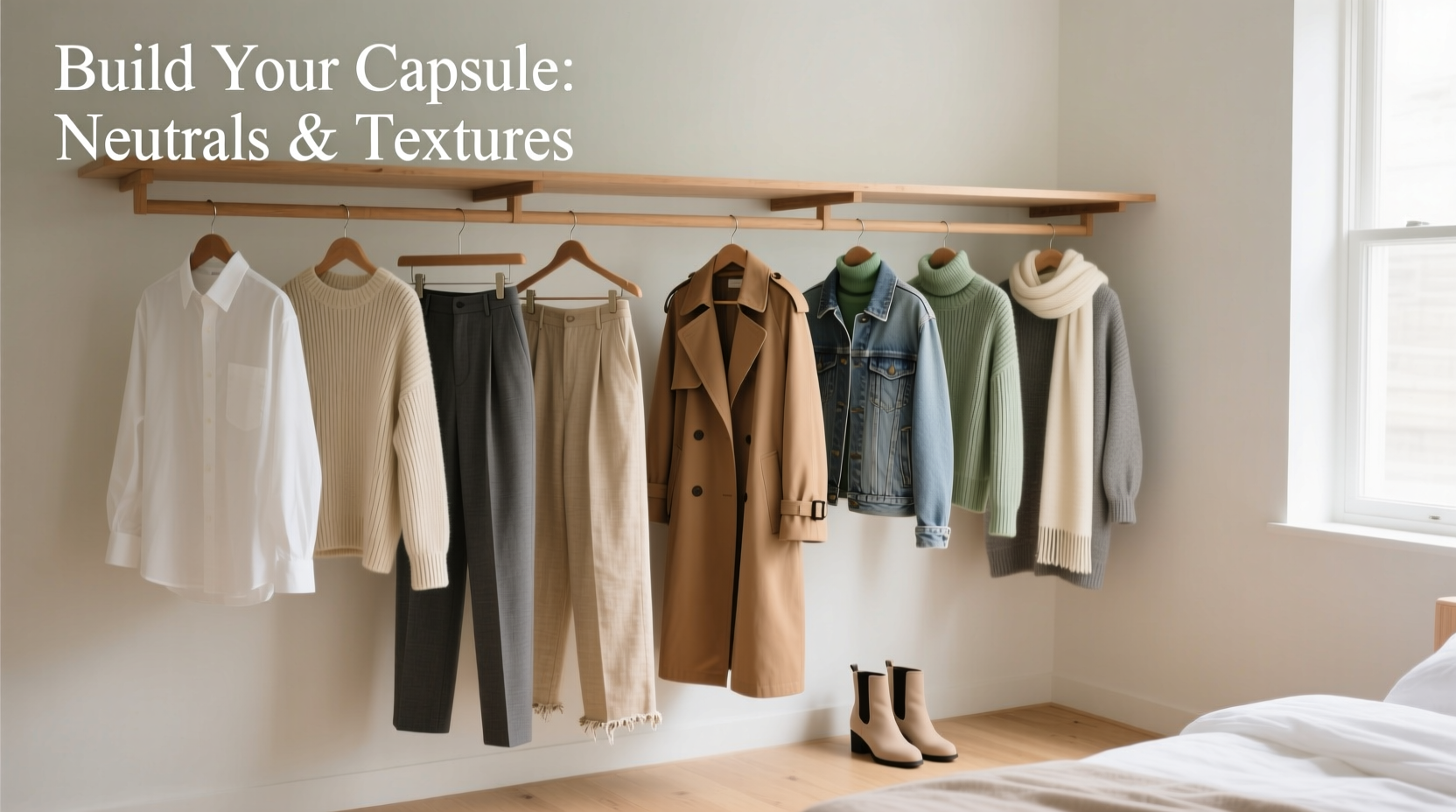
Neutral colors are inherently versatile. They don’t compete with one another, making every item in your wardrobe compatible. Unlike trend-driven hues that may feel outdated within months, neutrals remain relevant year after year. But wearing all neutrals risks appearing flat if texture isn't considered. That’s where material diversity comes in.
Texture adds visual interest and tactile richness. A ribbed turtleneck feels different from a smooth merino sweater; a structured wool blazer reads differently than a slouchy linen shirt. These variations keep outfits dynamic even when color remains consistent. The interplay between matte and sheen, rough and soft, heavy and light creates subtle contrast that draws attention to cut, fit, and movement rather than loud prints or clashing tones.
“Neutrality isn’t dull—it’s deliberate. When you remove color noise, you elevate the importance of fabric, silhouette, and proportion.” — Clara Nguyen, Sustainable Style Consultant
Step-by-Step Guide to Building Your Neutral Capsule
Creating a capsule wardrobe takes planning, honesty about your lifestyle, and a clear vision. Follow these steps to build a functional, elegant collection rooted in neutral tones and layered textures.
- Define Your Lifestyle Needs: Identify how you dress daily—office wear, casual weekends, travel, or hybrid roles. This shapes the types of garments you’ll prioritize.
- Choose a Neutral Palette: Select 4–6 core neutrals that complement your skin tone and environment. Common combinations include: beige + charcoal + cream + olive; or black + white + taupe + navy.
- Declutter Your Current Wardrobe: Remove items that no longer fit, are worn out, or clash with your chosen palette. Keep only what aligns with your new direction.
- Invest in Foundational Pieces: Focus on high-quality basics that serve as anchors—think tailored trousers, a trench coat, a cashmere sweater, and dark denim.
- Add Textural Variety: For each category (tops, bottoms, outerwear), include different fabrics: cotton poplin, boiled wool, corduroy, silk blends, etc.
- Test Outfit Combinations: Lay out potential pairings to ensure everything mixes and matches. Aim for at least 80% compatibility across pieces.
- Limit Final Count: Most effective capsules range between 30–50 total items, including clothing, shoes, and outerwear.
Essential Categories and Recommended Items
A balanced capsule covers all aspects of daily dressing. Below is a breakdown by garment type, emphasizing neutral shades and textural contrast.
| Category | Recommended Items | Textures to Include |
|---|---|---|
| Tops | Ivory button-down, oatmeal turtleneck, heather gray tee, camel shell top | Cotton, silk, fine knit, ribbed jersey |
| Bottoms | Dark wash jeans, charcoal wool trousers, beige chinos, black wide-leg pants | Denim, flannel, twill, crepe |
| Dresses | Black wrap dress, taupe shirtdress, gray midi slip | Satin, cotton sateen, wool blend |
| Outerwear | Tan trench coat, charcoal peacoat, black moto jacket, cream wool coat | Wool, melton, leather, quilted nylon |
| Layering | Camel cardigan, gray vest, black turtleneck base layer | Cashmere, boiled wool, thermal cotton |
| Shoes | Brown ankle boots, white sneakers, black loafers, nude pumps | Leather, suede, canvas, rubber sole |
| Accessories | Natural tote, black belt, silver watch, wool scarf | Grain leather, brushed metal, felted wool |
Each piece should be selected for durability, comfort, and alignment with your body shape. Avoid buying something just because it's neutral—if it doesn’t suit your proportions or lifestyle, it won’t get worn.
Do’s and Don’ts: Maintaining Cohesion
To prevent your neutral capsule from becoming monotonous—or accidentally drifting into dissonance—follow these guidelines.
| Do’s | Don’ts |
|---|---|
| Do mix matte and shiny finishes (e.g., wool pants with silk blouse) | Don’t combine too many textured pieces at once (e.g., corduroy shirt + tweed jacket + cable-knit scarf) |
| Do use tonal layering (light gray under dark gray) | Don’t ignore undertones—warm beige with cool gray can look mismatched |
| Do invest in natural fibers for breathability and aging well | Don’t overcrowd your capsule with similar-looking items (e.g., three nearly identical beige sweaters) |
| Do rotate seasonally with reversible layers (vests, scarves, jackets) | Don’t neglect footwear—neutral shoes must also coordinate across outfits |
Real Example: Sarah’s Workweek Capsule
Sarah, a project manager in Portland, wanted to simplify her mornings and reduce laundry load. She worked in a business-casual office and often attended client meetings. After assessing her needs, she created a 38-piece neutral capsule focused on warmth, mobility, and polish.
Her palette centered on charcoal, oatmeal, deep moss green (treated as a neutral), and cream. Key investments included a double-breasted wool blazer, a black silk camisole set, and water-resistant Chelsea boots in taupe. She paired a ribbed charcoal turtleneck with cream wide-leg trousers for winter presentations, then swapped in a lightweight linen shirt during summer months.
By sticking to natural textures and avoiding fast-fashion synthetics, her clothes aged gracefully. Within six months, she reported spending 70% less time choosing outfits and had stopped online shopping impulsively. Her colleagues noticed her consistently put-together appearance, unaware it stemmed from fewer than 40 core pieces.
Checklist: Building Your Own Capsule
- ☐ Define your primary activities and dress codes
- ☐ Choose a harmonious neutral palette (include warm/cool balance)
- ☐ Clean out current wardrobe—keep only fits-well, feels-good items
- ☐ List essential categories (tops, bottoms, outerwear, shoes, etc.)
- ☐ Source 5–7 foundational pieces in diverse textures
- ☐ Test at least 10 full outfit combinations for versatility
- ☐ Limit accessories to those that enhance, not distract
- ☐ Store off-season items separately to maintain focus
- ☐ Reassess every 3–6 months for wear, fit, and relevance
- ☐ Commit to mending or replacing thoughtfully, not reactively
“The most stylish people I know don’t chase trends—they master simplicity. A neutral capsule isn’t restrictive; it’s freedom in disguise.” — Marcus Reed, Fashion Editor at *The Line Journal*
Frequently Asked Questions
Can I include earth tones like olive or rust in a neutral capsule?
Yes—but selectively. Earth tones like olive, terracotta, or deep brown can function as neutrals if they appear frequently across multiple pieces and blend easily with true neutrals like gray or beige. However, limit them to one or two accent hues to preserve cohesion. If a color requires special pairing effort, it’s likely not neutral enough for this system.
How do I avoid looking boring in all neutrals?
Focus on silhouette and texture. A sharply tailored coat over a fluid silk dress creates drama without color. Add dimension with footwear choices—a sleek loafer versus rugged boots changes the entire mood. Jewelry, bags, and eyewear in metallic or natural materials also provide quiet punctuation. Remember: elegance lies in refinement, not clutter.
What if my workplace requires bright uniforms or logos?
Adapt the principle where possible. Build your personal wardrobe around neutrals, then layer compliant workwear on top. For example, wear a charcoal turtleneck under a branded vest, or pair black trousers with required safety shoes. Use downtime attire to reinforce your capsule habits, which will still reduce mental load and laundry complexity.
Final Thoughts: Embrace Quiet Confidence
A capsule wardrobe built on neutral colors and rich textures is more than a styling strategy—it’s a mindset shift. It moves fashion from consumption to curation, from reaction to intention. Each garment earns its place not by novelty, but by utility, compatibility, and longevity.
You don’t need dozens of options to feel inspired. You need a few exceptional pieces that work together, feel good on your body, and reflect who you are without shouting. In a world saturated with visual noise, there is power in restraint. There is strength in consistency. And there is beauty in the quiet details—the brush of cashmere, the drape of wool, the precision of a well-cut line.




 浙公网安备
33010002000092号
浙公网安备
33010002000092号 浙B2-20120091-4
Comments
No comments yet. Why don't you start the discussion?