
A well-curated capsule wardrobe simplifies daily dressing while elevating personal style. When built around neutral tones and subtle patterns, it becomes even more powerful—offering unmatched versatility, cohesion, and longevity. Unlike trend-driven wardrobes that require constant updates, a neutral-based capsule transcends seasons and transitions seamlessly from work to weekend, city to countryside. The goal isn’t minimalism for its own sake, but intentionality: choosing pieces that reflect your lifestyle, suit your body, and can be combined endlessly.
Neutral tones—such as beige, charcoal, cream, camel, olive, and deep navy—form a quiet foundation. When paired with understated patterns like herringbone, pinstripes, or tonal checks, they add depth without disrupting harmony. This approach eliminates visual clutter and reduces the stress of mismatched colors or clashing prints. More importantly, it empowers you to build outfits quickly, travel lighter, and shop more thoughtfully. Whether you're starting from scratch or editing an overstuffed closet, this guide provides a clear path to a functional, elegant, and enduring wardrobe.
Understanding Neutrals Beyond Black and White
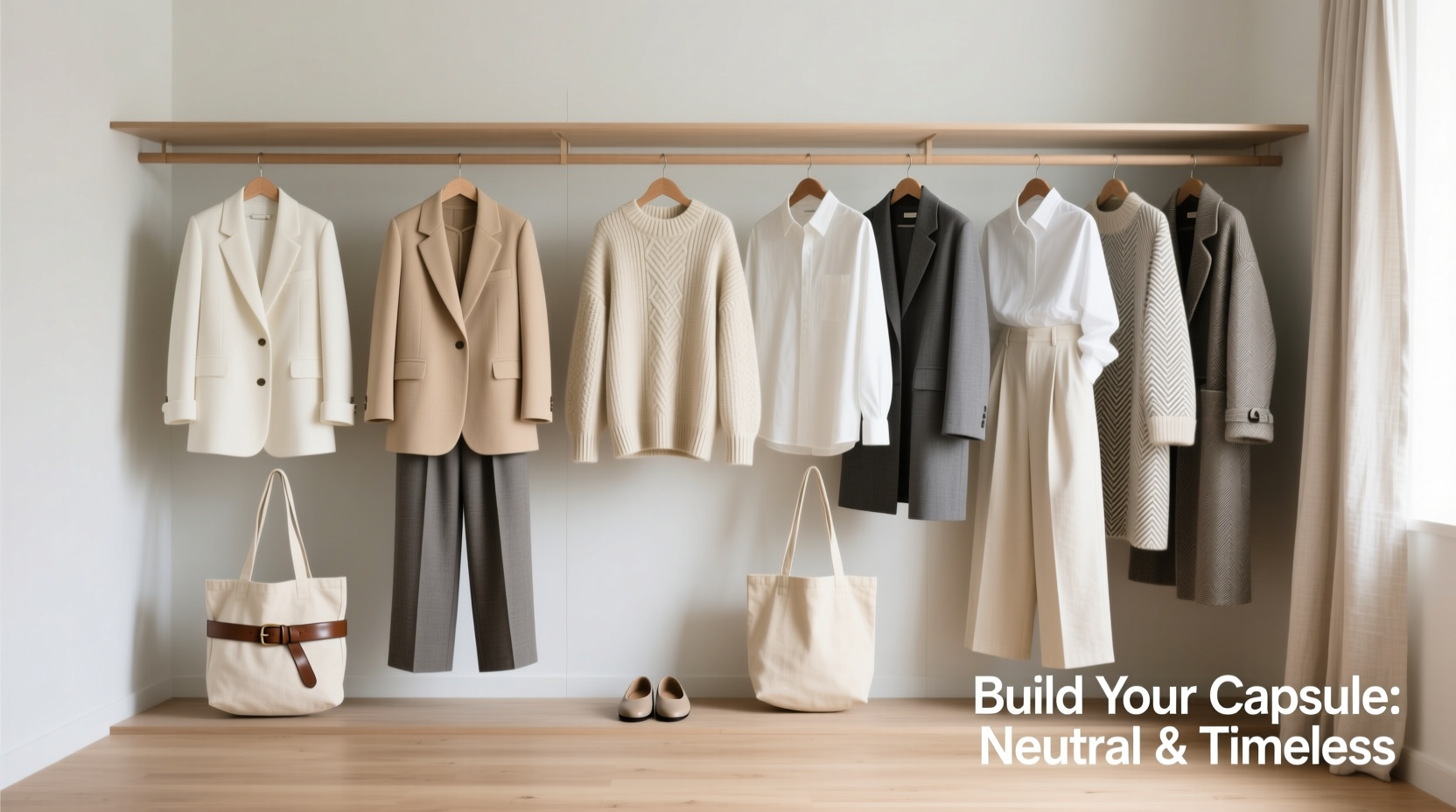
Many assume neutrals are limited to black, white, and gray. While these are classics, expanding your definition unlocks greater flexibility and warmth in styling. True neutrals include earth tones and muted shades that blend naturally with other colors. They serve as anchors—pieces you can layer, mix, and match without hesitation.
Consider these foundational neutrals:
- Warm Neutrals: Camel, oatmeal, taupe, terracotta, and warm browns. These flatter golden or olive skin tones and bring softness to structured silhouettes.
- Cool Neutrals: Charcoal, slate gray, deep navy, and cool gray. Ideal for sharper contrasts and polished looks, especially in professional settings.
- True Neutrals: Cream (not stark white), ash beige, and soft black. These bridge warm and cool palettes and work across seasons.
Patterns in a neutral capsule should not compete—they should complement. Opt for tonal variations: a charcoal sweater with a subtle cable knit, a beige blazer with a faint windowpane check, or black trousers with a micro-houndstooth weave. These textures add interest without breaking the color harmony.
“Neutrals aren’t boring—they’re the canvas. The way you layer them, the fabrics you choose, and the cut of each piece is where personality emerges.” — Lena Torres, Sustainable Style Consultant
Step-by-Step Guide to Building Your Capsule
Creating a capsule wardrobe is less about strict rules and more about disciplined editing and strategic selection. Follow this six-step process to build a cohesive collection rooted in neutral tones and patterns.
- Define Your Lifestyle Needs
Start by identifying your daily activities: office wear, casual weekends, workouts, travel, or social events. List the number of days you need outfits for and the typical dress codes. A corporate professional may need more tailored pieces; a creative freelancer might prioritize comfort and texture. - Clear Out Clashing Items
Remove anything that disrupts neutrality—bright colors, bold logos, or loud patterns that can’t be paired with three or more existing items. Keep only what aligns with your target palette. Be ruthless: if a piece causes hesitation, it doesn’t belong. - Select Core Silhouettes
Choose clean, timeless cuts: straight-leg trousers, A-line skirts, crewneck sweaters, trench coats, button-down shirts, and tailored blazers. Focus on fit—well-fitted clothes elevate even simple fabrics. - Incorporate Layering Pieces
Add depth with lightweight knits, cardigans, vests, and longline coats. Use textural patterns—ribbing, waffle weaves, or bouclé—to differentiate layers without introducing new colors. - Integrate Subtle Patterns Strategically
Limit patterned items to no more than 20% of your capsule. Choose one or two statement pieces—a herringbone coat, pinstripe trousers, or a tonal plaid shirt—and ensure they coordinate with at least four other items. - Finalize with Shoes and Accessories
Stick to neutral footwear: black ankle boots, tan loafers, gray sneakers, or nude pumps. Belts, scarves, and bags should mirror your dominant tones. A camel tote or charcoal crossbody will integrate effortlessly.
Sample Capsule Breakdown (15-Piece Framework)
| Category | Item | Tone/Pattern | Wear With |
|---|---|---|---|
| Top | White cotton button-down | Crisp white | Blazer, skirt, jeans |
| Top | Crewneck merino sweater | Oatmeal | Dress pants, over dress |
| Bottom | Straight-leg wool trousers | Charcoal gray | Blouse, sweater, blazer |
| Bottom | Dark wash denim | Near-black indigo | T-shirt, cardigan, boots |
| Dress | Sheath dress | Deep navy | Belt, blazer, tights |
| Outerwear | Trench coat | Camel | All tops and bottoms |
| Outerwear | Wool-blend blazer | Pinstripe (gray/white) | Dress, trousers, jeans |
| Knitwear | Cardigan | Taupe | Over dresses, with jeans |
| Shoes | Ankle boots | Black leather | All bottom halves |
| Accessories | Silk scarf | Beige with charcoal dots | Over coat, tied to bag |
The Role of Fabric and Fit in Neutral Cohesion
A neutral palette relies heavily on material quality to avoid looking flat or monotonous. Since color variation is minimized, texture becomes the primary tool for visual interest. A rough-knit turtleneck layered under a smooth wool coat creates contrast through touch as much as sight.
Prioritize natural fibers: wool, cashmere, cotton, linen, and silk. These breathe, drape well, and age gracefully. Avoid synthetic blends that pill or lose shape—especially in neutrals, where imperfections are more noticeable.
Fit remains non-negotiable. A poorly fitted beige blazer can make even the most expensive outfit look sloppy. Tailoring is not optional; it’s essential. Hem trousers to the right length, adjust sleeve widths, and nip in waists where needed. A $200 jacket that fits perfectly will look better than a $800 one that doesn’t.
Do’s and Don’ts: Fabric & Fit
| Do | Don't |
|---|---|
| Choose mid-to-heavy weight fabrics for structure | Use flimsy materials that wrinkle easily |
| Mix matte and textured finishes (e.g., suede + wool) | Combine too many shiny or reflective fabrics |
| Invest in tailoring for off-the-rack pieces | Assume “relaxed fit” means “ill-fitting” |
| Test movement—sit, raise arms, walk in clothes | Buy based solely on static appearance |
Real-Life Example: Sarah’s Workweek Capsule
Sarah, a project manager in a hybrid office environment, wanted to reduce morning stress and eliminate “nothing to wear” moments. She worked three days in-office, two remotely, and attended occasional client dinners. Her previous wardrobe was cluttered with seasonal trends and inconsistent colors.
After auditing her closet, she built a 30-piece neutral capsule focused on versatility. Her core included:
- Three pairs of bottoms: charcoal wool trousers, black jeans, and olive chinos
- Five tops: white silk blouse, oatmeal turtleneck, gray tee, striped (black/gray) long-sleeve, and a charcoal button-down
- Two dresses: a black wrap dress and a navy midi
- Layering pieces: camel coat, gray cardigan, black blazer with subtle pinstripe
- Footwear: black ankle boots, tan loafers, white sneakers
By sticking to warm and cool grays, blacks, and olives, every top could pair with every bottom. The pinstripe blazer added polish without limiting combinations. Over six months, Sarah wore the same pieces in over 70 unique outfits. She saved time, reduced laundry load, and received compliments on her consistently put-together appearance.
Essential Checklist for Your Neutral Capsule
Before finalizing your wardrobe, verify it meets these criteria:
- ✅ All pieces fall within your defined neutral palette
- ✅ Every item coordinates with at least three others
- ✅ You’ve included a mix of textures (knit, wool, cotton, etc.)
- ✅ Patterned items are tonal or subtle (no loud graphics)
- ✅ Clothing fits well and allows comfortable movement
- ✅ You’ve accounted for all seasonal and lifestyle needs
- ✅ Outerwear and shoes align with your core tones
- ✅ Everything is in good condition or replaceable soon
Frequently Asked Questions
Can I include accessories in color?
Yes—but sparingly. A single pop, like a burgundy bag or emerald scarf, can elevate a neutral outfit. However, keep it consistent: use the same accent color across accessories to maintain cohesion. Alternatively, let jewelry provide contrast—silver against black, gold against camel.
How do I avoid looking monotone?
Variety comes from silhouette, proportion, and texture—not color. Try pairing a loose tunic with slim pants, or adding a wide belt to break up a long coat. Play with lengths: a cropped sweater over high-waisted trousers adds dimension. Also, vary footwear—chunky boots versus sleek flats—to shift the mood of the same outfit.
Is this approach suitable for all body types?
Absolutely. Neutral tones are universally flattering when paired with thoughtful cuts. Darker shades offer slimming effects; lighter tones like cream or oatmeal add softness. The key is balancing proportions—using vertical lines, defined waists, and strategic layering to enhance your shape. A capsule lets you focus on fit rather than chasing fleeting trends.
Conclusion: Build Once, Wear Forever
A capsule wardrobe built on neutral tones and subtle patterns isn’t a restriction—it’s liberation. It removes the noise of excess choice and replaces it with confidence. Each piece earns its place, and every combination feels intentional. You’ll spend less time shopping, less money on replacements, and less mental energy deciding what to wear.
Start small. Pull everything out. Edit ruthlessly. Rebuild with purpose. Let quality override quantity, and let consistency become your signature. In a world of fast fashion and endless options, a curated neutral wardrobe stands as an act of quiet rebellion—and timeless elegance.




 浙公网安备
33010002000092号
浙公网安备
33010002000092号 浙B2-20120091-4
Comments
No comments yet. Why don't you start the discussion?