
A capsule wardrobe isn’t about buying new minimalist clothing—it’s about redefining what you already have. By thoughtfully curating your current closet, you can build a streamlined, versatile collection that simplifies daily dressing, reduces decision fatigue, and aligns with your personal style. The best part? You don’t need to spend a dime. This approach promotes sustainability, encourages mindful consumption, and helps you see your wardrobe with fresh eyes. With the right strategy, any closet—no matter its size or condition—can become the foundation of a functional, cohesive capsule.
Step 1: Empty and Assess Your Entire Wardrobe
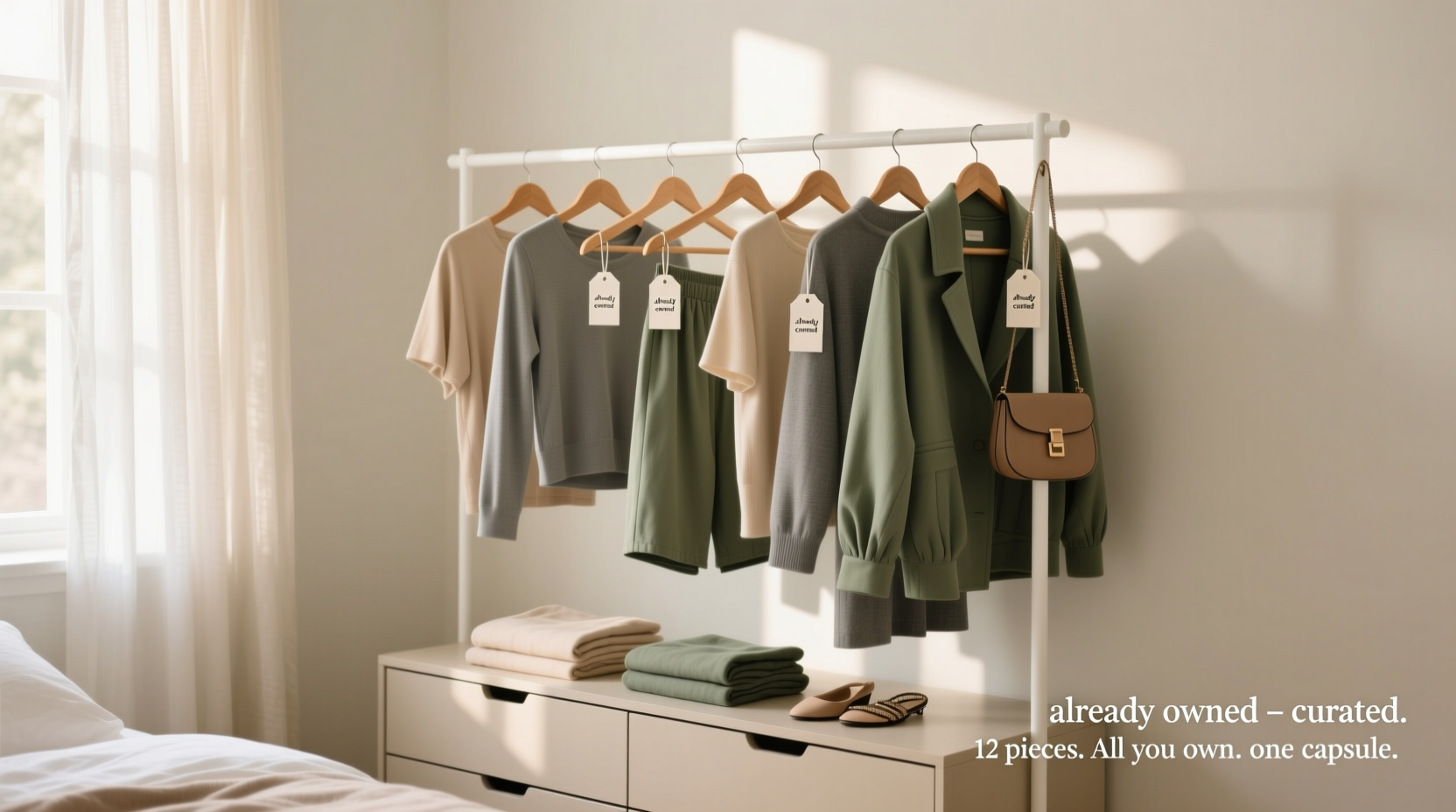
Begin by removing every clothing item from your closet, drawers, and storage bins. Lay them out where you can see everything at once—on your bed, floor, or even hung across chairs. This visual audit reveals patterns: duplicates, forgotten favorites, ill-fitting items, and pieces you’ve been holding onto without wearing.
As you sort, divide garments into four clear categories:
- Frequently worn – Items you reach for regularly and feel confident in.
- Rarely worn – Clothes that haven’t been worn in over six months.
- Kept for sentimental reasons – Pieces tied to memories but not practical for daily use.
- Unsure about – Garments you’re emotionally attached to but don’t wear.
This process isn’t about judgment—it’s about awareness. You’re gathering data on your actual habits, not idealized versions of them. Take note of which styles, colors, and fits dominate your “frequently worn” pile. These are the cornerstones of your future capsule.
Step 2: Define Your Personal Style and Lifestyle Needs
A successful capsule wardrobe reflects both who you are and how you live. Ask yourself: What activities fill my week? Do I work from home, commute to an office, attend social events, or spend most days running errands? Each context demands different clothing requirements.
Style is equally important. Look back at your frequently worn items. Do they share common traits? Maybe they’re all neutral-toned, feature soft fabrics, or follow a tailored silhouette. Identify recurring themes—these signal your authentic preferences, not trends or outside expectations.
“A capsule should feel like a natural extension of your identity, not a restriction imposed by minimalism.” — Lena Park, Sustainable Style Consultant
To clarify your direction, create a simple style statement. For example: “I want to feel polished yet comfortable, favoring breathable natural fibers and timeless silhouettes suitable for hybrid work and weekend outings.” This becomes your filter for selection.
Step 3: Build Your Capsule Using the 80/20 Principle
Pareto’s principle applies perfectly here: 80% of your outfits likely come from 20% of your wardrobe. Focus on that high-impact minority. Your goal is to assemble 30–40 interchangeable pieces (including tops, bottoms, dresses, outerwear, and layering essentials) that can mix and match seamlessly.
Start with anchors—versatile staples that form the base of multiple outfits:
- Well-fitting jeans or chinos
- Neutral blouses or button-down shirts
- A tailored blazer or cardigan
- A classic trench coat or jacket
- Simple dresses or jumpsuits
- Comfortable walking shoes and one dressy pair
Then layer in complementary items that add variety without clutter. Ensure each new addition coordinates with at least three other pieces. If a garment only works in one outfit, reconsider its place unless it serves a rare but essential function (e.g., formal event attire).
Color Coordination Strategy
A harmonious color palette ensures cohesion. Most effective capsules rely on a core of neutrals—black, navy, gray, beige, white—paired with 1–2 accent tones that reflect your personality (like rust, olive, or burgundy).
| Category | Recommended Colors | Why It Works |
|---|---|---|
| Base Neutrals | Black, Gray, Navy, Cream | Mix effortlessly; provide grounding for bolder pieces |
| Accent Hues | Olive Green, Terracotta, Denim Blue | Add visual interest while remaining wearable |
| Patterns | Subtle stripes, small checks | Break monotony without clashing |
Step 4: Edit Ruthlessly and Store Thoughtfully
Editing is where clarity emerges. From your sorted piles, select only those items that meet all three criteria: fit well, suit your lifestyle, and align with your style vision. Everything else gets set aside—not discarded, necessarily, but removed from daily rotation.
Create a temporary “maybe” box for items you’re unsure about. Store it out of sight for 30 days. If you don’t miss anything inside, donate or repurpose those pieces. Sentimental items can be kept separately—just not in your active wardrobe.
Once your capsule is selected, organize it visibly and accessibly. Use consistent hangers, fold similar items together, and group by category (e.g., all tops together, then bottoms). This makes planning outfits faster and reinforces the intentionality behind each piece.
Mini Case Study: Sarah’s Home Office Capsule
Sarah, a freelance designer working from home, had a closet overflowing with clothes but felt she “had nothing to wear.” After pulling everything out, she discovered she wore just 15 items repeatedly: soft knit tops, dark wash jeans, two blazers, and loafers. Her rarely worn section included party dresses and stiff office shirts she’d bought trying to “look professional.”
She defined her lifestyle needs: comfort for long sitting hours, presentability for video calls, and ease of movement. Her style leaned toward relaxed modern with earthy tones. She built a 32-piece capsule around oatmeal sweaters, black trousers, striped tees, a camel coat, and ballet flats. Every top paired with every bottom. Within a week, her morning routine shortened by half, and she felt more confident on camera. The rest of her wardrobe went into seasonal storage—with zero regrets.
Step 5: Maintain and Rotate Seasonally
A capsule isn’t static. As seasons change, so do your needs. Instead of overhauling it entirely, rotate in a few weather-appropriate pieces from stored inventory. Swap lightweight linen shirts for wool blends in winter, or replace ankle boots with sandals.
The key is balance: maintain your core (about 70% of the capsule) and refresh only the outer layer. This prevents drift into clutter while keeping your look seasonally appropriate.
Monthly check-ins help sustain momentum. Ask:
- Have I worn everything at least twice this month?
- Is anything causing discomfort or repeated wrinkling?
- Do I reach for non-capsule items more often?
If yes, adjust accordingly. Maybe a sweater isn’t as versatile as expected, or a shirt shrunk in the wash. Flexibility ensures longevity.
Checklist: Building Your No-Spend Capsule Wardrobe
- Empty your entire wardrobe and lay items out visibly.
- Categorize each piece by frequency of wear and emotional attachment.
- Try on every item to assess current fit and condition.
- Define your lifestyle needs and personal style in one sentence.
- Select 30–40 core pieces that mix and match easily.
- Ensure at least 80% of selected items coordinate with others.
- Use a neutral-based color palette with 1–2 accent tones.
- Store non-capsule items in labeled bins for 30-day evaluation.
- Organize your capsule for easy visibility and access.
- Schedule seasonal rotations and monthly reviews.
Common Pitfalls to Avoid
Even with good intentions, missteps happen. Here’s what to watch for:
| Do | Don’t |
|---|---|
| Choose pieces you genuinely enjoy wearing | Select items because they’re “supposed to” be in a capsule |
| Include comfort-focused options if your day requires them | Force yourself into uncomfortable “classic” pieces |
| Keep formalwear separate if used infrequently | Let occasional-use items dilute your everyday versatility |
| Reevaluate after life changes (job, climate, body) | Stick rigidly to a capsule that no longer fits your reality |
FAQ
Can I still buy new clothes after creating a capsule?
Absolutely. A capsule isn’t a ban on shopping—it’s a filter. Any new purchase should earn its place by complementing existing items and serving a clear purpose. Many people adopt a “one in, one out” rule to maintain balance.
What if I need special attire for events or travel?
Keep a secondary rotation for specific needs. Store these items separately so they don’t disrupt your daily system. When traveling, pack only what’s necessary and treat it as a mini-capsule within a suitcase.
How do I handle accessories like scarves or jewelry?
Treat accessories like any other garment: choose 5–7 versatile pieces that enhance multiple outfits. A silk scarf in your accent color, a neutral belt, and a few layered necklaces can elevate looks without excess.
Conclusion: Start Where You Are, With What You Have
Creating a capsule wardrobe from existing pieces is less about subtraction and more about intention. It transforms chaos into coherence, turning a cluttered closet into a curated collection that works for you—not against you. You don’t need a fashion degree or a budget to begin. You need only honesty, patience, and a willingness to see your clothes differently.
The act of building a capsule rewires your relationship with fashion. It shifts focus from consumption to creativity, from trend-chasing to self-expression. And when you open your closet each morning knowing every item belongs and every combination works, you gain something far more valuable than style: peace of mind.




 浙公网安备
33010002000092号
浙公网安备
33010002000092号 浙B2-20120091-4
Comments
No comments yet. Why don't you start the discussion?