
A well-curated capsule wardrobe simplifies daily dressing, reduces decision fatigue, and promotes sustainable fashion choices. Built around neutral colors and interchangeable essentials, it offers endless outfit possibilities without clutter. Unlike fast-fashion trends that demand constant updates, a capsule wardrobe focuses on quality over quantity, longevity over novelty. The foundation lies in selecting timeless silhouettes, cohesive tones, and multi-functional garments that work across seasons and occasions.
Neutral colors—such as beige, camel, charcoal, navy, cream, and black—form the backbone of this approach. They are inherently harmonious, allowing pieces to mix seamlessly. When combined with thoughtful tailoring and fabric selection, they elevate even the most basic ensembles. This guide walks through the principles, planning steps, and real-world strategies for building a functional, elegant capsule wardrobe rooted in versatility and intentionality.
Why Neutral Colors Are the Foundation of a Capsule Wardrobe
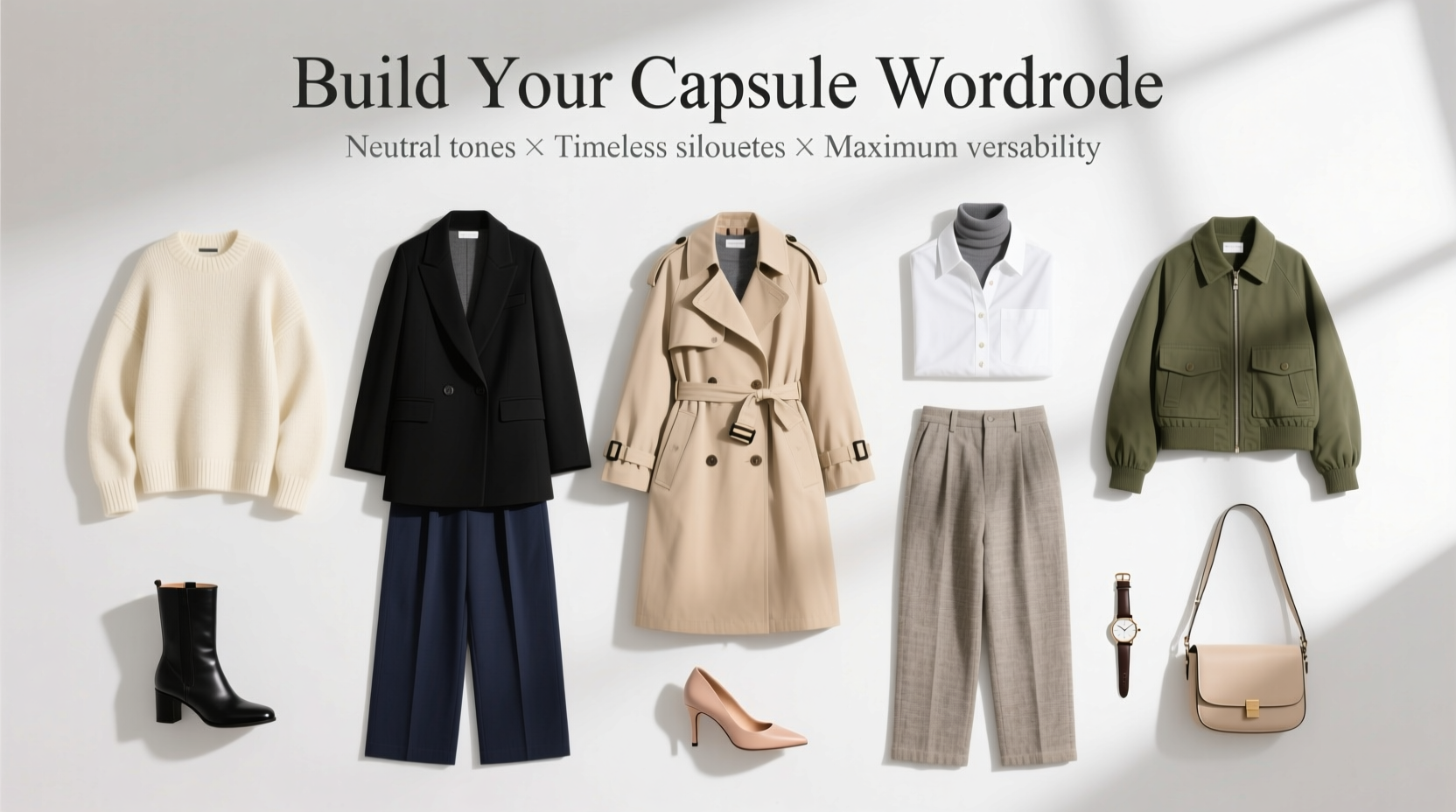
Neutrals dominate capsule wardrobes for good reason: they transcend seasonal trends and coordinate effortlessly. Unlike bold hues or patterned fabrics that limit pairing options, neutrals act as a visual anchor. A single beige blazer can be worn over a black turtleneck, paired with gray trousers, or layered with a cream dress—each combination yielding a distinct aesthetic.
Moreover, neutral palettes evoke calmness and sophistication. They draw attention to fit, texture, and proportion rather than color contrast. This allows individuals to express personal style through accessories, footwear, or subtle layering instead of relying on loud prints.
The psychological benefit is equally valuable. Studies in behavioral psychology suggest that simplified environments reduce cognitive load. In fashion, this translates to fewer morning dilemmas and more confidence in what you wear. By eliminating incompatible items, you free up mental space previously spent matching clashing colors or coordinating disjointed styles.
Step-by-Step Guide to Building Your Capsule Wardrobe
Creating a capsule wardrobe isn’t about discarding everything and starting from scratch—it’s about curating with purpose. Follow these seven steps to build a streamlined collection of clothing that reflects your lifestyle and values.
- Assess Your Lifestyle Needs: Identify your daily activities—office work, casual outings, workouts, social events. Prioritize garments that serve these functions.
- Define Your Color Palette: Choose 3–5 neutral base colors (e.g., black, gray, camel) and one accent shade if desired (like deep burgundy or olive green).
- Empty Your Closet: Remove all clothing and lay them out. Sort into keep, donate, repair, and reconsider piles.
- Select Core Pieces: Focus on high-quality basics: tailored trousers, well-fitted jeans, button-down shirts, knitwear, and outerwear.
- Ensure Mix-and-Match Compatibility: Every top should pair with at least three bottoms, and vice versa.
- Add Transitional Layers: Include lightweight cardigans, trench coats, and structured blazers to extend wear across seasons.
- Limited Accessories: Choose shoes and bags in complementary neutrals (tan leather, black, nude) to complete outfits without disrupting harmony.
This process typically results in a wardrobe of 30–40 items, including tops, bottoms, dresses, outerwear, and layering pieces—but excluding underwear, sleepwear, and workout clothes. The exact number depends on climate and personal preference.
Essential Versatile Pieces for a Neutral Capsule Wardrobe
Certain garments form the structural pillars of any effective capsule. These are not dictated by trend cycles but by function, durability, and adaptability. Below is a checklist of must-have items, each chosen for its ability to transition between settings and seasons.
Checklist: Core Items for a Neutral Capsule
- White and black crew-neck T-shirts (cotton or modal)
- Gray V-neck sweater
- Beige trench coat
- Black tailored blazer
- Dark wash straight-leg jeans
- Navy chinos or cropped trousers
- Cream cashmere turtleneck
- Charcoal wool pencil skirt
- Black midi dress (sleeveless or long-sleeve)
- White button-down shirt
- Ankle boots (black or tan)
- Loafers or oxfords in neutral leather
- Structured handbag (medium size, neutral tone)
Each item should pass the “three-way test”: Can it be styled in at least three different ways? For example, a white button-down can be worn under a sweater, tied at the waist over jeans, tucked into a pencil skirt, or layered under a blazer for formal meetings.
Do’s and Don’ts of Capsule Wardrobe Planning
To avoid common pitfalls, refer to the following table outlining key practices to adopt—and those to avoid—when assembling your collection.
| Do’s | Don’ts |
|---|---|
| Choose consistent undertones (all warm or all cool neutrals) | Mix warm and cool tones haphazardly (e.g., camel with steel gray) |
| Invest in excellent tailoring—even inexpensive pieces look refined when well-fitted | Keep ill-fitting items “for later” adjustments that never happen |
| Dry clean or hand-wash delicate fabrics to preserve shape | Machine-wash wool or silk regularly, causing shrinkage and pilling |
| Rotate seasonal layers (light knits in spring, heavy coats in winter) | Overfill your capsule beyond 40 core items |
| Use scarves or jewelry to add interest without breaking neutrality | Rely on statement prints or bright colors as core pieces |
Consistency in fabric weight also matters. A lightweight cotton blouse may clash visually with a thick wool skirt, creating imbalance. Aim for tonal and textural harmony across combinations.
Real Example: Sarah’s 38-Piece Work-to-Weekend Capsule
Sarah, a marketing consultant based in Portland, Oregon, struggled with an overcrowded closet despite rarely feeling “put together.” After adopting a capsule wardrobe focused on neutrals, she reduced her active wardrobe to 38 pieces. Her palette: charcoal, oatmeal, navy, black, and soft white.
She began by removing 70% of her clothes—mostly trendy tops and mismatched separates. She kept only items that could be worn in multiple contexts. Her core includes:
- A double-breasted navy blazer
- Three silk-blend blouses in ivory, gray, and pale blue
- Two pairs of black trousers (one slim-fit, one wide-leg)
- One pair of dark wash jeans
- A knee-length black wool coat
- Leather loafers and ankle boots in black
- A structured tote in taupe
With strategic layering, Sarah now wears different outfits every weekday for a month without repeating a full ensemble. On weekends, she swaps the blazer for a chunky oatmeal cardigan and adds sneakers. The result: faster mornings, fewer laundry loads, and increased confidence in her appearance.
“Simplicity isn’t minimalism for its own sake—it’s clarity of expression. When you remove the noise, your true style emerges.” — Clara Mendez, Sustainable Fashion Stylist
Frequently Asked Questions
Can I include patterns in a neutral capsule wardrobe?
Yes, but sparingly. Small-scale textures like herringbone, subtle pinstripes, or tonal jacquard can add depth without disrupting cohesion. Avoid large prints or contrasting colors. Think of patterns as accents, not foundations.
How do I handle seasonal changes without expanding my capsule?
Rotate outer layers and adjust fabric weights. Swap a linen shirt for a merino wool blend in winter. Store off-season items out of sight but don’t reintroduce them into the active rotation until needed. This keeps the capsule manageable year-round.
What if my workplace requires colorful attire or branding?
Incorporate required items as exceptions. If you must wear branded polos, choose ones in neutral bases (gray, navy) with minimal logos. Pair them with core pieces to maintain visual continuity. Treat these as functional additions, not central elements.
Final Thoughts and Call to Action
Building a capsule wardrobe with neutral colors and versatile pieces is not a one-time project but an ongoing practice of refinement. It rewards patience, self-awareness, and a commitment to mindful consumption. Over time, you’ll find that having fewer choices actually increases freedom—the freedom to dress confidently, sustainably, and authentically.
Start small. Pull out ten items that make you feel both comfortable and capable. Ask whether each one complements at least three others. Build outward from there. Document your progress, take note of which combinations you reach for most, and let data—not desire—guide future purchases.




 浙公网安备
33010002000092号
浙公网安备
33010002000092号 浙B2-20120091-4
Comments
No comments yet. Why don't you start the discussion?