
Fall is the season of transition—crisp mornings, cool evenings, and unpredictable weather. It’s also the ideal time to simplify your closet. A capsule wardrobe built around just 10 thoughtfully chosen pieces can streamline your daily routine, reduce decision fatigue, and elevate your personal style. The goal isn’t restriction; it’s intentionality. By focusing on quality, versatility, and cohesion, you can build a minimalist yet fully functional wardrobe that keeps you looking polished from September through November.
This approach isn’t about sacrificing style or comfort. On the contrary, it encourages smarter choices, reduces clutter, and promotes sustainability. Whether you live in a city with mild autumns or face early frosts, a 10-piece capsule can adapt. The key lies in selecting garments that layer well, coordinate effortlessly, and reflect your lifestyle.
Why 10 Pieces? The Philosophy Behind Minimalism
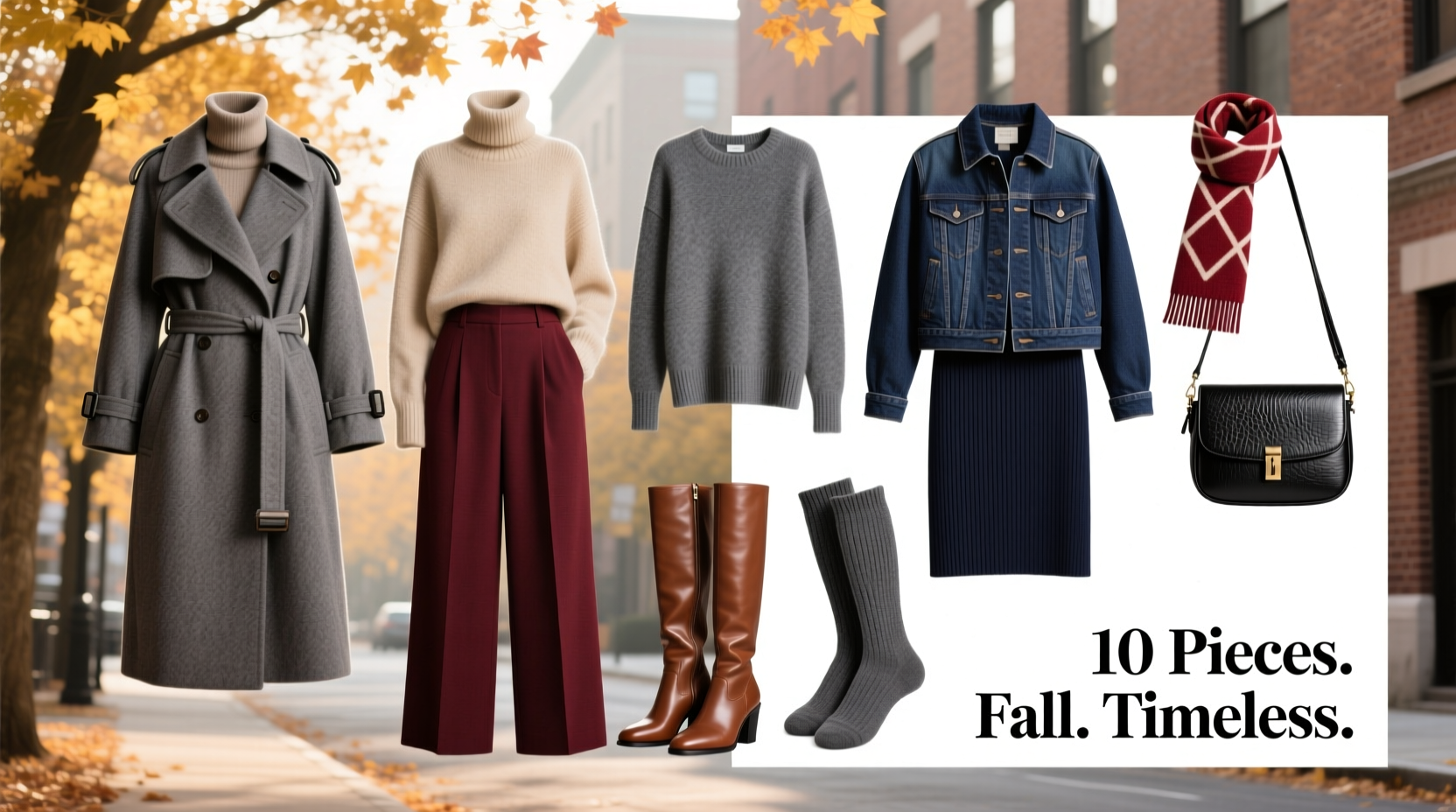
The concept of a capsule wardrobe originated in the 1970s with designer Susie Faux, who advocated for a small collection of interchangeable clothing suitable for an entire season. Later popularized by Donna Karan’s “seven easy pieces,” the idea has evolved into a modern movement toward mindful consumption.
Limiting yourself to 10 core items forces clarity. You must ask: Does this piece serve multiple purposes? Can it be dressed up or down? Does it align with my color palette? Will I wear it at least once a week?
“Simplicity is the ultimate sophistication.” — Leonardo da Vinci
In practical terms, 10 foundational garments—excluding underwear, sleepwear, outerwear (like heavy coats), shoes, and accessories—can generate dozens of outfits when layered and combined strategically. This number strikes a balance between minimalism and functionality, especially during fall when layering expands possibilities.
Step-by-Step Guide to Building Your Fall Capsule
Creating a 10-piece capsule isn’t about grabbing your favorite sweaters and calling it done. It requires planning, editing, and alignment with your environment and daily activities. Follow this timeline over one week to build a wardrobe that truly works for you.
- Day 1: Assess Your Lifestyle – Note how you spend your time: office work, remote meetings, weekend errands, social events. This determines the mix of casual vs. formal pieces.
- Day 2: Define Your Color Palette – Choose 3–4 base colors (e.g., charcoal, camel, navy, cream) and 1–2 accent tones (burgundy, olive). Stick to shades that complement your skin tone and existing footwear.
- Day 3: Audit Your Current Wardrobe – Pull out all potential candidates. Try each on. Keep only those in good condition, proper fit, and aligned with your palette.
- Day 4: Identify Gaps – List missing silhouettes or functions (e.g., no tailored pants, lack of warm knitwear).
- Days 5–6: Source Missing Items – Shop mindfully. Prioritize natural fibers like wool, cotton, and cashmere. Invest in timeless cuts over trends.
- Day 7: Finalize & Organize – Hang your 10 pieces together. Test five outfit combinations to ensure compatibility.
The Essential 10-Piece Fall Capsule Breakdown
Your capsule should include a balanced mix of tops, bottoms, and mid-layers. Outerwear (like a trench coat or puffer jacket) and shoes are excluded from the count but must coordinate with your core ten.
| Item | Function | Material Recommendation | Styling Tip |
|---|---|---|---|
| 1. Crewneck Cashmere Sweater | Warmth + polish | Cashmere or merino wool | Pairs with jeans or under blazers |
| 2. Turtleneck Bodysuit | Base layer for tucking | Merino wool blend | Wear under dresses or high-waisted pants |
| 3. Tailored Wool Blazer | Elevates any look | Wool or wool-blend | Dress up chinos or dark denim |
| 4. Dark Wash Straight-Leg Jeans | Casual staple | Mid-weight cotton with slight stretch | Avoid overly distressed styles |
| 5. High-Waisted Wool Trousers | Professional edge | Plain-weave wool | Roll cuffs slightly for ankle boots |
| 6. Midi-Length Pencil Skirt | Versatile for work or dinner | Wool or ponte knit | Add tights as temperatures drop |
| 7. Button-Up Shirt (Oxford or Silk) | Transitional layer | Cotton oxford or silk blend | Layer under sweaters or wear open |
| 8. Oversized Cardigan | Cozy outer layer | Chunky wool or alpaca | Throw over dresses or tees |
| 9. Black Turtleneck Dress | One-and-done option | Knit viscose-wool blend | Add a belt for definition |
| 10. Linen-Cotton Blend Shirtdress | Light layer for mild days | Linen-cotton | Wear belted or open as a duster |
This combination ensures variety without excess. Each piece connects visually and functionally. For example, the turtleneck bodysuit layers under the shirtdress or beneath the blazer. The pencil skirt pairs with both the sweater and the button-up. The cardigan doubles as a standalone top or light jacket.
Maximizing Outfit Combinations
With 10 pieces, the magic happens in layering. You’re not limited to single-item outfits. Instead, think in systems: base + middle + outer.
- Work Look: Turtleneck + blazer + wool trousers + ankle boots
- Casual Weekend: Crewneck sweater + dark jeans + sneakers
- Dinner Out: Turtleneck dress + cardigan + knee-high boots + statement earrings
- Hybrid Day: Button-up + shirtdress (worn as duster) + tights + loafers
- Smart-Casual: Bodysuit + pencil skirt + oversized cardigan + booties
The secret is repetition with variation. Wearing the same sweater three times a week doesn’t feel redundant if paired differently each time. A study by *The Journal of Consumer Research* found that people perceive more variety in wardrobes when items are recombined creatively—even if the total number of garments is low.
“The fewer decisions you make about trivial things like clothes, the more you can focus on what matters.” — President Barack Obama
Mini Case Study: Emma’s Urban Fall Capsule
Emma, a 34-year-old graphic designer in Portland, Oregon, spends her days split between client meetings and home studio work. She wanted a wardrobe that looked professional but felt comfortable, without buying new clothes every month.
She started by clearing out 30+ items that didn’t fit or hadn’t been worn in six months. After defining her palette—navy, heather gray, rust, and white—she selected her 10 core pieces. Her most-used combo? The black turtleneck dress under the wool blazer with knee-high boots for client visits. On relaxed days, she wore the linen shirtdress open over the crewneck sweater with leggings and moccasins.
Within two weeks, Emma reported spending 20 minutes less per week choosing outfits. Over three months, she saved $380 by avoiding impulse buys. More importantly, she felt more confident and put-together, even on chaotic mornings.
Common Pitfalls and How to Avoid Them
Even with the best intentions, building a capsule can go wrong. Here’s what to watch for:
| Do | Don't |
|---|---|
| Choose fabrics that breathe and insulate (wool, cotton, cashmere) | Select synthetics that pill or trap heat |
| Ensure every piece coordinates with at least 3 others | Include \"maybe\" items hoping they’ll work |
| Test fit after washing—some knits shrink | Assume dry-clean-only items are worth the hassle |
| Invest in one high-quality item over several cheap ones | Compromise on tailoring or comfort for trendiness |
Frequently Asked Questions
Can I really survive fall with only 10 clothes?
Yes—when you define “pieces” correctly. This count refers to core garments, not including outerwear, shoes, undergarments, or workout clothes. With strategic layering, 10 items can create 30+ unique looks. People successfully use even smaller capsules in colder climates by adding insulated jackets and thermal layers separately.
What if I need something specific, like a suit for a wedding?
Special occasions call for special solutions. Rent, borrow, or keep one non-capsule item for rare events. Capsules are designed for everyday wear, not edge cases. Flexibility within structure is key.
How do I maintain my capsule long-term?
Reassess every season. Replace worn items immediately to preserve balance. Store off-season clothes properly. And most importantly, wear your capsule consistently for at least four weeks to test its real-world viability before making changes.
Final Checklist Before Launching Your Capsule
- Defined primary color scheme (3–4 main colors)
- Selected 10 core garments based on fit, fabric, and function
- Verified each piece coordinates with at least 3 others
- Tested 5 complete outfits using only capsule items
- Stored non-essential or off-season clothing out of sight
- Paired capsule with 3–4 pairs of shoes and 1–2 outer layers
- Committed to wearing the capsule for 21 consecutive days
Conclusion: Less Really Is More
A 10-piece fall capsule isn’t a fashion gimmick—it’s a lifestyle upgrade. It reduces stress, saves money, and sharpens your sense of personal style. When you stop chasing trends and start curating purposefully, getting dressed becomes effortless rather than exhausting.
The true power of a capsule lies not in the number, but in the mindset. It teaches you to value quality over quantity, versatility over novelty, and confidence over conformity. As the air turns crisp and leaves begin to fall, take this opportunity to reset your relationship with clothing.




 浙公网安备
33010002000092号
浙公网安备
33010002000092号 浙B2-20120091-4
Comments
No comments yet. Why don't you start the discussion?