
A minimalist approach to fashion doesn’t mean sacrificing style. In fact, it often enhances it. A well-curated capsule wardrobe strips away excess, leaving only what you truly love and wear regularly. The goal isn’t to limit yourself—it’s to simplify your choices, reduce decision fatigue, and build outfits that reflect your personal aesthetic with minimal effort. One of the most effective models is the 10-piece capsule: a lean collection of clothing items that work together seamlessly across seasons and occasions. This guide walks through exactly how to assemble such a wardrobe—thoughtfully, sustainably, and stylishly.
The Philosophy Behind a 10-Piece Capsule Wardrobe
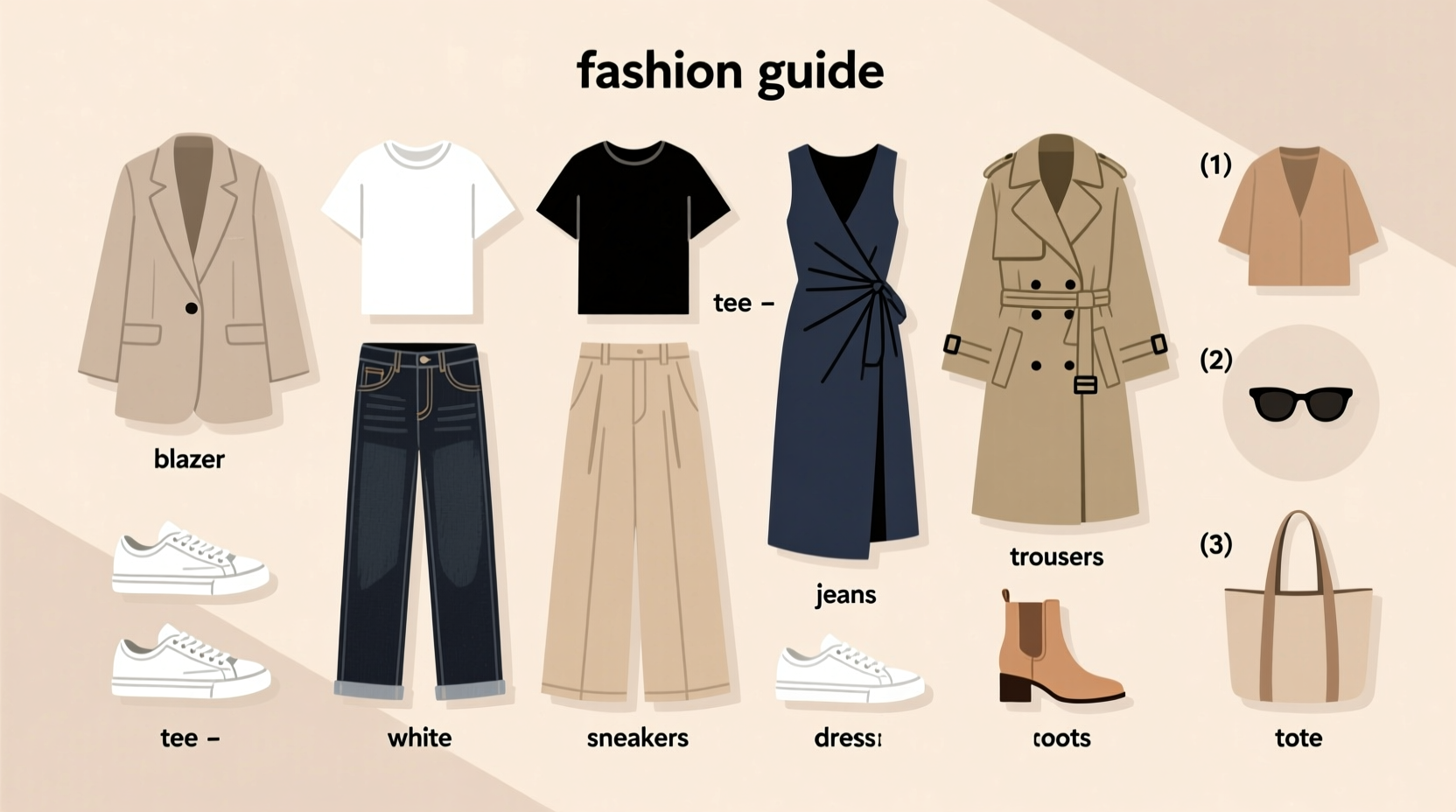
The concept of a capsule wardrobe originated in the 1970s with London boutique owner Susie Faux, but gained widespread popularity through designer Donna Karan’s “Seven Easy Pieces” collection. The idea is simple: a small number of high-quality, timeless garments can be combined in numerous ways to create a full range of functional and fashionable looks.
Scaling this down to just 10 core pieces forces intentionality. Each item must earn its place by being both versatile and aligned with your lifestyle. This isn't about deprivation; it's about liberation from clutter, indecision, and impulse purchases that don’t serve you long-term.
“Simplicity is the ultimate sophistication.” — Leonardo da Vinci
In practice, a 10-piece capsule includes tops, bottoms, layers, and one standout item—all in cohesive colors and complementary cuts. When chosen wisely, these ten items can generate dozens of unique outfit combinations suitable for work, casual outings, and even semi-formal events.
Selecting Your Core 10 Pieces: Criteria and Strategy
Before listing specific garments, it’s essential to define your selection criteria. Not every black sweater or pair of jeans will work in a tight rotation. You need pieces that meet three key standards:
- Versatility: Can it be dressed up or down? Worn across multiple seasons?
- Fit: Does it flatter your body type and allow comfortable movement?
- Color Palette: Does it coordinate with at least four other items in your planned capsule?
A neutral base palette—such as navy, charcoal, cream, black, or soft gray—forms the foundation. Accent colors, if used, should be limited to one tone (e.g., burgundy or olive) and appear only in accessories or a single statement piece.
Step-by-Step Guide to Building Your 10-Piece Capsule
- Evaluate your daily activities and dress requirements (e.g., office, remote work, weekends).
- Choose a dominant color scheme (e.g., neutrals with a pop of deep green).
- Pick one outerwear piece that transitions between seasons.
- Select two tops: one tailored, one relaxed.
- Include two bottoms: one tailored pant, one casual option.
- Add a dress or jumpsuit if your lifestyle allows.
- Choose a knit layer like a fine-gauge sweater or cardigan.
- Incorporate a transitional piece (e.g., a turtleneck or utility shirt).
- Decide on footwear (not counted in the 10, but must align).
- Edit ruthlessly—remove anything that doesn’t meet all three criteria.
Sample 10-Piece Capsule Wardrobe
Below is a realistic example for a professional woman living in a temperate climate. This combination yields over 30 distinct outfits while occupying minimal space.
| # | Item | Description | Outfit Combinations |
|---|---|---|---|
| 1 | Tailored Trousers | High-waisted, straight-leg in charcoal wool blend | With blouse, sweater, blazer, t-shirt |
| 2 | Cropped Wide-Leg Pants | Beige linen blend, ankle-length | With turtleneck, sandals, flat shoes |
| 3 | Crewneck Cashmere Sweater | Ivory, medium weight | Over dress, with trousers, layered under coat |
| 4 | Silk Blouse | Black, button-up with slight puff sleeve | With pants, tucked into skirt, under vest |
| 5 | White Button-Down Shirt | Crisp cotton, slightly oversized fit | As jacket, tied at waist, under sweater |
| 6 | Black Turtleneck | Fine merino wool, fitted | Under overalls, with skirts, solo with jeans |
| 7 | Wrap Dress | Navy midi with subtle sheen, 3/4 sleeves | With boots, cardigan, belt, alone |
| 8 | Denim Jacket | Mid-blue, cropped cut | Over dresses, shirts, sweaters |
| 9 | Blazer | Black structured single-breasted | With trousers, dress, jeans, skirt |
| 10 | Utility Shirt | Olive cotton, collarless, boxy fit | Layered, belted, open over tank |
This set uses a neutral backbone (black, ivory, charcoal, navy) with earth tones (olive, beige) to add depth without complexity. Every piece pairs with at least four others, maximizing combinatorial potential.
Maximizing Mix-and-Match Potential
The magic of a 10-piece capsule lies in layering and recontextualizing. A silk blouse worn under a turtleneck transforms into a winter layer. A blazer thrown over a denim jacket creates an unexpected contrast. The key is understanding garment roles:
- Base Layers: Turtlenecks, button-downs—go under everything.
- Mid Layers: Sweaters, shirts—add warmth and texture.
- Outerwear: Blazers, jackets—define the formality.
- Centerpieces: Dress, wide-leg pants—anchor the look.
To test versatility, try the “five-outfits challenge”: pick one bottom and see how many different tops and layers you can pair with it. If fewer than four combinations feel appropriate, reconsider the item.
“A wardrobe should work for you, not against you. Ten perfect pieces beat fifty mediocre ones.” — Matilda Kahl, Wardrobe Strategist & TED Speaker
Real-Life Example: Sarah’s Workweek Capsule
Sarah, a 34-year-old project manager in Portland, Oregon, adopted a 10-piece capsule after realizing she wore only 20% of her closet regularly. Her job required business-casual attire Monday through Thursday, with flexibility for remote days and occasional client meetings.
She selected:
- Charcoal tailored pants
- Beige cropped trousers
- Black turtleneck
- Silk camisole (in taupe)
- White button-down
- Gray V-neck sweater
- Navy wrap dress
- Blazer
- Denim jacket
- Oversized shawl cardigan
Over five weeks, she documented her outfits. She created 32 unique combinations using only these pieces. On Mondays, she paired the blazer with trousers and the silk cami for authority. Fridays were more relaxed: denim jacket, white shirt, cropped pants, and loafers. The wrap dress doubled as a standalone piece and a layering base when worn open like a coat.
Sarah reported saving time each morning, reduced laundry loads, and greater confidence in her appearance. Most importantly, she stopped shopping impulsively because every new item had to justify replacing one of her ten.
Common Pitfalls and How to Avoid Them
Even with good intentions, building a successful capsule can go wrong. Here are frequent missteps—and how to correct them:
| Pitfall | Why It Happens | How to Fix It |
|---|---|---|
| Choosing trendy over timeless | Attracted to seasonal styles | Ask: Will I wear this in 2 years? |
| Ignoring climate needs | Building for ideal weather only | Include one transitional layer |
| Overestimating versatility | Assuming mismatched colors will work | Test combinations before finalizing |
| Forgetting comfort | Prioritizing aesthetics over wearability | Wear each piece for a full day during trial |
Essential Checklist Before Finalizing Your Capsule
Use this checklist to ensure your 10-piece wardrobe is truly ready:
- ✅ All pieces are in coordinating colors
- ✅ Each item pairs with at least four others
- ✅ You’ve tested combinations in real settings
- ✅ Fabrics are durable and seasonally appropriate
- ✅ Gaps in functionality (e.g., no warm layer) are addressed
- ✅ You feel confident and comfortable in every item
- ✅ You’re willing to let go of duplicates outside the capsule
Frequently Asked Questions
Can I include shoes and accessories in the 10 pieces?
No—the 10-piece rule typically applies only to clothing. However, select 2–3 pairs of shoes (e.g., loafers, ankle boots, sneakers) and a small set of accessories (belt, scarf, watch) that align with your capsule colors. These enhance variety without increasing complexity.
What if I live in a cold climate?
In colder regions, adjust fabric weights rather than increase quantity. Swap linen pants for wool blends, choose heavier knits, and rely on outerwear like a quality coat (kept separate from the 10). Layering becomes your strategy—turtlenecks under dresses, sweaters over shirts—without breaking the capsule structure.
How often should I rotate my capsule?
Every 3–6 months, depending on climate shifts and lifestyle changes. Evaluate what worked and what didn’t. Replace underused items with higher-performing alternatives. The capsule evolves with you—it’s not static.
Conclusion: Start Small, Think Long-Term
Creating a capsule wardrobe with only 10 versatile, mix-and-match pieces is more than a styling exercise—it’s a shift in mindset. It encourages mindfulness, sustainability, and self-awareness. By focusing on quality over quantity, you invest in clothes that serve you, not clutter you.
The process may take a few iterations. You might swap out a blouse that looked great on the hanger but never felt right in practice. That’s part of the refinement. What matters is consistency: wearing what you own, loving what you wear, and freeing up mental space for things that matter beyond fashion.




 浙公网安备
33010002000092号
浙公网安备
33010002000092号 浙B2-20120091-4
Comments
No comments yet. Why don't you start the discussion?