
A capsule wardrobe simplifies your life by reducing clutter and streamlining choices. When built around a monochromatic palette of black and gray, it becomes a powerful tool for cultivating a refined, cohesive aesthetic. These neutral tones offer unmatched versatility, depth, and elegance—making them ideal for creating a functional, seasonless collection. Unlike trend-driven wardrobes, a black-and-gray capsule transcends seasons and occasions, allowing you to mix and match with confidence. This approach isn’t about restriction; it’s about intentionality. By focusing on quality, fit, and proportion, you can craft an adaptable closet that reflects clarity and personal style.
The Philosophy Behind Monochrome Minimalism
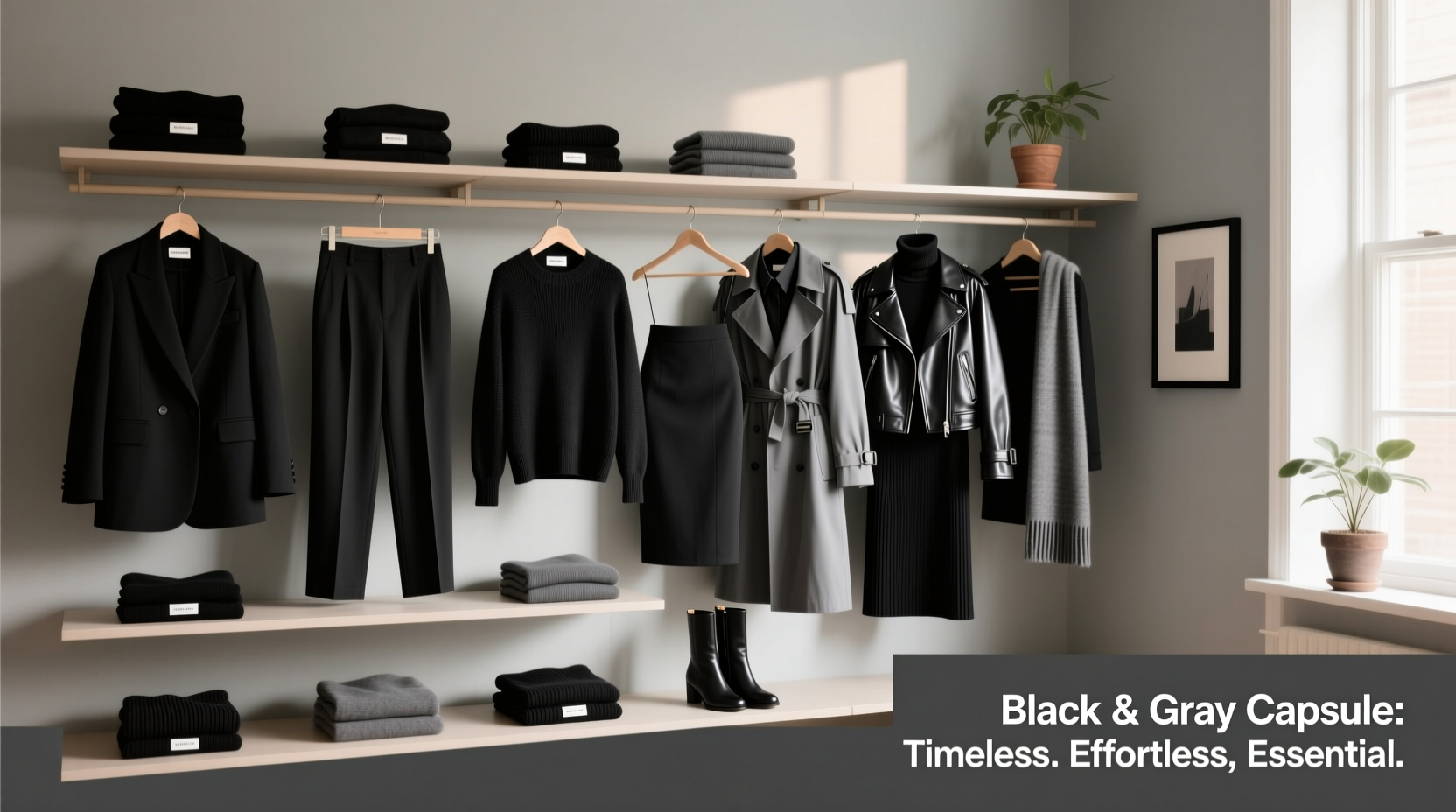
Monochrome dressing is more than a color choice—it’s a design principle. Black and gray exist on the same tonal spectrum, enabling seamless transitions between shades without disrupting visual harmony. Gray, in its many forms—from warm charcoal to cool slate—adds dimension to an all-black ensemble, while black provides grounding contrast. Together, they form a foundation that supports texture, silhouette, and layering as the primary sources of interest.
Designer Phoebe Philo, known for her minimalist aesthetic at Céline, championed this approach: “When you remove color, you’re forced to pay attention to cut, fabric, and movement.” This philosophy underpins the success of a black-and-gray capsule. Without the distraction of bold hues, details like a structured shoulder line, a fluid drape, or a subtle ribbed knit become focal points. The result is a wardrobe that feels both deliberate and effortlessly chic.
“Neutrals aren’t boring—they’re the canvas. Your posture, your walk, your presence completes the look.” — Tim Gunn, Fashion Educator and Stylist
Building within this limited palette also reduces decision fatigue. With every piece compatible with every other, outfit creation becomes intuitive. You’re not asking, “Does this color go with that?” but rather, “What mood am I expressing today?” A matte black turtleneck reads sleek and serious, while a heather gray hoodie paired with tailored trousers softens the tone. The emotional range remains broad, even within a narrow chromatic range.
Core Principles for Building Your Capsule
Creating a successful black-and-gray wardrobe requires adherence to several key principles. These ensure cohesion, longevity, and adaptability across seasons and lifestyles.
1. Prioritize Fabric Quality Over Quantity
Since color variation is minimal, texture becomes your primary visual differentiator. Invest in materials that feel substantial and age well: merino wool, cashmere, organic cotton, Tencel, and mid-weight wools. Avoid thin, shiny synthetics that degrade quickly or lack tactile interest.
2. Embrace a Range of Gray Tones
Gray is not a single shade. Include variations such as light silver, medium dove gray, deep charcoal, and near-black anthracite. This allows for tonal layering—a lighter gray sweater over a dark gray shirt creates depth without clashing.
3. Focus on Fit and Proportion
Well-fitted clothing elevates even the simplest combinations. Tailored pieces—like a straight-leg pant or a cropped blazer—anchor looser silhouettes such as wide-leg trousers or an oversized coat. Balance is key: pair a voluminous top with slim bottoms, or a fitted turtleneck with relaxed linen pants.
4. Design for Seasonless Wear
Choose mid-weight fabrics and modular layers instead of seasonal extremes. A merino base layer works under a jacket in winter and alone in spring. Linen-blend trousers breathe in summer and layer well in fall.
5. Limit Accessories to Complement, Not Compete
With no color to break up the palette, accessories should enhance, not distract. Opt for matte black leather shoes, brushed silver jewelry, or a textured tote in charcoal canvas. Avoid bright hardware or patterned scarves unless used sparingly.
Step-by-Step Guide to Building Your Wardrobe
Follow this seven-step process to construct a functional, elegant black-and-gray capsule.
- Assess Your Lifestyle Needs: Define your daily activities—office work, creative studio time, casual outings, formal events. This determines the balance of formal vs. relaxed pieces.
- Declutter Existing Clothing: Remove anything worn less than once a month, ill-fitting, or damaged. Keep only items in black, gray, or neutral tones that align with your vision.
- Select a Core Number of Pieces: Aim for 25–40 total items, including tops, bottoms, outerwear, dresses, and footwear. Adjust based on climate and personal needs.
- Build Around a Foundation of Tops: Start with 6–8 tops: turtlenecks, button-downs, camisoles, and long-sleeve tees in various black and gray shades.
- Add Bottoms for Contrast: Include 3–4 pairs: black tailored trousers, gray jeans, wide-leg pants, and a pencil skirt. Ensure each pairs with multiple tops.
- Incorporate Layering Essentials: Add a black blazer, gray cardigan, wool coat, and utility jacket. These bridge temperature changes and elevate outfits.
- Finalize with Shoes and Bags: Choose 3–4 pairs: black ankle boots, gray sneakers, loafers, and ballet flats. Stick to matte finishes and simple lines.
Essential Pieces Checklist
Use this checklist to ensure your capsule covers all bases. Mark each item as you acquire it.
- Black crewneck sweater (merino wool)
- Gray turtleneck (cashmere or blend)
- Black tailored trousers (wool blend)
- Charcoal gray jeans (non-stretch, dark wash)
- Black midi skirt (structured fabric)
- White-collar button-up shirt (black or heather gray)
- Black longline vest (for layering)
- Gray hoodie (luxury cotton, minimalist design)
- Black blazer (slim fit, unlined)
- Gray wool coat (knee-length, double-breasted)
- Black leather ankle boots (low heel)
- Gray suede loafers
- Black crossbody bag (structured shape)
- Gray tote (water-resistant fabric)
- Silk camisole (black, bias-cut)
Styling Strategies and Real-World Application
Even within a strict palette, variety emerges through composition. Consider the case of Maya, a freelance graphic designer based in Berlin. Her work spans client meetings, studio sessions, and weekend gallery visits. She needed a wardrobe that transitioned seamlessly without frequent changes.
Maya built a 32-piece capsule centered on black and gray. Her weekday look combines black high-waisted trousers with a heather gray turtleneck and black oxfords. For client calls, she adds a charcoal wool blazer and silver hoop earrings. On creative days, she swaps the blazer for an oversized black cardigan and gray sneakers. Evening outings call for a black slip dress layered under a long gray coat, accessorized with a matte black clutch.
The key to her success? Strategic repetition with variation. She owns two nearly identical black turtlenecks—one with a higher neck, one slightly looser—to avoid looking repetitive. Her gray coat has a belted waist, allowing it to function as both outerwear and a dress substitute when cinched.
This approach demonstrates how a disciplined palette enhances creativity. Instead of choosing from dozens of colors, Maya focuses on how pieces interact: the drape of a coat over a structured top, the contrast between matte and slightly glossy fabric, or the way a single silver necklace catches light against dark layers.
Do’s and Don’ts: Maintaining Cohesion
| Do | Don’t |
|---|---|
| Use texture contrasts (ribbed, smooth, brushed) to add visual interest | Mix too many competing textures in one outfit (e.g., shaggy knit + pleated satin) |
| Invest in proper tailoring to perfect fit | Wear ill-fitting clothes assuming “the look” will compensate |
| Layer tonally—light gray over dark gray, black over charcoal | Pair stark white or navy items that break the monochrome flow |
| Rotate shoes and bags to prevent overuse and wear | Introduce brightly colored accessories unless intentionally disruptive |
| Wash delicate fabrics gently and air dry to preserve integrity | Dry clean frequently unless necessary—many wools and silks don’t require it |
Frequently Asked Questions
Can a black-and-gray wardrobe work in warm climates?
Yes—with fabric selection. Opt for lightweight materials like linen, bamboo, or Tencel in lighter gray tones to reflect heat. Black absorbs sunlight, so reserve darker pieces for evenings or air-conditioned environments. Loose, breathable cuts help maintain comfort without sacrificing style.
Won’t everything look the same after a while?
Not if you vary texture, silhouette, and layering. A ribbed black tank under a smooth gray blazer reads differently than a crisp black button-down under a chunky charcoal knit. Introduce subtle differences in neckline, sleeve length, or hemline to keep combinations fresh.
How do I handle professional settings that expect more color or variety?
Many industries value consistency and polish over flamboyance. A well-curated monochrome wardrobe signals professionalism and attention to detail. If required, introduce a single neutral accent—like a camel trench or beige shoes—without disrupting the core palette. Alternatively, use statement jewelry in silver or gunmetal to add distinction.
Final Thoughts and Call to Action
A capsule wardrobe in black and gray is not a limitation—it’s a refinement. It strips away excess and centers your style on what truly matters: fit, fabric, and intention. Every piece earns its place. Every combination feels intentional. You stop chasing trends and start embodying a consistent identity.
Begin with one category—your tops or your shoes. Curate five essential pieces. Wear them repeatedly. Notice how people respond not to the absence of color, but to the presence of confidence. Then expand slowly, thoughtfully, until your closet reflects clarity rather than clutter.




 浙公网安备
33010002000092号
浙公网安备
33010002000092号 浙B2-20120091-4
Comments
No comments yet. Why don't you start the discussion?