
A well-curated capsule wardrobe built exclusively from neutral tones is one of the most effective ways to simplify dressing, reduce decision fatigue, and maintain a polished appearance year-round. Unlike trend-driven pieces that fade in relevance, a neutral-focused collection emphasizes longevity, versatility, and intentional design. When executed thoughtfully, such a wardrobe allows every item to pair seamlessly with another, eliminating clutter while maximizing outfit combinations. This approach isn’t about sacrificing personality—it’s about refining it through simplicity, quality, and cohesion.
The Timeless Appeal of Neutral Colors
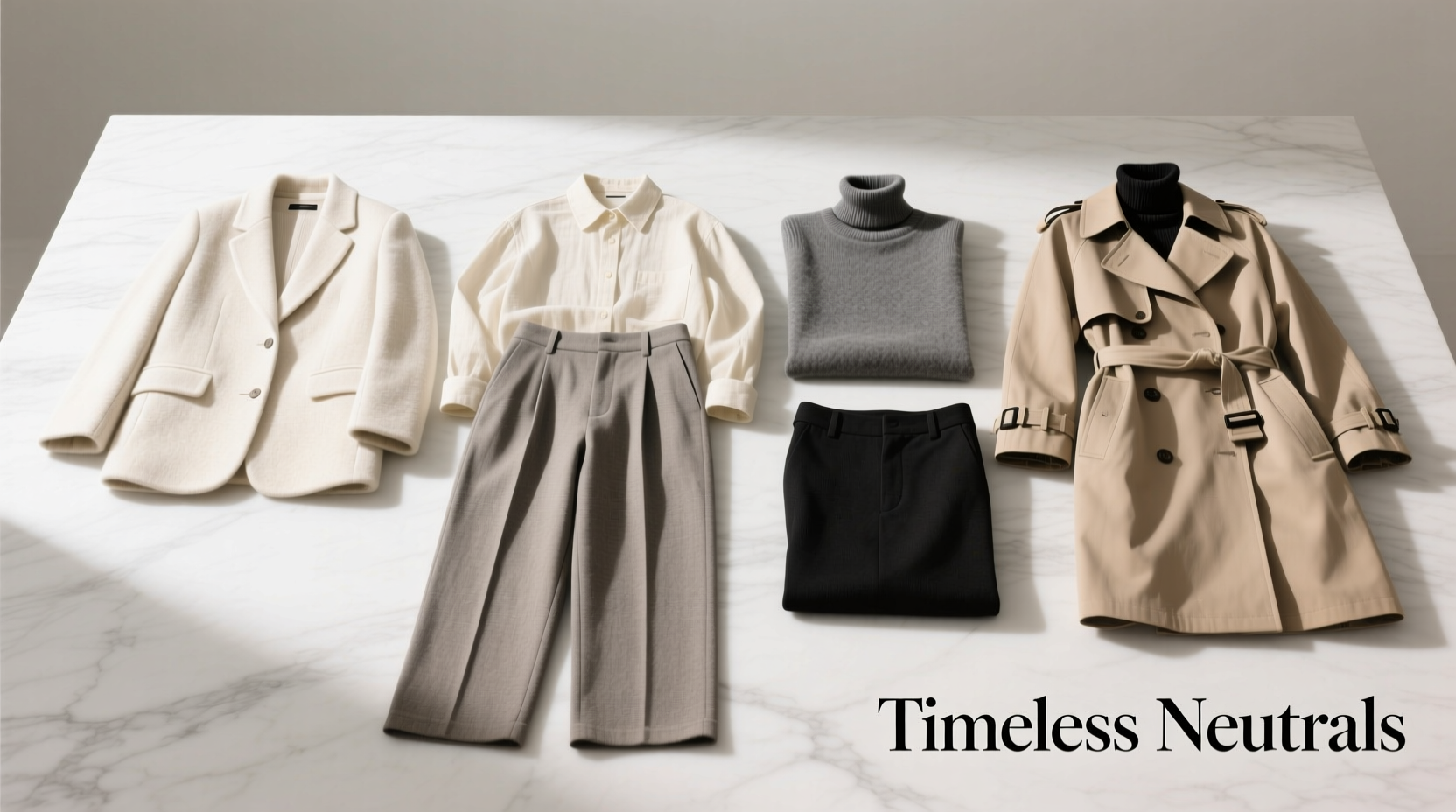
Neutral colors—such as black, white, beige, gray, navy, camel, and olive—are foundational in fashion because they transcend seasonal trends and cultural shifts. These hues don’t compete; instead, they harmonize. Their strength lies in adaptability: a charcoal sweater can be dressed up with tailored trousers or down with denim, while an ivory button-down works under a blazer or over a tank top on warm days.
What makes neutrals enduring is their grounding effect. They provide a stable base upon which textures, silhouettes, and accessories can express individuality without visual chaos. Designers like Phoebe Philo, Jil Sander, and Helmut Lang have long championed minimalist palettes not out of limitation, but as a statement of confidence in form and fabric.
“Neutrality isn’t blandness—it’s clarity. When you remove color noise, you highlight cut, drape, and movement.” — Clara Nguyen, Fashion Editor at *The Edit Magazine*
Moreover, neutral wardrobes are inherently sustainable. By focusing on pieces that last and layer well, consumers naturally buy less, choose better, and keep clothes longer—aligning with slow fashion principles.
Step-by-Step Guide to Building Your Capsule
Creating a functional, stylish capsule wardrobe takes planning and self-awareness. Follow this structured process to ensure your collection supports your lifestyle and stands the test of time.
- Assess Your Lifestyle Needs: Begin by identifying your daily activities—work environment, social engagements, climate, and physical demands. A corporate professional needs different staples than a creative freelancer or a parent managing school runs.
- Declutter Ruthlessly: Remove everything from your closet and sort items into three piles: keep, donate, discard. Keep only garments that fit well, are in good condition, and align with your desired aesthetic. Let go of anything worn out of obligation or guilt.
- Define Your Core Neutrals: Choose 4–6 dominant neutrals based on your skin tone and environment. For example, someone in a colder climate might favor charcoal, heather gray, and deep navy, while warmer regions may lean toward sand, oatmeal, and stone.
- Select Foundational Pieces: Focus on high-quality basics that serve multiple roles. Prioritize natural fibers like cotton, wool, cashmere, and linen for breathability and durability.
- Add Transitional Layers: Include lightweight sweaters, trench coats, and structured blazers that bridge seasons and elevate simple outfits.
- Incorporate Subtle Variation: Use tonal contrasts (e.g., light gray paired with dark gray) and textural differences (ribbed knit vs. smooth cotton) to add depth without introducing bright colors.
- Edit and Refine Monthly: After three months of wear, reassess. Which items did you reach for daily? Which gathered dust? Adjust accordingly.
Essential Pieces for a Neutral Capsule Wardrobe
A successful capsule typically contains between 30–40 items, including tops, bottoms, outerwear, dresses, shoes, and accessories. Below is a breakdown of must-have categories and recommended selections.
| Category | Recommended Items | Material Suggestions |
|---|---|---|
| Tops | White cotton button-down, black turtleneck, striped breton top, oatmeal crewneck sweater | Pima cotton, merino wool, silk blend |
| Bottoms | Dark wash jeans, black tailored trousers, beige chinos, navy midi skirt | Stretch cotton twill, Japanese denim, wool crepe |
| Dresses | Black sheath dress, gray wrap dress, camel shirtdress | Viscose blend, ponte knit, Tencel |
| Outerwear | Tan trench coat, black wool coat, gray peacoat, navy bomber jacket | Wool blend, water-resistant cotton, recycled polyester |
| Shoes | Black ankle boots, white sneakers, nude loafers, gray mules | Polished leather, suede, vegan alternatives |
| Accessories | Beige belt, black leather tote, silver hoop earrings, wool scarf | Full-grain leather, brushed metal, recycled wool |
Each piece should serve at least three distinct outfit combinations. For instance, a black turtleneck pairs with jeans for casual wear, under a blazer for work, and beneath a slip dress for evening events. The goal is interconnectivity.
Mini Case Study: Emma’s Transition to a Neutral Capsule
Emma, a 34-year-old graphic designer based in Portland, Oregon, found herself overwhelmed by her closet despite owning over 80 tops alone. She wore the same five items repeatedly and felt guilty about unused purchases. Inspired by minimalism blogs, she decided to rebuild her wardrobe around neutrals.
Over two weekends, she cleared out 70% of her clothing, keeping only well-fitting, high-quality pieces in shades of cream, taupe, charcoal, and forest green. She invested in a few key additions: a double-breasted camel coat, wide-leg black trousers, and a ribbed ivory sweater.
Within a month, Emma reported spending 40% less time choosing outfits and receiving more compliments on her “put-together” look. Her dry cleaning bills dropped, and she stopped impulse-buying trendy items. More importantly, she felt more confident—her clothes no longer dictated her mood; they supported it.
Common Mistakes to Avoid
Even with the best intentions, building a capsule wardrobe can go wrong if certain pitfalls aren’t addressed. Here are frequent errors and how to sidestep them.
- Choosing Neutrals That Don’t Suit You: Not all neutrals flatter every skin tone. Cool undertones often shine in charcoal and stark white, while warm complexions glow against camel and oatmeal. Test swatches near your face in natural light before committing.
- Ignoring Texture and Fit: A wardrobe of flat black cotton items can feel monotonous. Mix matte and sheen, ribbed and smooth, structured and flowy to create visual interest.
- Skipping Seasonal Adaptation: Neutrals aren’t limited to winter grays. In summer, consider sand, ivory, and soft gray. Rotate heavier knits seasonally while keeping core pieces accessible.
- Underestimating Undergarments and Lingerie: Even in a neutral wardrobe, visible straps or ill-fitting layers disrupt cohesion. Invest in seamless, skin-toned undergarments that match your palette.
- Forgetting Footwear Coordination: Shoes anchor an outfit. Ensure at least two pairs (e.g., black and tan) can pair with 80% of your bottom half options.
“A capsule wardrobe fails when it’s too rigid. Flexibility within structure is key—allow room for personal evolution.” — Marcus Lee, Sustainable Stylist & Consultant
Checklist: Building Your Neutral Capsule Wardrobe
Use this practical checklist to stay on track during your wardrobe transformation.
- ☐ Audit current wardrobe—remove ill-fitting, damaged, or rarely worn items
- ☐ Identify primary neutrals based on lifestyle and coloring
- ☐ Define 5–7 core outfits you want to wear regularly
- ☐ List missing essentials (e.g., “need a structured blazer in gray”)
- ☐ Research and purchase 1–2 high-quality foundation pieces per month
- ☐ Test mix-and-match potential of each new addition
- ☐ Store off-season items out of sight but accessible
- ☐ Schedule quarterly reviews to assess usage and satisfaction
Frequently Asked Questions
Can I include patterns in a neutral capsule?
Yes—but selectively. Subtle patterns like herringbone, pinstripes, or micro-checks in neutral-on-neutral tones (e.g., gray-on-gray) enhance depth without breaking the harmony. Avoid loud prints or contrasting colors that dominate the eye.
How do I add personality without using color?
Personality emerges through silhouette, texture, and accessories. A voluminous coat, sculptural heel, or handcrafted wooden bangle can define style more powerfully than a bright hue. Also consider layering techniques—tucking, rolling, belting—to alter familiar looks.
Is a neutral capsule suitable for all body types?
Absolutely. Neutral palettes are universally flattering when matched to individual proportions and preferences. Vertical lines in monochrome create elongation; tonal layering adds dimension. The focus on fit and fabric benefits all figures equally.
Conclusion: Style That Endures, Not Expires
A capsule wardrobe built on neutral colors is not a compromise—it’s a commitment to intentionality. It strips away excess, highlights quality, and fosters a deeper relationship with what you wear. Each garment earns its place not by novelty, but by utility and resonance. Over time, this approach reshapes not just your closet, but your mindset: from consumption to curation, from reaction to reflection.
You don’t need constant change to stay stylish. True elegance lies in consistency, care, and quiet confidence. Start small. Build thoughtfully. Wear with purpose.




 浙公网安备
33010002000092号
浙公网安备
33010002000092号 浙B2-20120091-4
Comments
No comments yet. Why don't you start the discussion?