
Fashion moves fast, but your closet doesn’t have to. The rise of overconsumption has left millions of garments underused or discarded within months of purchase. In response, a growing number of people are turning to secondhand clothing—not just for affordability, but as a deliberate act of sustainability. One of the most powerful ways to align personal style with environmental responsibility is by building a capsule wardrobe from pre-loved pieces. This approach combines intentionality, minimalism, and resourcefulness into a system that reduces waste while elevating everyday dressing.
A capsule wardrobe typically consists of 30–40 versatile, high-quality items that mix and match seamlessly across seasons. When built entirely from secondhand sources, it becomes more than a styling strategy—it’s a statement against fast fashion. Done right, this method saves money, reduces carbon footprint, and fosters a deeper connection to what you wear. Here’s how to do it thoughtfully and effectively.
Why Combine Capsule Wardrobes with Secondhand Shopping?
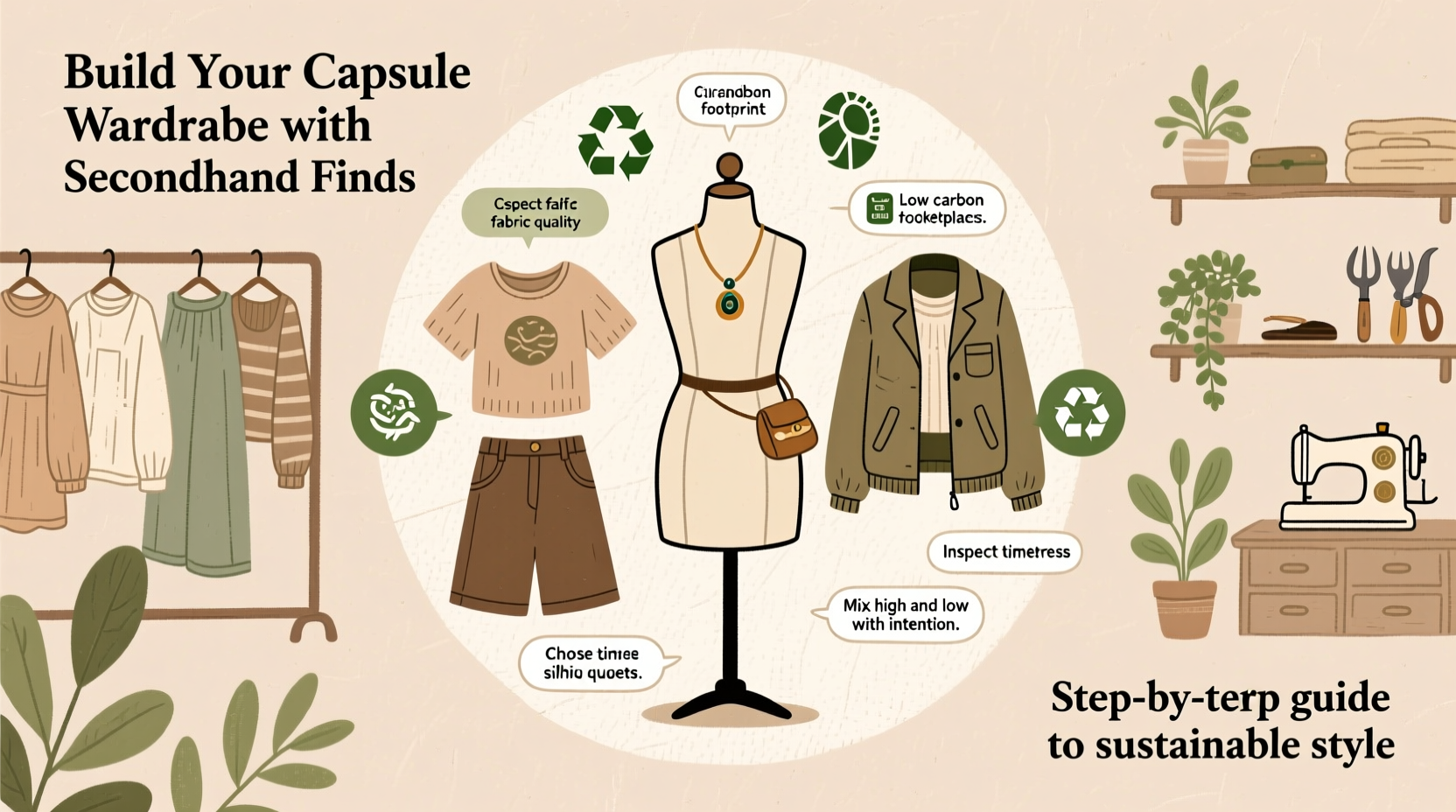
The core idea behind a capsule wardrobe is simplicity: fewer clothes, better quality, greater versatility. Pairing this concept with secondhand shopping amplifies its impact. According to the Ellen MacArthur Foundation, one garbage truck of textiles is landfilled or burned every second globally. By choosing used clothing, you extend the life cycle of existing garments—an action ranked among the top five most effective climate solutions by Project Drawdown.
Secondhand shopping also challenges the myth that sustainable fashion must be expensive. While ethical brands often carry premium price tags, thrift stores, consignment shops, and online resale platforms offer access to well-made pieces at a fraction of their original cost. Many vintage garments were constructed with higher-quality materials and craftsmanship than today’s mass-produced alternatives.
“Every time we buy secondhand, we vote for a different kind of fashion economy—one based on reuse, not constant extraction.” — Elizabeth Teo, Sustainable Fashion Advocate
Step-by-Step Guide to Building Your Secondhand Capsule
Creating a functional, cohesive capsule wardrobe from only secondhand finds requires planning and patience. Rushing leads to clutter. Instead, follow this structured timeline to build intentionally.
- Assess Your Lifestyle (Week 1): Track what you wear for seven days. Note activities (work, errands, social events), weather conditions, and recurring outfit combinations. Identify gaps and redundancies in your current wardrobe.
- Define Your Style Archetype (Week 2): Are you minimalist, classic, edgy, bohemian? Use Pinterest or a mood board to collect images of outfits you’re drawn to. Look for patterns in color, silhouette, and texture.
- Set a Core Color Palette (Week 3): Choose 3–5 base colors that complement your skin tone and can work across seasons. Neutral bases like charcoal, oatmeal, navy, or black pair easily. Add one or two accent tones if desired.
- Create a Master List (Week 4): Based on your lifestyle and aesthetic, draft a list of essential pieces (e.g., tailored blazer, dark wash jeans, white button-down, midi skirt). Prioritize versatility and layering potential.
- Begin Strategic Sourcing (Ongoing, Weeks 5–12+): Shop with your list in hand. Visit curated thrift stores, consignment boutiques, and trusted online marketplaces. Only purchase items that meet all criteria: fits well, matches palette, aligns with archetype.
- Edit and Refine (After 3 Months): Reassess your capsule. Remove anything unworn or ill-fitting. Replace only when necessary, always sticking to your guidelines.
Smart Sourcing: Where and How to Find Quality Pre-Loved Pieces
Not all secondhand shopping is equal. Some venues yield higher-quality finds with less effort. Focus on these sources to maximize success:
- Consignment Stores: Often curate by brand and condition. Examples include Crossroads Trading, Plato’s Closet (for younger styles), or local upscale boutiques. These tend to stock recent-season items from mid-to-high-end labels.
- Thrift Stores with Sorting Systems: Stores like Goodwill Outlets or Savers “buy-by-the-bag” models allow bulk sorting but require time investment. Go early in the week when shelves are freshly stocked.
- Online Resale Platforms: ThredUp, Poshmark, Vestiaire Collective, and eBay offer filters for size, color, brand, and material. Use keywords like “linen,” “wool,” “tailored,” or “vintage” to narrow results.
- Estate Sales & Vintage Markets: Ideal for unique, durable pieces. Look for natural fibers, clean stitching, and timeless cuts. Wool coats, silk blouses, and denim jackets often outlast trends.
When evaluating a piece, inspect seams, zippers, and fabric integrity. Smell for mildew or smoke. Try on whenever possible. Remember: alterations can fix fit issues, but cannot improve poor fabric quality.
Do’s and Don’ts of Secondhand Selection
| Do | Don’t |
|---|---|
| Look for natural fibers (cotton, wool, silk, linen) | Buy synthetic blends unless performance-driven (e.g., activewear) |
| Check garment labels for care instructions and fiber content | Assume size tags are accurate—always try on |
| Invest in outerwear and shoes—they last longest | Purchase damaged items hoping to “fix later”—most never get repaired |
| Shop seasonally ahead (e.g., buy wool coats in spring) | Overbuy basics—capsules thrive on restraint |
| Follow sellers with consistent style or quality curation | Ignore return policies on online platforms |
Real Example: Maya’s Transition to a Secondhand Capsule
Maya, a 34-year-old project manager in Portland, spent years cycling through trend-driven purchases. After reading about textile waste, she committed to a year-long challenge: no new clothing, only secondhand additions to a 35-piece capsule.
She began by auditing her closet, removing 68 items that no longer fit her professional-casual lifestyle. She defined a neutral palette of cream, olive, and deep gray, favoring structured silhouettes and breathable fabrics. Over three months, she sourced key pieces: a camel wool coat from an estate sale, two pairs of high-rise Levi’s from Poshmark, a linen-blend shirtdress from a consignment shop, and a black turtleneck sweater refinished locally.
Within six months, Maya reported dressing faster, feeling more confident, and spending 70% less on clothing. Her total expenditure on the entire capsule was under $400—less than the cost of two new designer items. More importantly, she developed a habit of mindful consumption that extended beyond fashion.
“Building my capsule taught me that style isn’t about having more—it’s about knowing what works and sticking to it.” — Maya R., Software Project Manager
Essential Checklist: Building Your Capsule
Use this checklist to stay on track throughout the process:
- ☐ Audit current wardrobe—keep only items worn in the last year
- ☐ Define daily activities and dress code requirements
- ☐ Select a cohesive color palette (3–5 main colors)
- ☐ Draft a master list of 30–40 essential items
- ☐ Identify preferred secondhand sources (local and online)
- ☐ Set a budget per category (e.g., $50 for outerwear, $20 for tops)
- ☐ Inspect each potential item for fit, fabric, and finish
- ☐ Allow a 48-hour decision window before purchasing
- ☐ Limit capsule size—edit ruthlessly every season
- ☐ Celebrate progress, not perfection
FAQ: Common Questions About Secondhand Capsule Wardrobes
Isn’t secondhand shopping unhygienic?
No, when done responsibly. Always wash or steam secondhand clothing before wearing. For dry-clean-only items, opt for professional cleaning or air them in sunlight for several hours. Most bacteria and allergens are eliminated through proper sanitation.
How do I deal with inconsistent sizing?
Sizing varies widely across eras and brands. Use body measurements rather than tag sizes. Keep a tape measure in your bag when thrifting. Online, check seller-provided measurements and compare them to a similar garment in your closet.
What if I get bored with only 30–40 pieces?
Boredom often stems from lack of creativity, not quantity. Experiment with layering, accessories, and shoe changes to create new looks. A white shirt can become office-ready with a blazer, casual with jeans, or elevated with gold jewelry. Capsules encourage styling skills, not limitation.
Maintaining Long-Term Success
A capsule wardrobe is not a one-time project. It’s a living system that evolves with your life. To sustain it:
- Seasonal Reviews: Every three months, reassess your capsule. Remove unworn items and note missing essentials.
- One-In, One-Out Rule: When adding a new secondhand piece, retire one old one. Donate or resell mindfully.
- Repair Culture: Learn basic mending or support local tailors. Fix loose buttons, replace zippers, patch small tears.
- Diversify Textures, Not Colors: Maintain cohesion by introducing variety through fabric—ribbed knits, corduroy, seersucker—rather than deviating from your palette.
Remember, the goal is not perfection. It’s progress. Some weeks you’ll reach for the same sweater repeatedly. Other months, you’ll discover a vintage gem that redefines your style. Both are valid.
Final Thoughts: Style That Stands the Test of Time
Creating a capsule wardrobe from secondhand finds is one of the most impactful choices a modern dresser can make. It shifts focus from accumulation to curation, from trend-chasing to self-knowledge. Each piece tells a story—not just of where it came from, but of the values you uphold.
You don’t need a closet full of new things to feel put together. You need a few excellent ones that reflect who you are and how you live. With patience, clarity, and a commitment to reuse, you can build a wardrobe that’s as kind to the planet as it is expressive of your individuality.




 浙公网安备
33010002000092号
浙公网安备
33010002000092号 浙B2-20120091-4
Comments
No comments yet. Why don't you start the discussion?