
Creating a Christmas mood board on Pinterest should feel like unwrapping your favorite ornament—not wrestling with infinite scroll, duplicate pins, and mounting anxiety about “getting it right.” Yet many people start with enthusiasm and end up paralyzed: tabs open across three devices, 47 boards named “Xmas Ideas (Final?)”, and a growing sense of guilt that their vision isn’t “cohesive enough” or “Pinterest-perfect.” That’s not a failure of creativity—it’s a failure of process. The truth is, Pinterest is a powerful tool for visual planning *only when used intentionally*. This guide walks you through a grounded, human-centered method to build a Christmas mood board that reflects your values, honors your energy limits, and actually helps you make confident decisions—from decor choices to gifting themes to family traditions.
Why “Overwhelm” Happens (and Why It’s Not Your Fault)
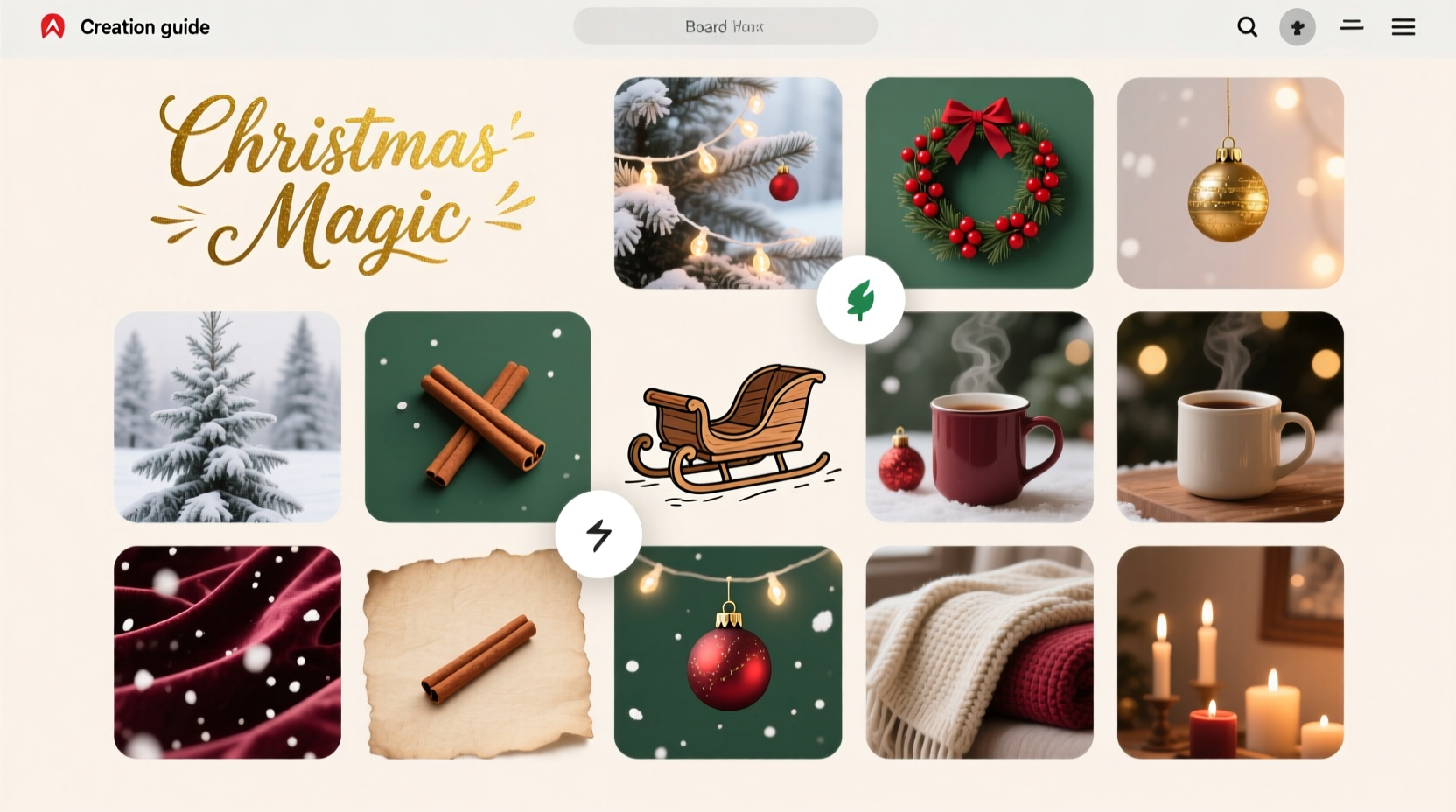
Pinterest’s algorithm rewards engagement, not clarity. It surfaces trending aesthetics—Scandi minimalism, cottagecore nostalgia, maximalist gold-and-velvet—often without context. When you search “Christmas decor,” the platform doesn’t know whether you live in a 1920s bungalow with low ceilings or a sun-drenched California condo. It doesn’t know your budget is $120, your partner hates tinsel, or your toddler eats pine needles. So it floods you with 12,000 variations of wreaths—some handmade, some AI-generated, some from luxury boutiques—and expects you to sort meaning from noise.
This mismatch between platform design and real-life constraints creates what psychologists call “choice overload”: too many options, too little scaffolding, and no clear criteria for selection. A 2022 study published in the Journal of Consumer Research found that users exposed to more than 15 visually distinct holiday inspiration images in one session experienced measurable increases in cortisol and decision fatigue—even before clicking a single pin.
“Mood boards aren’t about collecting ‘pretty things.’ They’re about curating evidence of your own taste, rhythm, and capacity. If yours feels exhausting, it’s misaligned—not inadequate.” — Lena Torres, Visual Strategist & Founder of Mindful Curation Lab
A Calm, 5-Step Process (No Perfection Required)
Forget “start from scratch.” Instead, begin where your energy already lives. This timeline-based approach reduces friction at every stage—and builds momentum instead of dread.
- Day 1 (15 minutes): Name your anchor feeling
Not “red and green,” but how you want Christmas to *feel* in your home. Examples: “warm and unhurried,” “playful and tactile,” “quiet and candlelit,” “vibrant and intergenerational.” Write it on sticky note. Keep it visible. - Day 2 (20 minutes): Create ONE board—named only with that feeling
No subfolders. No categories. Just one board titled exactly as your anchor feeling (e.g., “warm and unhurried”). Pin only what resonates *in your body*—a slight pause, a soft exhale, a quiet “yes.” Stop after 12 pins. - Day 3 (10 minutes): Audit with kindness
Open the board. Scroll slowly. Delete any pin that makes you think “I *should* like this” or “This looks expensive.” Keep only what feels true—not aspirational. - Day 4 (25 minutes): Add texture, not tropes
Search not for “Christmas tree,” but for “linen table runner,” “hand-thrown mug,” “worn wooden spoon,” “unwrapped book stack.” These non-holiday-specific items reveal your authentic aesthetic better than 500 red bauble photos. - Day 5 (15 minutes): Translate into action
Review your final 8–12 pins. Ask: What’s the *one thing* I can do this week that honors this feeling? (e.g., “buy cinnamon sticks to simmer on stove,” “order plain white paper tags,” “set aside 20 minutes to write cards by hand”).
Your Christmas Mood Board Decision Framework
When evaluating a pin, ask these three questions—not once, but each time. They replace vague judgment (“Is this pretty?”) with grounded discernment.
| Question | What It Reveals | Red Flag Example |
|---|---|---|
| Does this reflect how I actually live—or how I wish I lived? | Your real rhythms, space constraints, and daily habits | A photo of a perfectly styled mantel with 17 ceramic ornaments… while you have two toddlers who treat decor like chew toys |
| Does this support my energy—or drain it? | Your mental bandwidth, time availability, and tolerance for upkeep | An intricate paper-cut garland requiring 3 hours of steady hands… when your wrists ache after 20 minutes of wrapping |
| Does this honor what matters most to me this year? | Your current values—simplicity, sustainability, connection, rest, joy | A board saturated with branded gift guides… while your family has agreed to a “no new stuff” December |
This framework shifts Pinterest from a source of comparison to a mirror. You’re not gathering ideas to replicate—you’re gathering clues about yourself.
Real Example: Maya’s “Quiet Light” Board
Maya, a pediatric nurse and mother of twins, started her mood board during a rare 11 p.m. window after bedtime. She typed “Christmas calm” into Pinterest—and instantly felt tension rise. Instead, she paused, wrote “quiet light” on her phone notes, and searched only for “soft light photography,” “oatmeal wool blanket,” and “single branch in vase.” She pinned nine images: a close-up of beeswax candles melting slowly, a linen pillow with subtle embroidery, a shelf holding three well-loved children’s books, and a shot of morning light hitting a simple wooden bowl filled with walnuts and dried orange slices.
She deleted two pins the next day—one showing a marble countertop with gold flatware (she cooks on laminate) and another with a glittering tree (her twins have sensory sensitivities). Her final board had seven pins. From it, she ordered unscented soy candles, knitted two small cable-knit stockings, and committed to lighting one candle every evening at 6:30 p.m.—no other rituals required. “It didn’t look like anyone else’s Christmas,” she shared, “but it looked exactly like *ours*. And for the first time in five years, I didn’t dread December 1st.”
What to Do (and What to Skip) on Pinterest
- DO use Pinterest’s “close-up” zoom feature to examine textures—look at fabric weaves, wood grain, paper thickness. Real materials communicate more than color palettes.
- DO save pins to your phone’s Notes app first—then move to Pinterest only after sitting with them for 24 hours. This adds essential breathing room.
- DO search using sensory language: “crunchy pine needle sound,” “velvet ribbon pull,” “cinnamon steam rising.” These yield richer, more embodied results than “Christmas decor.”
- DON’T create multiple boards for “tree,” “table,” “wrapping,” “gifts.” One cohesive feeling holds everything together—if it belongs, it’ll resonate across categories.
- DON’T follow “holiday inspo” accounts preemptively. Their curated feeds train your eye to seek novelty—not resonance.
- DON’T use Pinterest’s auto-generated “related pins” sidebar as your primary discovery tool. It prioritizes virality, not viability.
FAQ: Practical Questions Answered
How many pins should my mood board have?
Between 7 and 15. Fewer than 7 rarely reveals patterns; more than 15 dilutes clarity. If you find yourself wanting to add a 16th pin, revisit your anchor feeling and ask: “Does this expand or distract from that core sensation?”
Can I use my existing Pinterest boards—or do I need to start fresh?
You can repurpose—but only if you’re willing to delete ruthlessly. Open your oldest Christmas-related board. Scroll once, top to bottom, without stopping. Then delete every pin that doesn’t spark immediate recognition (“Yes—that’s *us*”). If fewer than five remain, start fresh. Cluttered boards carry emotional weight; clean ones hold intention.
What if my anchor feeling changes halfway through?
That’s valuable data—not a mistake. Pause. Write down what shifted: Did you realize “cozy” meant “low-lit and slow” rather than “plaid and piled high”? Did “joyful” reveal itself as “colorful and loud” after all? Update your anchor feeling, archive the old board (don’t delete), and begin again. Flexibility is evidence of self-awareness—not inconsistency.
Conclusion: Your Mood Board Is a Compass, Not a Contract
A Christmas mood board built with calm intention does something rare in our hyper-curated world: it gives permission. Permission to choose the cranberry over the clove because it reminds you of your grandmother’s kitchen. Permission to skip the tree skirt because bare branches feel truer to your love of winter’s raw beauty. Permission to use last year’s ornaments—not because you’re “behind,” but because their imperfections tell your story better than anything new ever could.
This isn’t about assembling a flawless aesthetic. It’s about practicing attention—tuning into what lights you up, what soothes your nervous system, what fits your actual life. Every pin you keep is a small act of self-trust. Every pin you delete is a boundary drawn with care. And every decision you make from your board—whether it’s buying handmade cards or choosing silence over carols—is an affirmation: *This is mine. This is enough. This is how I celebrate.*




 浙公网安备
33010002000092号
浙公网安备
33010002000092号 浙B2-20120091-4
Comments
No comments yet. Why don't you start the discussion?