
As the holiday season approaches, many homes come alive with twinkling lights, festive decorations, and the warm glow of seasonal cheer. One of the most captivating ways to elevate your display is by synchronizing your Christmas lights with music—transforming a simple yard setup into a dynamic, immersive experience. But achieving harmony between sound and light requires more than just plugging in a string of bulbs and hitting play. The key lies in crafting a Christmas playlist that complements your light rhythm, ensuring every beat aligns with a flicker, pulse, or color change.
A well-designed audio-light pairing turns passive viewing into emotional storytelling. Whether you're using smart LED strips, programmable controllers, or a full-scale synchronized light show, the music sets the pace, mood, and intensity. When done right, viewers don’t just see the lights—they feel the music through them.
Understand Your Light System’s Rhythm Capabilities
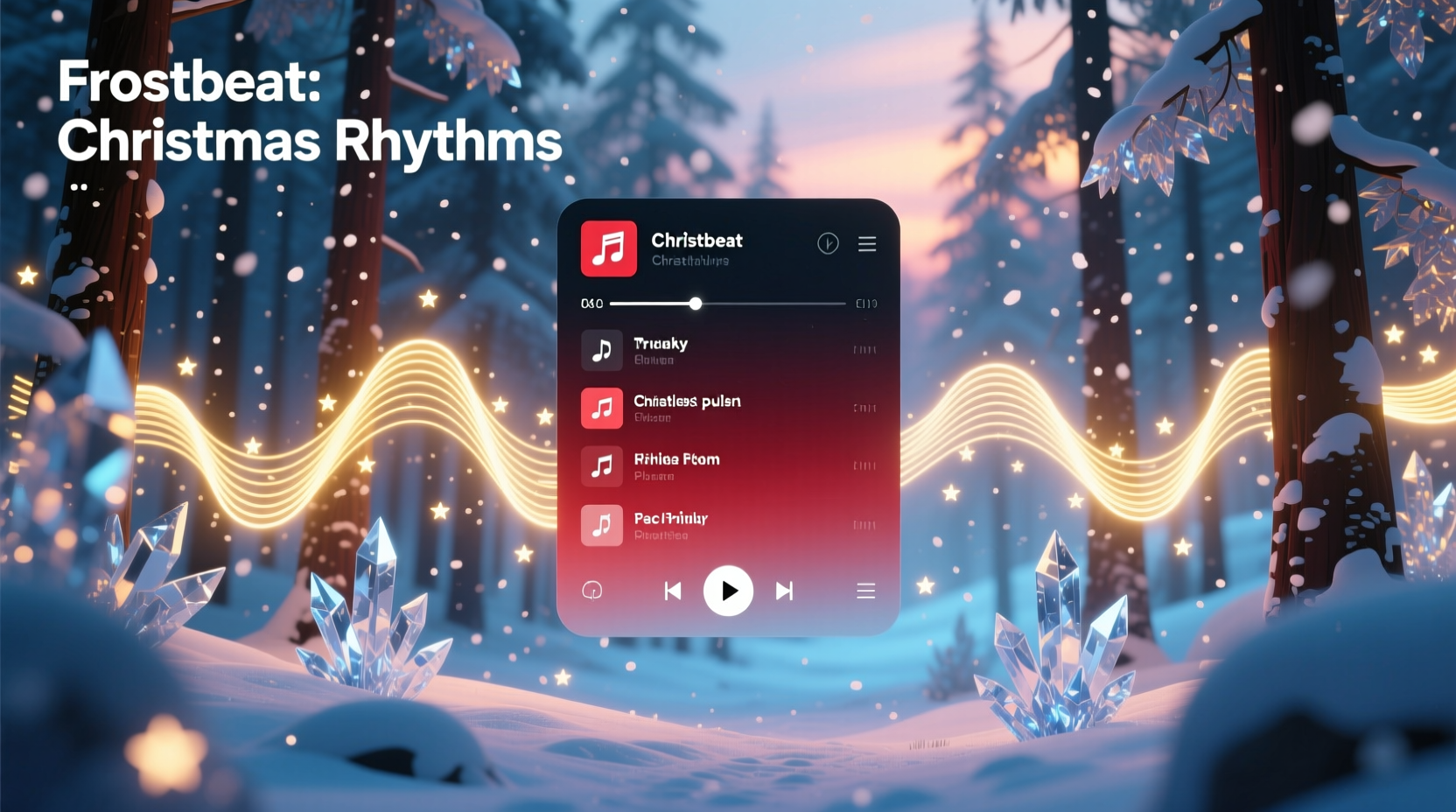
Before selecting a single song, assess what your lighting system can actually do. Not all setups support complex sequencing. Some smart bulbs respond only to volume changes, while advanced systems like those using Light-O-Rama or xLights can map individual channels to precise musical beats.
If your lights are basic Wi-Fi-enabled LEDs (such as Philips Hue or Govee), they likely react to ambient sound or pre-programmed effects. These systems work best with tracks that have strong, consistent rhythms and clear dynamic shifts—think drum-heavy classics or upbeat carols.
For custom installations with multiple zones and addressable pixels, you have far greater control. You can choreograph strobes to snare hits, fade colors during soft verses, and trigger full displays on crescendos. In this case, the playlist must be built with timing precision in mind—each song should offer identifiable rhythmic landmarks.
Select Songs Based on Tempo and Emotional Arc
The foundation of any effective light-synced playlist is tempo consistency and emotional progression. A great Christmas show takes viewers on a journey—from quiet anticipation to joyful climax and back to peaceful reflection.
Start by choosing songs within a similar BPM (beats per minute) range if you want seamless transitions. Most traditional Christmas music falls between 90 and 130 BPM, making it ideal for steady pacing. However, contrast matters too. Placing a slow, melodic piece like “O Holy Night” after an energetic “Jingle Bell Rock” creates dramatic impact—especially if your lights shift from rapid flashes to smooth glows.
Consider grouping songs into thematic segments:
- Nostalgic & Classic: “White Christmas,” “The Christmas Song” – use warm tones and gentle pulses
- Upbeat & Festive: “Santa Claus Is Coming to Town,” “Rockin’ Around the Christmas Tree” – perfect for fast sequences and rainbow chases
- Spiritual & Reflective: “Silent Night,” “What Child Is This?” – pair with slow fades and cool white hues
- Modern & Energetic: “Last Christmas” (Wham!), “All I Want for Christmas Is You” – ideal for high-BPM sync and multi-zone effects
“Music isn’t just background noise in a light show—it’s the conductor. Every note should guide the visual outcome.” — Daniel Reeves, Lighting Designer & Holiday Display Consultant
Build a Structured Playlist Timeline
A successful Christmas light display follows a narrative arc. Think of your playlist as a performance with distinct acts. A typical timeline might look like this:
- Opening (0:00–1:30): Begin with a recognizable melody played softly—like bells or piano—to draw attention without overwhelming.
- Build-Up (1:30–3:00): Introduce mid-tempo songs with increasing light activity. Use gradual color expansion and mild pulsing.
- Climax (3:00–5:00): Feature your highest-energy track. Maximize strobes, chases, and full-array flashes.
- Transition (5:00–6:00): Slow down slightly. Use a bridge song with moderate dynamics to reset viewer energy.
- Finale (6:00–7:30+): End with a beloved classic performed with full intensity—then fade out gently for emotional closure.
This structure prevents sensory overload and ensures a memorable experience. Each segment should last long enough to register but not so long that it loses momentum.
Match Musical Elements to Light Behaviors
To truly complement your light rhythm, go beyond matching volume spikes. Map specific musical components to lighting actions:
| Musical Element | Light Response |
|---|---|
| Beat (Kick/Drum) | Short flash or pop on main tree or roofline |
| Chorus | Activate all zones, increase brightness, start color chase |
| Instrumental Break | Switch to secondary patterns—twinkles, waves, or gradients |
| Vocal Pause | Fade to black or dim all lights momentarily |
| Tempo Change | Shift animation speed—e.g., slow fade to fast strobe |
For example, in “Dance of the Sugar Plum Fairy,” the celesta melody could trigger delicate pixel twinkles across a net light curtain, while each percussive hit activates a small strobe on a figurine. In contrast, the driving beat of “Run Rudolph Run” demands aggressive flashing and sweeping motions across eaves and trees.
Test, Refine, and Reorder for Flow
Even the best-curated playlist needs real-world testing. Play your sequence outdoors or in a simulated environment and observe how the lights interact with the music. Look for mismatches—moments where the beat lags behind the flash, or where transitions feel abrupt.
Common issues include:
- Latency: Audio delays caused by Bluetooth or streaming can throw off synchronization. Use wired connections or local files when possible.
- Overlapping Effects: Too many animations happening at once can confuse the eye. Prioritize focal points during key moments.
- Pacing Fatigue: Back-to-back high-energy songs exhaust viewers. Insert a softer track every 2–3 pieces.
Reorder songs based on actual performance. Sometimes a track that seems perfect on paper doesn’t translate visually. Be willing to cut strong songs if they disrupt the flow.
Mini Case Study: The Johnson Family Display
The Johnsons in suburban Denver upgraded their static Christmas lights to a smart LED system in 2022. Their initial playlist included 15 songs, ranging from classical hymns to pop hits. During testing, they noticed that “Sleigh Ride” worked beautifully—the whip cracks triggered sharp flashes on their porch columns—but “Have Yourself a Merry Little Christmas” felt flat despite its emotional weight.
They realized the issue wasn’t the song, but the lack of dynamic variation in their lights. By reprogramming their controller to slowly expand the illuminated area during the verse and peak at “Through the years we all will be together,” they turned a quiet moment into a highlight. They also reordered the playlist to place this song after two energetic numbers, creating a powerful contrast.
The result? A 40% increase in neighborhood visitors and a feature on the local news. The Johnsons learned that emotional resonance matters as much as technical precision.
Essential Checklist for Your Synced Playlist
- Checklist: Building a Light-Compatible Christmas Playlist
-
- ✅ Assess your lighting system’s capabilities (sound-reactive vs. programmable)
- ✅ Choose songs with clear, consistent beats (90–130 BPM ideal)
- ✅ Group tracks by mood and tempo for smooth transitions
- ✅ Map key musical events (chorus, snare hit, pause) to light actions
- ✅ Test each song with your lights and adjust timing if needed
- ✅ Structure the playlist with opening, buildup, climax, and finale
- ✅ Avoid abrupt genre shifts (e.g., classical to rock without transition)
- ✅ Use instrumental or karaoke versions to reduce vocal interference
- ✅ Limit total runtime to 6–8 minutes for public displays
- ✅ Export playlist as local files to prevent streaming lag
Frequently Asked Questions
Can I use Spotify or YouTube for my light-synced playlist?
You can, but it’s not recommended for precise synchronization. Streaming services introduce variable latency due to buffering and internet speed. For reliable timing, export your playlist as MP3 or WAV files and play them locally through a dedicated device like a Raspberry Pi or USB-connected player.
How do I find the BPM of a Christmas song?
Use free online tools like Tunebat, BeatFinder, or AutoDJ to analyze a song’s tempo. Many Christmas classics already have documented BPMs—“Jingle Bell Rock” is 120 BPM, “All I Want for Christmas Is You” is 176 BPM (but often feels like 88 BPM due to double-time rhythm).
Should every song be fully synced?
No. Full choreography is time-intensive and best reserved for 2–3 signature songs. For the rest, use general rhythm matching—where lights follow the overall beat and volume rather than individual notes. This balances effort and impact.
Final Tips for a Memorable Display
Creating a Christmas playlist that complements your light rhythm is both technical and artistic. It’s not about filling time with music, but about crafting moments that resonate. Focus on clarity, contrast, and emotional pacing.
Remember: your audience experiences the show in real time. A misplaced flash or poorly timed silence can break immersion. But when music and light move as one, the effect is magical—a fleeting moment of wonder that defines the season.
Start small. Test one song. Perfect it. Then build outward. Over time, you’ll develop an intuitive sense of how sound shapes light, and how together, they tell a story no decoration alone ever could.




 浙公网安备
33010002000092号
浙公网安备
33010002000092号 浙B2-20120091-4
Comments
No comments yet. Why don't you start the discussion?