
There’s something deeply comforting about losing yourself in a book—a quiet ritual that offers escape, clarity, and calm. But the experience is only as good as the space it happens in. A well-designed reading nook doesn’t require renovations or expensive furniture. In fact, one of the most inviting corners for reading can be assembled in under thirty minutes using only what you already have at home.
The key isn’t perfection—it’s intention. With thoughtful placement of everyday objects, you can transform an overlooked corner, a closet no longer in use, or even a patch of floor beside a window into a personal retreat. This guide walks you through exactly how to do it: quickly, affordably, and sustainably.
Why a Reading Nook Matters More Than You Think
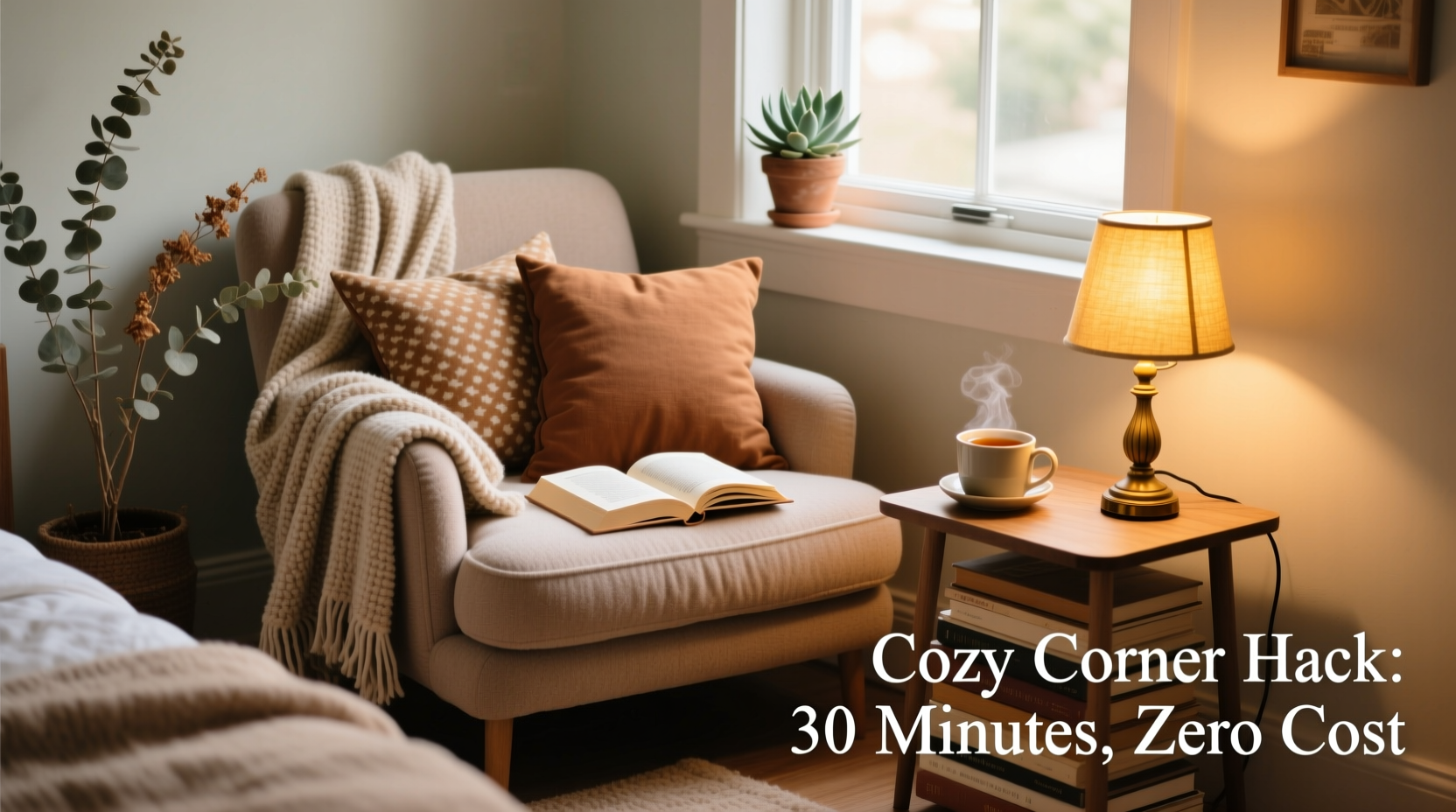
A dedicated reading space does more than just hold books. It signals to your brain that this is a place for focus, relaxation, and imagination. According to Dr. Sarah Langston, an environmental psychologist specializing in home design, “Having a designated area for a specific activity strengthens mental associations. When you sit in the same spot to read daily, your mind begins to shift into a receptive state faster.”
This psychological cue helps reduce distractions and improves concentration. Even if the space is small—a chair tucked beside a bookshelf or a cushion in a hallway corner—it becomes a sanctuary simply because it’s consistent and intentional.
“People underestimate the power of micro-environments. A single chair with good light and a blanket can become a mental reset button.” — Dr. Sarah Langston, Environmental Psychologist
Step-by-Step: Building Your Nook in Under 30 Minutes
You don’t need tools, measurements, or trips to the store. Just follow this six-step process to build a cozy reading zone before your next chapter begins.
- Choose Your Spot (3 minutes): Look for quiet, naturally lit areas. Ideal locations include near a window, in a bedroom corner, beneath a staircase, or even inside a large closet. Prioritize low-traffic zones where interruptions are minimal.
- Gather Seating (5 minutes): Use what you have—ottomans, floor cushions, dining chairs, or a sturdy wooden bench. Stack folded blankets or thick towels on a hard seat for instant softness. If you have a bean bag or inflatable lounger, now’s the time to inflate it.
- Add Soft Layers (6 minutes): Pull out extra throw blankets, quilts, or even a spare comforter. Drape one over the seat and keep another nearby for warmth. Mix textures—knit, fleece, cotton—for visual interest and tactile comfort.
- Set Up Lighting (4 minutes): Natural light is ideal during the day, but you’ll need reliable artificial lighting for evenings. Use a desk lamp, floor lamp, or even a string of battery-powered fairy lights clipped to a shelf. Position the light so it shines over your shoulder onto the page, reducing eye strain.
- Create Storage (5 minutes): Place a small side table, stool, or stack of sturdy books beside your seat. Use a laundry basket, tote bag, or shoebox to corral current reads, bookmarks, reading glasses, and a notebook. Label it mentally—or literally—with tape—as your “reading kit.”
- Personalize (7 minutes): Add meaning with small touches: a potted plant (real or faux), a framed photo, a scented candle (or essential oil diffuser), or a favorite mug. These elements make the space feel uniquely yours.
What to Use (and What to Skip)
Not every household item enhances a reading environment. Some add clutter instead of comfort. The following table outlines common household objects and whether they’re suitable for your nook.
| Item | Use? | Why / Why Not |
|---|---|---|
| Folded bath towel | Yes | Excellent for padding hard seats; adds texture and warmth. |
| Mismatched throw pillows | Yes | Encourage relaxed posture; mix colors for visual appeal. |
| Desk chair with wheels | No | Tends to roll away; opt for stationary seating instead. |
| Bluetooth speaker | Optional | Only if used for ambient sounds; avoid music with lyrics. |
| Wall mirror | No | Creates visual distraction; reflects movement and light. |
| Closet organizer bin | Yes | Perfect for holding books and supplies; keeps floor clear. |
| Laptop or tablet on standby | No | Screens emit blue light and invite digital distractions. |
Real-Life Example: Maria’s Closet Nook
Maria, a high school teacher from Portland, converted an unused linen closet into her nightly reading retreat. After long days of virtual teaching, she needed a place to disconnect. “I took down the shelves, swept the floor, and laid down two yoga mats covered with a quilt,” she said. She added a clip-on LED light to the doorframe and placed a wicker basket inside for her current novel, tea mug, and journal.
“It took me 22 minutes start to finish,” Maria recalled. “Now I look forward to crawling into my little cave every night. It feels like a secret hideout.” Her husband jokes that she’s “communing with the towels,” but Maria insists the space has improved her sleep and reduced stress.
Her story illustrates a powerful truth: a reading nook doesn’t need square footage. It needs purpose.
Essential Checklist: Build Your Nook Fast
Before you begin, run through this quick checklist to ensure you have everything you need. Most items should already be in your home.
- ✅ Comfortable seat (chair, cushion, ottoman)
- ✅ Extra layers (blanket, throw, quilt)
- ✅ Reliable lighting (lamp, string lights, clip light)
- ✅ Small surface for essentials (side table, crate, stacked books)
- ✅ Current book(s) and reading tools (glasses, bookmark, notebook)
- ✅ One personal touch (plant, photo, candle, mug)
- ✅ Quiet location with minimal foot traffic
- ✅ 30 minutes of uninterrupted time
Optimize for Comfort and Focus
A cozy nook isn’t just about aesthetics—it’s about ergonomics and atmosphere. Pay attention to three key factors: posture, temperature, and sensory input.
Posture: Your back should be supported. If your chair lacks lumbar support, roll up a towel and place it behind your lower back. Elevate your feet slightly with a footstool, stack of books, or repurposed drawer to reduce lower back strain.
Temperature: Being too hot or cold breaks immersion. Keep a lightweight blanket nearby even in summer—air conditioning can make stillness chilly. In winter, layer up before settling in.
Sensory Input: Minimize distractions. Turn off notifications. Choose a scent that calms—lavender, sandalwood, or unscented options if you’re sensitive. Avoid strong smells that might overpower the reading experience.
If noise is an issue, consider passive sound control. Hang thick curtains, drape a coat over a nearby door, or place a rolled-up rug against a wall to absorb echo. Silence isn’t mandatory, but predictable, low-level sound—like distant rain or a ticking clock—is often better than sudden interruptions.
FAQ: Common Questions About Quick Reading Nooks
Can I make a reading nook in a small apartment?
Absolutely. In fact, compact spaces often lend themselves better to intimate nooks. Use vertical space: install a floating shelf for books above your seat, or hang a hammock chair in a corner. Even a cushion placed beside a radiator (when off) can become a reading spot.
What if I don’t own throw blankets or pillows?
Repurpose what you have. A folded sweater makes a great neck wrap. A beach towel can double as a seat cover. Linens, scarves, or even clean laundry fresh from the dryer can provide warmth and texture. The goal is function first, decor second.
How do I keep the space from becoming cluttered?
Limit the number of items in your nook to five core components: seat, light, blanket, book holder, and one personal object. Anything beyond that should rotate in and out. At the end of each week, take two minutes to reset the space—fold the blanket, return books to their shelf, wipe down surfaces.
Final Thoughts: Start Small, Stay Consistent
You don’t need permission to create a space for reading. You don’t need special equipment or a renovation budget. All you need is twenty-eight minutes and the willingness to try. The beauty of a DIY reading nook lies in its impermanence—it can evolve, move, or disappear without consequence.
Some of the most cherished reading moments happen in makeshift spaces: a child curled under a blanket fort, a commuter absorbed in a paperback on a park bench, someone reading poetry in a bathtub. The setting doesn’t diminish the experience—it deepens it.
So find your corner. Claim it. Drape that old quilt over the armchair. Shine a lamp on the page. Let the world wait while you turn the first sentence into a journey.




 浙公网安备
33010002000092号
浙公网安备
33010002000092号 浙B2-20120091-4
Comments
No comments yet. Why don't you start the discussion?