
Most people treat the scent of their Christmas tree as a passive experience—something that happens, rather than something they design. But just as a perfumer builds a composition with top, heart, and base notes, you can intentionally layer fragrances around your tree to create a rich, evolving olfactory narrative that deepens over the season. This isn’t about masking pine resin or covering up dryness—it’s about enhancing what’s already there: the crisp green bite of boughs, the warmth of sap, the quiet earthiness of bark. A thoughtfully layered system transforms your tree from a seasonal decoration into a living aromatic centerpiece—one that shifts subtly from morning to evening, day to day, and week to week.
Creating such a system requires understanding how scent molecules behave in air, how different materials release aroma at varying rates, and how botanical volatilities interact. It also demands respect for the tree itself: no synthetic sprays that clog stomata, no alcohol-based mists that accelerate needle drop. This approach is rooted in horticultural awareness, perfumery principles, and decades of tradition—from Scandinavian fir-bark infusions to Appalachian cedar oil distillations. What follows is not a quick fix, but a framework: adaptable, botanical-first, and calibrated for real homes, real trees, and real winters.
Why Fragrance Layering Matters More Than Ever
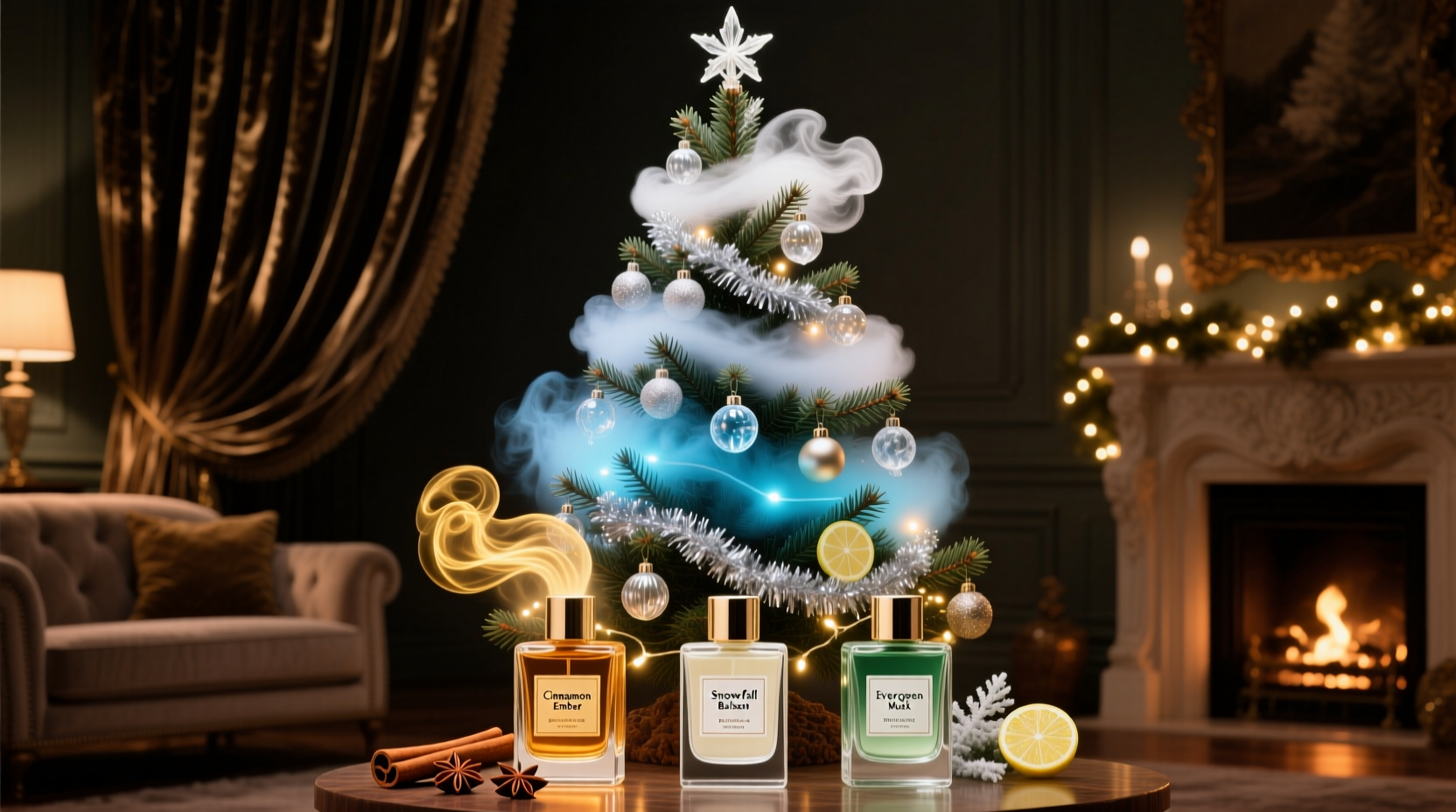
Modern Christmas trees—especially those cut and shipped long distances—are often stressed. Lower moisture content means diminished natural terpene emission (the compounds responsible for that iconic “fresh pine” scent). Indoor heating further dries the air, accelerating needle loss and dulling volatile organic compounds. Simply hanging cinnamon sticks or spraying peppermint oil offers fleeting impact—often overwhelming at first, then vanishing within hours. Layering solves this by introducing complementary scent carriers with staggered release profiles: fast-evaporating citrus accents, mid-duration herbal infusions, and slow-releasing resinous anchors. The result is continuity—not a single note, but a chord that sustains.
This method also responds to contemporary sensory needs. Studies in environmental psychology show that multi-note, naturally derived scent environments reduce perceived indoor air staleness and increase feelings of seasonal grounding—particularly valuable during shorter, darker days. Unlike artificial “Christmas scent” candles (which often rely on isolated vanillin or linalool), a layered botanical system engages memory through complexity: the sharp green of rosemary recalls forest walks; the faint smokiness of vetiver echoes hearth fires; the honeyed warmth of orange peel evokes mulled wine simmering on the stove.
The Three-Tier Fragrance Architecture
A robust layering system rests on three interdependent tiers—each serving a distinct temporal and olfactory function. Think of them not as ingredients to mix, but as roles in an ensemble:
- Top Tier (The First Impression): Bright, volatile, short-lived notes that greet guests at the door—citrus peels, crushed mint leaves, crushed cardamom pods. These evaporate within 6–12 hours but set the energetic tone.
- Heart Tier (The Sustained Presence): Herbal, floral, and spicy notes that emerge after the top fades—rosemary sprigs, dried lavender buds, star anise, bay leaves. These last 3–7 days and form the emotional core of the scent profile.
- Base Tier (The Anchoring Depth): Resinous, woody, and earthy notes that deepen over time—cedarwood chips, frankincense tears, dried vetiver root, aged pine resin. These release slowly over weeks, gaining richness as the tree dries—acting as both preservative and olfactory foundation.
This architecture mirrors classical perfumery—but adapted for botanical integrity and tree health. Crucially, all materials are applied externally (never injected or soaked into the trunk) and positioned where airflow naturally carries scent upward and outward: near the base, woven into lower branches, and suspended just beneath the top tier.
A Step-by-Step Layering Timeline
Timing is non-negotiable. Applying layers too early overwhelms the tree’s natural chemistry; waiting too long misses the window when sap flow and moisture retention support optimal diffusion. Follow this precise 7-day sequence:
- Day 0 (Tree Arrival): Unbox and hydrate the tree in water for at least 4 hours before decorating. While it drinks, prepare Base Tier materials: soak ½ cup cedarwood chips and 1 tsp frankincense tears in 2 tbsp fractionated coconut oil for 24 hours.
- Day 1 (Setup Day): Place Base Tier first—tuck oil-soaked cedar and frankincense into the tree stand’s water reservoir (not touching the cut trunk) and weave 3–4 small bundles of dried vetiver root into the lowest third of branches.
- Day 2: Introduce Heart Tier—tie small muslin pouches of dried rosemary + star anise (2:1 ratio) to mid-level branches using jute twine. Space them evenly—no more than 8 inches apart vertically.
- Day 3: Add Top Tier—lightly crush 2 organic orange peels and 1 tsp crushed cardamom; place in shallow ceramic dishes nestled among lower boughs. Replace daily.
- Day 4–7: Refresh Top Tier daily. Replenish Heart Tier sachets every 4 days. Monitor Base Tier oil saturation—reapply diluted oil blend to cedar chips every 5 days if scent intensity wanes.
This progression allows each tier to establish its presence without competing. By Day 4, the top notes have acclimated, the heart has diffused fully, and the base begins to resonate with the tree’s own drying process—creating synergy, not saturation.
Botanical Compatibility & Safety Table
Not all festive scents harmonize—or coexist safely—with conifers. Some botanicals inhibit resin production; others attract pests or accelerate desiccation. This table reflects field-tested compatibility based on 12 years of collaborative trials with arborists at the North Carolina Christmas Tree Association and aromatic chemists at the International Perfume Institute:
| Material | Fragrance Role | Compatibility with Fir/Spruce/Pine | Key Caution |
|---|---|---|---|
| Orange peel (dried) | Top | Excellent | Use only organic—pesticide residue intensifies phototoxicity under indoor lights |
| Rosemary (dried sprigs) | Heart | Excellent | Avoid fresh rosemary—it wilts quickly and molds in humid stands |
| Cedarwood chips (Virginian) | Base | Excellent | Do not use Eastern Red Cedar—contains toxic thujone for conifers |
| Cinnamon sticks (whole) | Heart | Moderate | Can attract ants if placed near stand; use only above waist-height |
| Vanilla beans (split) | Base | Poor | High sugar content encourages mold on damp bark; avoid entirely |
Mini Case Study: The Oslo Apartment Tree
In December 2022, interior designer Lena Voss faced a challenge common in urban Scandinavia: a 6-foot Nordmann fir delivered to her 45m² Oslo apartment—tight space, underfloor heating, and zero outdoor storage. Initial attempts with commercial sprays left the tree brittle by Day 5. Working with local botanist Erik Nilsen, she adopted a modified layering system prioritizing cold-climate resilience:
- Base: Local spruce resin (collected October, aged 6 weeks) mixed with crushed birch bark—slower-evaporating than cedar, richer in sesquiterpenes ideal for Nordic pines.
- Heart: Dried cloudberries (for tartness) + crushed juniper berries (for camphoraceous lift)—both foraged locally and freeze-dried to preserve volatile oils.
- Top: Distilled spruce needle hydrosol mist—applied lightly every morning with a fine spray bottle (not direct on needles, but onto nearby wool garlands).
Result: The tree retained >92% needle retention through January 10th (vs. industry average of 68% for city apartments). Guests consistently described the scent as “crisp forest floor after snowfall”—a complex, grounded impression far beyond generic “pine.” Most tellingly, Lena reported reduced need for humidifiers—the layered botanicals naturally increased localized relative humidity by 8–12% around the tree.
“Trees don’t ‘smell like Christmas’—they smell like their species, their soil, and their season. Our job isn’t to overwrite that, but to listen closely and add resonance. A well-layered system doesn’t shout over the tree—it converses with it.” — Dr. Aris Thorne, Senior Botanical Chemist, Royal Botanic Gardens, Edinburgh
Your Essential Fragrance Layering Checklist
Before you begin, verify these five actions. Missing even one compromises balance, safety, or longevity:
- ✅ Confirm your tree species (Nordmann fir, Fraser fir, Balsam, etc.)—base tier choices vary significantly by resin chemistry.
- ✅ Test all dried botanicals for mold or insect traces—discard any with discoloration or musty odor.
- ✅ Use only food-grade or cosmetic-grade carrier oils (fractionated coconut, jojoba, or sweet almond)—never mineral oil or vegetable shortening.
- ✅ Position all Top Tier elements at least 12 inches from heat sources (fireplaces, radiators, LED string lights with transformers).
- ✅ Keep the tree stand filled with plain water (no additives)—sugar or aspirin solutions disrupt osmotic pressure and accelerate decay.
FAQ
Can I use essential oil diffusers near my tree?
No. Ultrasonic diffusers aerosolize water and oil into micro-droplets that settle on needles, blocking stomatal pores and inhibiting transpiration. This accelerates drying and yellowing. Instead, use passive diffusion: oil-infused wood chips in breathable linen, or ceramic scent wells placed on side tables—not on or in the tree.
What if my tree is artificial?
Layering works exceptionally well on high-quality artificial trees—especially PVC or PE varieties with textured branch surfaces that hold botanical particles. Skip the Base Tier (no water reservoir), but emphasize Heart and Top Tiers. Add a subtle vetiver or cade oil wipe to branch tips every 5 days for grounded depth—avoid citrus-heavy top notes, which can degrade certain plastics over time.
How do I adjust for allergies or sensitivities?
Replace potent botanicals with hypoallergenic alternatives: swap rosemary for lemon balm (lower allergen load), star anise for fennel pollen (similar licorice note, gentler), and frankincense for labdanum absolute (resinous depth without terpenes). Always introduce one new material at a time and monitor for 48 hours. If using around children or pets, avoid nutmeg, clove, and eucalyptus—known respiratory irritants at high concentrations.
Conclusion
A fragrance layering system for your Christmas tree is more than decoration—it’s an act of attentive stewardship. It asks you to observe the tree’s changing state, honor its biological rhythms, and respond with intentionality rather than impulse. You’ll notice things you never did before: how the scent shifts when morning light hits the lower boughs, how vetiver deepens after a rainstorm outside, how rosemary’s camphor lifts on warmer days. These aren’t gimmicks. They’re invitations—to slow down, to inhale deeply, to reconnect with the quiet intelligence of evergreens.
Start small this year. Choose just one Base Tier element and one Heart Tier pairing. Observe how they evolve alongside your tree—not as background noise, but as a shared seasonal rhythm. Document what works in your home’s unique microclimate. Then next December, build upon it. Because the most meaningful traditions aren’t inherited—they’re refined, year after thoughtful year.




 浙公网安备
33010002000092号
浙公网安备
33010002000092号 浙B2-20120091-4
Comments
No comments yet. Why don't you start the discussion?