
A well-lit Christmas tree can transform a room, evoking warmth, nostalgia, and festive cheer. While traditional white or multicolored strands are timeless, a growing number of decorators are embracing intentional lighting design—particularly the gradient effect. By transitioning from one hue to another in a smooth progression across your tree, you can achieve a sophisticated, gallery-worthy centerpiece that stands out without overwhelming the space.
Creating a gradient isn’t about randomness; it’s about precision, planning, and understanding how light interacts with color and depth. Whether you’re using warm tones like red and gold, cool hues like blue and silver, or a full rainbow spectrum, a thoughtful gradient adds dimension and visual rhythm. This guide walks through every step—from selecting compatible bulbs to executing the wrap—with expert-backed techniques that ensure consistent, radiant results.
Selecting the Right Lights and Colors
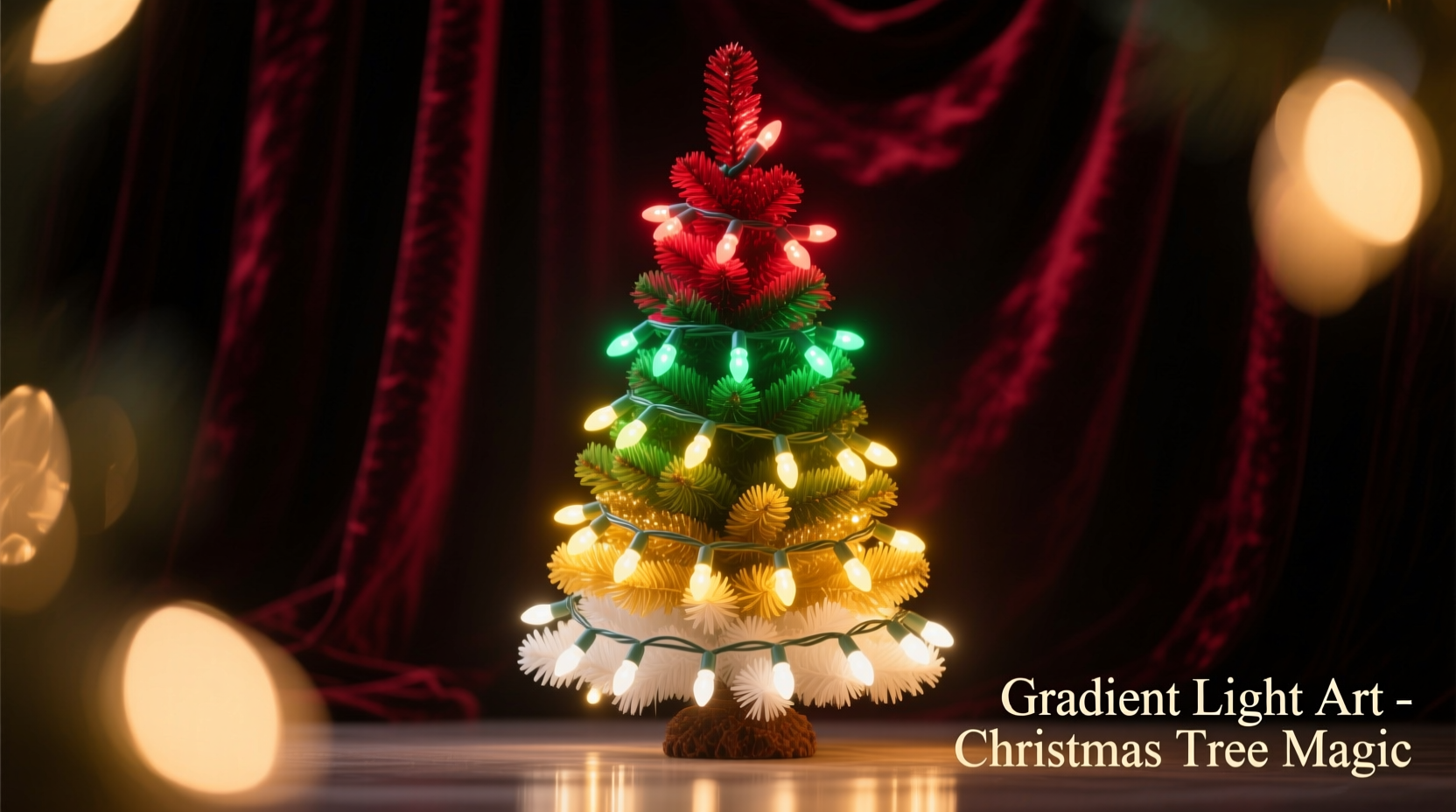
The foundation of any successful gradient lies in the choice of lights. Not all LED or incandescent strings behave the same under different conditions. For gradients, consistency in brightness, bulb shape, and color temperature is essential. Mismatched intensities will disrupt the flow, making some sections appear brighter or washed out.
Opt for LED string lights with uniform color output. Look for terms like “true color” or “consistent hue” on packaging. Avoid bargain strands where one red might lean orange while another appears pink. If possible, test several sets side by side before purchasing in bulk.
When choosing colors, decide whether you want a monochromatic gradient (e.g., light pink to deep burgundy) or a complementary transition (e.g., gold to green). Monochromatic schemes offer subtlety and elegance, ideal for formal or minimalist decor. Complementary gradients provide drama and vibrancy, perfect for family rooms or seasonal displays.
Recommended Color Transitions
- Winter Frost: White → Light Blue → Icy Silver
- Rustic Holiday: Warm White → Amber → Deep Red
- Festive Rainbow: Red → Orange → Yellow → Green → Blue → Purple
- Luxe Elegance: Champagne Gold → Rose Gold → Copper
- Nordic Cool: Soft White → Pale Blue → Navy
Each sequence should span no more than five to seven distinct colors to maintain coherence. Too many shifts fracture the eye’s movement, undermining the illusion of a seamless blend.
Planning Your Gradient Layout
Before touching a single strand, map out your gradient direction. Will the transition move vertically (bottom to top), horizontally (inside to outside), or spirally (from base to peak)? Each approach creates a different mood.
Vertical gradients suggest growth and uplift—ideal for emphasizing height in tall trees. Horizontal gradients highlight depth, drawing attention into the core of the tree and creating a glowing center. Spiral gradients mimic natural motion, guiding the viewer’s gaze around the tree in a continuous loop.
To plan effectively, sketch a rough outline of your tree and assign color zones. Divide the tree into thirds or quarters depending on how many colors you’re using. For example, with four colors in a vertical gradient:
- Bottom third: Deep red
- Middle third: Amber
- Top third: Warm white
If layering horizontally, place cooler or lighter tones toward the interior branches and warmer or darker ones on the outer tips to simulate depth and luminosity.
“Light is directional, even on a tree. A well-planned gradient accounts for shadow lines and viewing angles.” — Daniel Reyes, Lighting Designer & Holiday Display Consultant
Step-by-Step Installation Guide
Execution determines success. Even the best plan fails without careful application. Follow this timeline to install your gradient lights with precision.
Step 1: Prepare the Tree
Ensure your tree is fully fluffed and stable. Work on a turntable if available—it makes rotation easier during installation. Remove any pre-lit strands if replacing them.
Step 2: Test All Lights
Plug in each string to confirm functionality. Replace any flickering or dead bulbs. Label each set by color and position (e.g., “Red – Base,” “White – Top”).
Step 3: Start at the Core (for horizontal gradients)
Begin with the innermost, darkest color. Feed the first strand from the central pole outward along a primary branch. Wrap slowly, maintaining 4–6 inches between loops. Use twist ties or floral wire to secure strands discreetly.
Step 4: Layer Outward by Hue
Add the next color slightly farther out on adjacent branches. Overlap minimally—no more than an inch—to avoid harsh boundaries. Maintain consistent spacing throughout.
Step 5: Spiral Method (for vertical or spiral gradients)
Start at the bottom with the deepest shade. Wrap upward in a slow spiral, switching to the next color every 12–18 inches. Do not mix colors on the same level. Allow one color to dominate each section before introducing the next.
Step 6: Blend at Transition Zones
In areas where two colors meet, interlace a few bulbs from each set to soften the shift. For example, after finishing a row of amber, add a partial row of warm white interspersed with remaining amber ends. This creates optical blending when viewed from a distance.
Step 7: Final Inspection
Turn off room lights and power on the tree. Walk around it slowly. Identify dark spots, overcrowded areas, or abrupt color changes. Adjust spacing or reposition strands as needed.
Do’s and Don’ts of Gradient Lighting
| Do | Don’t |
|---|---|
| Use lights with the same bulb count per string for consistency | Mix warm and cool white LEDs in the same gradient unless intentionally contrasting |
| Plan transitions based on viewing angle and room layout | Place jarring color contrasts (e.g., red next to green) without intermediate tones |
| Secure wires with green or neutral zip ties to minimize visibility | Overload branches, which causes sagging and uneven light distribution |
| Test combinations on a small section before full application | Rush installation—take time to rotate and evaluate as you go |
Real Example: The Downtown Gallery Tree
In 2022, the Evergreen Art Gallery in Portland commissioned a 12-foot Fraser fir for their atrium. Their goal was a modern take on holiday lighting—something elegant enough for patrons yet festive for visitors. The design team chose a vertical gradient: starting with deep forest green at the base, transitioning through emerald and lime, then fading into soft white at the crown.
They used commercial-grade LED strings with tight color tolerances, ensuring each green tone remained distinct yet harmonious. Lights were installed in three phases over two days, with daily evaluations under evening lighting conditions. Staff reported that guests consistently paused near the tree, often commenting on its “sunrise-like glow.”
The key to their success? Patience in blending. Between each color zone, they overlapped three bulbs from the incoming strand with three from the outgoing one. From six feet away, the shift was imperceptible—a true gradient rather than a series of bands.
Tips for Maintaining the Effect Throughout the Season
Once installed, your gradient should remain flawless for weeks. But environmental factors like heat, dust, and accidental tugs can degrade performance.
- Check connections weekly. Loose plugs cause dimming or blackouts.
- Dust lightly with a microfiber cloth or soft duster. Buildup scatters light and mutes color.
- Avoid placing the tree near heating vents, which can warp plastic bulbs and reduce LED lifespan.
- Use a surge protector to prevent voltage spikes from damaging sensitive electronics.
If using timers, set them to turn on just before dusk. Extended operation isn’t necessary and may lead to premature wear.
FAQ
Can I create a gradient with pre-lit trees?
It’s challenging but possible. Most pre-lit trees come with fixed white or multicolor lights. However, you can enhance them by adding secondary strands in a gradient pattern over the existing lights. Choose warm or cool tones that complement the base lighting, and focus on outer branches to create layered depth.
What if my lights don’t match perfectly?
Slight variations happen. To minimize mismatch, group similar shades together in concentrated zones rather than spreading them thinly. You can also use sheer fabric or frosted sleeves over bulbs to diffuse differences. Alternatively, embrace the variation as part of a rustic aesthetic.
Are smart lights suitable for gradients?
Yes, especially addressable RGB LED strips. These allow individual bulb control, enabling dynamic gradients that shift over time. However, they require controllers and apps, increasing complexity. For static displays, physical colored strings often deliver richer, more reliable color than digital approximations.
Checklist: Creating Your Gradient-Lit Tree
- Choose a color scheme (monochromatic or complementary)
- Select high-quality, consistent LED strings
- Decide on gradient direction (vertical, horizontal, spiral)
- Sketch a layout with color zones
- Label each light set by position and hue
- Fluff and stabilize the tree
- Test all strands before installation
- Begin wiring from the designated start point (base, core, or trunk)
- Wrap with consistent spacing (4–6 inches apart)
- Blend transition zones with overlapping bulbs
- Inspect under low ambient light
- Make adjustments for gaps or harsh edges
- Schedule weekly maintenance checks
Conclusion
A gradient-effect Christmas tree is more than decoration—it’s a statement of intentionality and artistry. By moving beyond random illumination and embracing color theory, spacing discipline, and strategic layering, you elevate a seasonal tradition into something memorable and visually compelling.
The effort pays off in quiet moments: when light filters through branches in a seamless cascade, or when someone pauses to admire the way colors breathe into one another. These details transform a house into a home, and a holiday into an experience.




 浙公网安备
33010002000092号
浙公网安备
33010002000092号 浙B2-20120091-4
Comments
No comments yet. Why don't you start the discussion?