
A Christmas tree is more than just a centerpiece—it's a canvas for storytelling through light and color. While traditional white or multicolored lights have long defined holiday decor, a new trend is transforming living rooms across the country: the gradient lighting effect. By carefully layering LED colors from base to tip, you can achieve a seamless transition that mimics sunrise, ocean depths, or winter twilight. This technique elevates your tree from festive to artistic, creating depth, mood, and visual intrigue.
The key lies not in randomness, but in intentional design. Unlike scattering different colored bulbs haphazardly, a gradient follows a deliberate progression—each hue flowing naturally into the next. When executed well, it draws the eye upward, adds dimension to even small trees, and becomes a conversation starter. With smart LEDs now widely available and affordable, achieving this look is easier than ever, even for beginners.
Understanding Gradient Lighting and Its Visual Impact
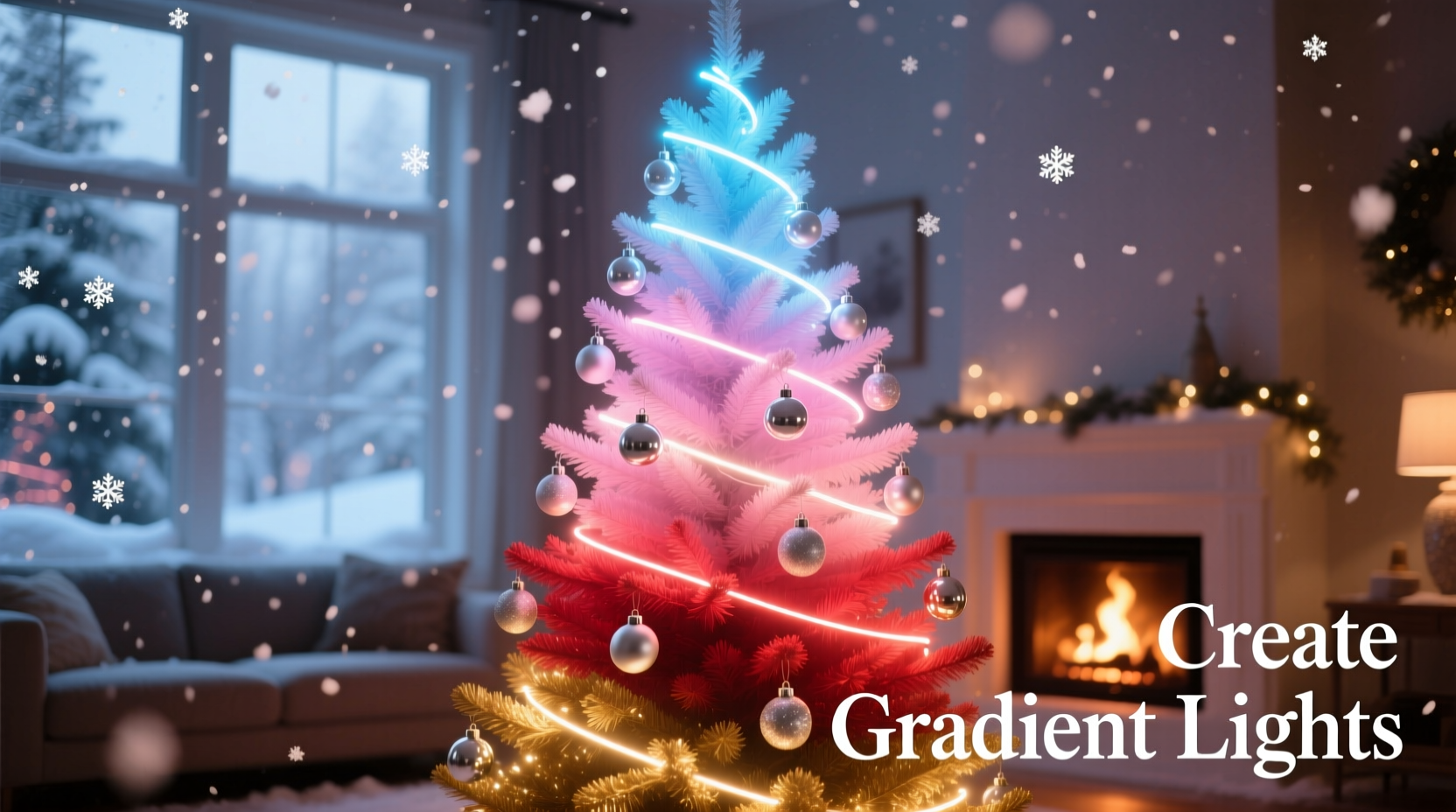
Gradient lighting refers to a smooth transition between two or more colors across a surface or object. In the context of a Christmas tree, this means arranging LED strings so that one dominant color appears at the bottom, gradually blending into another (or several others) toward the top. The result is a luminous ombre effect that enhances the tree’s natural conical shape.
This technique works because of how human vision perceives depth and temperature. Warm tones like red, orange, and amber feel heavier and closer, making them ideal for the lower branches. Cool tones such as blue, purple, and soft white appear lighter and more distant, drawing the gaze upward. A well-designed gradient leverages these perceptual cues to make the tree seem taller and more dynamic.
“Lighting gradients tap into basic principles of visual harmony. They guide attention, evoke emotion, and turn decoration into experience.” — Daniel Reeves, Lighting Designer & Architectural Consultant
Common gradient themes include:
- Sunset: Deep red → orange → golden yellow → soft white
- Ocean Depths: Turquoise → deep blue → violet → indigo
- Winter Forest: Emerald green → icy blue → silver-white
- Twilight: Magenta → royal purple → navy → cool white
Each theme sets a distinct mood—romantic, serene, mystical, or wintry—and can be matched to your room’s decor or personal aesthetic.
Choosing the Right LED Lights for Your Gradient Effect
Not all LED strings are suitable for gradient designs. To achieve a smooth, professional look, consider the following features when selecting your lights:
Color Consistency and Saturation
Opt for high-quality LEDs with uniform color output. Cheap strings often have slight variations in hue or brightness between bulbs, which breaks the illusion of a continuous gradient. Look for brands that specify “consistent color temperature” or “precision-tuned diodes.”
Warm vs. Cool White Options
If including white in your gradient, choose either warm white (2700K–3000K), neutral white (4000K), or cool white (5000K+). For example, pairing warm white with red enhances a cozy sunset effect, while cool white complements blues and purples in an arctic theme.
Smart vs. Static LEDs
You can create gradients with both static (single-color) and smart (color-changing) LEDs. However, each has trade-offs:
| Type | Pros | Cons |
|---|---|---|
| Static Single-Color Strings | Precise control over placement; consistent brightness; no app needed | Requires multiple strands; less flexible once installed |
| Smart RGB LED Strings | One strand can display multiple colors; programmable via app; reusable for different effects | Higher upfront cost; potential syncing issues; may require Wi-Fi or Bluetooth |
For maximum control and reliability during the season, many professionals recommend using individual monochromatic LED strands in your chosen gradient palette. Smart lights are excellent for experimentation, but static strings deliver more predictable results for permanent installations.
Step-by-Step Guide to Installing Your Gradient Lights
Creating a gradient isn’t just about the lights—you need a strategic approach to placement. Follow this timeline-based method for best results.
- Plan Your Color Sequence (Day 1)
Decide on your theme and select 4–6 colors. Assign each color to a zone: bottom third, middle third, upper third, and crown. Sketch a simple diagram showing where each color will go. - Test Light Output (Day 1)
Plug in each string individually to ensure proper function and check for flickering or dim spots. Label each strand with its intended position (e.g., “Base – Red”). - Start Wiring from the Bottom (Day 2)
Begin with the lowest color in your gradient. Wrap the first strand around the bottom third of the tree, starting near the trunk and spiraling outward. Keep spacing even—about 4–6 inches between loops. Avoid clustering lights on one side. - Layer Gradually Upward
Move to the next color. Overlap the top edge of the previous strand slightly (1–2 inches) to prevent gaps. Continue wrapping upward, maintaining consistent spiral density. If using warm-to-cool gradients, place warmer hues low and cooler ones high. - Add Transition Zones
For smoother blending, insert a transitional color between major shifts. For example, if moving from red to blue, include purple in the middle section. Alternatively, mix short sections of both colors in overlapping areas to simulate a blend. - Finish with the Crown
Use the lightest or most ethereal color (like soft white or pale blue) at the very top. Consider adding a star or angel lit internally with matching LEDs to complete the effect. - Final Evaluation (Next Morning)
Turn off room lights and view your tree in darkness. Walk around it to check for dark spots or abrupt changes. Adjust by repositioning strands or adding accent mini-lights where needed.
Pro Tips for a Seamless, Professional Finish
Even with careful planning, small details can make or break the illusion of a true gradient. These advanced techniques help refine your display:
- Mix bulb types sparingly. Combining warm white fairy lights with saturated RGB LEDs can disrupt the flow. Stick to one style per tree unless intentionally layering textures.
- Use sheer netting or tulle lightly draped over the tree to diffuse harsh contrasts between colors. This softens edges and creates a dreamy glow.
- Balance density. More lights on lower branches mimic how natural light pools at ground level, enhancing realism.
- Control power sources discreetly. Route cords down the back of the tree and use cord covers or decorative sleeves. Multiple plug packs should be grouped behind the tree or in a nearby cabinet.
“A successful gradient feels inevitable—not designed, but discovered. It should look like the tree was always meant to glow that way.” — Lena Torres, Holiday Display Artist
Real Example: Transforming a Standard Tree into a Sunset Spectacle
Consider Sarah from Portland, who wanted to refresh her 7-foot pre-lit artificial tree. Each year, she used the same warm white lights, feeling they lacked excitement. Inspired by coastal sunsets over the Pacific, she decided to try a gradient using four separate LED strands: crimson, tangerine, golden yellow, and warm white.
She began by unplugging her old lights and removing excess ornaments that blocked visibility. She then wrapped the crimson strand tightly around the lowest third, focusing on inner branches to create a glowing core. Next came tangerine, layered slightly higher with wider spacing. Golden yellow followed in the upper midsection, and finally, warm white crowned the top and outermost tips.
The transformation was immediate. Guests described the tree as “a flame frozen in pine,” with light appearing to rise organically. By avoiding primary colors and choosing nuanced shades, Sarah achieved a subtle yet powerful effect. She later added mirrored balls and gold-toned ornaments to reflect and amplify the glow without competing with it.
Essential Checklist Before You Begin
Before purchasing supplies or unwrapping lights, verify you have everything needed:
- ✅ 4–6 monochromatic LED strings (or one programmable smart string)
- ✅ Extension cords rated for indoor use
- ✅ Zip ties or floral wire for securing lights
- ✅ Ladder or step stool for reaching upper branches
- ✅ Labels or masking tape to mark each strand
- ✅ Spare bulbs or backup string in case of failure
- ✅ Timer or smart plug for automated operation
Double-check compatibility if using smart lights—ensure your phone supports the required app and that your Wi-Fi reaches the tree location.
Frequently Asked Questions
Can I create a gradient with only one string of lights?
Yes—if you use a programmable smart LED string that supports segment control. Apps like Philips Hue, Govee, or Twinkly allow you to assign specific colors to different sections of a single strand. This eliminates clutter but requires precise setup and may limit total brightness compared to multiple physical strings.
How do I prevent colors from looking muddy where they meet?
Muddy transitions usually occur when adjacent colors are too dissimilar or poorly overlapped. To avoid this, choose hues that share undertones (e.g., red-violet instead of red-green) and physically overlap strands by 1–2 inches. You can also insert a neutral buffer color (like soft pink or lavender) between strong contrasts.
Will this work on a small tabletop tree?
Absolutely. Gradient effects scale beautifully. For smaller trees, reduce the number of colors to three (base, middle, top) and use micro-LEDs for finer detail. The compact size often makes the gradient more striking due to concentrated light.
Conclusion: Illuminate with Intention
A gradient lighting effect transforms your Christmas tree from a seasonal decoration into a piece of illuminated art. It reflects thoughtfulness, creativity, and a modern sensibility that stands out in any home. Whether you’re aiming for the warmth of a desert dusk or the mystery of a northern aurora, the principles remain the same: plan with purpose, layer with care, and test with patience.
This holiday season, move beyond tradition and experiment with color as a tool for emotion and atmosphere. With readily available LED technology and a clear strategy, anyone can master this elegant technique. Your tree doesn’t just shine—it tells a story.




 浙公网安备
33010002000092号
浙公网安备
33010002000092号 浙B2-20120091-4
Comments
No comments yet. Why don't you start the discussion?