
A woven willow Christmas tree brings natural charm and rustic elegance to holiday decor. Unlike traditional evergreen trees, it offers a minimalist, sustainable alternative—especially when enhanced with the right lighting. The secret to elevating its visual impact lies in integrating a hidden light source that casts a soft, diffused glow from within. This method avoids visible wires or bulky fixtures, preserving the tree’s organic silhouette while transforming it into a luminous centerpiece.
Creating an internal illumination system requires thoughtful planning, the right materials, and attention to safety. When done well, the result is a warm, ethereal radiance that appears to emanate from the willow itself. Whether your tree stands in a living room corner, adorns a dining table, or serves as a festive entryway accent, concealed lighting can turn it into a captivating focal point.
Selecting the Right Lighting Technology
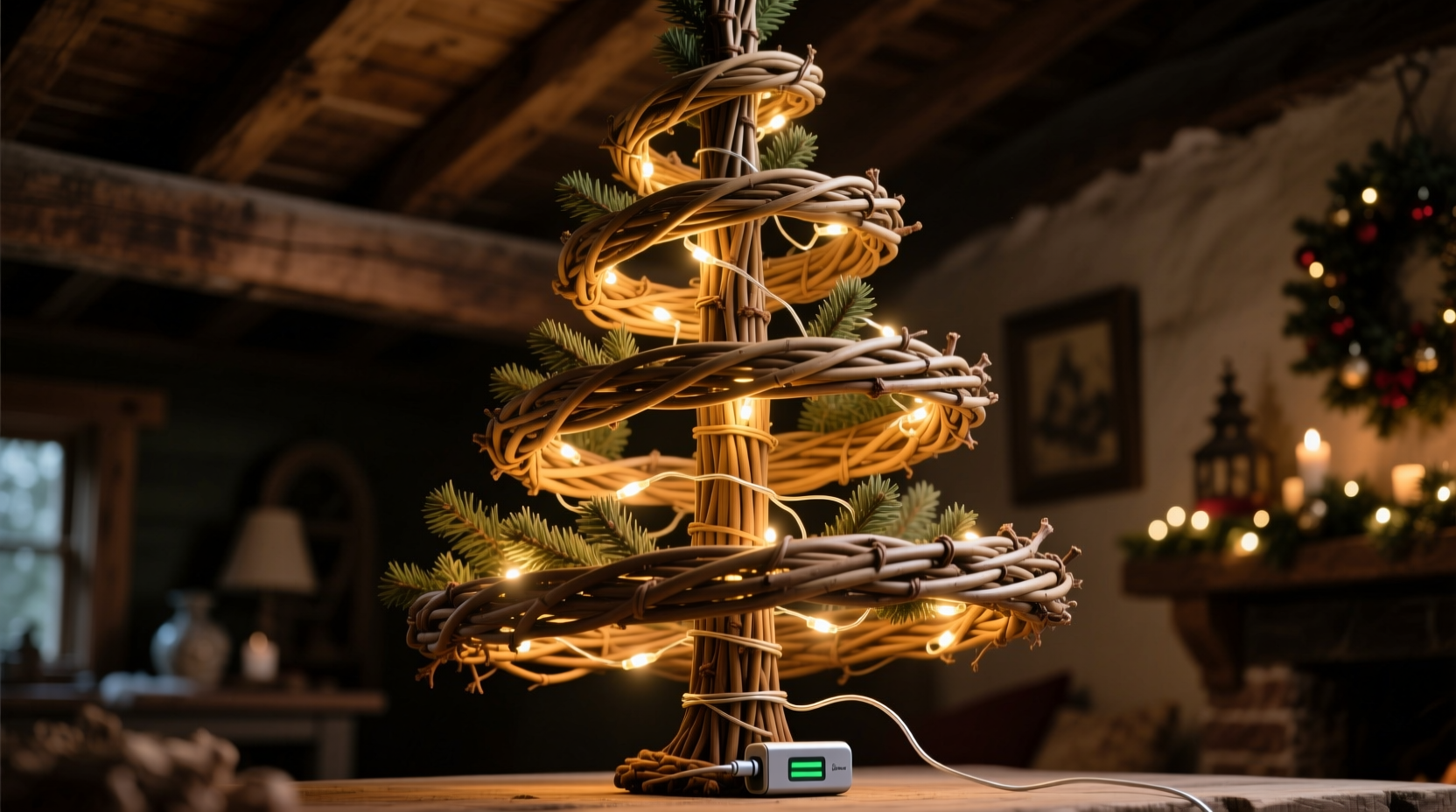
The first step in designing a hidden light source is choosing the appropriate lighting technology. Not all lights are suitable for integration into a woven structure. The ideal option must be flexible, low-heat, energy-efficient, and capable of producing a soft, even glow.
- LED fairy lights: These are the most popular choice due to their minimal heat output, low power consumption, and availability in warm white tones that mimic candlelight.
- Battery-powered string lights: Offer complete wire-free freedom, making them ideal for placement inside the tree without needing nearby outlets.
- Remote-controlled LED strips: Thin, adhesive-backed strips can be carefully coiled through the branches for more uniform brightness.
- Fiber optic strands: Less common but effective for creating a starry, twinkling effect without electrical components inside the weave.
Avoid incandescent bulbs or high-wattage LEDs, as they generate excess heat that could dry out the willow over time or pose a fire risk, especially in enclosed spaces.
Designing the Internal Light Layout
Placement is critical when hiding lights within a woven structure. The goal is even diffusion—not hotspots or visible bulbs peering through gaps. A strategic layout ensures the light filters naturally through the willow weave, mimicking the effect of embers glowing inside a lantern.
Begin by assessing the tree’s construction. Most woven willow trees are built around a central support pole or frame, with horizontal tiers or spiraling arms extending outward. Use this structure to guide your light distribution.
- Start at the base: Position the light source near the bottom center, where shadows tend to gather. This creates upward illumination that fills the entire form.
- Spiral wiring technique: Wind string lights vertically in a loose spiral from bottom to top, tucking them between layers of weave. Maintain consistent spacing (about 6–8 inches apart) to prevent clustering.
- Layered distribution: For fuller trees, use two sets of lights—one focused on the inner core and another along the outer perimeter—to achieve depth and dimension.
- Conceal connections: Hide battery packs or plug housings inside the hollow base or behind thicker clusters of weave.
If using LED strips, cut them into short segments (6–12 inches) and place them at key junctions where multiple branches converge. This avoids long, visible runs and allows for targeted brightness.
Safety and Material Compatibility
Dried willow is flammable, especially when exposed to prolonged heat. While modern LED lights run cool, improper installation can still pose risks. Always prioritize safety over aesthetics.
| Do’s | Don’ts |
|---|---|
| Use only UL-listed or CE-certified lighting products | Never use damaged or frayed wires |
| Test lights for 30+ minutes before final installation | Don’t leave non-remote lights unattended for extended periods |
| Install a timer to limit daily operation to 8–12 hours | Avoid placing lights directly against dry bark |
| Choose battery-operated options when possible | Don’t overload circuits with multiple connected strings |
Additionally, consider environmental factors. If the tree is placed in a sunlit area, UV exposure can further dry the willow. Limit direct sunlight and avoid positioning near heating vents.
“Integrating light into natural materials demands respect for both physics and craftsmanship. The safest installations are those where function disappears into form.” — Lena Petrov, Sustainable Lighting Designer
Step-by-Step Installation Guide
Follow this detailed process to embed a hidden light source seamlessly into your willow tree:
- Inspect the tree: Check for loose weaves, weak joints, or sharp protrusions. Reinforce any fragile areas with natural jute twine.
- Measure and test lights: Lay out your chosen lights alongside the tree to estimate coverage. Plug them in or activate batteries to confirm color and brightness.
- Begin at the base: Insert the first bulb or strip end into the central cavity. If the tree has a hollow trunk, feed the wire down through it.
- Weave upward: Gently tuck each bulb between overlapping willow rods, pushing them slightly inward so only the glow is visible. Avoid forcing wires, which may crack brittle stems.
- Secure discreetly: Use small clips made from floral wire or twist ties to anchor lights at branch intersections. Paint them brown to blend in.
- Hide the power source: Place battery packs in a fabric pouch tucked beneath the tree’s base or use a decorative basket to conceal cords.
- Final check: Turn on the lights in a darkened room. Walk around the tree to identify bright spots or dark zones. Adjust as needed.
For larger trees (over 5 feet), work in sections and enlist a helper to hold branches open during installation. Patience pays off—rushing can lead to broken twigs or tangled wires.
Enhancing Ambiance with Diffusion Techniques
Even the best-placed lights can appear harsh if not properly diffused. Willow’s open weave means some bulbs may remain partially visible. Softening the light ensures a seamless, magical glow.
- Add rice paper sleeves: Slide small tubes of translucent rice paper over individual bulbs to scatter light evenly.
- Wrap lights in muslin: Loosely encase string lights in thin, white cotton fabric before weaving. This creates a gentle halo effect.
- Incorporate reflective elements: Hang clear glass beads or mirrored ornaments inside the tree to bounce light deeper into shadowed areas.
- Use dimmers or remotes: Install smart battery packs with adjustable brightness to fine-tune intensity based on room lighting.
For a flickering candle-like effect, select fairy lights with a “warm twinkle” mode. These subtly pulse, adding movement and lifelike warmth to the static structure.
Real-World Example: A Dining Table Centerpiece Transformation
Sophie Reynolds, a home stylist in Vermont, used a 3-foot woven willow tree as a centerpiece for her holiday dinner party. Initially, she draped lights over the exterior, but the wires were obvious and the effect felt flat.
She redesigned the setup using 20-foot battery-powered warm-white fairy lights. Starting at the base, she spiraled the strand inward, tucking each bulb behind intersecting rods. She wrapped the entire length in sheer organza before insertion, softening the points of light.
The battery pack was placed inside a faux-log planter that served as the tree’s base. After testing for heat and visibility, she added frosted glass orbs hung just below the mid-tier to catch and reflect upward light.
Guests described the tree as “looking like it grew its own light.” The ambient glow illuminated place settings without overpowering conversation—a testament to thoughtful, hidden illumination.
FAQ
Can I leave the lights on overnight?
It’s safe to do so only if using LED lights with a built-in timer or auto-shutoff feature. Even then, it’s best practice to turn them off when leaving the house or sleeping. Battery-powered systems are safer than plug-in models for unattended use.
What if my tree doesn’t have a hollow center?
No problem. Focus on weaving lights horizontally through the interior layers, starting from the backside. Use shorter strands and distribute them across multiple levels rather than relying on vertical runs.
Are solar-powered lights suitable?
Generally not ideal. Solar lights require daytime charging and often lack sufficient brightness or duration for evening ambiance. They also come with external panels that disrupt the aesthetic. Stick to battery or USB-rechargeable options for reliability.
Checklist: Hidden Lighting Installation
- ☐ Choose warm-white, low-heat LED lights (battery-powered preferred)
- ☐ Test lights for heat and brightness before installation
- ☐ Plan a spiral or layered path through the tree’s interior
- ☐ Prepare small clips or ties to secure wires discreetly
- ☐ Conceal battery pack or plug in a hidden compartment
- ☐ Diffuse light with fabric, paper, or reflective ornaments
- ☐ Inspect for visible bulbs and adjust placement as needed
- ☐ Set a timer for 6–10 hours of nightly use
Conclusion
A woven willow Christmas tree is more than a decoration—it’s a canvas for creative expression. By embedding a hidden light source, you transform it into a vessel of warmth and quiet beauty. The ambient glow invites stillness, reflection, and connection, embodying the spirit of the season without spectacle.
This project blends craft and technology, demanding care and precision. But the reward—a tree that seems to breathe light—is worth every deliberate step. Whether you’re illuminating a personal space or inspiring guests at a gathering, the subtle radiance of a well-lit willow tree lingers in memory far longer than any flashy display.




 浙公网安备
33010002000092号
浙公网安备
33010002000092号 浙B2-20120091-4
Comments
No comments yet. Why don't you start the discussion?