
There’s something undeniably magical about an object that appears to float in midair—defying gravity, capturing attention, and sparking curiosity. Whether you're designing a holiday display, enhancing a retail window, or creating a centerpiece for a themed event, the levitating ornament illusion is a powerful visual trick that combines science and artistry. With the right materials and careful execution, this effect can be achieved using nothing more than invisible thread and strategically placed magnets. This guide walks you through every detail: from selecting components to troubleshooting common pitfalls, ensuring your floating display looks seamless and enchanting.
Understanding the Science Behind the Illusion
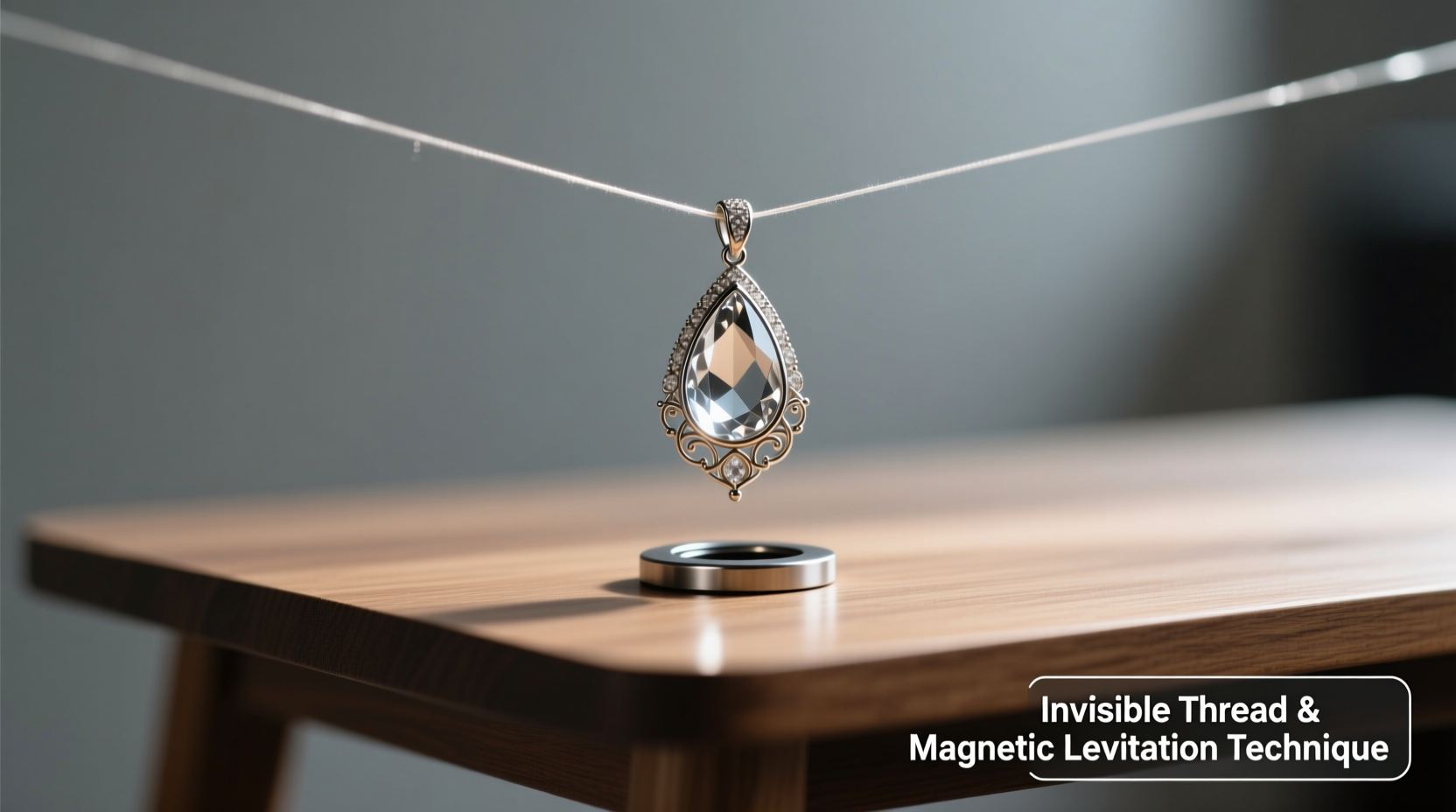
The levitating ornament illusion relies on two key principles: visual concealment and magnetic suspension. Invisible thread—typically made of nylon monofilament—blends into the background when viewed from a distance, especially under controlled lighting. Meanwhile, small but strong magnets counteract gravity by providing upward force or lateral stability, depending on how they are arranged.
This isn’t true levitation in the scientific sense—there’s no anti-gravity at play—but rather a carefully crafted deception. The brain expects objects to rest on surfaces or be visibly supported. When neither condition is met, perception fills in the gap, concluding that the object must be floating. Your goal as the creator is to eliminate any clues that break this illusion.
“Optical illusions work best when every element supports the narrative of impossibility. Even a single visible support thread can destroy the magic.” — Dr. Lena Torres, Visual Perception Researcher, MIT Media Lab
To maintain the effect, viewers should observe the ornament from designated angles. Background choice, lighting direction, and mounting precision all contribute to whether the trick succeeds. Mastery comes not just from assembling parts, but from understanding sightlines and material behavior.
Materials and Setup: What You’ll Need
Before diving into construction, gather the necessary supplies. Precision in selection directly impacts the realism of the final result.
| Material | Purpose | Recommended Specs |
|---|---|---|
| Invisible Thread (Monofilament) | Primary suspension line | 5–10 lb test strength, clear finish, 0.25mm thickness |
| Neodymium Magnets (Rare Earth) | Stabilization or lift assistance | Disk or ring shape, N35 grade or higher, 1/4” to 1/2” diameter |
| Ornament or Object | The floating item | Lightweight (under 1 oz), balanced center of mass |
| Anchor Point (Ceiling Hook, Frame, etc.) | Secure overhead attachment | Paint-matched hook or discreet bracket |
| Tape, Glue, or Adhesive Putty | Attachment without visibility | Clear-drying epoxy or museum putty |
| Scissors & Tweezers | Precise handling | Fine-tip tools for micro-adjustments |
Not all threads are equally “invisible.” Fishing line may seem ideal due to availability, but thicker gauges catch light and reflect glare. Opt for high-clarity monofilament designed for display use. Similarly, avoid ceramic magnets—they lack the strength-to-size ratio needed for subtle support.
Step-by-Step Guide to Building the Levitating Display
Follow this sequence to assemble a convincing floating ornament. Patience and precision matter more than speed.
- Choose the Viewing Angle: Decide where observers will stand. Mount everything relative to this line of sight. A single-angle display is far easier than 360-degree visibility.
- Prepare the Ornament: If your ornament doesn’t have a natural attachment point, glue a tiny loop or eyelet to its top. Use clear-drying adhesive and let it cure fully. Alternatively, embed a small magnet inside if hollow.
- Cut and Attach the Thread: Cut a length of monofilament 1.5x longer than the drop distance. Tie one end securely to the ornament’s anchor point. Double-knot and seal with a micro-drop of clear nail polish to prevent unraveling.
- Install the Overhead Anchor: Install a small screw hook into the ceiling or frame directly above the desired float position. Match the hook color to the ceiling if possible. For temporary setups, use a sturdy picture-hanging wire stretched taut between two wall anchors.
- Suspend the Ornament: Drape the free end of the thread over the anchor and gently lower the ornament. Adjust tension so it hangs straight but isn’t pulled tight enough to distort shape.
- Add Magnetic Stabilization (Optional): Place a neodymium magnet either above (in the ceiling) or below (on a base) to repel or attract a corresponding magnet on the ornament. This reduces sway and gives the impression of self-support.
- Conceal the Thread Path: Along its route, secure the thread lightly to the surface using clear tape dots every 6–8 inches. Avoid sagging. If near edges, route behind moldings or artwork frames.
- Test and Refine: View from multiple distances and angles. Slight tilts or reflections can ruin the illusion. Rotate the ornament until its most symmetrical face is forward. Dim ambient light slightly to reduce glare on the thread.
For heavier ornaments (up to 2 oz), consider doubling the thread or using braided micro-line, which has less stretch. However, always retest invisibility—doubled lines increase visibility risk.
Tips for Maximizing Realism and Durability
A successful illusion lasts beyond the first glance. These strategies ensure longevity and viewer immersion.
- Use dark backgrounds whenever possible. Clear thread becomes nearly invisible against black or deep-colored walls or ceilings.
- Avoid air currents. HVAC vents, fans, or open windows cause movement that draws attention to the thread. Seal drafts or add dampening weights inside the ornament.
- Illuminate from below or the side. Top-down lighting casts shadows along the thread, making it more visible. Upward spotlights enhance the “floating” look and hide suspension points in shadow.
- Limit interaction. While tempting, letting guests touch the display often leads to tangled threads or broken attachments. Add a small sign: “Please admire—do not touch.”
- Check monthly for wear. Monofilament weakens over time due to UV exposure and tension fatigue. Replace every 3–6 months for permanent installations.
Mini Case Study: The Floating Snowflake Display
A boutique gift shop in Burlington, Vermont sought to create a winter wonderland effect in their front window. Their goal: make snowflake ornaments appear to drift magically through the air without supports.
The team used 12 laser-cut acrylic snowflakes (0.7 oz each), suspended with 7 lb-test monofilament from a painted metal grid mounted to the ceiling. Each thread was secured with a micro-knot and sealed with UV-resistant glue. To minimize sway from foot traffic vibrations, a small neodymium magnet was embedded in the top of each snowflake, with a matching magnet recessed into the ceiling panel above—set to repel slightly.
Backlit with cool-white LED strips from beneath, the snowflakes cast delicate shadows while remaining visually weightless. The display ran for six weeks during the holiday season with only one adjustment needed after a delivery truck caused minor shaking.
Customer feedback was overwhelmingly positive. “People stopped in the street to watch,” said manager Clara Nguyen. “Many asked if we used drones or holograms. That’s when I knew it worked.”
Common Mistakes and How to Avoid Them
Even experienced crafters encounter setbacks. Here are frequent errors and their solutions:
| Mistake | Why It Happens | Solution |
|---|---|---|
| Thread is visible | Poor lighting angle or thick gauge | Switch to thinner thread; use indirect backlighting |
| Ornament spins or swings | Airflow or unbalanced weight | Add counterweight or magnetic stabilization |
| Thread breaks unexpectedly | UV degradation or knot stress | Inspect regularly; reinforce knots with sealant |
| Magnets interfere with electronics | Strong fields near devices | Keep neodymium magnets at least 12” from phones, credit cards, pacemakers |
| Installation looks sloppy | Uneven spacing or crooked alignment | Use a laser level and measuring tape during setup |
“Perfection in illusion lies in repetition. Build a prototype first. Test it under real conditions before committing to the final layout.” — Marcus Reed, Exhibit Designer, Exploratorium San Francisco
FAQ: Common Questions About Levitating Ornaments
Can I make an object float without any visible thread?
Yes, but not with household materials alone. True levitation requires electromagnets, acoustic waves, or diamagnetic materials—technologies typically found in labs or high-end installations. For DIY purposes, invisible thread remains the most practical method.
Are there alternatives to monofilament thread?
Some use clear fishing wire or even spider silk replicas, but standard monofilament offers the best balance of strength, clarity, and affordability. Avoid cotton or polyester threads—they’re too opaque and stretchy.
How high can I safely suspend an ornament?
Most indoor setups work well between 6 and 10 feet high. Beyond that, thread becomes harder to manage and more prone to vibration. Always ensure the anchor point is structurally sound—do not rely on drywall anchors alone for heavy loads.
Checklist: Creating Your Levitating Ornament Successfully
- Selected lightweight ornament (under 1 oz preferred)
- Acquired clear monofilament thread (5–10 lb test)
- Obtained neodymium magnets (if using magnetic assist)
- Determined primary viewing angle
- Prepared secure overhead anchor point
- Attached thread to ornament with sealed knot
- Suspended and aligned ornament
- Tested visibility from multiple positions
- Minimized ambient airflow
- Adjusted lighting to reduce thread glare
- Performed final inspection for wobble or tilt
Conclusion: Bring Magic Into the Physical World
The levitating ornament illusion proves that wonder doesn’t require advanced technology—just insight, care, and attention to detail. By combining invisible thread with strategic magnet placement, you transform ordinary space into something extraordinary. Whether delighting children during the holidays or elevating a commercial display, this technique bridges imagination and reality.
Start small: suspend a single star above a mantel. Refine your method. Then expand to multi-object arrangements that dance in silent defiance of gravity. Every successful build sharpens your eye for deception and deepens your appreciation for perceptual nuance.




 浙公网安备
33010002000092号
浙公网安备
33010002000092号 浙B2-20120091-4
Comments
No comments yet. Why don't you start the discussion?