
A Memory Lane Christmas tree is more than decoration—it’s a living timeline. Each ornament tells a story: the year your child took their first steps, the month you bought your first home, the season you welcomed a new family member, or even the quiet triumph of graduating during a global crisis. Unlike generic tinsel or mass-produced baubles, this tree evolves intentionally, layering personal history into holiday ritual. It transforms December into an act of gentle remembrance and forward-looking gratitude. Families who adopt this tradition report deeper conversations at tree-trimming parties, stronger emotional connections across generations, and a renewed sense of continuity amid life’s constant change.
Why a Memory Lane Tree Matters Beyond Aesthetics
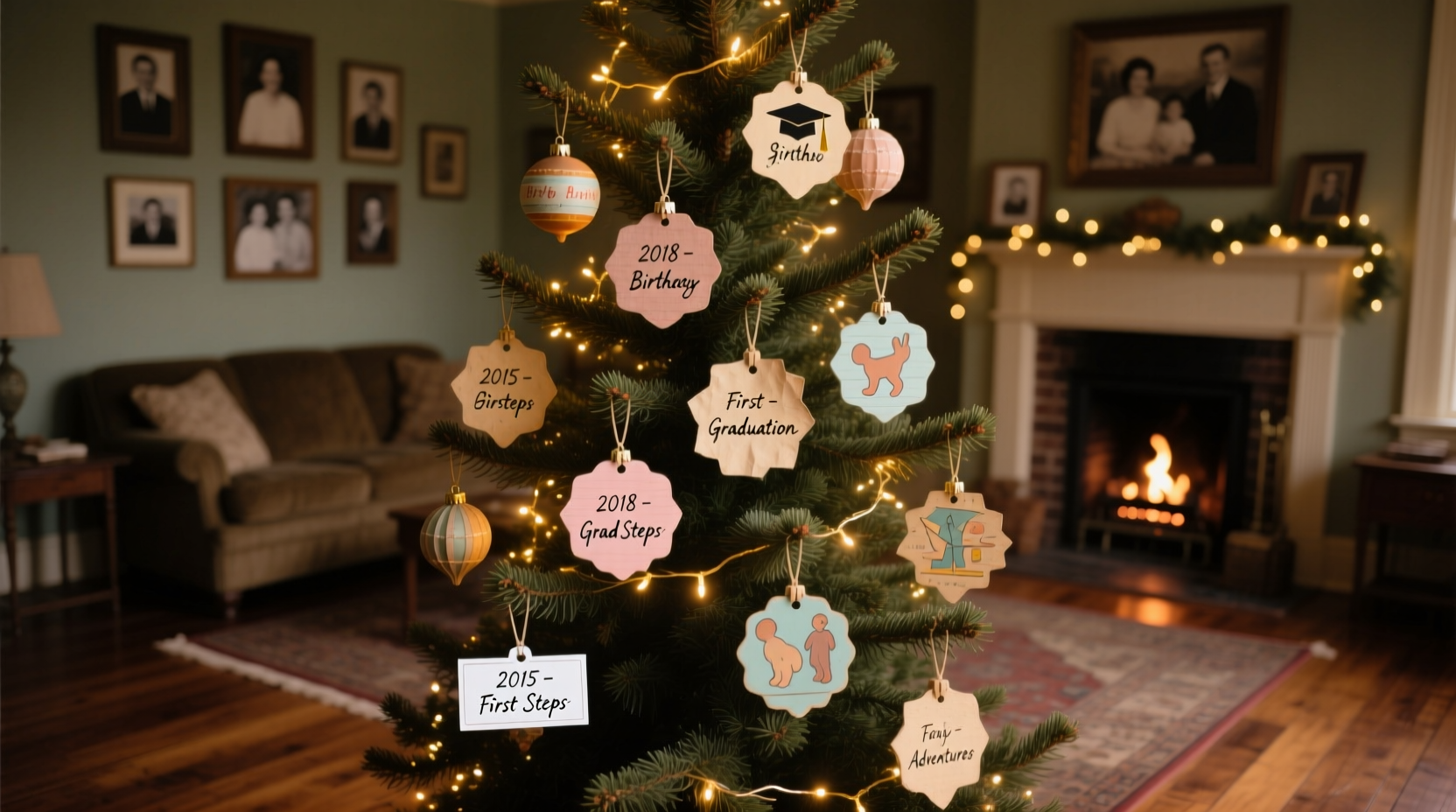
In an era of fleeting digital moments—where milestones vanish into algorithmic feeds—a physical, tactile archive offers grounding. Psychologists affirm that narrative identity—the stories we tell ourselves about who we are—is strengthened through tangible, repeated rituals. Dr. Elena Torres, a developmental psychologist specializing in family memory practices, explains:
“When children help hang an ornament marking their kindergarten graduation, they’re not just placing a trinket—they’re anchoring a self-concept in time and place. That object becomes a cognitive landmark, helping them understand growth as both linear and meaningful.”The Memory Lane tree does precisely this: it makes time visible, measurable, and emotionally resonant. It also serves practical functions—reducing seasonal clutter (no more discarding “last year’s” ornaments), encouraging mindful curation over consumption, and offering comfort during difficult years (e.g., an ornament commemorating resilience after loss can become a quiet source of strength).
Curating Your First Milestone Ornaments: Principles, Not Perfection
Begin not with shopping, but with reflection. A meaningful Memory Lane tree grows organically—not from a single purchase spree, but from deliberate selection guided by three core principles:
- Authenticity over aesthetics: An imperfect handprint clay ornament from preschool holds more weight than a flawless crystal replica of a landmark you’ve never visited.
- Specificity over symbolism: Instead of “Baby’s First Christmas,” choose “Maya’s First Steps – March 2021,” paired with a tiny embroidered shoe or a photo transfer on wood.
- Accessibility over exclusivity: Every family member—including young children, elders, or those with limited dexterity—should be able to contribute meaningfully. Use materials like air-dry clay, fabric scraps, printed photos on cardstock, or engraved wooden discs.
Resist the urge to “catch up” on past decades all at once. Begin where you are: this year’s tree includes only the milestones that truly shaped your family’s journey since last Christmas. Authenticity deepens with time—not haste.
Step-by-Step: Building Your Memory Lane Tree Year After Year
- January–February: Reflect & Record
Set aside 45 minutes with your partner, children, or journal. Review photos, calendars, and notes from the past year. Ask: What moment felt like a turning point? What brought unexpected joy or quiet pride? Jot down 1–3 candidates (e.g., “Leo started piano lessons,” “We adopted Luna the rescue dog,” “Grandma moved in with us”). - March–April: Design & Create
Choose one milestone to commemorate. Assign creation based on interest and ability: children paint ceramic blanks, teens design digital prints for laser-cut acrylic, adults engrave brass tags or stitch fabric appliqués. Keep supplies simple: mod podge, twine, recycled cardboard, natural wood slices. - May–June: Document the Story
Write a 2–3 sentence story behind the ornament—date, people involved, sensory detail (“the smell of rain during our first hike together”), and why it mattered. Store this note in a labeled archival sleeve beside the ornament. - July–November: Organize & Preserve
Store ornaments individually in acid-free tissue inside compartmentalized boxes. Label each compartment with year + milestone (e.g., “2023 – First Family Camping Trip”). Include a master index card listing all ornaments chronologically with brief descriptors. - December: Hang with Intention
On tree-trimming day, unpack ornaments *in chronological order*. As each is hung, read its story aloud. Invite everyone to share a memory connected to that year—even if it’s not the milestone itself (“That was the summer we got our porch swing!”). This transforms hanging into collective storytelling.
What to Commemorate: A Thoughtful Milestone Framework
Milestones aren’t only celebrations. They include transitions, quiet achievements, acts of care, and even hard-won stability. Use this framework to broaden your definition beyond conventional markers:
| Type | Examples | Ornament Ideas |
|---|---|---|
| Personal Growth | Learning to ride a bike, mastering a language, completing therapy, maintaining sobriety for 1 year | Mini bicycle charm, origami crane, engraved key shape, woven hemp circle |
| Family Evolution | First shared apartment, moving into a forever home, blending families, becoming grandparents | Miniature house cutout, key-shaped wood slice, interlocking rings etched on slate, tiny rocking chair |
| Cultural & Seasonal Anchors | First Diwali as a family, planting a heritage garden, hosting Thanksgiving after relocation, starting a holiday cookie tradition | Clay diya, pressed herb leaf sealed in resin, vintage recipe card replica, gingerbread house silhouette |
| Acts of Resilience | Recovering from illness, navigating job loss, supporting a loved one through hardship, rebuilding after fire/flood | Hand-stitched mending patch ornament, river stone painted with gold kintsugi lines, folded paper crane with handwritten affirmation |
| Everyday Joys | Adopting a pet, starting a morning walk routine, growing tomatoes for the first time, reading 100 books as a family | Felt paw print, ceramic sun, terracotta tomato, book-shaped wood carving |
This framework prevents the tree from feeling like a pressure-filled “achievement wall.” It honors the full spectrum of human experience—especially the quiet, persistent work of showing up for one another.
Real Example: The Chen Family’s 7-Year Memory Lane Journey
The Chen family began their Memory Lane tree in 2017, the year their daughter Amara was diagnosed with Type 1 diabetes. Instead of avoiding the complexity, they created an ornament: a smooth river stone painted with a subtle blue circle (the universal diabetes symbol) and inscribed with “Amara Strong – Oct 2017.” Each subsequent year added layers: a miniature insulin pump charm (2018), a tiny bronze apple (symbolizing their nutritionist’s guidance, 2019), a hand-printed cotton tag listing their “Top 3 Glucose Wins” of 2020. By 2023, the tree included 22 ornaments—but the 2017 stone remains at the base, wrapped in soft twine. “It’s not about erasing the hard things,” says Mei Chen, Amara’s mother. “It’s about saying: *This happened, and look how we grew around it.* When Amara hangs that first stone now, she doesn’t flinch. She smiles—and tells her friends how we learned to count carbs and celebrate small victories.” Their tree isn’t polished. Some ornaments are chipped, others faded. But its authenticity is its power.
Common Pitfalls & How to Avoid Them
Even well-intentioned traditions can falter without awareness. Here’s what experienced Memory Lane families consistently flag:
- Pitfall: Ornament overload leading to visual chaos. Solution: Limit to 1–3 new ornaments per year. Prioritize quality of story over quantity of objects.
- Pitfall: Letting “perfect” become the enemy of “done.” Solution: Embrace handmade imperfections. A lopsided clay heart from a 5-year-old’s hands holds more truth than a factory-perfect replica.
- Pitfall: Excluding non-celebratory milestones. Solution: Explicitly name resilience, healing, and quiet perseverance as valid milestones. Normalize honoring grief or transition alongside joy.
- Pitfall: Storing ornaments haphazardly, losing context. Solution: Maintain a physical “Memory Ledger”—a small notebook beside your ornament box where each entry includes year, milestone, creator, materials, and the story note.
- Pitfall: Making it solely adult-driven. Solution: Give children agency: let them choose *which* milestone to represent, *how* to make it, and *what* to write in the story note—even if it’s just “Dad fixed my bike.”
FAQ: Practical Questions Answered
How do I start if my kids are already teenagers—or if I’m beginning this tradition later in life?
Begin with what you have. Pull out 3–5 meaningful photos from different decades. Turn one into a simple ornament: print it on archival paper, mount it on a wood slice, seal with matte varnish, and attach twine. Write the story behind that photo—not just the event, but what it taught you then, and what it means now. Age isn’t a barrier; perspective is an asset.
What if a milestone feels too private or painful to display?
Your tree is yours. Not every milestone needs ornament form. Honor it privately: write the story in your Memory Ledger, light a candle beside the tree that year, or plant a bulb in spring to bloom at Christmas. Tradition serves you—not the other way around.
Can I incorporate digital elements without losing the tactile heart of the tradition?
Absolutely—with boundaries. Print QR codes linking to short audio recordings (a child’s voice describing their first day of school) or scanned letters, then mount the code on wood or metal. The physical object remains central; the digital layer is optional, supplemental, and always accessible offline via printed transcripts.
Conclusion: Your Tree Is Already Growing
You don’t need vintage ornaments, artisanal supplies, or a Pinterest-perfect aesthetic to begin. You need only one thing: the willingness to pause and say, *“This mattered.”* Your Memory Lane Christmas tree starts not with a trip to the craft store, but with a breath—and the courage to name what endures. It will hold your stumbles and your leaps, your silences and your songs, your ordinary Tuesdays and your extraordinary turning points. Over time, it becomes less a decoration and more a compass: pointing back to where you’ve been, and quietly, steadily, guiding you toward who you’re becoming—together. This December, choose one moment. Make one ornament. Tell one true story. Then hang it—not as an end point, but as the first stitch in a legacy you’re weaving, year after year, with love and intention.




 浙公网安备
33010002000092号
浙公网安备
33010002000092号 浙B2-20120091-4
Comments
No comments yet. Why don't you start the discussion?