
A memory tree is more than decor—it’s a tactile archive of love, loss, growth, and gratitude. Unlike digital albums that scroll past in seconds, a memory tree invites slow reflection: fingers trace the curve of a child’s smile on a miniature photo, eyes pause over a note written in shaky handwriting after a diagnosis, or a grandparent’s recipe card—tucked inside a glass ornament—unfolds like a whispered secret. This tradition has evolved from Victorian mourning customs into a widely embraced practice for commemorating milestones, honoring loved ones, or marking personal transitions. What makes it uniquely powerful is its physicality: each ornament is chosen, printed, written, assembled, and hung with intention. It transforms abstract memories into objects you can hold, rearrange, and pass down—not as static relics, but as living artifacts.
Why a Memory Tree Resonates Across Life Stages
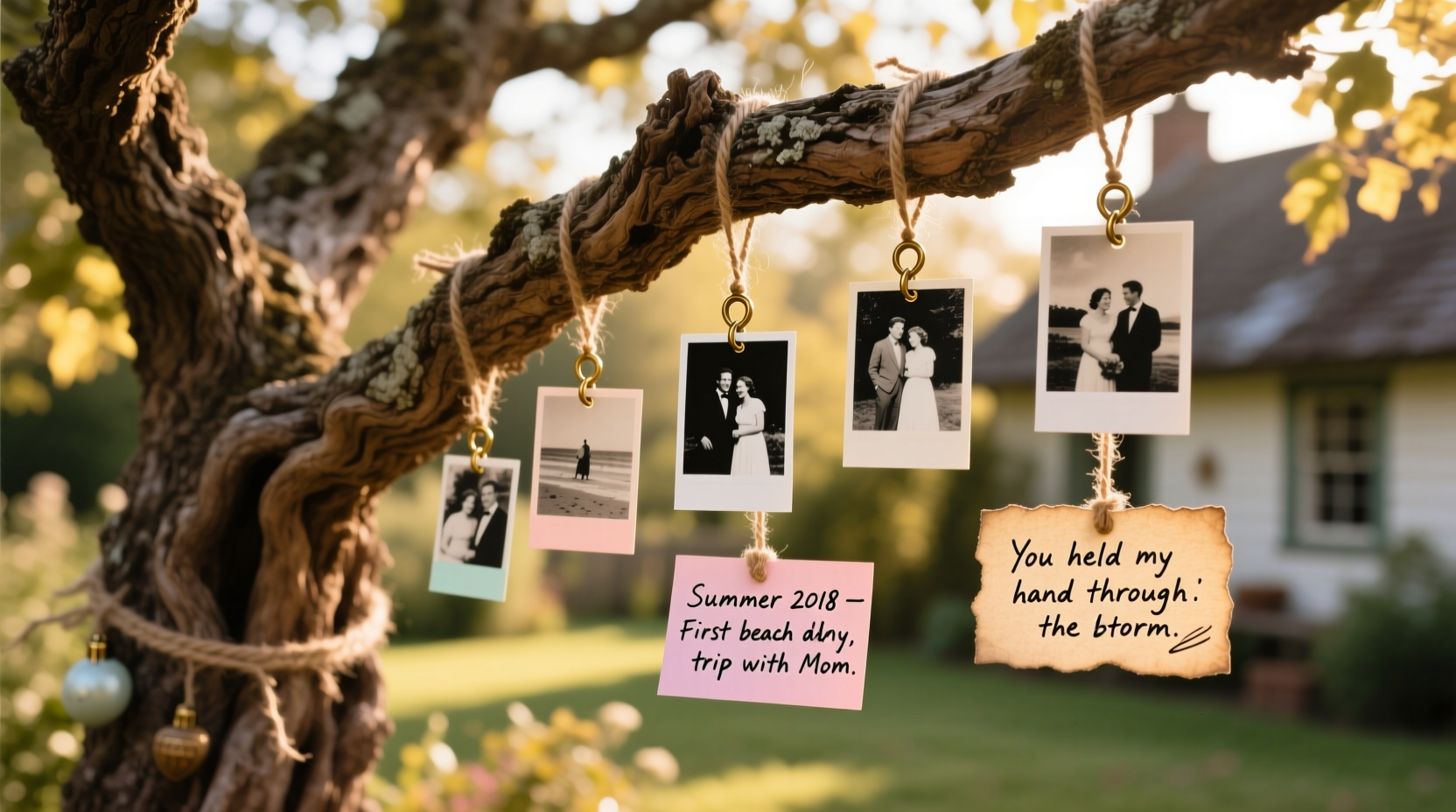
Psychologists observe that tangible memory aids strengthen autobiographical recall and emotional regulation. Dr. Lena Torres, a clinical neuropsychologist specializing in grief and identity, explains:
“When we engage multiple senses—touching paper, seeing handwriting, arranging objects in space—we activate broader neural networks than screen-based memory. A memory tree isn’t just about remembering *what* happened; it’s about re-experiencing *how it felt* to be present in that moment.”Families use memory trees to mark first days of school, cancer remission anniversaries, or the quiet courage of sobriety. Therapists recommend them for children processing divorce or adoption. Bereavement groups build communal trees where each participant contributes one ornament honoring someone they’ve lost—creating shared witness without requiring verbal sharing. The ritual of adding a new ornament becomes an act of continuity: “I am still here. We are still connected. This matters.”
Essential Materials & Thoughtful Sourcing
Quality materials ensure longevity and emotional resonance. Avoid mass-produced kits with flimsy plastic or low-resolution prints. Prioritize archival-grade supplies that resist yellowing, fading, and brittleness over time.
| Item | Recommended Specification | Why It Matters |
|---|---|---|
| Photo Paper | Matte-finish, 100% cotton rag (e.g., Hahnemühle Photo Rag) | Acid-free and lignin-free; prevents fading for 100+ years under proper display conditions |
| Ornament Shells | Clear glass or acrylic spheres (2–3 inches diameter) with removable metal caps | Glass offers clarity and weight; acrylic is safer for homes with young children—but choose UV-resistant grades |
| Ink for Notes | Pigment-based archival ink (e.g., Platinum Carbon Black or Sailor Kiwa-Gurashi) | Waterproof, fade-resistant, and pH-neutral—won’t bleed if humidity rises |
| Tree Base | Natural wood (birch, walnut, or reclaimed oak) or a sturdy iron stand | Wood grain adds warmth; avoid painted MDF, which off-gasses formaldehyde over time |
| Hanging Cord | Waxed linen thread or silk ribbon (not nylon or polyester) | Linen and silk age gracefully; synthetics become brittle and discolor |
A Step-by-Step Assembly Process (With Timing Guidance)
Build your memory tree in four deliberate phases—not as a weekend craft project, but as a reflective practice. Allow at least five days between stages to let meaning settle.
- Select & Digitize Memories (Day 1): Choose 5–12 moments representing distinct emotional tones—joy, resilience, tenderness, discovery, quiet pride. Scan physical photos at 600 dpi; for digital-only images, export originals (not compressed JPEGs). Name files meaningfully:
2017_sarah_graduation_smile.jpg, notIMG_2948.jpg. - Write & Refine Tiny Notes (Days 2–3): Draft notes by hand first on scrap paper. Each should be 15–35 words—specific, sensory, and present-tense. Edit ruthlessly: cut adjectives, keep verbs strong. Example revision: “My daughter’s graduation day was beautiful and emotional.” → “Sarah’s cap tilted sideways as she hugged me—her gown smelled like rain and hairspray, her hands trembling just once.”
- Print, Cut & Assemble Ornaments (Day 4): Print photos on matte cotton paper. Cut circles precisely using a 2-inch circle cutter (not scissors). Roll notes tightly into scrolls no thicker than a pencil; secure with a single dot of acid-free PVA glue. Place photo + scroll inside ornament; add a silica gel packet (included in most archival supply kits) to absorb ambient moisture.
- Arrange & Hang Mindfully (Day 5): Lay ornaments on a clean cloth. Group by theme (e.g., “firsts,” “hard-won joys,” “quiet moments”) before hanging. Start from the base: place earliest memory lowest, newest highest—or arrange by color temperature (cool blues/greys at bottom, warm golds/reds near top) to evoke emotional arc.
Preservation, Display & Evolving the Tree
A memory tree isn’t finished when the last ornament hangs—it begins its life as a dynamic heirloom. How you care for it determines whether it remains vibrant for decades or fades into sentimental clutter.
- Light Exposure: Never hang near south-facing windows or under LED spotlights. UV radiation degrades paper fibers and ink pigments within months. Use indirect north-light or warm-white (2700K) LED bulbs with UV filters if lighting is essential.
- Climate Control: Ideal conditions: 40–50% relative humidity, 65–70°F (18–21°C). Avoid garages, attics, or basements. In dry climates, place a small, uncovered dish of distilled water nearby—not touching the tree—to stabilize humidity.
- Cleaning Protocol: Dust monthly with a soft, natural-bristle brush (never feather dusters or microfiber cloths, which generate static and attract dust). Wipe glass ornaments only with lens tissue and distilled water—no commercial cleaners.
- Evolving the Ritual: Designate one day each year—your birthday, solstice, or anniversary—to review the tree. Remove one older ornament (store it safely in an acid-free box), add one new one, and rewrite one note to reflect how your understanding of that memory has deepened.
“The most profound memory trees aren’t the most ornate—they’re the ones where the handwriting changes across years: a child’s wobbly letters beside a teen’s hurried script, then an adult’s steady hand, then a parent’s tremulous cursive. That progression *is* the story.” — Maya Chen, Archivist & Founder of The Keepers Collective
Real-Life Example: Building a Tree After Loss
When Elena’s husband David passed from early-onset Parkinson’s, their daughter Maya (then 12) began collecting small objects he’d touched: a smooth river stone from their favorite hiking trail, a worn leather keychain, a tea-stained recipe card for his famous ginger cookies. With guidance from a hospice art therapist, they transformed these into a memory tree—not as a monument to absence, but as a map of presence.
They used walnut wood for the base, echoing David’s carpentry workshop. Each ornament held one photo (David teaching Maya to whittle) and one note written by Maya: “His hands shook when he held the chisel, but his voice stayed steady. ‘Feel the grain,’ he said. I still do.” They added a final, empty ornament with a note tucked inside: “For the first joke he’ll tell me in my dreams.” Three years later, Maya, now 15, added her own ornament: a photo of her first solo hike on that same trail, with a note: “The stone is still in my pocket. The grain is still in my hands.” The tree stands in their sunroom—not behind glass, but within reach, touched daily.
FAQ: Practical Questions Answered
Can I use black-and-white photos exclusively—and will they feel less personal?
Not at all. Monochrome printing often heightens emotional focus by removing color distraction. Many families choose B&W for solemn milestones (funerals, medical diagnoses) and color for joyful ones (births, graduations), creating visual rhythm. Just ensure contrast is rich—not flat gray—so facial expressions remain legible.
What if I’m not artistic or handwriting isn’t legible?
Legibility matters less than authenticity. Type notes in a clean, serif font (Garamond, Lora) at 8–10 pt, print on archival paper, and cut into precise scrolls. Or use a calligraphy app that converts typed text into elegant script—then print. The ritual lies in selection and intention, not penmanship.
How many ornaments is too many for a standard tabletop tree?
Twelve is the practical and psychological ceiling for focused engagement. Beyond that, ornaments compete for attention, diluting impact. If you have more memories, rotate them seasonally—like a museum curating exhibits—or build companion trees (e.g., “Family Recipes,” “Travel Moments”) anchored to the same base.
Conclusion: Your Tree Is Already Growing
You don’t need perfect photos, poetic notes, or flawless execution to begin. You need only one memory that catches your breath—a laugh caught mid-air, the weight of a newborn in your arms, the silence after signing adoption papers, the scent of soil after planting your first garden. That moment is your first ornament. Gather it. Write what it taught you in three sentences. Find a small, clear sphere. Place them together. Hang it where light falls gently upon it each morning.
This isn’t about preserving the past. It’s about anchoring yourself in continuity—proving that love, grief, joy, and resilience aren’t erased by time, but woven, thread by thread, into the fabric of who you are becoming. Your memory tree will shift in meaning as you do: a childhood ornament may one day reveal hidden strength you didn’t recognize then; a note written in sorrow may, years later, shimmer with unexpected grace. Start small. Be kind to your hands and your heart. And when you look at your tree—not as decoration, but as testimony—know this: you are already tending something sacred.




 浙公网安备
33010002000092号
浙公网安备
33010002000092号 浙B2-20120091-4
Comments
No comments yet. Why don't you start the discussion?