
The final weeks of the year often come with heightened activity—holiday preparations, social obligations, and seasonal pressures can leave little room for stillness. Yet this is precisely when mindfulness matters most. A mindfulness advent calendar offers a gentle counterbalance: 24 days of intentional pauses, reflections, and small practices that anchor you in the present. Unlike traditional calendars filled with chocolates or gifts, this version nurtures inner awareness, emotional resilience, and mental clarity.
Creating your own mindfulness advent calendar allows full customization based on your needs, values, and pace of life. Whether used individually or as a shared family ritual, it transforms the countdown to the new year into a journey of self-discovery and presence. This guide walks you through designing a meaningful experience grounded in psychological insight and practical wisdom.
Why a mindfulness advent calendar works
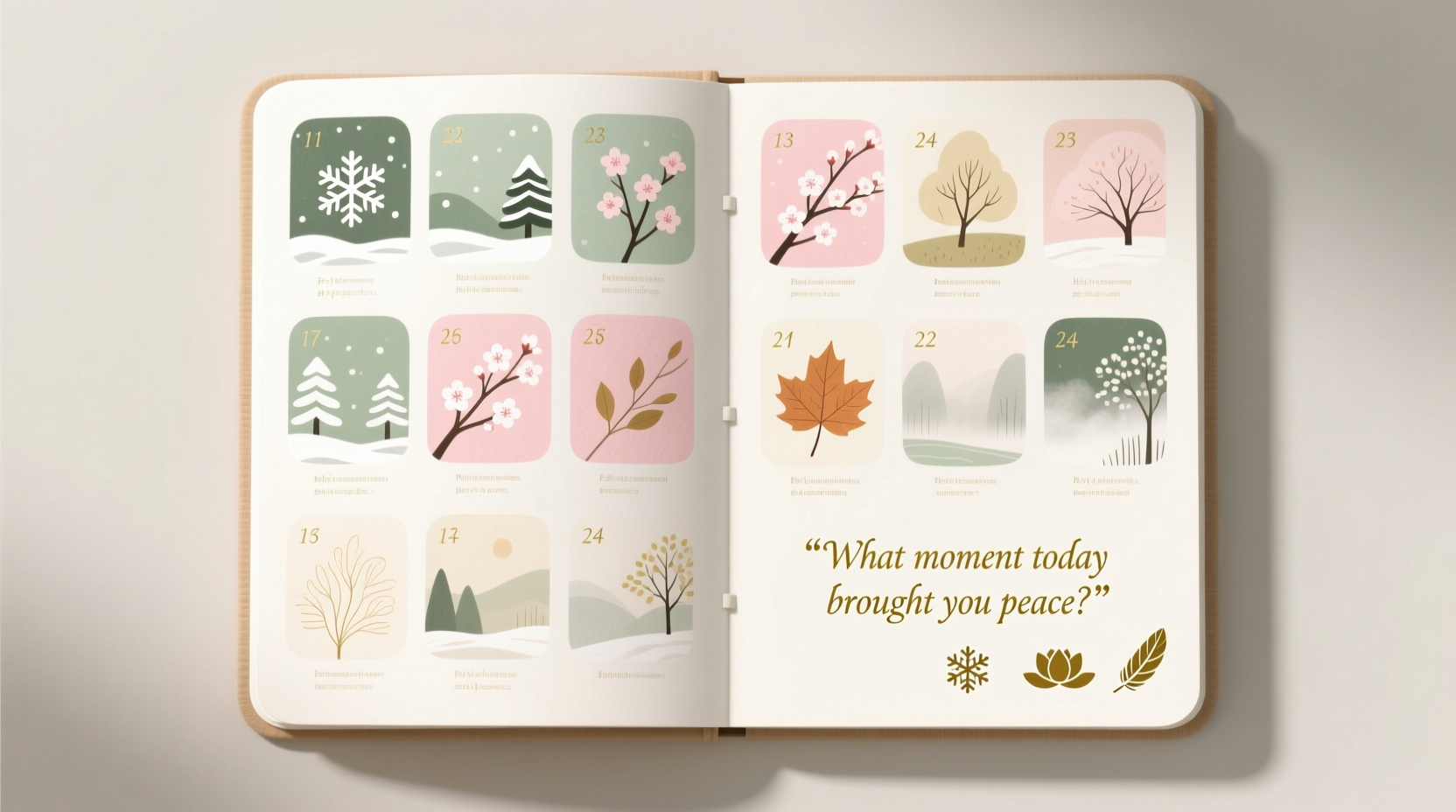
Mindfulness—the practice of paying attention to the present moment without judgment—has been shown to reduce anxiety, improve focus, and enhance emotional regulation. But consistency is key. Many people struggle to maintain daily practice because they lack structure or motivation. An advent calendar introduces both: a built-in timeline and a sense of anticipation.
By limiting each day’s engagement to a single prompt or short exercise, the barrier to entry remains low. You’re not expected to meditate for 30 minutes; instead, you might pause to breathe deeply, journal one sentence, or notice the sensation of warm tea in your hands. These micro-moments accumulate into lasting shifts in awareness.
“Daily mindfulness doesn’t require grand gestures. It’s the repetition of small attentions that rewires our relationship with ourselves.” — Dr. Lena Patel, Clinical Psychologist & Mindfulness Researcher
Step-by-step guide to building your calendar
Constructing a mindfulness advent calendar takes less than an hour but can influence your entire holiday season. Follow these steps to ensure clarity, variety, and sustainability.
- Choose your format: Decide whether you want a physical or digital calendar. Physical versions (like paper pockets, a jar of notes, or a printed grid) offer tactile engagement. Digital options (a private blog, note-taking app, or email series) provide convenience and reminders.
- Select a theme: While general mindfulness works well, narrowing your focus increases relevance. Themes could include gratitude, compassion, letting go, body awareness, or mindful communication.
- Design daily prompts: Create 24 unique entries that vary in length and type. Include breathing exercises, journaling questions, sensory observations, movement invitations, and acts of kindness.
- Sequence intentionally: Begin with accessible prompts and gradually introduce deeper reflections. For example, start with “Notice three sounds around you” and progress to “Reflect on what you’re releasing from this year.”
- Prepare materials: If using a physical format, gather envelopes, cards, string, or a decorative box. Write each prompt clearly and store them securely until December 1st.
- Add flexibility: Allow space for adaptation. Life gets busy—include two “wildcard” days where users can revisit a favorite prompt or skip without guilt.
Daily reflection prompts: A sample framework
A balanced calendar mixes cognitive, emotional, and somatic practices. Below is a categorized selection of prompts suitable for different stages of the month. Adapt freely based on personal or household needs.
| Type | Early Month (Days 1–8) | Middle Month (Days 9–16) | Late Month (Days 17–24) |
|---|---|---|---|
| Sensory Awareness | Pause and name five things you can see right now. | Hold a warm drink and describe its texture, temperature, and scent. | Close your eyes and identify all the layers of sound in your environment. |
| Emotional Reflection | What emotion are you feeling most today? Give it a color. | Recall a moment this week when you felt truly calm. | Write a kind message to yourself as if speaking to a close friend. |
| Body Connection | Stand up and stretch slowly. Notice where you feel tension. | Sit quietly for two minutes and scan your body from toes to head. | Place a hand over your heart and feel its rhythm for one minute. |
| Gratitude Practice | Name one small pleasure you experienced today. | Think of someone who helped you recently. Send silent thanks. | List three experiences from this year that shaped you positively. |
| Action-Based | Smile at one person today, even if just internally. | Do one chore mindfully—focus only on the task. | Offer a genuine compliment to someone important to you. |
Variety ensures engagement
Repetition supports habit formation, but novelty sustains interest. Rotate between introspective writing, brief meditations, external interactions, and physical awareness. This prevents burnout and appeals to different learning styles.
Real example: The Johnson family’s mindful December
The Johnsons, a family of four in Portland, Oregon, introduced a mindfulness advent calendar after noticing rising stress during past holiday seasons. Their teenage daughter struggled with school pressure, while both parents worked long hours preparing for year-end deadlines.
They created a fabric banner with 24 numbered pockets hung near their kitchen table. Each evening at dinner, one member drew a prompt and read it aloud. Some were simple (“Name one thing you’re grateful for”), others more involved (“Sit outside for five minutes and watch the sky”).
Within two weeks, they observed subtle changes. Conversations grew more attentive. The son began journaling unprompted. The mother reported fewer nighttime ruminations. On Day 18, the prompt was “Let go of one expectation you’ve been holding.” That night, they discussed unrealistic ideals around gift-giving and agreed to simplify traditions—a decision that reduced financial and emotional strain.
By December 24th, the calendar had become less of a novelty and more of a grounding ritual. They plan to reuse the concept annually, rotating themes like “presence,” “connection,” and “rest.”
Checklist: Building your calendar in one session
- ☐ Choose physical or digital format
- ☐ Pick a central theme (optional but recommended)
- ☐ Draft 24 unique prompts across multiple categories
- ☐ Balance ease and depth—start simple, build complexity
- ☐ Incorporate at least three prompt types (e.g., journal, breath, action)
- ☐ Add two flexible/wildcard days
- ☐ Finalize design and prepare materials (cards, envelopes, digital layout)
- ☐ Store securely until December 1st
- ☐ Share intention with household members or intended participants
- ☐ Commit to showing up—even for just one minute per day
Common pitfalls and how to avoid them
Even well-intentioned practices can falter without realistic planning. Here are frequent challenges and solutions:
| Pitfall | Solution |
|---|---|
| Prompts feel repetitive or too vague | Use specific language and rotate formats. Instead of “Be mindful,” try “Count six breaths while watching candlelight.” |
| Skipping days due to travel or fatigue | Allow catch-up days or use mobile access. Don’t equate missing a day with failure. |
| Losing motivation mid-month | Include energizing prompts later in the calendar. Invite accountability by sharing progress with a friend. |
| Overcomplicating the process | Keep most prompts under three minutes. Complexity isn’t required for depth. |
| Forgetting to do the daily practice | Pair it with an existing habit (morning coffee, bedtime routine) or set a phone reminder. |
“The most powerful mindfulness practices are those we actually do—not the ones we idealize.” — Tara Brach, Author of *Radical Acceptance*
FAQ: Common questions about mindfulness advent calendars
Can children participate in a mindfulness advent calendar?
Absolutely. Children benefit greatly from structured mindfulness, especially during chaotic seasons. Simplify language and include playful elements—like drawing emotions, listening to nature sounds, or doing “mindful bites” of food. For younger kids, pair prompts with visuals or actions.
What if I miss several days? Is it worth continuing?
Yes. Mindfulness is not about perfection. Resuming after a gap is itself a mindful act—an acknowledgment of impermanence and renewal. Use a wildcard day or simply pick up where you left off. The goal is gentle return, not rigid adherence.
Can I use this beyond December?
Definitely. While designed for the pre-holiday period, the model applies to any 24-day window. Consider using it before major transitions—starting a new job, post-pandemic reentry, or recovery periods. Simply adjust prompts to match the context.
Create presence, one day at a time
In a culture that glorifies speed and productivity, choosing mindfulness is a quiet act of resistance. A mindfulness advent calendar doesn’t demand hours of silence or retreats in remote monasteries. It asks only for moments—brief, honest encounters with your breath, your thoughts, your surroundings.
Each prompt is an invitation: to pause, to listen, to remember that you are here, alive, in this fleeting season. Whether practiced alone or shared across generations, the cumulative effect is profound. Stress softens. Perspective widens. Joy appears in unexpected places—a sunbeam on the floor, a child’s laughter, the warmth of your own hands.
You don’t need expensive tools or special training. Just commitment, curiosity, and a willingness to show up. Start today: draft your first five prompts, choose your container, and decide when to begin. Let this December be the one where you didn’t just count down the days—but truly lived them.




 浙公网安备
33010002000092号
浙公网安备
33010002000092号 浙B2-20120091-4
Comments
No comments yet. Why don't you start the discussion?