
A minimalist capsule wardrobe isn’t about sacrifice—it’s about intention. It’s choosing fewer clothes that reflect your lifestyle, suit your body, and work together seamlessly. By limiting your wardrobe to 20 versatile, high-quality pieces, you reduce decision fatigue, save money, and build an effortlessly cohesive style. This approach is not trend-driven; it’s identity-driven. The goal is not to own less for the sake of minimalism, but to own better, wear more, and stress less.
Creating such a wardrobe requires clarity, strategy, and honesty about how you live. Whether you're navigating a corporate job, parenting full-time, or working remotely, a well-designed capsule adapts to your real life—not the idealized version sold on social media.
Why 20 Pieces? The Psychology Behind the Number
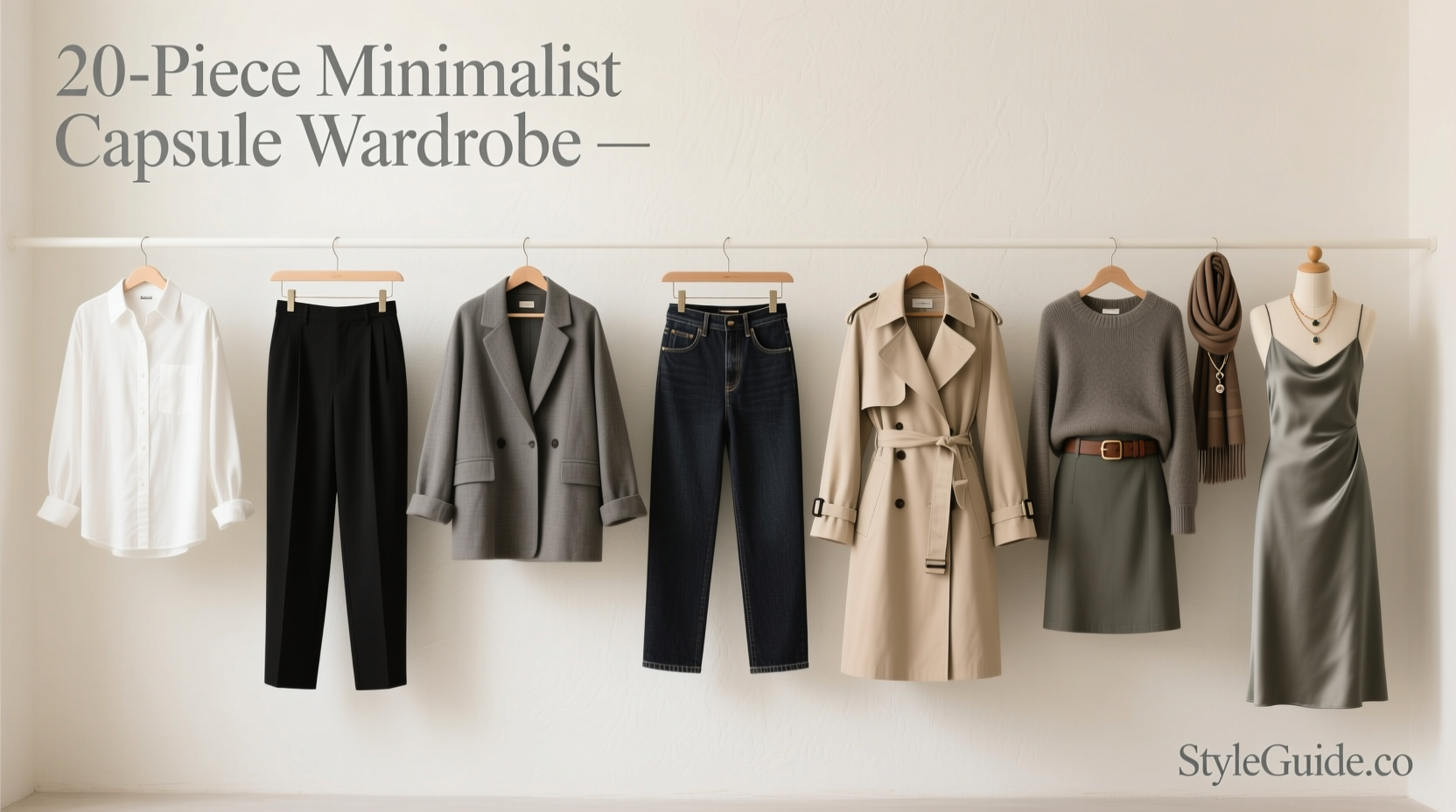
The number 20 strikes a balance between constraint and practicality. Fewer than 15 can feel restrictive for most climates and lifestyles, while more than 30 begins to dilute the purpose of a capsule: simplicity. Twenty items force thoughtful selection without compromising versatility.
Research in behavioral psychology shows that too many choices lead to decision paralysis and dissatisfaction. A study published in the *Journal of Consumer Research* found that people presented with fewer options reported higher satisfaction and confidence in their decisions. Applying this to fashion, a limited wardrobe reduces morning stress and increases wearing frequency of each item.
“Minimalism in fashion isn't about deprivation. It's about designing a wardrobe that works so well, you forget you're wearing it.” — Anika Patel, Sustainable Style Consultant
A 20-piece capsule typically includes clothing only (excluding underwear, sleepwear, activewear, and outerwear like heavy coats). Shoes are often considered separately but should be kept to 5–7 pairs max for cohesion.
Step-by-Step Guide to Building Your Capsule
Building a capsule wardrobe isn’t a one-day project. It’s a process of editing, evaluating, and refining. Follow this six-step timeline over two to three weeks to ensure thoughtful decisions.
- Empty your closet completely. Remove every garment and lay them out where you can see them. This creates psychological distance from emotional attachments and reveals the true volume of your wardrobe.
- Categorize by type. Group items into tops, bottoms, dresses, jackets, etc. This helps identify imbalances—like owning 12 blouses but only two pairs of pants.
- Evaluate each piece honestly. Ask: Does it fit well? Is it comfortable? Do I love wearing it? Does it align with my current lifestyle? If any answer is “no,” set it aside.
- Test wearability for one week. For uncertain items, wear them during the week. Note how you feel in them and whether they serve a purpose. If unworn or uncomfortable, let them go.
- Select core neutrals first. Choose 4–6 foundational pieces in neutral colors (black, navy, beige, gray, white) that can mix and match effortlessly.
- Add accent pieces strategically. Fill gaps with 2–3 items in complementary colors or subtle patterns that elevate the base layer.
What Counts as One Piece? Defining Your Inventory
Clarity on what constitutes “one piece” prevents loopholes and maintains integrity. Here’s a standard breakdown:
| Item Type | Counts as One? | Notes |
|---|---|---|
| Tank top | Yes | Worn alone or layered |
| Blouse | Yes | Includes button-downs, tunics |
| Cardigan | Yes | Lightweight layering piece |
| Blazer | Yes | Counts even if worn infrequently |
| Jeans | Yes | One pair = one piece |
| Dress | Yes | Full outfit in one item |
| Sweater | Yes | Chunky knits included |
| Scarf | No | Accessory, not counted |
| Shoes | No | Maintain separate list (ideal: 5–7 pairs) |
| Underwear / Socks | No | Excluded from count |
This structure ensures fairness and consistency. A dress counts as one piece even though it replaces top + bottom, which balances the equation.
Curating a Cohesive Color Palette
Color is the glue of a capsule wardrobe. A unified palette allows every top to pair with every bottom, maximizing combinations from minimal items. Start with a base of 2–3 neutrals that complement your skin tone and environment.
- Classic Neutrals: Black, charcoal, cream, navy, camel
- Warm Undertones: Terracotta, olive, rust, sand
- Cool Undertones: Slate blue, heather gray, deep plum
Aim for 70% neutrals, 20% complements, and 10% accent. For example: a capsule built on black and beige might include a burgundy sweater (complement) and a patterned silk scarf with those tones (accent).
Stick to solids for core pieces. Introduce texture (ribbed knits, corduroy, linen) instead of patterns to add depth without visual noise.
Real-Life Example: Sarah’s 20-Piece Transition
Sarah, a 34-year-old project manager in Portland, Oregon, spent years rotating through fast-fashion pieces that never felt “quite right.” Her closet held 80+ items, yet she wore the same five outfits repeatedly. After researching minimalism, she committed to a 20-piece capsule for three months.
She began by removing everything and identifying her non-negotiable needs: business-casual office attire, weekend comfort, and one semi-formal option for dinners. She chose a base of charcoal, oat, and midnight blue. Her final 20 included:
- White button-down
- Black turtleneck
- Gray merino sweater
- Oat-colored cardigan
- Navy wrap dress
- Black tailored pants
- Charcoal wool blend slacks
- Medium wash jeans
- Black pencil skirt
- Blazer (navy)
- Two additional blouses (patterns in navy/cream)
- One casual dress
- Leather belt
- Structured handbag
- Three pairs of shoes: loafers, ankle boots, white sneakers
Within two weeks, Sarah reported spending 60% less time choosing outfits and receiving multiple compliments at work. After three months, she hadn’t missed a single excluded item.
“I realized I wasn’t dressing for myself—I was dressing for imagined judgments. Now, I wear what feels authentic, and I feel more confident than ever.” — Sarah T., Portland, OR
Common Pitfalls to Avoid
Even with good intentions, common mistakes can undermine a capsule wardrobe. Awareness prevents setbacks.
| Pitfall | Why It Happens | How to Avoid |
|---|---|---|
| Keeping “maybe” items | Emotional attachment or sunk cost fallacy | If unworn in 12 months or doesn’t spark joy, donate |
| Overemphasizing trends | Influence from social media or sales | Ask: Will I wear this in 2 years? If no, skip |
| Poor fit assumptions | Hoping to lose/gain weight | Only include clothes that fit now |
| Ignoring climate needs | Choosing aesthetics over function | Adapt capsule seasonally; don’t ignore rain or heat |
| Forgetting lifestyle alignment | Designing for a fantasy life | Base selections on actual weekly activities |
Frequently Asked Questions
Can I refresh my capsule seasonally?
Yes—and you should. A minimalist capsule is not static. Rotate in seasonal items (e.g., a turtleneck in winter, linen shirt in summer) while maintaining the 20-piece limit. Store off-season items properly to preserve quality.
What if I need formal wear occasionally?
Incorporate one versatile dress or suit that transitions from office to event. Alternatively, rent for rare occasions. Owning something worn once a year contradicts the capsule philosophy.
How do I handle laundry with so few clothes?
Wash items as needed, not on a fixed schedule. Most garments don’t require washing after single use. Spot clean, air out, and rotate. Plan laundering mid-week to maintain availability. With proper care, natural fibers like cotton, wool, and linen last longer between washes.
Essential Checklist for Launching Your Capsule
Use this checklist to stay on track:
- ☐ Empty entire wardrobe for unbiased assessment
- ☐ Define your lifestyle needs (work, home, social)
- ☐ Identify your best colors and fits
- ☐ Choose a cohesive color palette (3–5 colors max)
- ☐ Select 4–6 foundational neutral pieces
- ☐ Edit down to exactly 20 clothing items
- ☐ Limit shoes to 5–7 functional pairs
- ☐ Test all combinations for versatility
- ☐ Donate or responsibly dispose of removed items
- ☐ Schedule seasonal review every 3 months
Final Thoughts: Simplicity as a Style Statement
A 20-piece capsule wardrobe is more than a clothing challenge—it’s a declaration of self-awareness. It says you value time over trends, function over excess, and authenticity over approval. When you stop chasing variety and start curating coherence, getting dressed becomes effortless. You’re no longer searching for something to wear; you’re expressing who you already are.
The most stylish people aren’t those with the fullest closets, but those whose presence commands attention regardless of what they wear. That confidence comes not from novelty, but from consistency.




 浙公网安备
33010002000092号
浙公网安备
33010002000092号 浙B2-20120091-4
Comments
No comments yet. Why don't you start the discussion?