
Scandinavian Christmas design is not about scarcity—it’s about intentionality. Rooted in Nordic traditions of hygge (cozy contentment) and lagom (just the right amount), this aesthetic embraces quiet elegance, natural warmth, and uncluttered beauty. A minimalist Scandinavian tree doesn’t require expensive ornaments or designer lights. Instead, it relies on thoughtful curation, tactile materials, and restraint as a form of richness. And crucially, it’s entirely achievable without overspending—especially when you shift focus from acquisition to adaptation, from decoration to storytelling.
This guide distills years of interior styling experience with real-world constraints: tight holiday budgets, small living spaces, second-hand resources, and the desire for sustainability. It’s written for those who love the calm clarity of white walls and linen throws but also appreciate the grounded joy of pine needles and handmade paper stars. No artificial “Scandi kits” needed. Just honesty, resourcefulness, and respect for what already exists in your home.
Understanding the Core Principles (Beyond Aesthetics)
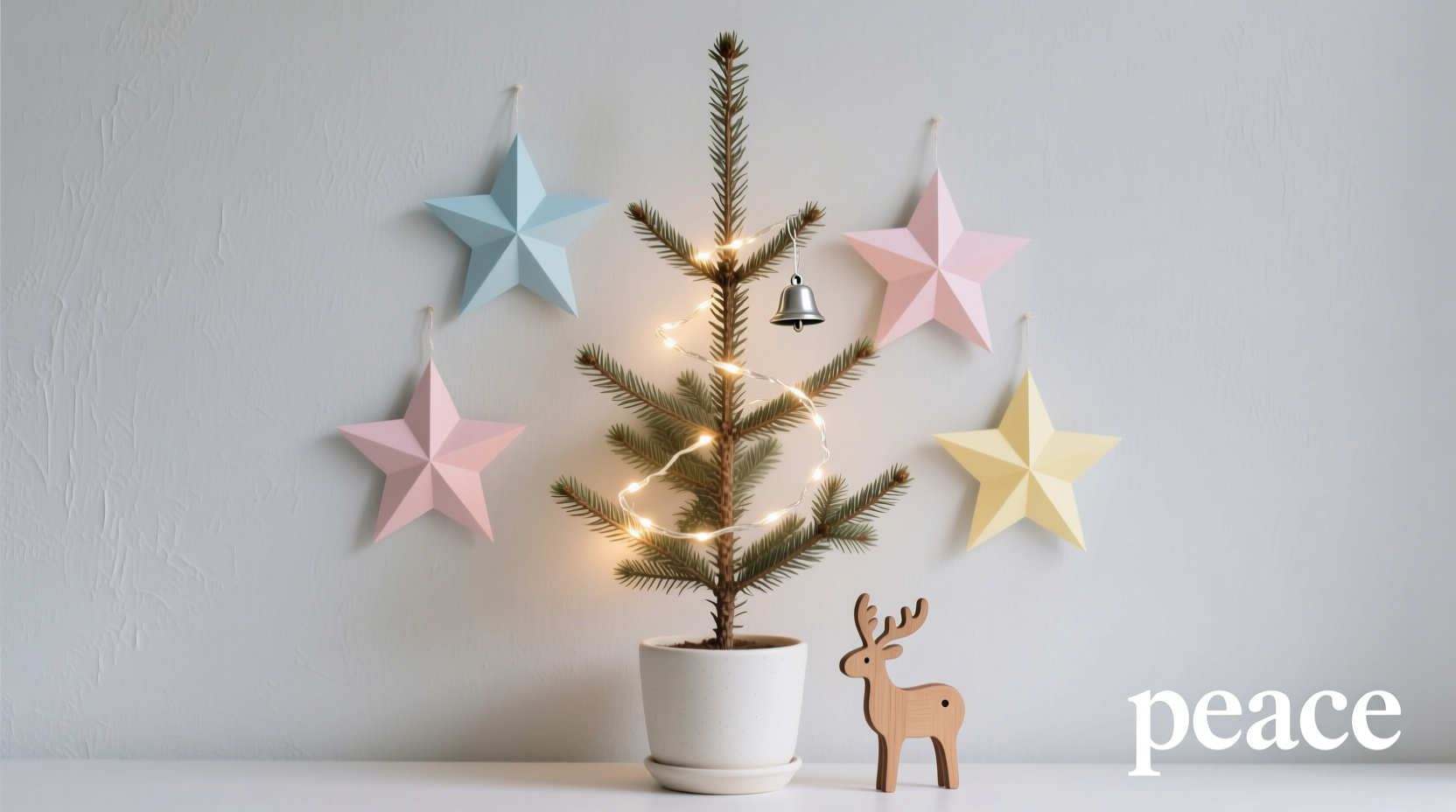
Before selecting ornaments or choosing a tree, clarify what makes a tree authentically Scandinavian—not just visually similar. Three interlocking principles define the style:
- Naturalness: Prioritizing organic materials—wood, wool, dried citrus, untreated linen, raw cotton, pinecones, birch bark—over plastic, chrome, or synthetic finishes.
- Neutrality: A restrained palette anchored in whites, creams, soft greys, oatmeals, and muted forest greens. Accents are rare—and when used, they’re earthy (ochre, rust, deep moss) rather than bright or metallic.
- Intentional Emptiness: Space is treated as an active design element. A branch left bare isn’t unfinished—it’s breathing room. Each ornament carries meaning or texture; nothing is added solely for density.
This isn’t minimalism as austerity. It’s minimalism as generosity: giving each object space to be seen, felt, and appreciated. As Danish design historian Mette Rasmussen observes:
“Scandinavian holiday tradition grew from necessity—long winters, limited resources—but evolved into a philosophy of presence. The tree isn’t decorated to impress. It’s dressed to invite stillness.” — Mette Rasmussen, Curator of Nordic Design, National Museum of Denmark
Your Budget-Friendly Materials Toolkit
You don’t need a craft store haul. Most elements can be sourced for under £15—or even free—with strategic sourcing. Below is a realistic breakdown of what to acquire, where to find it, and why each item matters functionally and aesthetically.
| Material | Budget Source Options | Why It Works |
|---|---|---|
| Tree Base | Repurposed wooden crate (free from local bakery); untreated pine planter box (£8–£12 online); stack of vintage hardcover books wrapped in undyed linen | Provides visual weight, natural grain, and grounding—no glossy stands needed. |
| Ornament Core | Dried orange slices (oven-dried at home, £0); hand-cut wool felt circles (£3 for 100g wool blend); unfinished wooden beads (£4 for 100); recycled paper stars (scrap paper + glue) | All are low-cost, tactile, biodegradable, and reinforce the “handmade rhythm” central to Scandi interiors. |
| Lighting | Warm-white LED fairy lights with fabric-covered cords (£6–£9); second-hand string lights with replaceable bulbs (check charity shops) | Soft, diffused light mimics candle glow—never cool white or flashing modes. Fabric cords eliminate plastic glare. |
| Textural Layers | Unbleached calico ribbon (£2.50/m); thrifted wool scarves (cut into strips); foraged pinecones (free, local park) | Adds depth without color. Texture compensates for absence of pattern or shine. |
| Tree Topper | Hand-folded origami star (recycled paper); single dried eucalyptus stem; small ceramic bird figurine (thrifted, £1–£3) | Subtle, symbolic, and scaled to proportion—not oversized or glittered. |
A Real-World Example: Lena’s Apartment Tree (Stockholm, 2023)
Lena, a graphic designer living in a 42m² Stockholm studio, had £12.70 left for Christmas decor after rent and groceries. She refused to compromise her aesthetic—or her values. Her solution took three evenings and involved zero new purchases:
- Day 1: Foraged 22 pinecones and 3 birch branches during her evening walk. Dried orange slices using her oven’s lowest setting (1 hour at 100°C).
- Day 2: Cut 1.2m of leftover calico from a prior sewing project into 8mm-wide ribbons. Sewed simple loops by hand (no machine needed). Used scrap wool yarn to stitch three small felt birds—each taking 20 minutes.
- Day 3: Borrowed warm-white fairy lights from her neighbour. Wrapped the trunk of her pre-lit artificial tree (bought second-hand in 2021) with the calico ribbons, spacing them 15cm apart. Hung ornaments asymmetrically—grouping three pinecones on one lower branch, two oranges and a bird on another, leaving full sections bare.
The result? A tree that looked quietly luxurious, deeply personal, and unmistakably Scandinavian. Neighbours asked where she’d bought it. She smiled and said, “I made it with what I already owned—and what the forest gave me.”
Step-by-Step Assembly Guide
Follow this sequence—not as rigid rules, but as a mindful ritual. Timing matters less than attention.
- Select & Prep Your Tree (30 mins): Choose a real Nordmann fir or Norway spruce if possible—their dense, horizontal branching supports minimal hanging. If using artificial, ensure branches are matte green (no shine) and avoid overly uniform shapes. Gently fluff branches outward, not upward, to encourage horizontal volume. Trim any stray or overly dense tips to open sightlines.
- Anchor With Light (20 mins): Start at the base. Weave warm-white fairy lights *under* branches—not over them—to diffuse glow upward. Keep cord visible only where necessary; tuck excess behind trunk. Aim for 100 bulbs per 1.8m tree. Test before proceeding.
- Add Textural Ribbons (25 mins): Use calico or wool strips. Tie simple half-hitches around thick inner branches—not tips. Space knots 12–18cm apart. Let ends hang naturally (15–25cm length). Avoid symmetry: cluster more on one side, leave opposite sparse.
- Place Ornaments With Purpose (40 mins): Hold each piece before hanging. Ask: “Does this add warmth? Texture? Memory?” Hang heavier items (pinecones, wood beads) lower. Place delicate items (dried citrus, felt birds) mid-height where light catches them. Never fill a branch—leave at least 40% of visible surface empty. Step back every 5 ornaments.
- Final Grounding (15 mins): Cover the base with natural elements: unbleached jute twine coiled loosely, a scattering of dried lavender buds, or small birch bark shards. Add a single sprig of fresh rosemary tucked beside the trunk—it releases scent when brushed, reinforcing sensory calm.
What to Avoid: The Scandi Style Killers
Even small missteps disrupt the harmony. These aren’t “mistakes”—they’re signals that intention has slipped:
- Over-lighting: More than 100 warm-white LEDs on a standard tree creates visual noise. Avoid multicolour strings, blinking modes, or cool-white LEDs—they read as clinical, not cozy.
- Uniform spacing: Hanging ornaments at equal intervals reads as mechanical, not human. Embrace gentle clustering and deliberate voids.
- Plastic or foil finishes: Even “matte” plastic ornaments reflect light differently than wood or wool. Their texture feels alien in a Scandi context.
- Themed ornament sets: Collections like “snowman trio” or “reindeer family” contradict the principle of singular, meaningful objects.
- Overcrowded top: A large star or angel defeats the purpose. The topper should be smaller than your palm and sit lightly—not perch heavily.
Frequently Asked Questions
Can I use an artificial tree and still achieve authenticity?
Absolutely—if it meets three criteria: 1) Matte, non-reflective foliage (avoid PVC or PE with shine), 2) Natural-looking branch structure (slightly irregular, not perfectly symmetrical), and 3) Trunk visible at base (no plastic stand hiding the stem). Many second-hand artificial trees from the early 2000s meet these standards and cost under £15.
What if I live in a flat with no access to foraging?
Order sustainably harvested pinecones or birch bark online from ethical UK suppliers like Woodland Trust Shop or The Wild Things Co. Dried citrus slices take 1 hour in any domestic oven—no special equipment required. Wool felt and calico are widely available in remnant bins at fabric shops for under £3.
How do I store these decorations for next year without losing their integrity?
Store flat, not hung. Place dried citrus between sheets of parchment paper in a sealed cardboard box (not plastic—traps moisture). Roll wool ribbons loosely around a cardboard tube. Keep wooden beads in a breathable cotton bag. Avoid attics (heat degrades citrus) and basements (humidity warps wood). A cool, dark cupboard is ideal.
Conclusion: Your Tree Is an Invitation, Not an Achievement
A minimalist Scandinavian Christmas tree isn’t a finish line—it’s the first gesture in a season of presence. It asks nothing of you except attention: to the curve of a pinecone, the softness of unbleached cloth, the way light pools on a dried orange slice at dusk. Its beauty multiplies with time, not expense. Each year, you’ll notice new textures, remember where a particular ornament came from, feel the quiet pride of having made something meaningful with little.
You don’t need permission to begin. Take inventory tonight—not of what you lack, but of what you already hold: a roll of twine, a handful of buttons, a forgotten spool of yarn, a sunny windowsill where citrus can dry. Start with one branch. One ribbon. One moment of stillness while you tie the knot.
This is how tradition grows—not through perfection, but through repetition, care, and the quiet confidence that less, when chosen well, is always enough.




 浙公网安备
33010002000092号
浙公网安备
33010002000092号 浙B2-20120091-4
Comments
No comments yet. Why don't you start the discussion?