
Mornings set the tone for the rest of the day. For many, that starts with a cup of coffee—an automatic reflex meant to jumpstart alertness. But relying on caffeine isn’t sustainable long-term. It can lead to crashes, dependency, disrupted sleep, and adrenal fatigue. The good news? You don’t need caffeine to feel sharp and focused in the morning. A well-designed routine grounded in circadian biology, movement, and intentionality can deliver lasting energy and mental clarity.
Creating a caffeine-free morning routine is not about deprivation—it’s about replacement with better, more natural stimuli. When you align your actions with your body’s internal clock and psychological needs, you unlock steady energy, improved mood, and deeper concentration. This guide outlines how to build such a routine from the ground up, using practical, research-supported strategies anyone can implement.
Why Skip Caffeine?
Caffeine works by blocking adenosine receptors in the brain—adenosine being the chemical that builds up throughout the day and makes you feel tired. While this creates temporary alertness, it doesn’t address the root cause of fatigue. Over time, the brain adapts by producing more adenosine receptors, leading to tolerance and dependence.
Additionally, consuming caffeine too early in the morning—especially within an hour of waking—can interfere with cortisol regulation. Cortisol, often misunderstood as just a “stress hormone,” actually plays a vital role in wakefulness. It naturally peaks between 30 and 60 minutes after waking, helping you feel alert. Introducing caffeine during this peak can blunt its effect and disrupt your body’s ability to self-regulate energy.
“Your body has built-in mechanisms for alertness. The goal is to support them—not override them.” — Dr. Sara Mednick, sleep and performance researcher, University of California
By skipping caffeine, you allow your nervous system to recalibrate. You become more responsive to natural cues like light, movement, and hydration, which are more reliable and side-effect-free than stimulants.
Step-by-Step: Building Your Caffeine-Free Morning Routine
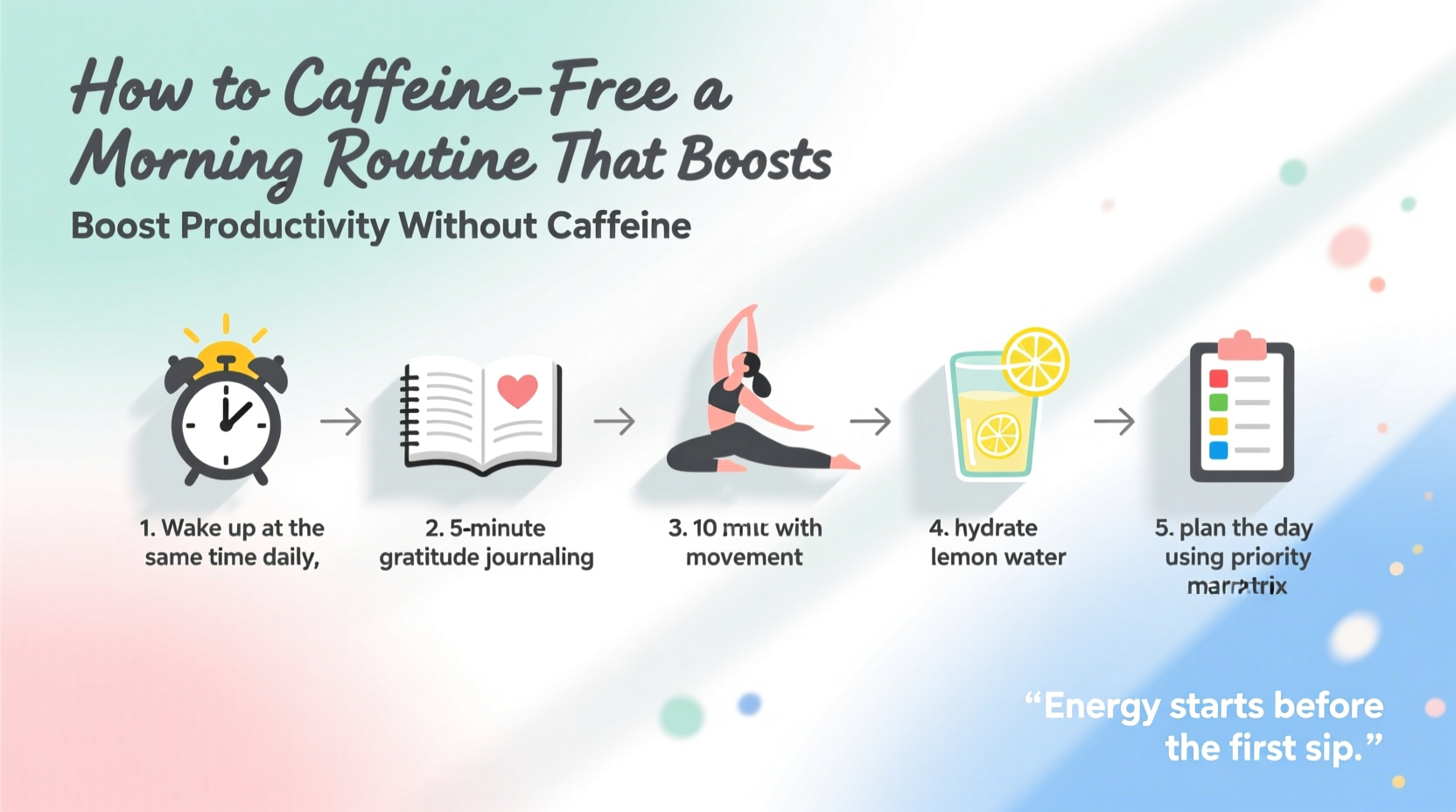
A productive morning doesn’t happen by accident. It requires intentional design. Below is a science-backed sequence of actions to follow within the first 60–90 minutes of waking. Each step supports physiological arousal, mental clarity, and emotional resilience—without a single drop of coffee.
1. Wake at a Consistent Time (Even on Weekends)
Your circadian rhythm thrives on predictability. Waking at the same time every day—even weekends—strengthens your body’s internal clock, making it easier to rise naturally and feel alert earlier in the day.
2. Get Natural Light Within 5 Minutes of Waking
Exposure to sunlight—or bright outdoor light—within the first few minutes of waking suppresses melatonin and signals your brain that it’s time to be awake. This resets your circadian clock daily and improves sleep quality at night.
- Sit by a window with direct sunlight.
- Take a short walk outside (even 5 minutes helps).
- If natural light isn’t available, use a 10,000-lux light therapy lamp for 15–30 minutes.
3. Hydrate Immediately
After 6–8 hours without water, your body is mildly dehydrated. Replenishing fluids kickstarts metabolism, circulation, and cognitive function.
Drink 12–16 oz (350–500 ml) of water right after waking. Add a pinch of sea salt and lemon if desired—to enhance electrolyte balance and digestion.
4. Move Your Body (No Gym Required)
Movement increases blood flow to the brain, raises core temperature, and stimulates the release of endorphins and norepinephrine—neurochemicals linked to focus and motivation.
You don’t need a full workout. Just 5–10 minutes of dynamic stretching, yoga, or brisk walking is enough. Try this mini-sequence:
- Neck rolls and shoulder shrugs (1 min)
- Forward fold with bent knees (1 min)
- Standing side bends (1 min)
- Jumping jacks or marching in place (2 min)
- Deep breathing: inhale for 4 counts, exhale for 6 (1 min)
5. Practice Mindful Intention Setting
Instead of checking emails or social media, begin with purpose. Spend 3–5 minutes reflecting on your top priority for the day. Ask yourself:
- What one task will make today feel successful?
- How do I want to show up emotionally today?
- What small win can I aim for before noon?
This practice shifts your mindset from reactivity to agency, priming your brain for proactive work.
The Science Behind Non-Caffeinated Alertness
Alertness doesn’t require stimulants. It arises from a combination of biological signals and behavioral inputs. Here’s what actually wakes up your brain—and how to trigger it naturally.
| Stimulus | Biological Effect | Practical Application |
|---|---|---|
| Natural light | Suppresses melatonin, boosts serotonin | Open curtains or step outside within 5 min of waking |
| Hydration | Restores blood volume and cognitive function | Drink 16 oz water upon waking |
| Physical movement | Increases cerebral blood flow and dopamine | Stretch, walk, or do light exercise |
| Controlled breathing | Activates parasympathetic nervous system | Breathe in 4 sec, out 6 sec for 2–5 minutes |
| Mental priming | Enhances focus and reduces decision fatigue | Write down your top 1–3 priorities |
These inputs work synergistically. Light tells your brain it’s daytime. Water restores physiological function. Movement energizes the body. Breath regulates the nervous system. Intention directs attention. Together, they form a powerful alternative to caffeine—one that builds momentum rather than borrowing from tomorrow’s energy.
Real Example: How Maya Transformed Her Mornings
Maya, a project manager in Toronto, used to rely on two large coffees to get through her mornings. She’d wake groggy, reach for her phone, scroll through emails, then rush to brew coffee before logging into work. By 10:30 a.m., she’d crash, needing sugar or another cup to stay focused.
After learning about circadian hygiene, she redesigned her routine:
- She started waking at 6:30 a.m. consistently, even on weekends.
- She placed a glass of water beside her bed and drank it immediately.
- She opened her blinds before turning on any lights.
- She did 7 minutes of yoga followed by 3 minutes of box breathing.
- She wrote down one key task for the day in a notebook.
Within two weeks, Maya noticed she was waking more easily. By week four, she no longer craved coffee. Her focus improved, and she completed high-priority tasks before noon—something she hadn’t done in years. “I feel like I’m starting the day with power, not panic,” she said.
Common Pitfalls to Avoid
Even with good intentions, people often undermine their caffeine-free routines. Watch out for these mistakes:
- Checking your phone immediately – This floods your brain with external demands before you’ve had a chance to center yourself.
- Skipping hydration – Many mistake morning fatigue for low energy when it’s simply dehydration.
- Overcomplicating the routine – More steps don’t mean better results. Focus on consistency over complexity.
- Expecting instant results – It takes 10–21 days for new habits to feel automatic. Stick with it.
- Not adjusting for context – If you travel or have irregular hours, have a “minimum viable routine” (e.g., light + water + 2 minutes of stretching).
Your Caffeine-Free Morning Checklist
Use this checklist to ensure your routine hits all the essential elements. Print it or save it on your phone for the first 21 days until the habit sticks.
- ☑ Wake at the same time daily
- Set a consistent wake-up time, ±15 minutes max on weekends.
- ☑ Expose yourself to natural light
- Get sunlight or bright light within 5 minutes of rising.
- ☑ Drink a full glass of water
- Rehydrate with 12–16 oz of water, optionally with lemon and salt.
- ☑ Move your body for 5–10 minutes
- Stretch, walk, or do light exercise to increase circulation.
- ☑ Practice deep breathing or mindfulness
- Focus on slow exhalations to calm and awaken the nervous system.
- ☑ Set one clear intention for the day
- Write down the most important task or desired mindset.
- ☑ Delay screen time for at least 30 minutes
- Avoid email and social media until you’re centered.
Frequently Asked Questions
Can I still drink tea in the morning?
Yes, but choose wisely. Herbal teas like chamomile, rooibos, or ginger are caffeine-free and can be part of your routine. Green or black tea contains caffeine (albeit less than coffee), so if you're trying to eliminate stimulants entirely, avoid them. Matcha, despite its reputation for calm energy, still delivers a significant caffeine dose.
What if I work late or have an irregular schedule?
Even with variable hours, anchor your routine to waking time, not clock time. As soon as you wake, follow the core steps: light, water, movement. Adapt duration based on time available—a 3-minute stretch still counts. The key is consistency in sequence, not timing.
How long does it take to feel the benefits?
Most people notice improved morning alertness within 3–7 days. Deeper benefits—like sustained energy, reduced anxiety, and better sleep—typically emerge after 2–4 weeks. Withdrawal symptoms from caffeine usually subside within 5–9 days.
Final Thoughts: Start Small, Build Momentum
You don’t need caffeine to be productive. In fact, removing it may be the catalyst for a more balanced, resilient, and focused life. The morning is your daily reset button—a chance to begin with clarity instead of stimulation.
Start with one change: drink water first thing, or step outside for sunlight. Master that. Then add another element. Stack them over time into a routine that feels empowering, not rigid. The goal isn’t perfection; it’s progress. Each morning becomes an opportunity to reinforce self-trust and discipline.
Imagine waking without grogginess, without reaching for a crutch. Imagine starting your day already ahead—mentally clear, physically energized, emotionally grounded. That’s not a fantasy. It’s a repeatable habit stack, available to anyone willing to try.




 浙公网安备
33010002000092号
浙公网安备
33010002000092号 浙B2-20120091-4
Comments
No comments yet. Why don't you start the discussion?