
A strong logo is more than just a visual mark—it’s the cornerstone of your brand identity. It communicates your values, sets the tone for customer perception, and distinguishes you from competitors. Whether you're launching a startup or rebranding an established business, designing a logo requires strategy, creativity, and attention to detail. This guide walks you through every phase of creating a logo that is both unique and professionally aligned with your brand.
Understand Your Brand Identity First
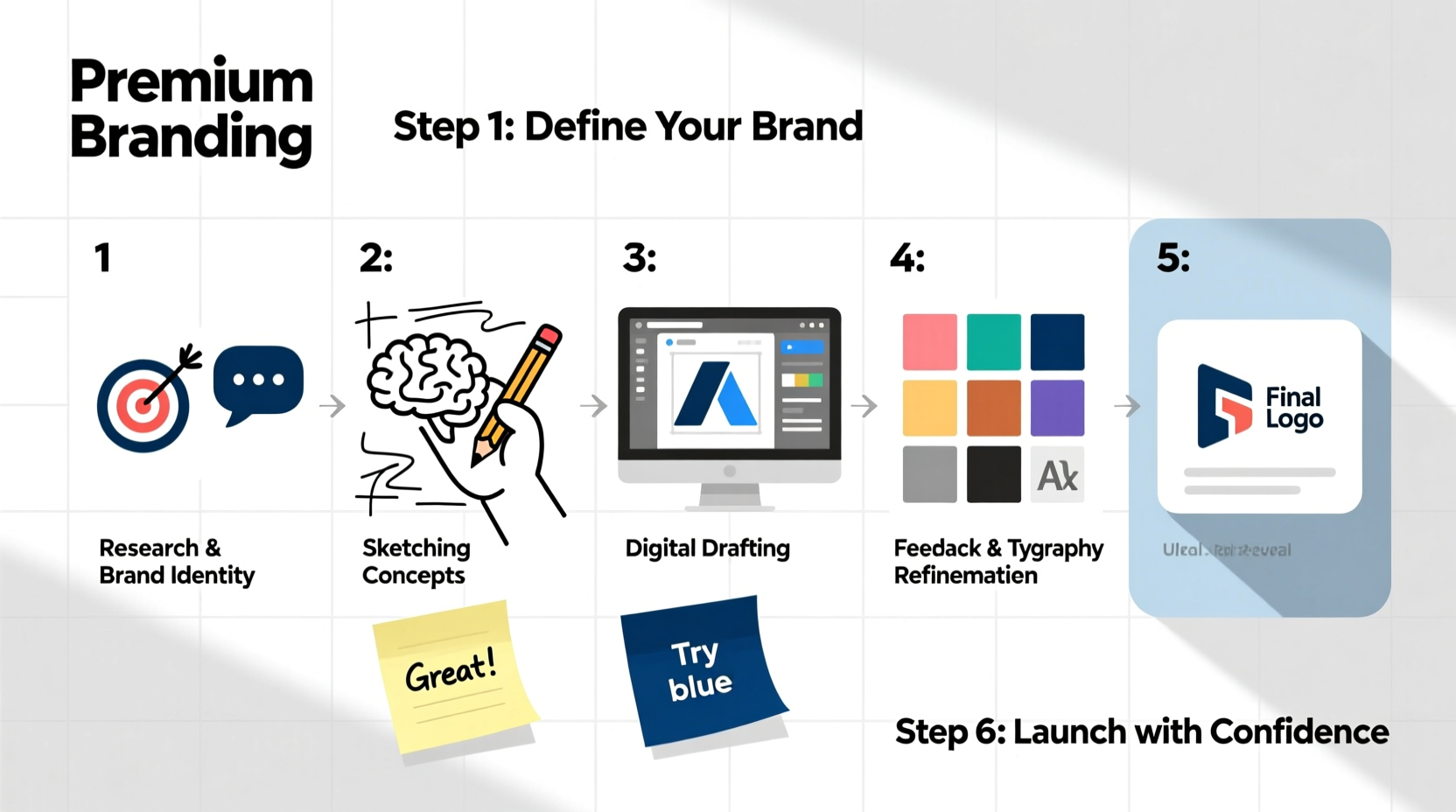
Before sketching a single line, clarify who your brand is. A successful logo reflects your mission, audience, industry, and personality. Ask yourself: What emotions should your brand evoke? Is it bold and modern, or traditional and trustworthy? Who are you speaking to—tech-savvy millennials, corporate clients, or eco-conscious families?
Document your core brand elements:
- Mission and values – Why does your business exist?
- Tone of voice – Friendly, authoritative, playful, or minimalist?
- Target audience – Age, location, interests, pain points.
- Competitive landscape – How do others in your space present themselves?
“Design is not just what it looks like. Design is how it works.” — Steve Jobs
Research and Analyze Competitors
Effective logos stand out while fitting within industry expectations. Study logos from direct and indirect competitors. Look beyond aesthetics—analyze what makes them memorable. Are they wordmarks, symbols, or combination marks? What color psychology do they use? Do they lean toward minimalism or illustrative detail?
This isn’t about copying—it’s about identifying gaps and opportunities. If every competitor uses blue and serif fonts, a clean black-and-red sans-serif design might cut through the noise.
| Brand Type | Common Logo Styles | Color Trends |
|---|---|---|
| Tech Startups | Abstract symbols, custom typography | Blue, purple, gradient schemes |
| Eco-Friendly Brands | Nature-inspired icons, organic shapes | Green, earth tones, natural textures |
| Luxury Services | Emblems, monograms, elegant serifs | Black, gold, white – high contrast |
| Creative Agencies | Playful typography, dynamic layouts | Bold primaries, experimental palettes |
Define Your Logo Requirements
Not all logos serve the same purpose. Your final design must be functional across multiple platforms and sizes—from mobile apps to billboards. Consider these practical needs:
- Versatility – Should work in color, black-and-white, and at small sizes (e.g., favicon).
- Scalability – Must remain clear when enlarged or reduced.
- Format compatibility – Needs vector formats (SVG, AI, EPS) for print and web.
- Application context – Will it appear on packaging, uniforms, digital ads?
“A logo is not art. Art is self-expression. Design is problem-solving.” — Paul Rand
Step-by-Step Guide to Creating Your Logo
Follow this structured process to ensure a professional outcome:
- Brainstorm Concepts – List keywords related to your brand. Think metaphorically: “growth,” “speed,” “trust.” Use mind maps to explore connections.
- Sketch Initial Ideas – Grab pen and paper. Sketch freely without judgment. Focus on shapes, negative space, and letterforms.
- Choose a Logo Type – Decide between:
- Wordmark (e.g., Google) – Ideal if your name is distinctive.
- Lettermark (e.g., HBO) – Great for long company names.
- Iconic/Symbol (e.g., Apple) – Strong recognition potential.
- Combination Mark (e.g., Adidas) – Balances name and symbol.
- Emblem (e.g., Starbucks) – Formal, often used in education or government.
- Select Typography – Fonts carry meaning. Sans-serifs feel modern; serifs convey tradition. Avoid overly decorative fonts unless they align with your niche.
- Pick a Color Palette – Colors influence perception:
- Red: Energy, urgency
- Blue: Trust, professionalism
- Green: Growth, sustainability
- Yellow: Optimism, creativity
- Black: Luxury, sophistication
- Draft Digital Versions – Use tools like Adobe Illustrator, Figma, or Canva to digitize your best sketches. Stick to vector software for scalability.
- Refine and Simplify – Remove unnecessary details. Aim for clarity over complexity. Test how it looks at 1 inch wide.
- Get Feedback – Share with trusted colleagues or target customers. Ask: “What does this make you feel?” and “What kind of business would use this?”
- Finalize and Export – Save in multiple formats: SVG (web), PNG (transparency), EPS (print), and JPEG (general use).
Mini Case Study: Rebranding \"UrbanBrew Café\"
UrbanBrew Café, a local coffee shop, wanted to refresh its outdated logo. The original featured a cartoon cup with bright yellow steam and a cursive font. While friendly, it looked amateurish and didn’t reflect their artisanal beans or community focus.
The owner began by defining key brand traits: “warm,” “local,” “handcrafted.” They researched other independent cafés and noticed many used hand-drawn elements and earthy tones. Inspired, they sketched a minimalist coffee bean forming the dot of a lowercase “u” in “urban.”
They chose a warm brown and cream palette and paired a clean sans-serif with a subtle handwritten accent font for taglines. After testing variations with customers, they launched a refined combination mark that worked equally well on cups, social media, and storefront signage. Within three months, brand recognition increased by 40% according to local surveys.
Checklist: Essential Steps Before Finalizing Your Logo
- ✅ Clarified brand mission and audience
- ✅ Researched competitors’ visual identities
- ✅ Selected appropriate logo type (wordmark, symbol, etc.)
- ✅ Chosen fonts that match brand personality
- ✅ Tested color choices for emotional impact
- ✅ Created scalable vector files
- ✅ Reviewed logo in black-and-white
- ✅ Obtained feedback from stakeholders
- ✅ Verified legibility at small sizes
- ✅ Secured proper licensing for any third-party assets
Common Mistakes to Avoid
Even experienced designers can fall into traps. Watch out for:
- Overcomplication – Too many details make logos messy when scaled down.
- Trend dependency – Today’s trendy effect may look dated in two years.
- Ignoring versatility – A logo that only works in color fails on faxes or embroidery.
- Using free clipart or unlicensed fonts – Risks legal issues and lack of uniqueness.
- Skipping professional review – An expert eye can spot alignment, spacing, or proportion flaws.
FAQ
How much should I budget for a professional logo?
Freelance designers typically charge $300–$1,500 for a complete logo package including concepts, revisions, and file formats. Agencies may charge $2,000+. For startups, investing in quality design pays off in long-term credibility.
Can I design my own logo without experience?
Yes, especially with user-friendly tools like Canva or Looka. However, consider hiring a designer if branding is critical to your success. A professional brings strategic insight and technical precision that DIY tools can’t replicate.
How do I trademark my logo?
To protect your logo legally, file a trademark application with your national intellectual property office (e.g., USPTO in the U.S.). Conduct a thorough search first to ensure no one else owns a similar mark in your category.
Conclusion
A powerful logo doesn’t happen by accident. It emerges from deep understanding, deliberate choices, and iterative refinement. By grounding your design in brand truth and following a disciplined process, you create more than a graphic—you build a lasting symbol of trust and recognition.




 浙公网安备
33010002000092号
浙公网安备
33010002000092号 浙B2-20120091-4
Comments
No comments yet. Why don't you start the discussion?