
The Nordic Christmas aesthetic—rooted in Scandinavian design principles of hygge, lagom, and functional beauty—offers a powerful antidote to seasonal excess. It doesn’t rely on abundance, but on presence: the quiet weight of hand-thrown ceramics, the soft glow of beeswax candles, the whisper of dried birch branches against white walls. Creating this look with minimal decor isn’t about cutting corners—it’s about curating meaning. It’s choosing one perfect pinecone over ten plastic ornaments; placing a single linen-wrapped candlestick where others stack tinsel-laden centerpieces. This approach honors tradition while respecting modern living: smaller homes, sustainable values, and the desire for calm amid holiday noise. Done thoughtfully, a Nordic display feels deeply personal, serene, and effortlessly elegant—not sparse, but intentional.
Understanding the Nordic Christmas Ethos
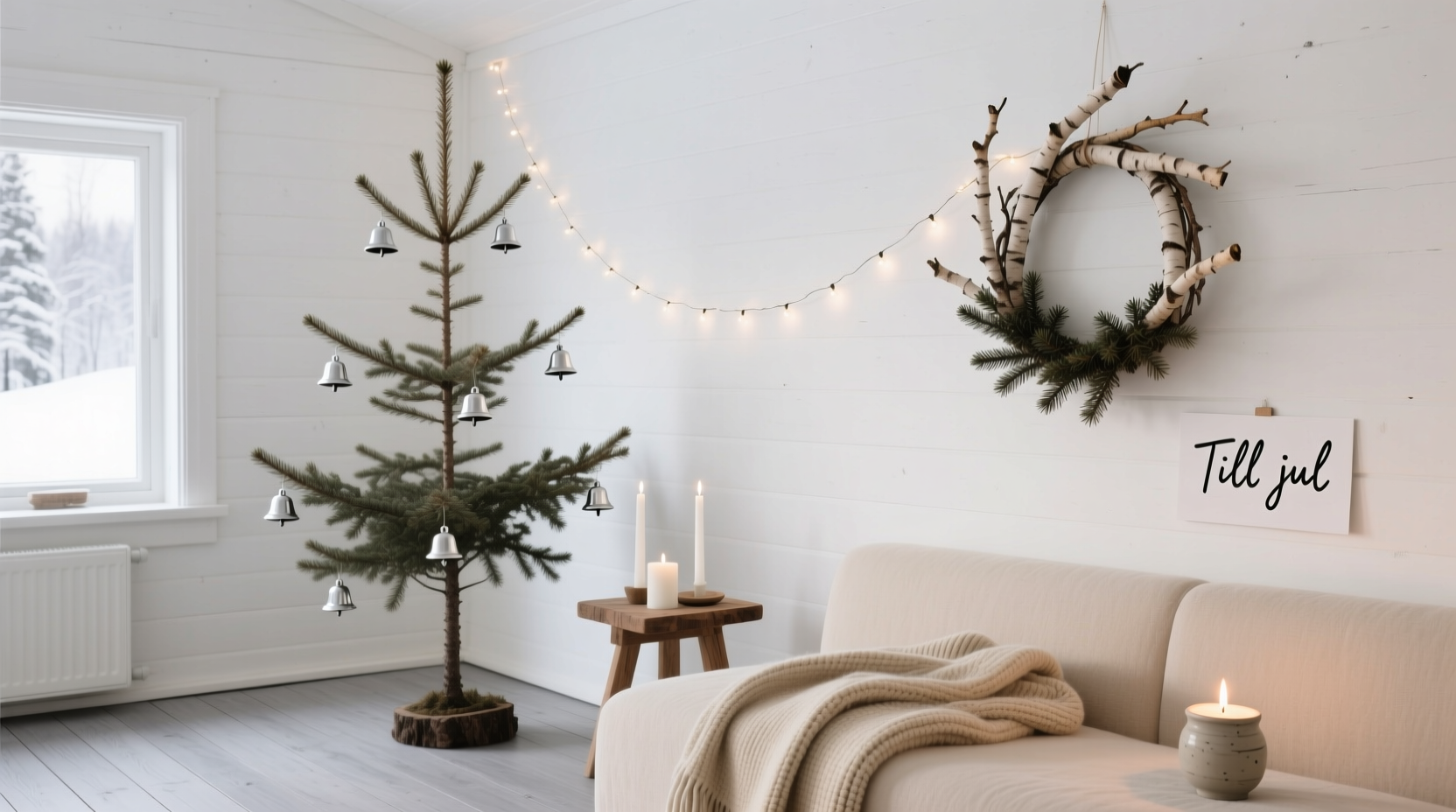
Nordic Christmas traditions evolved from long, dark winters and deep reverence for nature. In Sweden, St. Lucia Day (December 13) marks the turning point toward light with candlelit processions and saffron buns. In Norway, families gather around the julebord—a festive table set with handmade linens and heirloom glassware. Finland celebrates with silent forest walks and sauna rituals before Christmas Eve. These customs share core values: reverence for natural materials, respect for craftsmanship, emphasis on light and warmth, and a profound belief that less space allows more room for connection.
This ethos translates directly into decor philosophy. Unlike maximalist themes that layer pattern, color, and ornament, Nordic design prioritizes negative space, tactile authenticity, and monochromatic harmony. White, charcoal, oat, and muted forest green dominate—not as absence, but as canvas. Texture replaces pattern: rough-hewn wood grain, nubby wool, raw linen, frosted glass. Light is never harsh or artificial—it’s diffused, flickering, or reflected softly off matte surfaces.
Core Elements of Minimal Nordic Decor
A truly minimal Nordic Christmas display rests on just five foundational elements—each chosen for function, origin, and emotional resonance. None are decorative for decoration’s sake.
- Natural Wood Elements: Unstained, unfinished, or lightly oiled birch, ash, or pine. Think simple log slices as coasters, a single branch leaning in a corner, or a hand-carved wooden star hung with undyed linen twine.
- Textural Neutrals: Linen, unbleached cotton, boiled wool, and hand-thrown stoneware in matte finishes. Avoid sheen, gloss, or synthetic blends.
- Controlled Light Sources: Beeswax or soy candles in clear or frosted glass holders; LED string lights with warm-white (2700K–3000K), low-lumen output; paper lanterns made from recycled pulp.
- Foraged Botanicals: Dried eucalyptus, preserved juniper sprigs, cinnamon sticks, pinecones (left natural or lightly whitewashed), and birch bark strips. No plastic “greenery” or glitter-dipped berries.
- Intentional Negative Space: At least 60% of any surface remains visibly empty. A mantel holds three items only—a ceramic bowl, a single candle, a small sprig of fir. Walls remain bare except for one framed vintage Swedish Christmas print or a single woven wall hanging.
This restraint isn’t arbitrary. Research from the University of Gothenburg’s Design Psychology Lab shows that environments with high visual complexity increase cortisol levels by up to 22% during holiday periods—while spaces adhering to Nordic principles of clarity and material honesty reduce perceived stress and improve focus on interpersonal interaction.
Step-by-Step: Building Your Display in Under 90 Minutes
You don’t need weeks or a craft studio. With pre-sourced elements and focused intention, a cohesive Nordic display can be assembled in under 90 minutes. Follow this sequence—no deviations, no “just one more thing.”
- Clear & Assess (10 min): Remove all existing decor. Wipe surfaces. Stand back. Identify your primary focal point—the mantel, dining table, entry console, or windowsill. Ask: What do I want people to feel when they first see this space? (e.g., “calm,” “warmth,” “quiet celebration”). Write it down.
- Select Base Layer (15 min): Choose one textile anchor: a 100% linen runner (off-white or oat), a small wool throw folded at one end of the sofa, or a stoneware tray placed centrally on a side table. This sets the tone and scale. No mixing fibers or hues—only one base layer per zone.
- Add Natural Structure (20 min): Place your largest natural element: a birch branch (36–42” long) leaning in a floor corner, a log slice under a candle, or a small potted dwarf spruce in an unglazed ceramic pot. Ensure it has visible grain, knots, or irregularity—perfection is excluded.
- Introduce Light (15 min): Position candles or lights. Use odd numbers: one on a shelf, three along a mantel, five in staggered heights on a dining table. All flames must be at eye level or lower—never above head height. If using LEDs, wrap cords tightly and conceal behind objects or within hollow logs.
- Final Touch & Edit (30 min): Add botanicals—no more than three types total across your entire home. Then, remove one item. Step away for five minutes. Return and remove *one more*. The final edit is non-negotiable. If it doesn’t serve warmth, texture, light, or memory—it doesn’t belong.
What to Use (and What to Skip)
Choosing the right materials makes all the difference—not just aesthetically, but emotionally and ecologically. Below is a concise comparison of authentic Nordic choices versus common compromises.
| Category | Authentic Nordic Choice | Why It Works | Avoid | Why It Breaks the Ethos |
|---|---|---|---|---|
| Candles | Beeswax or rapeseed oil candles in hand-blown glass or ceramic holders | Natural burn, subtle honey scent, warm amber flame; holders emphasize material honesty | Paraffin candles, colored wax, metallic tins | Paraffin is petroleum-based; dyes and metals contradict purity and sustainability |
| Greenery | Dried juniper, foraged birch twigs, preserved eucalyptus, unsprayed pinecones | Locally sourced, biodegradable, textural variation, subtle scent | Plastic garlands, glitter-sprayed branches, dyed moss | Non-renewable, visually noisy, chemically treated, contradicts nature reverence |
| Ornaments | Hand-blown glass baubles (clear or smoky grey), wooden stars, ceramic hearts, linen pouches filled with cinnamon sticks | Emphasize craft, weight, and tactility; color palette stays within 3 tones | Metallic balls, sequined trees, cartoonish figurines, mass-produced resin | Reflective surfaces disrupt soft light; mass production negates human-scale value |
| Lighting | Warm-white LED filament bulbs (2700K), paper lanterns, candlelight only | Mimics firelight; avoids blue spectrum that suppresses melatonin | Multi-color LEDs, flashing lights, cool-white strings | Disrupts circadian rhythm; visual chaos undermines calm |
Real Example: A Stockholm Apartment Transformation
In late November 2023, Lena Holm, a 34-year-old graphic designer in Södermalm, faced a familiar challenge: her 42 m² apartment had no storage for seasonal decor, and last year’s red-and-gold tinsel-filled tree left her exhausted by December 10th. She committed to a strict Nordic minimal display—no budget increase, no new purchases beyond what she already owned.
Lena began by photographing every surface in her home, then digitally removing all decor using editing software. She identified her strongest existing assets: a 1972 Swedish ceramic vase (matte white, cracked glaze), a hand-knitted oat-colored wool blanket, and a collection of river-smoothed stones gathered during summer hikes. She foraged birch branches and pinecones from nearby Djurgården park, dried them on her balcony for five days, and boiled cinnamon sticks for scent. Her “tree” became a single 1.8-meter birch branch mounted vertically on the wall with brass brackets, wrapped at its base with undyed linen and dotted with three beeswax candles and six pinecones.
Her mantel held only the ceramic vase (filled with dried eucalyptus), one pillar candle, and a small sprig of juniper tucked behind it. She strung 15 warm-white LED bulbs—hidden inside hollow reeds—along her bookshelf. Total assembly time: 78 minutes. Visitors consistently remarked on how “still” and “present” the space felt—even children lowered their voices upon entering. As Lena shared in a local design forum: “It wasn’t about having less. It was about finally seeing what mattered.”
“The Nordic Christmas isn’t defined by what you add—but by what you protect: silence, light, shared warmth, and the dignity of natural materials.” — Anders Lindström, Curator of Nordic Design, National Museum of Denmark
Essential Checklist for Your Nordic Display
Before lighting your first candle, verify each item on this list. Print it. Check it off. Then put it away—no further reference needed.
- ☑ All surfaces have been cleared—not just decorated, but *emptied*
- ☑ Only one primary textile is in use (linen, wool, or unbleached cotton)
- ☑ Every wooden element is untreated, unstained, or lightly oiled—no varnish or lacquer
- ☑ Candles or lights emit only warm-white light (2700K–3000K); no cool tones or color shifts
- ☑ Botanicals are either foraged, sustainably harvested, or certified organic—no plastic imitations
- ☑ There are no words, slogans, or characters (e.g., no “Merry Christmas” signs, no Santa figures)
- ☑ You’ve removed at least two items after your initial arrangement
FAQ: Practical Questions Answered
Can I use faux fur or synthetic wool in a Nordic display?
No—authentic Nordic design rejects synthetics on principle. Wool, linen, wood, stone, and glass are non-negotiable materials because they carry inherent texture, breathability, and ecological integrity. If real wool is cost-prohibitive, choose thick, unbleached cotton or handwoven jute instead. Faux alternatives introduce static, chemical odors, and visual flatness that undermine the entire aesthetic.
How do I make a minimal display feel festive—not austere?
Festivity comes from sensory warmth, not visual density. Focus on touch (a nubby wool throw), scent (cinnamon, pine, beeswax), sound (the quiet crackle of a real candle, not electric “fireplace” noise), and taste (homemade ginger biscuits served on stoneware). An austere space feels cold and empty; a Nordic space feels held, grounded, and quietly generous. If your display feels sterile, add one more candle—or one more person to share it with.
What if my home has bold colors or modern furniture?
Nordic minimalism integrates seamlessly with contemporary interiors. Anchor your display with the same neutral palette already present—pull the oat tone from your sofa fabric, match the charcoal of your bookshelf shelves, echo the grain of your dining table. The key is contrast through texture, not color clash. A single birch branch beside a glossy black cabinet creates sophisticated tension. A linen runner on a marble table grounds the cool surface in warmth. Let your existing architecture lead—you’re not overriding it, but harmonizing with it.
Conclusion: Embrace the Quiet Magic
A Nordic-themed Christmas display built with minimal decor is more than a stylistic choice—it’s an act of quiet resistance. Resistance against consumption fatigue. Against the pressure to perform festivity. Against the idea that joy must be loud, layered, or expensive. When you choose one perfect candle over ten mismatched ones, when you hang a single handmade ornament instead of filling a tree, when you leave space for breath and stillness—you’re honoring centuries of Nordic wisdom: that light is most luminous against darkness, that warmth is deepest when shared simply, and that beauty resides not in accumulation, but in attention.
This season, don’t ask “What more can I add?” Ask “What can I release—to make room for presence?” Gather your birch branch. Light your beeswax candle. Place your hand on the cool, honest grain of wood. Breathe. That is the heart of it.




 浙公网安备
33010002000092号
浙公网安备
33010002000092号 浙B2-20120091-4
Comments
No comments yet. Why don't you start the discussion?