
In the heart of winter, when snow blankets rooftops and daylight fades early, the Nordic countries embrace a philosophy of warmth through simplicity. This essence—known as *hygge* in Denmark or *kos* in Sweden—is not just about comfort; it’s about intentionality. When applied to holiday decor, particularly the Christmas tree, this aesthetic yields a space that feels both festive and peaceful. A Nordic-themed Christmas tree with minimalist elegance avoids clutter and excess, favoring natural textures, soft lighting, and muted tones. It’s a celebration of stillness amid the season’s frenzy.
Creating such a tree is less about what you add and more about what you choose to leave out. It’s an invitation to slow down, reflect, and celebrate beauty in restraint. Whether your home is a city apartment or a countryside cabin, this approach brings timeless charm without overwhelming your space.
The Essence of Nordic Holiday Design
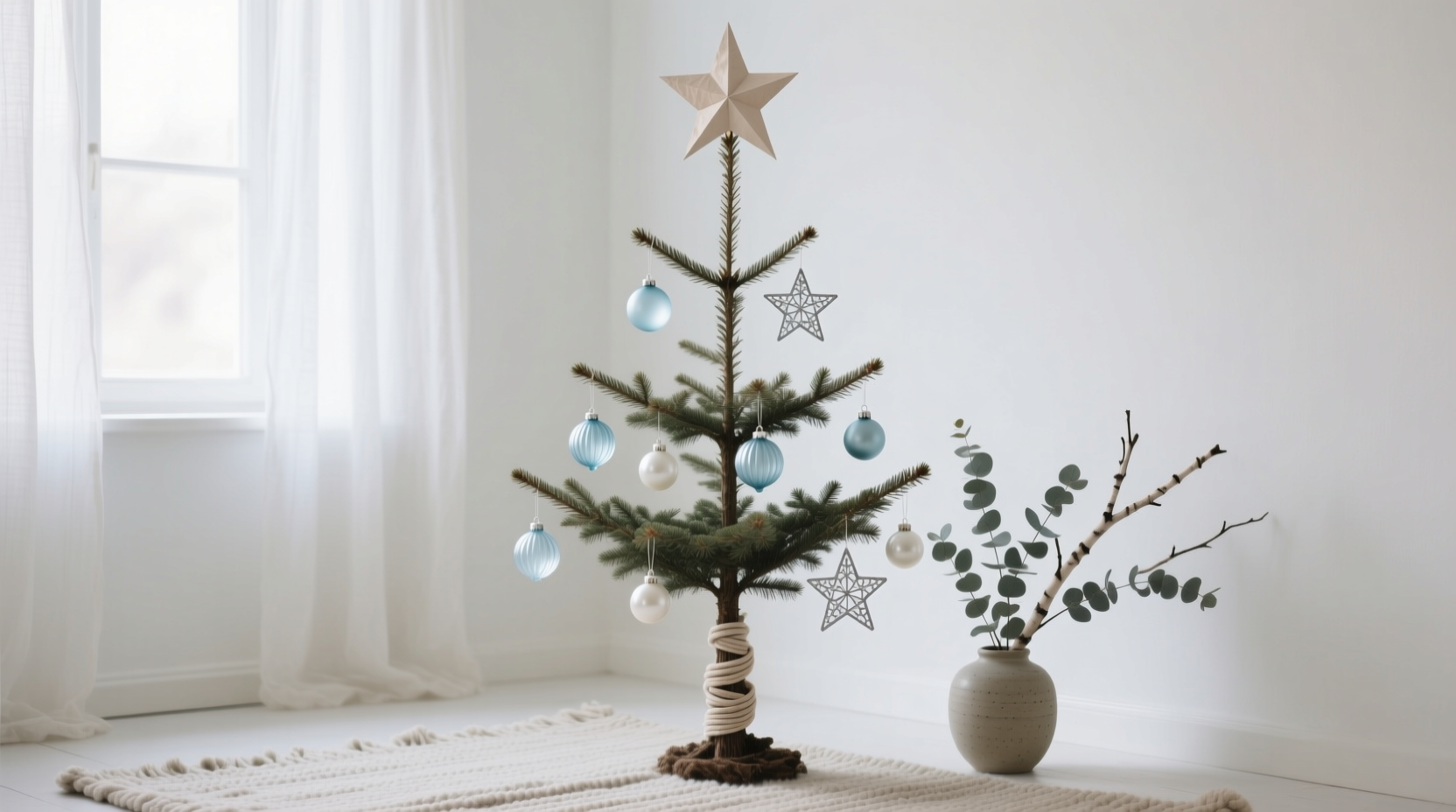
Nordic design is rooted in functionality, nature, and calm. During the holidays, this translates into decor that feels grounded rather than flashy. Unlike traditional red-and-green extravaganzas, a Nordic Christmas tree leans into monochrome palettes, organic materials, and handmade elements. The goal isn’t to impress—it’s to create a focal point that soothes the eye and warms the soul.
Key characteristics include:
- Neutral color schemes: Whites, creams, grays, soft blues, and earthy browns dominate.
- Natural materials: Wood, wool, linen, dried citrus, pinecones, and birch bark are staples.
- Handcrafted ornaments: Knitted stars, felt animals, wooden initials, and salt-dough shapes carry personal meaning.
- Soft illumination: Candles, fairy lights, and lanterns provide gentle glow rather than bright sparkle.
- Intentional sparsity: Ornaments are placed with care, not coverage. Negative space is part of the design.
This approach reflects a deeper cultural attitude: that beauty lies in authenticity and purpose. As designer Ingrid Fetell Lee writes, “Joy doesn’t have to be loud. Sometimes it whispers—in the flicker of candlelight, the texture of knitted wool, the quiet symmetry of a well-placed ornament.”
“Minimalism in Nordic decor isn’t about emptiness—it’s about making room for what matters.” — Lars Malmström, Scandinavian Interior Historian
Step-by-Step Guide to Building Your Tree
Creating a Nordic-inspired Christmas tree follows a deliberate sequence. Each step reinforces the principles of simplicity, balance, and natural harmony.
- Select the right tree: Opt for a real fir, spruce, or pine if possible. Its natural scent and irregular shape embody rustic authenticity. If using an artificial tree, choose one with matte green needles and minimal sheen. Avoid pre-lit models with bold white or colored lights—these clash with the subdued palette.
- Use a neutral tree skirt: Replace traditional red velvet with a cream-colored linen cloth, a woven sheepskin rug, or a simple burlap wrap. These textures echo Nordic craftsmanship and ground the tree visually.
- String natural garlands: Drape long chains of popcorn (unsalted, unbuttered), dried orange slices, or cinnamon sticks tied with twine. These biodegradable options add subtle fragrance and visual rhythm without overwhelming the branches.
- Add soft lighting: Use warm-white LED fairy lights with a low lumen output. Wrap them loosely, focusing on the inner trunk and lower branches to create depth. For added authenticity, incorporate battery-operated LED candles nestled among the boughs—never real flames unless supervised.
- Hang handmade ornaments sparingly: Limit yourself to 15–25 decorations for a standard 6-foot tree. Place larger items toward the bottom and smaller ones higher up. Allow at least 6 inches between each piece to preserve breathing room.
- Crown with simplicity: Skip the glittery star or angel. Instead, use a wooden snowflake, a loop of reindeer moss, or a single lit candle (simulated) at the top. Let the peak feel intentional, not overstated.
Essential Elements Checklist
To ensure your tree captures the Nordic spirit, follow this curated checklist:
- ✔ Real or high-quality artificial evergreen tree
- ✔ Neutral-toned tree stand or hidden base cover
- ✔ Cream, gray, or natural fiber tree skirt
- ✔ Warm-white fairy lights (preferably dimmable)
- ✔ Natural garlands (dried fruit, popcorn, or felt strips)
- ✔ Handmade ornaments in wood, wool, or paper
- ✔ Minimalist tree topper (wooden shape or fabric bow)
- ✔ Optional: Small ceramic candle holders or faux fur accents around the base
Resist the urge to include tinsel, plastic snow, or mass-produced character ornaments. These disrupt the serene tone. Every addition should serve texture, light, or memory—not merely fill space.
Do’s and Don’ts: A Practical Table
| Do | Don’t |
|---|---|
| Use matte finishes on all materials | Use glossy or metallic surfaces |
| Incorporate handmade or heirloom pieces | Rely solely on store-bought plastic ornaments |
| Limit color to 2–3 tones max | Mix bright red, green, gold, and silver |
| Embrace asymmetry and organic placement | Arrange ornaments in rigid rows or patterns |
| Include natural scents like pine or cinnamon | Use synthetic air fresheners or overpowering sprays |
A Real Example: Anna’s Apartment Tree in Oslo
Anna, a graphic designer living in a small Oslo flat, wanted her first solo Christmas to feel meaningful but not chaotic. With only 400 square feet of space, she knew a traditional tree would dominate the room. Instead, she chose a narrow, 5.5-foot Nordmann fir delivered by a local farm. She wrapped the base in unbleached linen and secured it with a leather strap instead of a stand.
Her lighting was limited to 50 warm-white LEDs strung vertically along the trunk, creating a column of soft light. She made eight ornaments over three evenings: two knitted reindeer from recycled wool, four wooden discs painted with delicate snowflakes, and two salt-dough hearts stamped with her family initials. One orange slice garland circled the midsection.
The result? A tree that felt present but not imposing. Her neighbors commented that it “smelled like childhood” and “looked like silence had been decorated.” Anna kept a journal beside it, writing one gratitude each night. The tree became less a decoration and more a ritual.
Frequently Asked Questions
Can I incorporate any color beyond neutrals?
Yes—but sparingly. A single deep forest green ribbon or a faint blush on a hand-painted ornament can work if it doesn’t dominate. The key is tonal harmony. Think of color as an accent, not a theme.
What if I don’t have time to make my own decorations?
That’s perfectly fine. Look for sustainably made Nordic-style ornaments online or at artisan markets. Prioritize natural materials and simple forms. Even three well-chosen pieces can anchor the tree better than twenty generic balls.
Is this style suitable for families with young children?
Absolutely. While fragile items should be placed higher, many Nordic ornaments—like felt stars or wooden animals—are child-friendly. You can also create a “kids’ zone” on lower branches where their handmade crafts take center stage, maintaining the overall aesthetic while honoring their involvement.
Conclusion: Embrace Quiet Celebration
A Nordic-themed Christmas tree with minimalist elegance isn’t just a design choice—it’s a mindset. It invites you to reconsider what the holidays are for. Is it to dazzle, or to dwell? To accumulate attention, or to cultivate presence?
By stripping away excess, you make space for what truly glows: shared moments, handmade care, and the quiet joy of a room softened by candlelight. This tree won’t shout from across the room, but it will hold your gaze when you pause beside it with a cup of tea, reminding you that beauty often lives in the barely there.
Your home doesn’t need to be Scandinavian to reflect these values. Start small. Choose one element—a linen skirt, a string of dried oranges, a single wooden star—and build from there. Let this season be less about perfection and more about peace.




 浙公网安备
33010002000092号
浙公网安备
33010002000092号 浙B2-20120091-4
Comments
No comments yet. Why don't you start the discussion?