
There’s a quiet magic in the way certain Christmases linger—not as memories, but as sensory imprints: the low hum of a tube radio warming up, the soft crackle beneath Bing Crosby’s voice, the faint scent of pine needles mingling with old paper and warm plastic from a 1970s Fisher-Price record player. Today’s hyper-connected, algorithm-curated holiday season often feels frictionless—but also emotionally weightless. Nostalgia isn’t about escaping the present; it’s about reintroducing texture, intention, and humanity into celebration. This isn’t retro as costume. It’s retro as ritual—using analog tools not for novelty, but for presence. The goal isn’t to replicate the 1950s or 1980s exactly, but to borrow their deliberate slowness, their physicality, and their unapologetic warmth.
The Philosophy Behind Analog Holiday Warmth
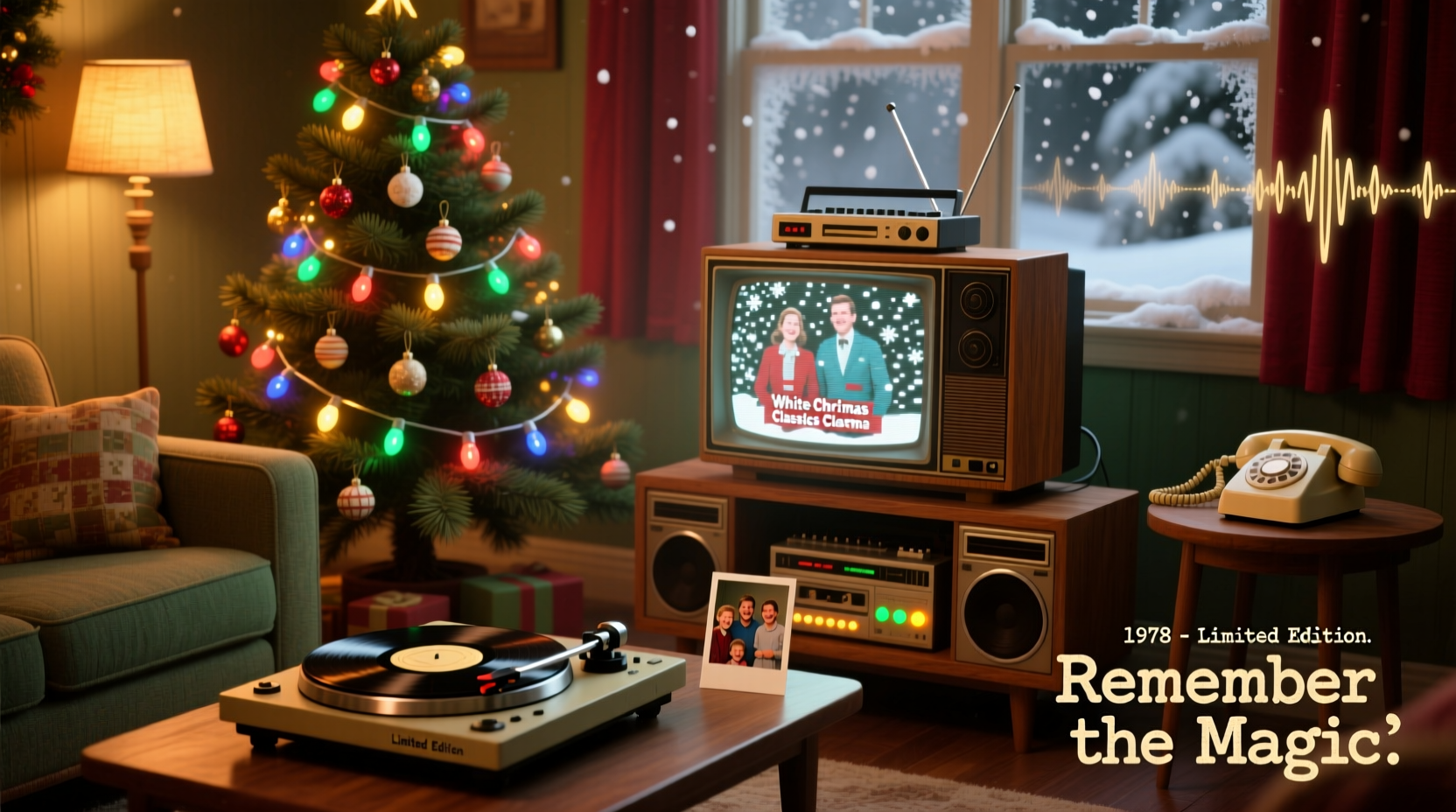
Nostalgic Christmas vibes aren’t generated by aesthetics alone. They emerge from three interlocking principles: tactility, limitation, and temporal resonance. Tactility means engaging multiple senses through physical objects—the heft of a vinyl sleeve, the resistance of a rotary dial, the grain of a hand-typed card. Limitation refers to the gentle constraints of older technology: a single turntable means one album at a time; a reel-to-reel tape recorder invites editing by splicing, not deleting. These boundaries slow consumption and deepen attention. Temporal resonance is subtler—it’s the way a specific frequency range (like the 3–5 kHz “presence boost” common in mid-century AM radio) or a particular tape hiss triggers limbic recognition, bypassing cognition to land directly in emotional memory.
Musicologist Dr. Lena Torres observes:
“The warmth people associate with ‘vintage Christmas’ isn’t just nostalgia—it’s psychoacoustics. Tube amplifiers introduce even-order harmonic distortion that the human ear perceives as ‘fuller’ and more comforting. Combined with the slight pitch instability of aging tapes or worn turntable belts, it creates an auditory signature our brains map to safety, family, and continuity.” — Dr. Lena Torres, Director of Audio Heritage Studies, Indiana University
Retro Tech That Builds Atmosphere (Not Just Gimmicks)
Effective retro tech integration avoids kitsch. Prioritize devices that serve functional roles in your holiday routine—and whose quirks enhance, rather than interrupt, the experience.
Here’s how to select and use key technologies meaningfully:
- Vinyl Records & Belt-Drive Turntables: Seek out original pressings of classic holiday albums—Perry Como’s Christmas Songs (1959), Nat King Cole’s The Magic of Christmas (1960), or even the slightly off-kilter charm of the 1978 Star Wars Christmas Album. A belt-drive turntable with a felt mat and basic cartridge delivers warmth without requiring audiophile investment. Avoid direct-drive models unless they’re vintage (e.g., Technics SL-B200)—their precision feels too clinical for this purpose.
- Vacuum Tube Radios: Models like the Zenith Trans-Oceanic series (1950s–60s) or the Philco Predicta (1958) offer rich AM/FM reception with unmistakable tube glow. Tune into local holiday-themed AM stations (many still broadcast carols on AM frequencies) or use the radio’s built-in speaker for ambient background sound—even when no station is perfectly tuned, the low-frequency hiss and distant signal bleed create atmospheric depth.
- Cassette Decks & Reel-to-Reel Recorders: Use these for personalization. Record a family member reading “The Night Before Christmas” onto a blank Maxell XLII cassette. Make a mixtape of lesser-known holiday songs (think Darlene Love’s “Christmas (Baby Please Come Home)” or The Ronettes’ “Sleigh Ride”)—the physical act of flipping sides and rewinding reinforces ritual. For authenticity, splice edits with Scotch tape and a razor blade.
- Analog Clocks & Light Timers: Replace digital LED displays with a Westclox Big Ben alarm clock or a 1970s GE mechanical timer for your tree lights. The soft tick, the visible gear movement, and the lack of blinking digits ground the space in real time—not simulated time.
Curating a Nostalgic Music Experience (Beyond the Playlist)
A nostalgic Christmas soundtrack isn’t defined solely by song selection—it’s shaped by delivery, context, and imperfection. Streaming services offer convenience, but they erase the very elements that trigger nostalgia: the anticipation of side A ending, the slight warble of a record groove, the shared silence while someone flips the tape.
| Element | Retro Approach | Why It Works |
|---|---|---|
| Playback Order | Commit to full albums—no skipping. Let side A of Andy Williams’ It’s the Most Wonderful Time of the Year (1963) play uninterrupted. | Creates narrative flow and mimics how families experienced music before on-demand listening. The pause between sides becomes a natural moment for conversation or hot cocoa refills. |
| Song Selection | Mix iconic tracks with regional or era-specific obscurities: Wanda Jackson’s “Santa’s Rockin’” (1959), The Chipmunks’ “Christmas with the Chipmunks” (1962), or even instrumental lounge versions (e.g., Martin Denny’s “Christmas Island”). | Avoids overexposure fatigue. Obscure cuts carry authentic period texture without triggering commercial saturation bias. |
| Sound Quality | Embrace mild imperfections: surface noise on vinyl, slight tape flutter, or the compressed fidelity of AM radio broadcasts. | These “flaws” are sonic signatures of authenticity. Our brains associate them with memory encoding—making the experience feel more personally resonant. |
| Interaction | Assign roles: One person chooses the next album, another adjusts the tone control on the amp, a child places the needle. | Distributes agency and makes music-making a collaborative, embodied activity—not passive consumption. |
A Step-by-Step Guide to Building Your Retro Holiday Setup
Creating this atmosphere doesn’t require deep pockets or technical expertise. Follow this realistic, phased approach:
- Week 1: Audit & Acquire Core Sound
Test your existing speakers—if they’re modern Bluetooth units, temporarily disconnect them. Source one analog playback device: a working tube radio ($80–$200 on eBay or local vintage shops) or a refurbished turntable ($120–$300). Prioritize functionality over cosmetics—scratches on the cabinet are part of the story. - Week 2: Build Your First Physical Library
Purchase three original vinyl LPs or high-quality reissues: one iconic (Bing Crosby), one eclectic (The Ventures’ Christmas Album, 1965), and one personal (a local choir recording from the 1970s, if available). Resist digital backups for now—physical media enforces presence. - Week 3: Integrate Tactile Rituals
Designate a “music corner”: a small table with a felt mat, a stack of records, a vintage lamp, and a notebook for writing down favorite moments (“12/10 – Heard snow falling during ‘Silent Night’ on side B”). Add a manual timer for lights and a non-digital thermometer to track room temperature—warmth is part of the feeling. - Week 4: Invite Imperfection & Participation
Host a “Vinyl Night”: Guests bring one holiday record and share why it matters. Play each side fully. Serve drinks in mismatched vintage glasses. If the needle skips, laugh—and restart. Document the evening with a disposable film camera (Fujifilm QuickSnap) instead of smartphones. - Ongoing: Maintain the Vibe
Once weekly, spend 15 minutes cleaning records with distilled water and a carbon fiber brush. Wind the clock. Check tape deck belts for stiffness. These small acts reinforce care and continuity—the essence of tradition.
Real Example: The Henderson Family’s Analog Advent
In Portland, Oregon, the Hendersons transformed their holiday routine after noticing their children scrolling silently during carol singing. In 2022, they committed to a “No Digital December.” They sourced a 1964 Zenith Royal 500D transistor radio (found at a church rummage sale for $12) and began tuning into KEX-AM’s annual “Yuletide Hour,” a locally produced show featuring live piano, listener call-ins, and weather reports read in a mid-century cadence. They recorded the broadcasts onto cassette, then played them back during cookie baking—introducing the kids to the static-laced intro jingle and the host’s slightly reedy baritone. Their daughter, age 9, now insists on winding the kitchen wall clock every morning. “It feels like we’re inside a story,” she told her parents last year. “Not watching one.” The shift wasn’t about rejecting modernity—it was about reclaiming the feeling of being collectively held by sound, time, and shared attention.
Frequently Asked Questions
Do I need expensive vintage gear to get the right vibe?
No. Functionality matters more than pedigree. A working 1980s Sony boombox with good speakers delivers more authentic warmth than a $2,000 modern turntable with digital outputs. Focus on devices with analog signal paths, physical controls, and audible mechanical feedback (like a satisfying click when pressing play).
What if I can’t find original records or tapes?
Start with high-fidelity digital rips—then play them through analog equipment. Burn a CD of curated holiday tracks and play it on a vintage CD player with tube output stages (e.g., early Marantz models). The conversion happens in the amplifier and speakers, not the source. The goal is the *listening experience*, not archival purity.
How do I handle modern needs (like video calls with distant relatives) without breaking the mood?
Designate one small, neutral-tech zone—like a folding table in the hallway—for digital use. Keep all retro elements confined to the main living area. When video calling, dim the festive lights, mute background music, and use a simple backdrop (a wool blanket, not a virtual background). The contrast actually heightens appreciation for the analog space when you return to it.
Conclusion: The Enduring Power of Intentional Warmth
Retro tech doesn’t transport us backward. It anchors us—in the weight of a record in hand, the patience required to thread a tape, the shared glance when a favorite lyric arrives. In a world optimized for speed and scalability, choosing analog Christmas tools is a quiet act of resistance: resistance against emotional dilution, against the tyranny of infinite choice, against the erasure of time’s gentle imperfections. You don’t need a museum-worthy collection. You need one turntable, one well-chosen album, and the willingness to let the needle drop—and wait.
This season, try turning off the smart speaker. Unplug the streaming box. Find a local record shop or thrift store. Hold a piece of history in your hands. Press play. Listen—not just to the music, but to the space between the notes, the hum of the amplifier, the sound of your own breath syncing with the rhythm of something made by human hands, for human hearts.




 浙公网安备
33010002000092号
浙公网安备
33010002000092号 浙B2-20120091-4
Comments
No comments yet. Why don't you start the discussion?