
A true rustic cabin vibe isn’t about imitation—it’s about evoking warmth, texture, quietude, and groundedness. It’s the scent of aged wood, the soft glow that pools on worn floorboards, the organic weight of natural elements gathered from the forest floor. Warm string lights and pine cones are two of the most accessible, affordable, and emotionally resonant tools for achieving this atmosphere—but only when used with intention. Done carelessly, they risk looking like generic holiday decor or craft-store clutter. Done thoughtfully, they become anchors of authenticity: subtle, sensory, and deeply calming. This guide distills years of interior styling experience—including work with mountain lodges, boutique cabins, and heritage home restorations—into actionable, safety-conscious, and aesthetically coherent methods.
The Psychology Behind the Glow: Why Warm Light and Pine Cones Work Together
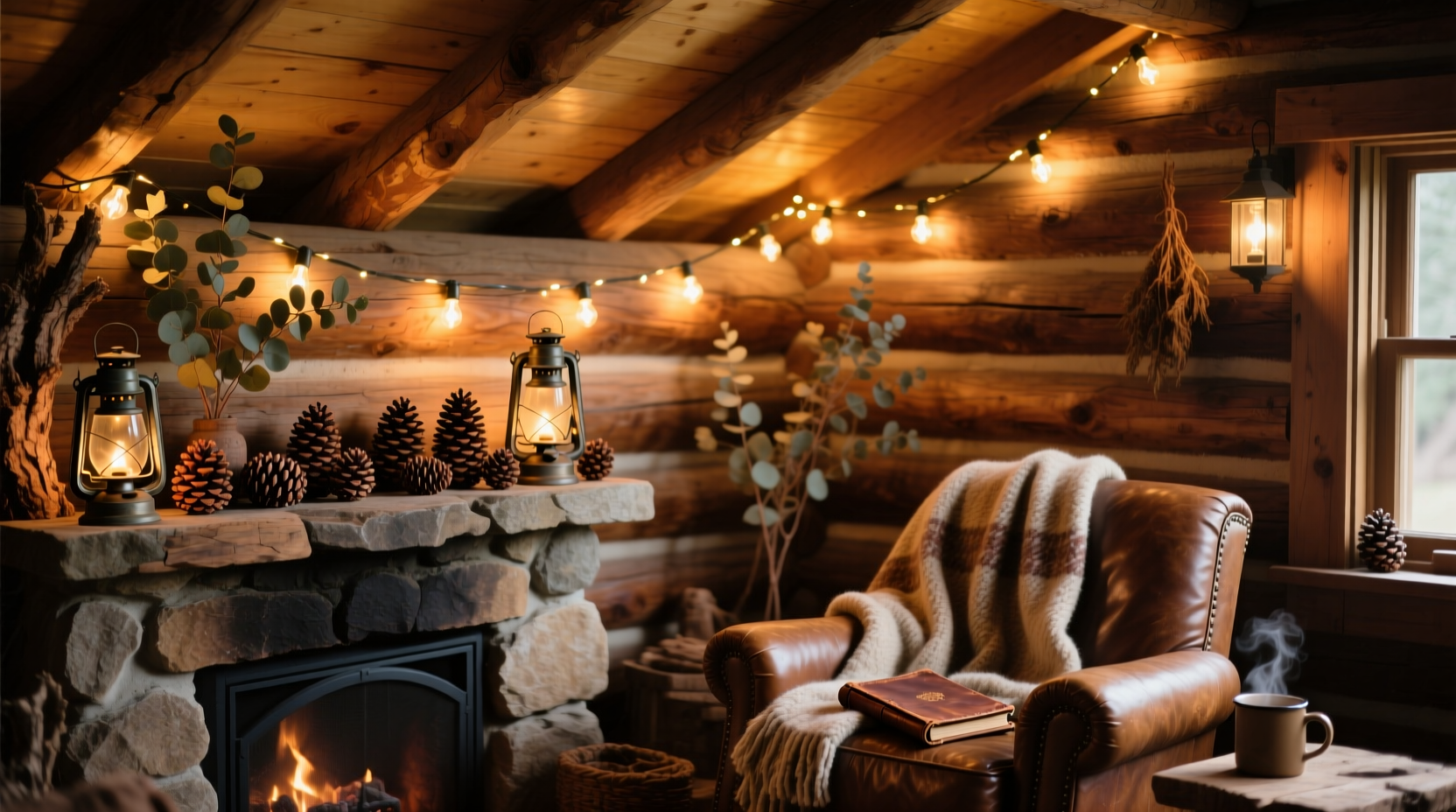
Human perception responds predictably to specific visual cues. Warm-toned light (measured between 2200K–2700K on the Kelvin scale) mimics sunset and firelight—the wavelengths our ancestors associated with safety, rest, and community. In contrast, cool white light (4000K+) triggers alertness and is better suited for task-oriented spaces. Pine cones, meanwhile, carry strong biophilic resonance: their fractal geometry, weathered textures, and earthy scent activate our innate connection to nature. When combined, warm light illuminates the intricate ridges and resinous sheen of pine cones without washing them out, while the cones diffuse and soften the light’s path—creating pockets of shadow and depth that mimic the dappled quality of sunlight filtering through conifer boughs.
This synergy isn’t decorative happenstance. Neuroaesthetic research confirms that environments rich in natural materials *and* low-color-temperature lighting reduce cortisol levels by up to 18% and increase perceived spaciousness—even in compact urban apartments. The key is avoiding uniformity: staggered heights, irregular groupings, and intentional asymmetry replicate how light and organic matter behave in real woodland settings.
Choosing the Right String Lights: Safety, Scale, and Authenticity
Not all warm string lights serve the rustic cabin aesthetic equally. LED options dominate the market, but many emit a flat, overly uniform glow that reads as “party lights” rather than “hearth light.” Prioritize these features:
- Dimmability: Essential for adjusting ambiance across times of day and seasons. Non-dimmable strings limit flexibility and often produce harsher output at full brightness.
- Bulb shape and finish: Opt for Edison-style filament bulbs (preferably amber-tinted glass, not clear) or vintage-style globes with visible filaments. Avoid plastic-coated bulbs—they lack warmth and degrade visually over time.
- Cord material: Fabric-wrapped cords (cotton or linen blend) feel tactile and grounded; transparent PVC cords read as temporary or utilitarian.
- UL/ETL certification: Non-negotiable for indoor use, especially near combustible materials like dried pine cones or wooden beams.
Harvesting, Preparing, and Styling Pine Cones the Right Way
Pine cones are abundant, but not all are equal for interior use. Wild-harvested cones offer unmatched character—subtle variations in size, color, and resin content—but require careful preparation to prevent pests, mold, or dust release. Store-bought cones are convenient but often oversanitized, losing their natural scent and textural nuance.
Foraged cones: Collect after dry, windy days when cones have naturally opened and detached. Avoid damp forest floors or cones showing signs of insect bore holes (tiny exit holes or sawdust piles). Place freshly gathered cones on a baking sheet lined with parchment paper and bake at 200°F (93°C) for 30 minutes. This kills insects, dries residual sap, and sterilizes surface microbes. Let cool completely before handling.
Styling principles:
- Group in odd numbers: Trios and quintets feel organic; even-numbered arrangements suggest symmetry and formality—both antithetical to rustic ease.
- Mix species: Combine closed white pine cones (smooth, pale), open eastern red cedar cones (small, berry-like), and large, spiky ponderosa pine cones for layered visual interest.
- Embrace imperfection: Retain natural resin flecks, minor discoloration, or slight warping—these tell a story of wind, rain, and time.
“Authentic rustic design honors process, not perfection. A pine cone with a single beetle track or a string light with a slightly dimmer bulb tells a truer story than anything mass-produced and flawlessly uniform.” — Lena Torres, Founder of Timber & Thread Studio, specializing in biophilic residential interiors since 2012
Step-by-Step Installation: Creating Depth and Dimension
Effective rustic lighting avoids the “garland-on-a-string” effect. Instead, build layers that invite the eye to wander and rest. Follow this sequence:
- Anchor with architecture: Identify structural elements—exposed beams, mantelpieces, ceiling joists, or built-in shelving—and plan light placement to emphasize, not obscure, them.
- Establish primary glow zones: Hang one main string horizontally above the sofa or dining table, keeping it 7–10 feet above the floor. Use clips or hooks rated for weight (not tape or tacks).
- Add vertical rhythm: Drape a second string vertically from a ceiling hook down beside a bookshelf or window frame, allowing gentle loops every 12–18 inches. Tuck 3–5 medium-sized pine cones into the loops where wire meets cone base.
- Create focal clusters: Fill a shallow wooden bowl or iron tray with 15–20 prepared pine cones. Nestle a short (10–15 ft), battery-operated warm string light *within* the cluster—winding it loosely so bulbs nestle between cones, not atop them.
- Introduce movement and air: Suspend 2–3 individual pine cones by thin, undyed jute twine from ceiling hooks. Attach a single micro-LED bulb (2700K) inside each cone’s center cavity using museum putty—no wiring exposed.
Do’s and Don’ts: A Practical Comparison Table
| Action | Do | Don’t |
|---|---|---|
| Light Placement | Position strings 6–12 inches below ceiling height to avoid glare and enhance wall texture | Run lights tightly along baseboards or door frames—creates a “track lighting” effect, not rustic warmth |
| Pine Cone Sourcing | Use cones harvested within 50 miles of your location for regional authenticity and scent compatibility | Buy dyed or glitter-coated cones—they disrupt natural harmony and shed particles |
| Electrical Safety | Use UL-listed outdoor-rated strings indoors if placing near fireplaces or wood stoves (higher heat tolerance) | Plug more than three strings into a single outlet or power strip—overloading risks overheating |
| Seasonal Layering | In winter, tuck dried eucalyptus sprigs or cinnamon sticks among pine cones for subtle scent complexity | Add plastic ornaments, tinsel, or synthetic garlands—they compete with organic integrity |
| Maintenance | Dust pine cones monthly with a soft-bristle brush; wipe string cord with dry microfiber cloth | Use water, spray cleaners, or compressed air—moisture degrades cones; air blows dust deeper into crevices |
Real-World Application: A Mountain Loft Transformation
When interior designer Mara Chen renovated a 1940s Adirondack-style loft in Lake Placid, NY, the client requested “cabin energy without kitsch.” The space had soaring ceilings, raw timber beams, and large north-facing windows—beautiful, but stark in winter. Mara avoided traditional log-cabin tropes (bear statues, checkered flannel, taxidermy) and focused instead on light and texture.
She installed three distinct lighting systems: First, a 30-foot fabric-wrapped string with amber Edison bulbs ran diagonally across the ceiling, clipped discreetly to joists—its uneven spacing mimicking how light falls through a forest canopy. Second, she filled five reclaimed oak crates (mounted at varying heights on a stone chimney wall) with mixed pine cones and nestled miniature warm LEDs inside each crate’s hollow. Third, she suspended eight hand-collected balsam fir cones from the ceiling with hemp cord, each holding a single 2-lumen bulb—so faint they appeared like distant stars reflected in still water.
The result? A space that felt simultaneously expansive and intimate, modern and timeless. Guests consistently remarked on the “quiet warmth”—not from heat, but from layered, human-scaled light interacting with honest, unrefined natural forms. No single element dominated; instead, the pine cones gave the lights purpose, and the lights gave the pine cones presence.
Frequently Asked Questions
Can I use string lights near real candles or a wood-burning stove?
Yes—but only with strict precautions. Use only UL-listed LED strings rated for “dry locations” (not damp or wet), and maintain at least 36 inches of clearance from open flames or stove surfaces exceeding 90°F (32°C). Never drape cords over hot surfaces or allow bulbs to contact flammable materials like dried moss or paper. Battery-operated strings are safest for proximity applications.
How do I keep pine cones from shedding dust or attracting pests long-term?
Proper initial baking (200°F for 30 minutes) eliminates 99% of insect eggs and moisture. Store unused cones in breathable cotton bags—not plastic—in a cool, dry closet. For displayed cones, lightly brush with a clean, dry toothbrush every 4–6 weeks. If you notice fine webbing or tiny black specks, discard the affected cones immediately and re-bake the remainder.
Will warm string lights work in a small apartment or non-cabin space?
Absolutely—and often more effectively. In compact urban spaces, warm light expands perceived volume and softens hard edges (concrete, glass, steel). Pine cones add grounded texture without visual clutter. Focus on micro-clusters: a single lit pine cone on a bookshelf, a short string wrapped around a floor lamp base, or cones tucked into a woven basket beside a reading nook. Scale matters less than consistency of tone and material honesty.
Conclusion: Your Invitation to Slow Down and Gather Light
Creating a rustic cabin vibe isn’t about replicating a place—it’s about cultivating a feeling: unhurried, elemental, and deeply human. Warm string lights and pine cones succeed because they’re rooted in biology and memory. They ask nothing of you except attention: to notice how light catches the curve of a cone’s scale, how the amber glow deepens wood grain, how silence settles differently when surrounded by things that grew, fell, and were gathered with care.
You don’t need a mountain view or timber frame to begin. Start tonight with one string light draped over a shelf and five pine cones from your local park (properly baked, of course). Observe how the light changes as evening deepens. Notice the scent that emerges as warmth activates natural resins. That quiet shift—the softening of edges, the slowing of breath—is the cabin vibe taking root.




 浙公网安备
33010002000092号
浙公网安备
33010002000092号 浙B2-20120091-4
Comments
No comments yet. Why don't you start the discussion?