
For decades, the scent of a real Christmas tree—pine resin, crisp balsam, and woody warmth—has anchored holiday memories. But not every home can accommodate a fresh-cut tree: allergies, pets, space constraints, or sustainability concerns often steer people toward artificial alternatives. Without natural fragrance, those trees risk feeling sterile, even clinical, during a season defined by sensory richness. The solution isn’t synthetic sprays or plug-in air fresheners that overwhelm or dry out the air. It’s intentional, botanical, and beautifully simple: essential oil diffuser ornaments. These handcrafted accents transform your tree into a living aromatherapy installation—calming, uplifting, and deeply evocative—without heat, electricity, or chemical propellants. This method respects both tradition and modern wellness values: it’s safe around children and pets, eco-conscious when made thoughtfully, and customizable to match your family’s emotional rhythm—whether that’s grounding frankincense for quiet reflection or bright citrus for festive energy.
Why Essential Oil Diffuser Ornaments Outperform Conventional Scenting Methods
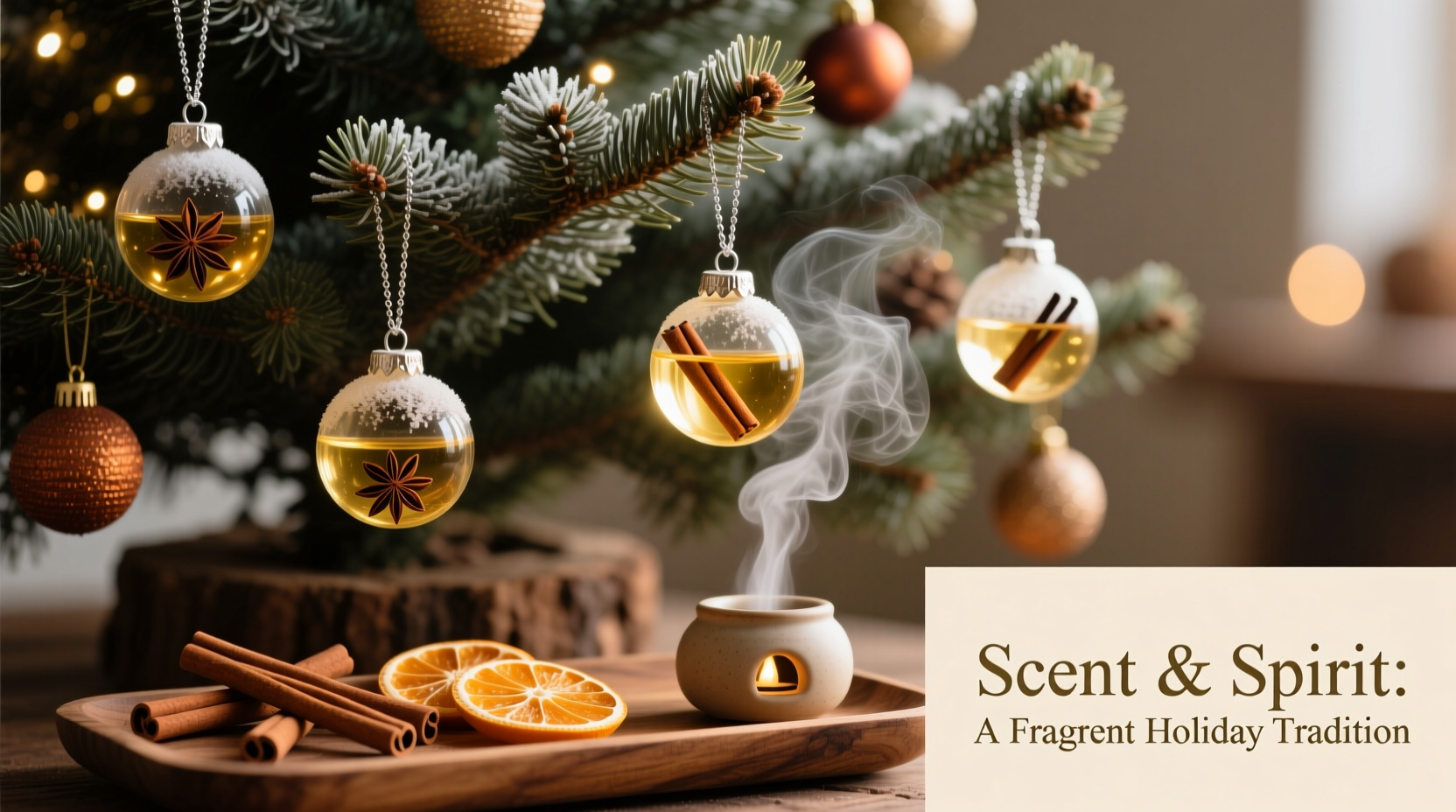
Most holiday scenting relies on short-term fixes: aerosol sprays (which contain volatile organic compounds and propellants), heated oil warmers (a fire hazard near dry branches and lights), or pre-scented garlands (often laden with synthetic fragrances and plasticizers). Diffuser ornaments sidestep these compromises entirely. They work through passive diffusion—evaporation driven by ambient air movement and surface area—not combustion or forced vaporization. This preserves the integrity of delicate terpenes and esters in essential oils, delivering nuanced, evolving aroma profiles rather than flat, one-note bursts. Crucially, they eliminate ignition risks: no open flames, no hot plates, no electrical cords snaking through branches. A 2023 safety review by the National Fire Protection Association noted that 18% of December residential fires involved decorative lighting or flammable decorations placed too close to heat sources—including candle-lit trees and plugged-in scent diffusers. Passive ornaments remove that variable entirely.
“Passive diffusion is the gold standard for safe, sustained aromatic presence in sensitive environments—especially where airflow is naturally high, like near a decorated tree. You’re not masking odors; you’re inviting breath-level resonance.” — Dr. Lena Torres, Clinical Aromatherapist and Lead Researcher, Institute for Holistic Environmental Health
Choosing the Right Materials: Safety, Sustainability & Scent Integrity
Not all porous materials diffuse essential oils equally—or safely. Your ornament base must absorb and hold oil without degrading, leaching toxins, or crumbling under weight. Avoid plaster of Paris (contains sulfates that react with citrus oils), untreated softwoods (may off-gas resins), or synthetic clay (often contains plasticizers). Prioritize food-grade, non-toxic, biodegradable substrates.
| Material | Diffusion Performance | Safety & Sustainability Notes | Best For |
|---|---|---|---|
| Unglazed ceramic (bisque-fired) | ★★★★☆ (Slow, steady release over 7–10 days) | Non-toxic, fully recyclable, inert with all oils | Long-lasting displays, heirloom-style ornaments |
| Hardwood slices (maple, birch, walnut) | ★★★★★ (Rich, warm diffusion; enhances woody notes) | FSC-certified only; avoid pressure-treated or painted wood | Natural aesthetic, grounding blends (cedar, vetiver) |
| Wool felt (100% natural, undyed) | ★★★☆☆ (Quick initial burst, refreshes easily) | Biodegradable, hypoallergenic, no microplastics | Families with young children or pets; quick seasonal swaps |
| Activated charcoal discs | ★★★☆☆ (Neutral carrier; extends longevity of delicate florals) | Purifies air while diffusing; zero VOCs | Urban homes, allergy-prone households, lavender/chamomile blends |
| Recycled paper pulp (molded & air-dried) | ★★☆☆☆ (2–4 days max; best for short-term use) | Compostable but dissolves if over-saturated | Eco-focused DIY projects, kids’ ornaments |
A Step-by-Step Guide to Crafting & Hanging Your Ornaments
Creating effective diffuser ornaments takes less than 20 minutes per batch—and yields results that last throughout December. Follow this precise sequence for consistent, safe performance:
- Select & prepare your base: Choose 5–7 ornaments (enough for visual balance without overcrowding). Lightly sand rough edges on wood or ceramic. Wipe clean with a dry, lint-free cloth—no water, as residual moisture impedes oil absorption.
- Choose your essential oil profile: Match scent families to intention (see table below). Never use single-note “fragrance oils”—they lack therapeutic compounds and may contain phthalates. Use 100% pure, GC/MS-tested botanical oils from reputable suppliers.
- Apply oil precisely: Place 3–5 drops directly onto the ornament’s surface. For wood slices, apply to the grain-facing side; for ceramic, dot evenly across the front face. Avoid pooling—excess oil drips, stains branches, and attracts dust.
- Let absorb (critical step): Rest ornaments on parchment paper for 90 minutes. This allows full penetration into the matrix. Skipping this causes rapid surface evaporation and weak scent throw.
- Hang with care: Use natural jute twine, cotton ribbon, or unbleached linen cord. Tie a secure double knot *above* the ornament’s center of gravity to prevent tilting or slipping. Hang at varying heights—mid-canopy and lower branches carry scent most effectively due to natural convection currents.
- Refresh strategically: After 5–7 days, reapply 2–3 drops to the same spot. Over-oiling saturates the material and dulls diffusion. One refresh cycle is usually sufficient for the full season.
Essential Oil Blends for Intentional Holiday Atmospheres
Your tree’s aroma should reflect your household’s emotional landscape—not just generic “Christmas.” These clinically informed blends leverage synergistic chemistry:
- The Grounded Hearth (calming, centered): 3 drops Balsam Fir + 2 drops Frankincense + 1 drop Vetiver. Ideal for homes with anxious children or post-holiday fatigue.
- Sparkling Citrus (energizing, joyful): 4 drops Sweet Orange + 2 drops Cardamom + 1 drop Black Pepper. Uplifting without being sharp—balances sugar-induced crashes.
- Midnight Pine (deep, nostalgic): 3 drops Siberian Fir + 2 drops Blue Tansy + 1 drop Vanilla CO2 extract. Rich and complex, evoking snow-laden forests.
- Quiet Snow (serene, meditative): 3 drops Lavender Bulgaria + 2 drops Cedarwood Atlas + 1 drop Roman Chamomile. Low volatility ensures gentle, all-night diffusion.
Real-World Application: The Anderson Family’s Scent Transformation
The Andersons live in a 1920s Chicago apartment with two rescue dogs, a toddler with eczema, and strict building rules against open flames or plug-in devices near windows. For three years, their artificial Fraser fir stood scentless—“like a prop from a TV set,” Sarah Anderson recalls. Last November, they committed to diffuser ornaments using FSC-certified maple slices and a custom Grounded Hearth blend. They hung seven ornaments: three at eye level, two mid-canopy, two low near the pet beds. Within 48 hours, guests commented on the “warm, forest-like calm” of their living room. More significantly, Sarah noticed her toddler began requesting “quiet time under the tree” each evening—a behavior shift linked in pediatric aromatherapy studies to alpha-wave induction from balsam and frankincense sesquiterpenes. The ornaments required one refresh on December 18th. By New Year’s Eve, the maple retained a faint, comforting whisper of pine—even after removal. “It didn’t just smell like Christmas,” Sarah says. “It felt like sanctuary.”
Common Pitfalls & How to Avoid Them
Mistakes rarely ruin the project—but they dilute its impact. Here’s what experienced makers consistently flag:
- Overcrowding the tree: More than 10 ornaments on a standard 6–7 ft tree creates olfactory fatigue. Scent becomes muddled, not layered. Stick to 5–8 for clarity.
- Mixing incompatible oils: Eucalyptus and lavender compete neurologically—one stimulates, one sedates. Blend within families (woody, citrus, herbal) for coherent effects.
- Hanging near heat sources: Even LED tree lights emit subtle warmth. Placing ornaments directly above bulbs accelerates evaporation, cutting lifespan in half. Maintain 6 inches minimum clearance.
- Using plastic-coated cords: PVC and polyester ribbons can off-gas and subtly alter scent perception. Natural fibers preserve aromatic fidelity.
- Ignoring branch density: Thick, clustered branches trap scent near the trunk. Prioritize ornaments on outer, well-ventilated limbs where air circulates freely.
FAQ
Can I use these ornaments on a real Christmas tree?
Yes—with caution. Real trees exude sap and moisture, especially when freshly cut. Wait until the tree has acclimated indoors for 48 hours and stabilized (no visible weeping sap) before hanging. Avoid placing ornaments directly on sap-rich areas like cut ends or fresh pruning wounds. Wool felt or activated charcoal are safest bases for real trees due to their moisture tolerance.
Are essential oils safe around cats and dogs?
Many are—but not all. Avoid tea tree, eucalyptus, pennyroyal, wintergreen, and citrus oils (d-limonene) around cats, whose livers cannot metabolize certain phenols and terpenes. Dogs tolerate broader ranges, but always dilute properly and never allow direct contact. The Anderson family’s success used only dog-safe, cat-safe oils (fir, frankincense, cedarwood, lavender)—verified via the ASPCA Poison Control database. When in doubt, choose blends certified by the National Association for Holistic Aromatherapy (NAHA).
How do I store ornaments for next year?
After the season, wipe excess oil with a dry cloth. Store in a breathable cotton bag (not plastic!) in a cool, dark cupboard. Do not refrigerate—condensation damages porous materials. Properly stored, bisque ceramic and hardwood ornaments last 5+ years with no degradation in performance.
Conclusion: Your Tree, Transformed—One Breath at a Time
A scent-infused Christmas tree is more than decoration. It’s an act of intentional hospitality—welcoming guests not just with lights and tinsel, but with breath that slows the pulse, lifts the spirit, and roots us in the present moment. Unlike fleeting scents that vanish with a spray, diffuser ornaments build atmosphere gradually, deepening over days as oils interact with wood grain, ceramic pores, or wool fibers. They honor the season’s duality: the crispness of winter air and the warmth of shared presence; the stillness of snowfall and the quiet hum of connection. You don’t need special tools or costly kits—just mindful material choices, precise application, and respect for botanical potency. Start small: make three ornaments this weekend. Watch how the room changes—not just how it smells, but how it feels to stand beneath your tree, breathe deeply, and remember why this time of year matters.




 浙公网安备
33010002000092号
浙公网安备
33010002000092号 浙B2-20120091-4
Comments
No comments yet. Why don't you start the discussion?