
For many, the scent of a Christmas tree is the first true signal of the season—the crisp green sharpness of pine, the resinous warmth of fir, or the faint sweetness of spruce. But real trees dry quickly indoors, and their natural fragrance fades within days. Synthetic sprays often contain volatile organic compounds (VOCs), alcohol, or artificial fragrances that can irritate airways, trigger headaches, or pose fire hazards near lights and wiring. Essential oils offer a compelling alternative: botanical, customizable, and inherently festive—but only when used with precision, knowledge, and respect for safety. This guide walks you through creating a layered, balanced, and *safe* scent pairing for your tree—not as a novelty, but as a thoughtful sensory ritual grounded in aromatherapy science, fire safety standards, and practical home experience.
Why Scent Pairing Matters More Than You Think
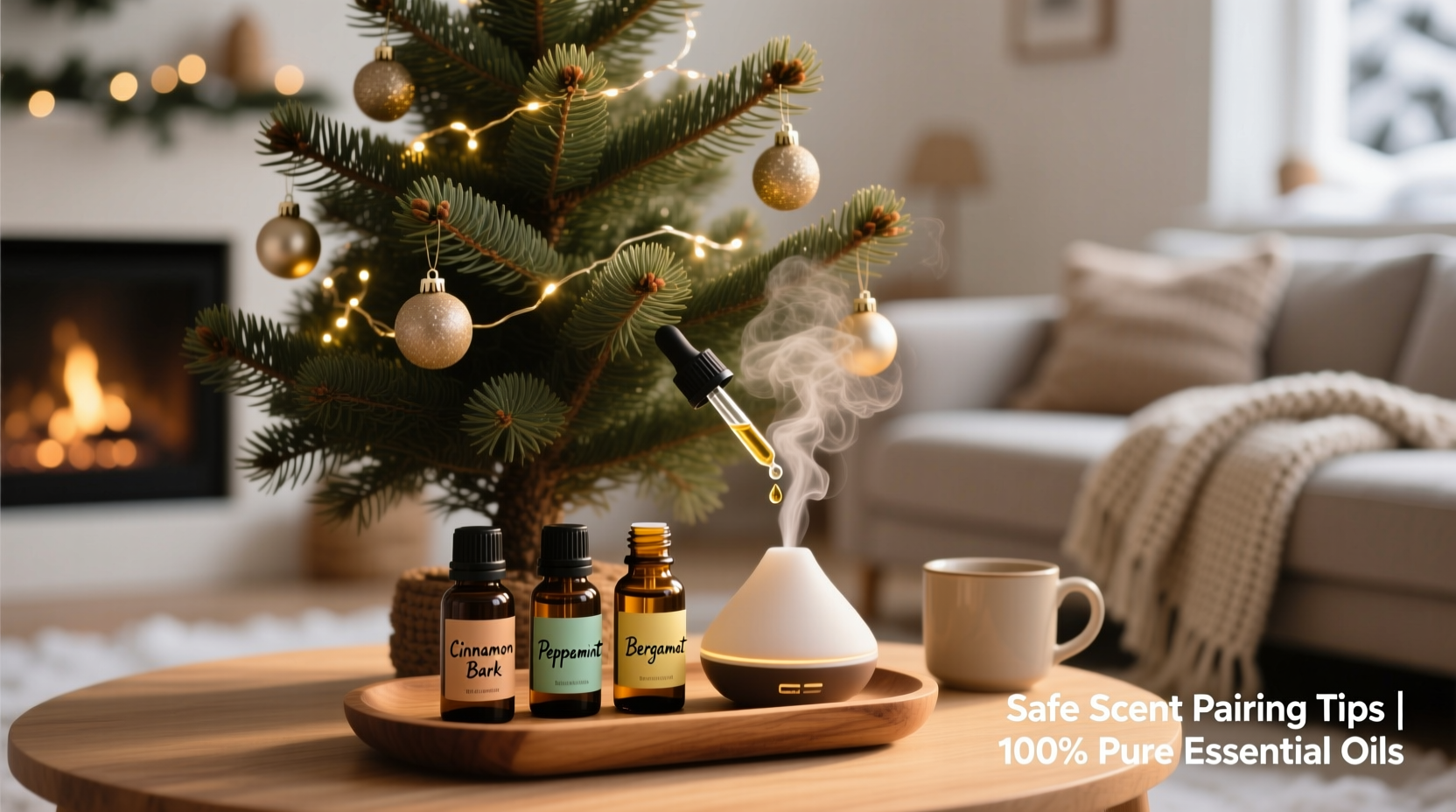
A single-note oil like “pure pine” rarely captures the complexity of a living tree. Real conifer scent is a dynamic blend: top notes of citrusy terpenes (limonene, pinene), heart notes of balsamic resins (bornane, camphene), and base notes of woody, earthy sesquiterpenes. A well-constructed pairing mirrors this architecture—adding depth, longevity, and emotional resonance. For example, a hint of sweet orange lifts the sharpness of Scotch pine; a trace of cedarwood grounds the brightness of Douglas fir; a whisper of frankincense adds sacred stillness. Done thoughtfully, scent pairing transforms your tree from a decoration into an anchor point—a place where memory, mood, and atmosphere converge. Done carelessly, it risks overwhelming the space, irritating sensitive family members, or compromising safety.
Essential Oil Safety Fundamentals for Tree Use
Before selecting oils, understand three non-negotiable safety pillars: dilution, delivery method, and environmental context.
Dilution is non-optional. Pure essential oils are 50–100x more concentrated than the plant material they’re extracted from. Applying them neat to porous surfaces like tree bark invites rapid evaporation, uneven diffusion, and potential phytotoxicity (plant tissue damage). The safe working concentration for passive diffusion on trees is 0.5%–1% total essential oil volume in carrier solution—equivalent to 3–6 drops per tablespoon (15 mL) of carrier.
Delivery method must prioritize low-risk, low-contact application. Spraying mist onto branches is unsafe: fine droplets can coat electrical sockets, light bulb filaments, or plastic ornament coatings, increasing flammability risk and causing premature degradation. Instead, use passive diffusion via absorbent substrates placed *away* from heat sources and wiring—like cotton balls tucked into branch forks, or wooden diffuser rings hung on lower boughs.
Environmental context includes pets, children, respiratory health, and indoor air quality. Oils like eucalyptus, peppermint, and tea tree are toxic to cats and dogs even at low airborne concentrations. Pine and wintergreen oils contain methyl salicylate, which poses aspirin-like toxicity risks for young children. Always verify pet safety with the ASPCA Animal Poison Control Center database before selecting oils.
“Essential oils are potent phytochemicals—not ‘natural perfume.’ Their volatility means they interact with our nervous system, respiratory mucosa, and even surface materials. Respect their power, not just their pleasantness.” — Dr. Sarah Lin, Clinical Aromatherapist & Environmental Health Researcher, University of Michigan School of Public Health
Building Your Safe Scent Pairing: A Step-by-Step Guide
Follow this sequence precisely. Skipping steps compromises both olfactory balance and safety.
- Choose your base tree type: Identify whether your tree is Fraser fir (balsamic, slightly citrusy), Balsam fir (rich, sweet, resinous), Blue spruce (sharp, clean, almost metallic), or Noble fir (soft, woody, subtle). This informs your pairing’s foundation.
- Select one primary oil: Match it closely to your tree’s dominant profile. Example: Balsam fir tree → Balsam fir essential oil (same species, same chemotype). Avoid “pine” oils labeled generically—opt for Pinus sylvestris (Scotch pine) or Pinus strobus (Eastern white pine) for accuracy.
- Add one complementary oil: Choose a second oil that enhances—not overpowers—your primary. Use the table below to guide pairings.
- Calculate dilution: For every 15 mL (1 tbsp) of carrier (see next section), add 3–6 total drops: e.g., 4 drops primary + 2 drops complementary = 6 drops total (1% dilution).
- Prepare carrier solution: Combine distilled water (50%), high-proof food-grade ethanol (e.g., 190-proof Everclear, 30%), and vegetable glycerin (20%). Ethanol solubilizes oils; glycerin slows evaporation; water provides bulk and reduces volatility. Shake vigorously for 30 seconds before use.
- Apply passively: Soak a 100% cotton ball (not synthetic) in 1 tsp of solution. Gently squeeze out excess. Tuck deep into a sturdy branch fork—never near lights, sockets, or tinsel. Replace every 3–4 days.
Scent Pairing Recommendations & Safety Profiles
The following pairings are vetted for olfactory harmony, botanical synergy, and household safety. All oils listed are 100% pure, GC/MS-tested, and free from synthetic extenders or adulterants.
| Tree Type | Primary Oil | Complementary Oil | Safety Notes | Why It Works |
|---|---|---|---|---|
| Fraser Fir | Balsam fir (Abies balsamea) | Sweet orange (Citrus sinensis) | Non-toxic to pets; avoid if child under 2 is present (citrus phototoxicity irrelevant here, but caution advised) | Orange’s limonene brightens balsam’s deep resin without masking it—mirroring how sunlight reveals citrus notes in fresh Fraser boughs. |
| Blue Spruce | Scotch pine (Pinus sylvestris) | Cedarwood atlas (Cedrus atlantica) | Safe for dogs/cats at passive diffusion levels; avoid if asthma is uncontrolled | Pine’s sharp top notes lift spruce’s cool austerity; cedarwood’s creamy base adds warmth and extends longevity by slowing evaporation. |
| Noble Fir | Douglas fir (Pseudotsuga menziesii) | Frankincense (Boswellia carterii) | Generally recognized as safe (GRAS) for ambient use; avoid during pregnancy (consult provider) | Douglas fir’s soft, green clarity pairs with frankincense’s meditative, slightly lemony incense—evoking forest stillness and sacred quiet. |
| Realistic Artificial Tree | Spruce (Picea mariana) | Vanilla CO2 extract (Vanilla planifolia) | CO2 extracts are gentler than absolutes; vanilla is non-irritating and pet-safe | Spruce’s clean greenness balances vanilla’s creamy sweetness—creating a “baked goods in a pine forest” effect without gourmand overload. |
Real-World Application: The Thompson Family’s First Safe Scent Tree
The Thompsons live in Portland, Oregon, with two young children (ages 3 and 6), a senior cat named Mochi, and a 7-foot Noble fir. Last year, they used a commercial “Christmas tree spray” that left Mochi sneezing for days and triggered their daughter’s seasonal asthma. This December, they followed the step-by-step guide above: identified their tree as Noble fir, chose Douglas fir oil (botanically matched) and frankincense (for grounding), prepared a 0.75% dilution in ethanol/glycerin/water, and applied soaked cotton balls to four lower branch junctions—far from lights and out of reach. Within 12 hours, the room held a soft, forest-clear aroma—not cloying, not medicinal. Mochi napped peacefully beneath the tree. Their son described it as “the smell of snow falling on quiet woods.” They replaced cotton balls every 3 days and noted no needle drop acceleration versus their unscented tree from previous years. Most importantly, no one experienced respiratory irritation—a win measured in breaths, not just scent.
What to Avoid: Critical Don’ts for Tree Scenting
- Don’t use ultrasonic diffusers near the tree. These aerosolize oils into microscopic particles that settle on lights, wiring, and ornaments—increasing fire risk and leaving oily residues that attract dust.
- Don’t mix more than two essential oils. Three-oil blends rapidly become muddy and unbalanced, especially in passive diffusion where top notes vanish first, leaving harsh bases behind.
- Don’t substitute carrier oils (like coconut or jojoba) for the ethanol/glycerin/water blend. Carrier oils go rancid on warm tree surfaces, producing off-odors and sticky residue that attracts pests.
- Don’t apply near LED light strings—even “cool” LEDs generate localized heat at connection points sufficient to volatilize oils unpredictably.
- Don’t use oxidized oils. Citrus oils degrade after 6–12 months, forming sensitizing compounds. Check batch dates and discard oils with cloudy appearance or sharp, sour odor.
FAQ: Essential Questions Answered
Can I use this method on a pre-lit artificial tree?
Yes—with extra caution. Pre-lit trees have internal wiring and plastic components vulnerable to oil degradation. Use only the lowest dilution (0.5%), apply cotton balls exclusively to outer branch tips (never near base or light clusters), and inspect daily for any oily residue on plastic or wire casings. Discontinue immediately if residue appears.
How long will the scent last, and how often should I refresh?
With proper dilution and cotton ball placement, expect 3–4 days of consistent scent before top notes fade. Refresh every 3 days—or sooner if the cotton ball feels dry or the aroma weakens noticeably. Do not “top up” existing cotton balls; replace entirely to prevent bacterial growth in residual moisture.
Is there a non-essential-oil alternative for families with infants or severe sensitivities?
Absolutely. Simmer a small pot of water with fresh citrus peels (orange, grapefruit), cinnamon sticks, whole cloves, and a few sprigs of rosemary or thyme. Keep it on low heat *in another room*, away from the tree, and let the gentle steam circulate naturally. This delivers comforting holiday aroma without concentrated volatiles—and zero fire or toxicity risk near the tree.
Conclusion: Your Tree, Your Intention, Your Season
Creating a scent pairing for your Christmas tree isn’t about replicating a department store fragrance—it’s about honoring the living presence of the tree itself. It’s about choosing intention over impulse, safety over spectacle, and botanical truth over marketing claims. When you select Balsam fir oil because it shares DNA with your Fraser fir, when you add sweet orange to echo the sun-warmed resin on its boughs, when you dilute mindfully and place thoughtfully—you’re not just adding scent. You’re deepening attention. You’re slowing down. You’re transforming a tradition into a practice—one that respects your health, your home, your loved ones, and the quiet dignity of the evergreen standing in your living room. This season, skip the synthetic spritz. Skip the risky DIY hacks. Start with one safe pairing, one cotton ball, one mindful breath. Then notice how the air changes—not just in scent, but in stillness. That’s where the real magic begins.




 浙公网安备
33010002000092号
浙公网安备
33010002000092号 浙B2-20120091-4
Comments
No comments yet. Why don't you start the discussion?