
Fragrance is more than an accessory—it’s an extension of identity. While off-the-shelf perfumes offer convenience, they rarely capture the full complexity of who you are. Creating a signature scent through the art of layering perfume oils and lotions allows you to craft something deeply personal, dynamic, and uniquely yours. Unlike alcohol-based sprays that evaporate quickly, oil-based fragrances blend with your skin chemistry and can be layered strategically with scented body products to produce a multidimensional aroma that evolves throughout the day.
This method isn’t just about combining pleasant smells; it’s about understanding scent families, timing, and application techniques to build a fragrance profile that lingers, transforms, and resonates with your presence. Whether you're new to perfumery or looking to refine your olfactory expression, mastering scent layering unlocks a world of customization that mass-market fragrances simply can't match.
The Science Behind Scent Layering
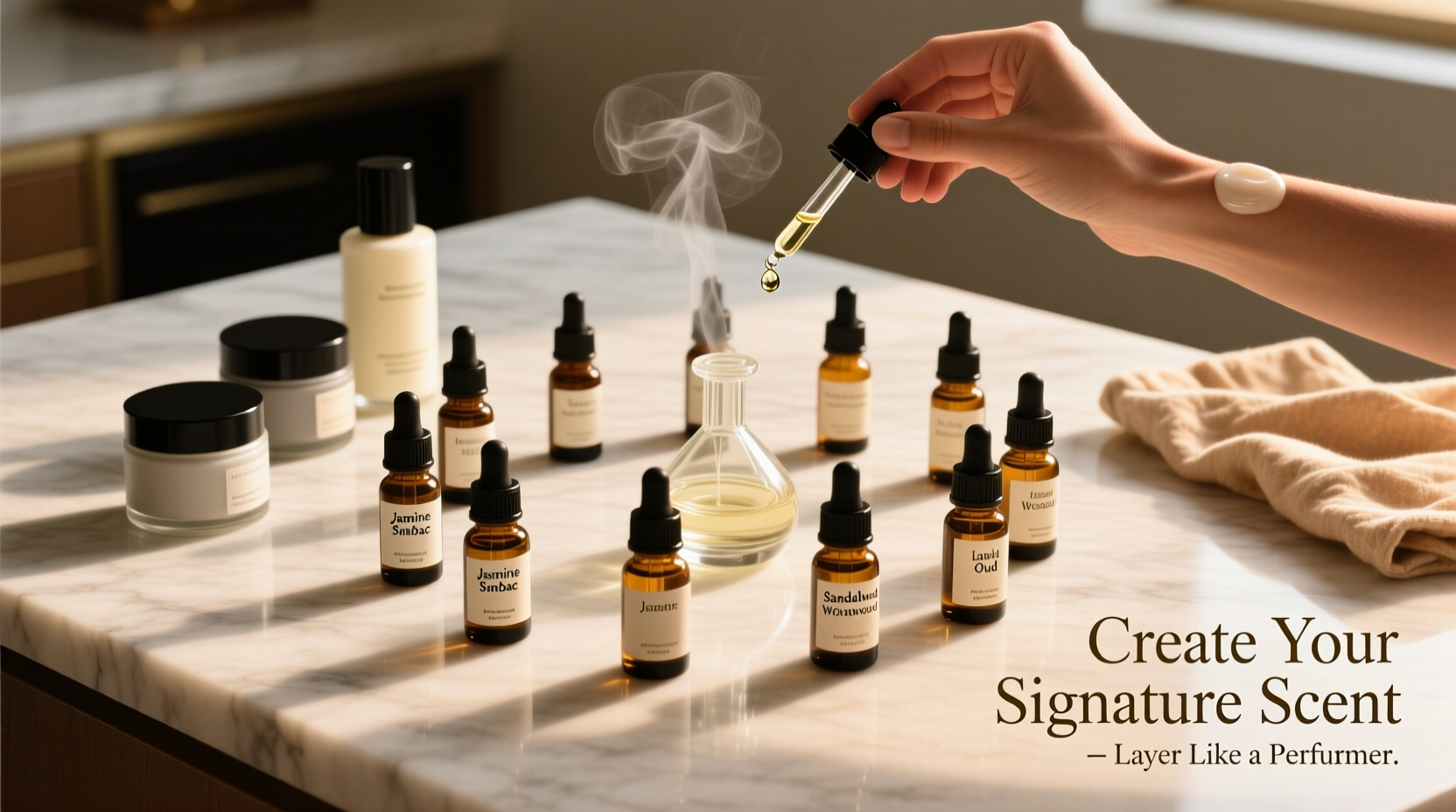
Scent layering works because different fragrance components interact with your skin’s pH, temperature, and natural oils. Perfume oils—typically diluted in carrier oils like jojoba or fractionated coconut oil—are more concentrated and less volatile than alcohol-based perfumes. They adhere closely to the skin and release their aroma gradually. When paired with a matching or complementary scented lotion, the base note is amplified, creating a richer foundation for top and middle notes to unfold over time.
Lotions play a crucial role in this process. Hydrated skin holds fragrance longer. A moisturized base acts like a sponge for scent molecules, slowing evaporation and enhancing projection. By applying a lightly scented body cream before your perfume oil, you’re not only extending longevity but also softening the initial burst of aroma, allowing for a smoother transition between scent phases.
Consider this: a citrus top note might feel sharp when sprayed alone, but when layered over a vanilla-scented lotion, it becomes warm and rounded. This synergy is the essence of effective layering—creating harmony where individual elements shine without clashing.
“Layering isn’t just about strength—it’s about depth. The best fragrances tell a story, and each layer adds a new chapter.” — Julian Hartwell, Natural Perfumer & Founder of Hartwell Atelier
Choosing Compatible Fragrance Families
To avoid olfactory chaos, start by understanding the five primary fragrance families: floral, oriental, woody, fresh, and gourmand. Each has distinct characteristics and blends differently with others. Successful layering depends on selecting notes within compatible families or using bridge notes—scents that naturally harmonize across categories.
For example:
- Floral + Oriental: Rose and jasmine pair beautifully with warm spices like cinnamon or amber, creating a lush, sensual blend.
- Woody + Fresh: Sandalwood and cedarwood can anchor citrus or aquatic notes, adding depth without overpowering.
- Gourmand + Floral: Vanilla and tonka bean enhance powdery florals like heliotrope or mimosa, lending a dessert-like richness.
Avoid combining opposing extremes unless you're aiming for contrast—like pairing heavy patchouli with sharp green apple—because mismatched intensities can result in a muddled or overwhelming effect.
Step-by-Step Guide to Building Your Signature Scent
Creating a consistent, repeatable signature scent involves intentionality and repetition. Follow this timeline to develop a personalized fragrance routine:
- Identify Your Core Note (Day 1–3): Choose one perfume oil that resonates most with your personality—this will be your anchor. It should reflect your preferred fragrance family and feel comfortable after several hours on skin.
- Select a Base Lotion (Day 4–5): Find a lightly scented or unscented lotion enriched with nourishing oils. If using a scented version, ensure its dominant note complements your core oil.
- Introduce a Modifier Oil (Day 6–7): Add a second perfume oil with a supporting note—one that enhances but doesn’t dominate. For instance, if your core is lavender, try a touch of bergamot or vetiver.
- Test Layering Sequence (Day 8–10): Apply lotion first, let it absorb for 2–3 minutes, then apply the modifier oil, followed by the core oil. Observe how the scent develops over 6+ hours.
- Refine Ratios (Ongoing): Adjust the number of drops or order of application until balance is achieved. Less is often more—start with one drop of modifier and two of core.
- Document Your Formula (Final Step): Record the products used, quantities, and application order so you can recreate your blend consistently.
Consistency is key. Skin chemistry changes slightly with seasons, diet, and hormones, so revisit your formula every few months to ensure it still aligns with your natural scent profile.
Do’s and Don’ts of Fragrance Layering
| Do’s | Don’ts |
|---|---|
| Use unscented or lightly fragranced lotions as a neutral base | Layer multiple strong perfumes at once—this causes olfactory fatigue |
| Apply oils to pulse points after moisturizing | Apply undiluted essential oils directly to skin without carrier oil |
| Start with lower concentrations and build gradually | Ignore skin sensitivity—always patch test new oils |
| Store oils in dark glass bottles away from heat and light | Mix synthetic fragrances with pure essential oils indiscriminately |
| Reapply subtly throughout the day as needed | Layer too many notes—limit yourself to 2–3 per routine |
Real Example: Crafting a Morning-to-Night Scent Journey
Sophia, a freelance writer based in Portland, wanted a fragrance that reflected her creative yet grounded lifestyle. She loved the earthiness of sandalwood but found it too heavy for daytime. Her solution? A layered system tailored to her daily rhythm.
In the morning, she applied a light almond milk body lotion, followed by a single drop of blood orange perfume oil blended with 2 drops of sandalwood. The citrus lifted the woodiness, making it bright and inviting. For evening, she switched to a shea butter cream infused with vanilla absolute, then layered sandalwood more prominently, adding a hint of frankincense for meditative depth.
Over time, friends began commenting, “You always smell so calming and familiar.” That consistency became part of her personal brand. By documenting her formulas, Sophia could maintain her signature scent even during travel or seasonal shifts.
Essential Tools and Ingredients Checklist
To begin crafting your signature scent, gather these essentials:
- At least one high-quality perfume oil in your preferred note family
- A nourishing, unscented or lightly scented body lotion or body butter
- One or two complementary perfume oils for accentuating or modifying the main scent
- Small rollerball bottles for mixing and portable application
- Jojoba or fractionated coconut oil (as a diluent for custom blends)
- Cotton pads or disposable gloves (to prevent cross-contamination during testing)
- A journal to record formulations and experiences
When sourcing products, prioritize clean ingredients. Look for perfume oils free from phthalates and parabens, and lotions without mineral oil or synthetic fragrances that could interfere with natural aroma development.
Frequently Asked Questions
Can I layer different brands of perfume oils?
Yes, but proceed with caution. Different brands use varying concentrations and solvents, which may affect how scents interact. Always test small amounts together before full application. Stick to brands that use natural bases like jojoba oil for better compatibility.
How do I make my layered scent last longer?
Maximize longevity by moisturizing first, applying oils to damp skin, and focusing on pulse points (wrists, neck, behind ears). Reapplication midday with a rollerball blend can refresh the scent. Avoid washing hands immediately after application, as this removes oil from key areas.
Is it safe to mix essential oils myself?
Yes, if done properly. Always dilute essential oils in a carrier oil (typically 2–5% concentration for skin use). Research phototoxicity (e.g., citrus oils increase sun sensitivity) and allergens. If pregnant or managing health conditions, consult a certified aromatherapist before use.
“The most memorable scents aren’t the loudest—they’re the ones that feel inevitable, like they’ve always been part of you.” — Dr. Lena Moreau, Olfactory Psychologist
Final Thoughts: Make Your Scent Speak for You
A signature scent built through layering isn’t discovered overnight—it’s cultivated. It requires curiosity, patience, and a willingness to experiment. But the reward is profound: a fragrance that moves with you, adapts to your mood, and leaves a lasting impression rooted in authenticity.
Unlike commercial perfumes designed for mass appeal, your layered blend belongs entirely to you. It captures nuances no bottle can replicate—the warmth of your skin, the rhythm of your day, the subtleties of your presence. Once you’ve found it, people won’t just notice your scent; they’ll remember it.




 浙公网安备
33010002000092号
浙公网安备
33010002000092号 浙B2-20120091-4
Comments
No comments yet. Why don't you start the discussion?