
There’s something profoundly peaceful about a holiday light display that activates only when needed—gentle illumination emerging from darkness as someone approaches, then fading back into stillness. A silent night display with motion-activated lighting combines elegance, energy efficiency, and thoughtful design to create a memorable seasonal experience without overwhelming the senses or the power bill. Whether you're aiming for subtle curb appeal or a full front-yard narrative, integrating motion sensors into your lighting strategy transforms passive decoration into interactive storytelling.
This approach is especially effective in neighborhoods where constant bright lights can feel intrusive or where homeowners prefer a more intimate, eco-conscious aesthetic. By illuminating only when movement is detected, you conserve energy, reduce light pollution, and add an element of surprise and delight for visitors and passersby alike.
Understanding Motion-Activated Lighting Systems
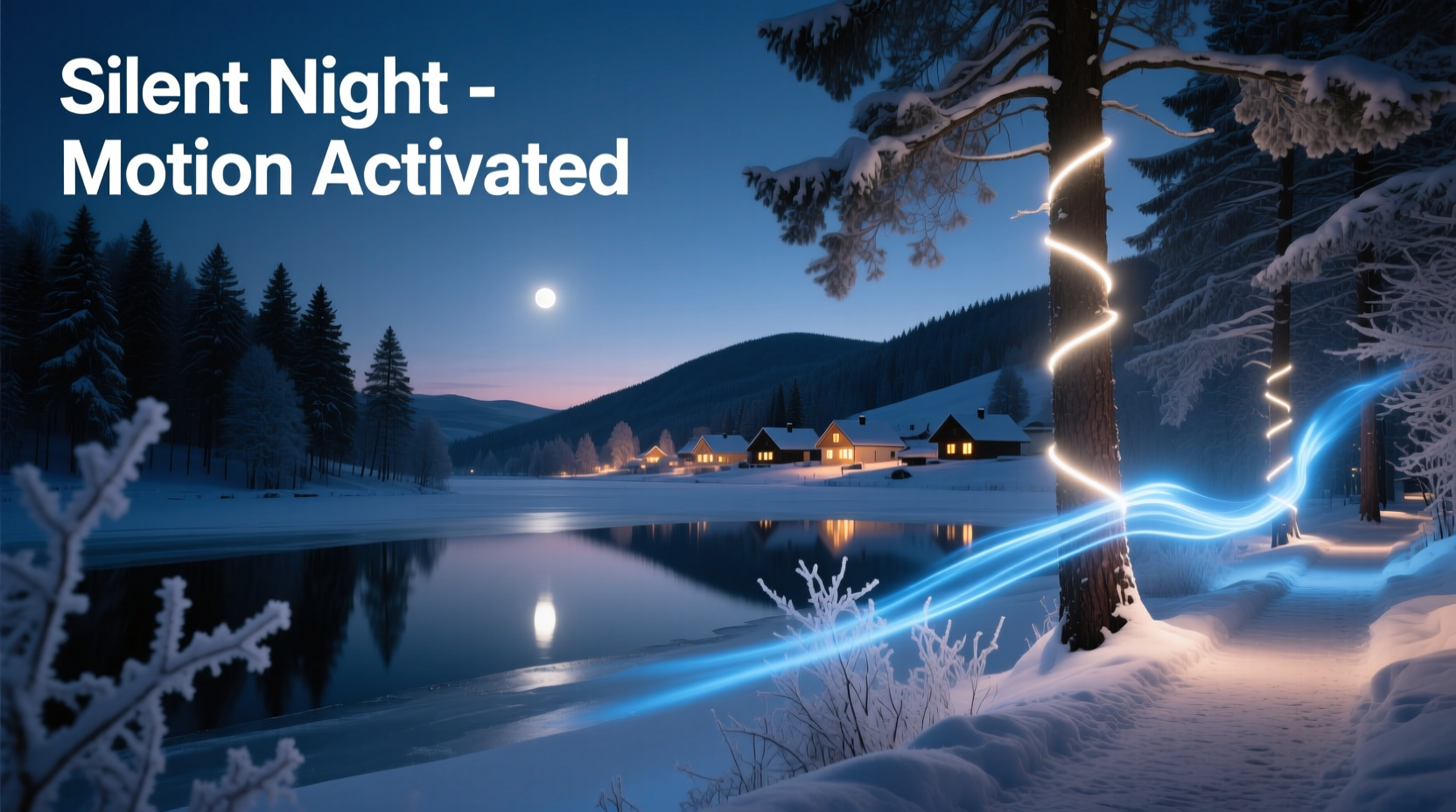
Motion-activated lighting relies on sensors to detect infrared energy (body heat) or changes in reflected light (via microwave or ultrasonic detection). The most common type used in outdoor holiday displays is the passive infrared (PIR) sensor, which responds to body heat from people or animals within its field of view.
These systems typically include three components: the light source (LED strings, spotlights, path markers), the sensor unit (either built-in or external), and a control mechanism (timers, sensitivity dials, range adjusters). When properly calibrated, they turn on instantly upon detecting motion and remain lit for a preset duration before powering down.
Modern smart lighting options now allow integration with Wi-Fi or Bluetooth networks, enabling remote configuration through smartphone apps. This level of control makes it possible to customize not just when lights activate, but also their brightness, color, and even animation patterns—all triggered by motion.
“Motion-based lighting brings intentionality to holiday displays. It shifts focus from spectacle to experience.” — Daniel Reeves, Smart Home Lighting Designer
Planning Your Silent Night Display Layout
Before purchasing supplies, sketch a rough plan of your property’s exterior zones: entryway, walkway, porch, trees, driveway, and any focal points like statues or nativity scenes. Identify high-traffic paths where guests naturally move—these are ideal spots for activation triggers.
Consider layering your display so that primary features (e.g., a manger scene or illuminated tree) remain off until someone approaches, while secondary elements (like low-level path markers) may stay softly lit throughout the evening. This creates depth and guides attention where you want it.
Determine whether you’ll use standalone motion-sensor bulbs, plug-in modules, or integrated smart strips. Each has advantages:
- Standalone units: Easy to install; screw directly into existing sockets.
- Plug-in motion switches: Work with standard light strings; offer adjustable timers.
- Smart LED strips with PIR: Allow dynamic effects and app-based customization.
For larger installations, consider zoning your layout. Zone 1 might be the sidewalk approach, triggering soft blue-white snowflake lights. Zone 2 could be the porch steps, activating warm white lanterns only when visitors are near. This segmentation prevents unnecessary activation across the entire display.
Step-by-Step Guide to Installation
Follow this logical sequence to build a reliable, visually compelling silent night display:
- Assess Power Sources: Map available outdoor outlets. Use weatherproof extension cords rated for outdoor use if needed. Avoid daisy-chaining more than three standard light sets.
- Test Sensor Range: Before mounting, test each sensor’s detection angle and distance (typically 180° arc up to 30 feet). Adjust placement to cover intended areas without overspilling onto streets or neighboring yards.
- Install Primary Fixtures: Mount spotlights or light strings at key display points—above doorways, around window frames, along fences. Secure with clips, not nails or staples, to prevent wire damage.
- Connect Sensors: Attach inline motion modules between the outlet and light string. For permanent fixtures, hardwire PIR sensors according to manufacturer instructions (consult an electrician if unsure).
- Set Timing & Sensitivity: Most sensors let you adjust how long lights stay on after detection (5 sec to 10 min). Start with 30 seconds. Set sensitivity to ignore small animals unless desired (e.g., for whimsical effect).
- Add Delayed Zones (Optional): Use smart relays or programmable hubs to create cascading activation—e.g., pathway lights trigger first, followed by a 5-second delay before the main tree illuminates.
- Weatherproof Connections: Seal all junctions with silicone tape or waterproof enclosures. Elevate plugs slightly off the ground using outlet risers.
- Night Test & Refine: Walk through every access point at dusk. Note blind spots or premature cutoffs. Fine-tune angles and durations accordingly.
Do’s and Don’ts of Silent Night Displays
| Do | Don’t |
|---|---|
| Use LED lights—they consume less power and generate minimal heat. | Overload circuits with too many strands on one breaker. |
| Aim sensors downward to minimize skyglow and glare. | Point sensors directly at busy roads where traffic causes constant cycling. |
| Label zones clearly for easy troubleshooting. | Ignore local ordinances on outdoor lighting hours or brightness levels. |
| Incorporate sound-sensitive dimming or delayed fade-outs for dramatic effect. | Use non-weather-rated equipment outdoors—even temporarily. |
| Combine motion lights with solar path markers for ambient base lighting. | Forget to check battery status weekly in wireless units. |
Real Example: The Johnson Family Porch Scene
The Johnsons live in a quiet suburban neighborhood where residents value peace during the holidays. Instead of running bright lights all night, they designed a silent night display centered around their covered porch, featuring a simple wooden nativity set.
They installed two PIR-controlled spotlight strips—one aimed at the manger, another at the star above the door. Pathway markers leading to the porch operate on a separate timer, glowing faintly from 5–10 PM. When motion is detected within 15 feet of the stairs, both spotlights activate for 45 seconds, revealing the figures in warm golden light. A small speaker (wired separately) plays 20 seconds of “Silent Night” chimes once per activation.
Neighbors report feeling welcomed rather than overwhelmed. Energy usage dropped by 70% compared to previous years, and the children love surprising guests with the sudden glow. The system uses only four channels of a smart plug hub, controlled via a single app.
“We wanted reverence, not noise. The silence before the lights come on—that moment feels sacred.” — Lisa Johnson, homeowner
Enhancing Ambiance with Smart Features
Today’s smart lighting platforms—such as Philips Hue, LIFX, or Kasa—allow advanced programming beyond basic motion triggers. You can configure rules like:
- Only activate between sunset and 9 PM.
- Fade in over 3 seconds for a gentle reveal.
- Shift from cool white to warm white after midnight.
- Skip activation if music is already playing (to avoid repetition).
Some systems support geofencing—activating lights when a family member’s phone enters the driveway. While not strictly \"motion\" based, this complements traditional sensors by personalizing the welcome sequence.
For those embracing sustainability, pair your setup with solar-charged batteries and low-wattage LEDs. Many modern micro-LED strips draw under 5 watts per meter, making them ideal for extended motion-based operation.
Checklist: Building Your Silent Night Display
✔ Pre-Installation
- Sketch display zones and traffic flow
- Inventory power outlets and cord lengths
- Select motion-compatible lights and sensors
- Check local lighting regulations
✔ Setup Phase
- Mount lights securely using proper clips
- Connect sensors and test range
- Adjust time delay and sensitivity settings
- Seal all outdoor connections
✔ Final Testing
- Walk all approach paths at night
- Verify no blind spots or false triggers
- Confirm safe shutdown timing
- Document configuration for future seasons
FAQ
Can I use regular Christmas lights with a motion sensor?
Yes, as long as you use a compatible plug-in motion module or smart outlet. Ensure the total wattage of connected lights does not exceed the sensor’s maximum load rating (usually 600–1800 watts).
Will cold weather affect motion sensor performance?
Most PIR sensors work reliably down to -20°C (-4°F). However, extreme frost or ice buildup on the lens can block detection. Clean lenses gently with a dry cloth if obscured.
How do I prevent my lights from turning on every time a cat walks by?
Adjust the sensor’s sensitivity dial to ignore smaller heat signatures. Alternatively, mount the sensor higher or angle it downward to focus on human-height movement.
Conclusion
A silent night display with motion-activated lighting isn’t just a technical project—it’s an invitation to slow down, observe, and engage meaningfully with the season. By thoughtfully placing lights that respond to presence, you honor the quiet beauty of winter nights while conserving energy and enhancing safety. These displays grow more impressive not with scale, but with intentionality.
Start small: one sensor, one spotlight, one moment of magic revealed only when someone pauses to notice. From there, expand with confidence, guided by what feels right for your home and community. The result isn’t just a better-lit porch—it’s a deeper connection to the rhythm of arrival, stillness, and celebration.




 浙公网安备
33010002000092号
浙公网安备
33010002000092号 浙B2-20120091-4
Comments
No comments yet. Why don't you start the discussion?