
Combination skin is one of the most common skin types, yet it’s often misunderstood. It presents a unique challenge: oily in the T-zone (forehead, nose, and chin) and dry or normal on the cheeks and jawline. This duality makes product selection tricky—what works for one area might worsen another. A poorly designed routine can leave you battling shine in some zones and flakiness in others. The key isn’t compromise; it’s balance. With thoughtful layering, targeted treatments, and consistency, you can develop a regimen that addresses both concerns without overloading your skin.
Understanding Combination Skin: Why It Happens
Combination skin arises from uneven sebum production across the face. Hormonal fluctuations, environmental factors, genetics, and even lifestyle habits like diet and stress influence this imbalance. The T-zone contains more sebaceous glands, making it naturally oilier. Meanwhile, the cheeks may lack natural oils, leading to tightness or dry patches—especially in colder months or with harsh products.
It's important not to misdiagnose your skin. Many people mistake dehydration for dryness or over-cleanse in an attempt to “fix” oiliness, which only triggers rebound oil production. True combination skin maintains this dual nature consistently over time, not just during seasonal changes.
“Combination skin requires a strategic approach—not two separate routines, but one unified system that respects regional differences.” — Dr. Lena Park, Board-Certified Dermatologist
The Core Principles of an Effective Routine
A successful skincare regimen for combination skin follows three guiding principles: balance, simplicity, and adaptability.
- Balance: Use ingredients that regulate oil without stripping moisture.
- Simplicity: Avoid overcrowding your routine with too many active ingredients, which can disrupt your skin barrier.
- Adaptability: Adjust based on season, climate, and skin response—lighter textures in summer, slightly richer hydration in winter.
Over-exfoliating or using alcohol-heavy toners may temporarily reduce shine but often lead to irritation and compensatory oil production. Instead, focus on gentle cleansing, pH-balanced formulas, and smart layering.
Step-by-Step Skincare Routine for Morning and Night
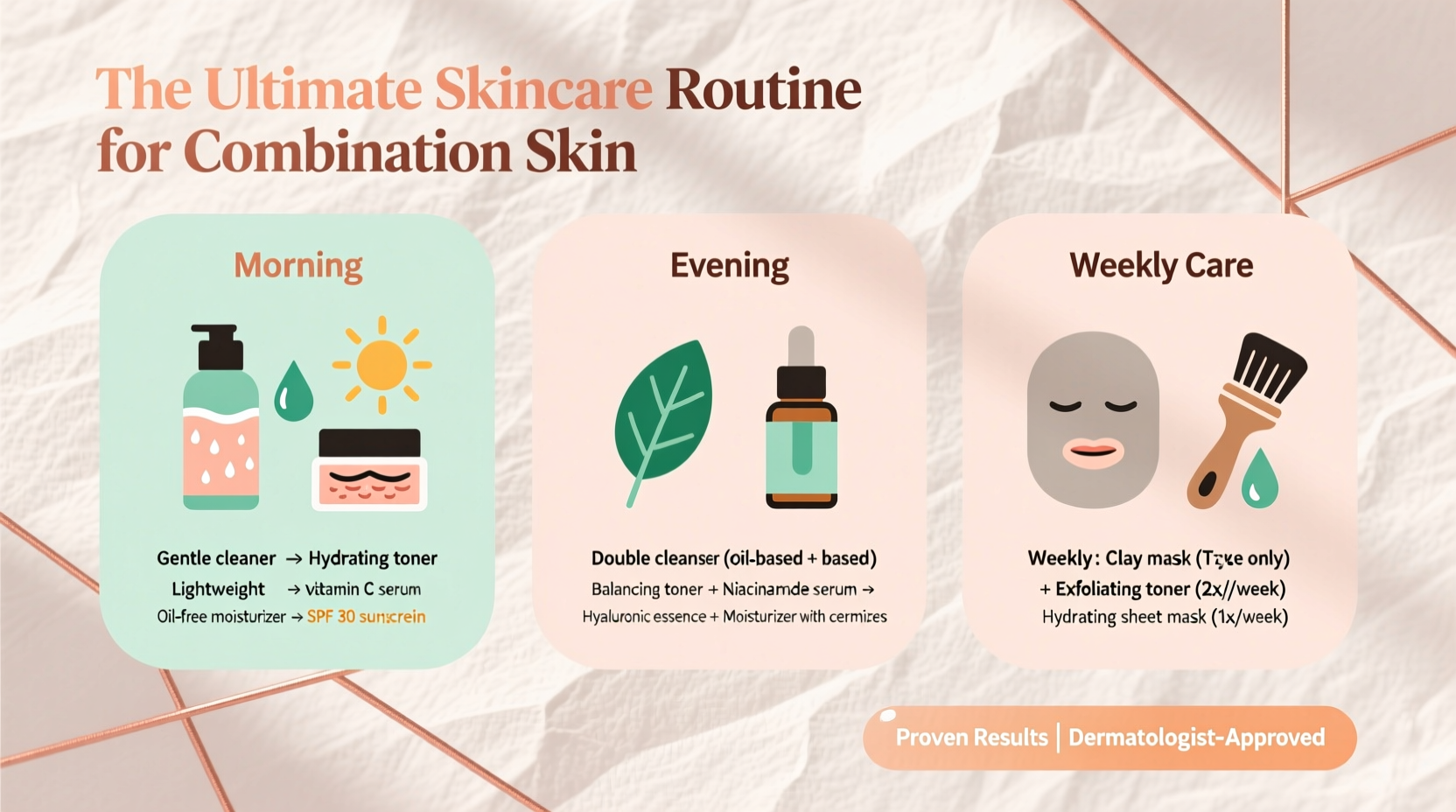
An effective daily routine should be consistent but customizable. Below is a science-backed, dermatologist-approved sequence tailored for combination skin.
Morning Routine
- Cleanser: Use a gentle, water-based or micellar cleanser. Avoid foaming formulas with sulfates if they cause tightness.
- Toner (optional): Apply an alcohol-free toner with hydrating or balancing ingredients like witch hazel (distilled), niacinamide, or hyaluronic acid.
- Antioxidant Serum: Vitamin C serum helps brighten, protect against pollution, and mildly control oil.
- Lightweight Moisturizer: Choose a non-comedogenic gel or gel-cream formula that hydrates without clogging pores.
- Sunscreen: Non-negotiable. Opt for a broad-spectrum SPF 30+ with a matte or hybrid finish to prevent midday shine.
Night Routine
- Double Cleanse (if wearing makeup/sunscreen): Start with an oil-based cleanser to dissolve impurities, followed by a water-based cleanser.
- Toner: Same as morning—focus on hydration and prep.
- Treatment Serum: Use actives like niacinamide (oil regulation), azelaic acid (gentle exfoliation), or low-concentration retinol (cell turnover).
- Moisturizer: Slightly richer than morning if needed, but still lightweight. Consider layering a hydrating serum underneath.
- Spot Treatment (as needed): Apply salicylic acid or tea tree oil only on breakout-prone areas, not all over.
Weekly Add-Ons
- Exfoliation: 1–2 times per week with a chemical exfoliant containing AHAs (for dry areas) or BHAs (for oily zones). Avoid physical scrubs with rough particles.
- Clay Mask: Apply only on the T-zone once weekly to absorb excess oil without drying cheeks.
- Sleeping Mask (optional): Use a thin layer of a hydrating overnight mask monthly during dry spells.
Product Selection Guide: What Works and What Doesn’t
Choosing the right products is critical. The wrong moisturizer or cleanser can throw off your entire routine. Below is a comparison of recommended formulations versus those to avoid.
| Category | Recommended | Avoid |
|---|---|---|
| Cleanser | Gentle foaming, milky, or micellar formulas with ceramides or glycerin | Sulfate-based cleansers, bar soaps, alcohol-heavy gels |
| Moisturizer | Oil-free, non-comedogenic gel or gel-cream formulas with hyaluronic acid | Heavy creams, petroleum-based ointments, comedogenic oils (coconut oil) |
| Sunscreen | Matte-finish, mineral-tinted, or hybrid SPF with silica or dimethicone | Oily lotions, fragrance-heavy sunscreens, sprays that don’t offer even coverage |
| Exfoliant | BHA (salicylic acid) 0.5%–2%, or AHA/BHA blends used sparingly | Scrubs with walnut shells, high-strength peels, daily exfoliants |
| Toner | Alcohol-free, hydrating formulas with panthenol, allantoin, or fermented extracts | High-alcohol toners marketed for “deep cleaning” or pore tightening |
When introducing new products, do so one at a time, spaced 7–10 days apart. This allows you to monitor for breakouts, redness, or increased dryness. Keep a simple journal noting each addition and your skin’s response.
Real-Life Example: Sarah’s Balanced Approach
Sarah, a 28-year-old marketing professional in Chicago, struggled for years with shiny forehead and flaky cheeks. She tried everything: blotting papers, heavy powders, and even skipping moisturizer on her T-zone. Her skin responded with more oil and occasional breakouts along her jawline.
After consulting a dermatologist, she simplified her routine. She switched to a micellar water for evening cleansing, added a niacinamide serum every night, and began using a gel-based moisturizer. In winter, she layered a few drops of squalane oil only on her cheeks. She applied sunscreen every morning—even indoors.
Within six weeks, her skin stabilized. The T-zone remained matte longer, and her cheeks lost their tightness. By month three, her foundation applied smoothly without touch-ups. Sarah now adjusts only minor elements seasonally but sticks to her core five-step routine.
“Consistency beats complexity. Sarah didn’t need ten products—she needed the right five.” — Dr. Lena Park
Common Mistakes That Undermine Progress
Even with good intentions, these missteps can sabotage your results:
- Using different products on different zones: While spot treatments are fine, applying entirely different serums or moisturizers can create texture inconsistencies and increase risk of pilling or irritation.
- Skipping moisturizer on oily areas: Depriving skin of hydration signals it to produce more oil. Always moisturize—even if it’s a feather-light formula.
- Overusing clay masks: Applying them all over the face or too frequently strips the skin, triggering rebound oiliness.
- Layering too many actives: Combining retinol, vitamin C, and exfoliants daily overwhelms the skin barrier, especially in sensitive combination types.
- Ignoring sunscreen: UV exposure worsens both oil production and dry patches. Daily SPF is essential.
Frequently Asked Questions
Can I use oils if I have combination skin?
Yes—but selectively. Lightweight, non-comedogenic oils like squalane, jojoba, or grapeseed can be beneficial, especially when applied only to dry areas. Avoid coconut or wheat germ oil, which are highly comedogenic and may clog pores in oily zones.
How often should I exfoliate?
1–2 times per week is ideal. Over-exfoliation disrupts the skin barrier, leading to increased sensitivity and oil production. Use a BHA (like salicylic acid) for the T-zone and consider a mild AHA (like lactic acid) for cheeks if dryness persists.
Is my diet affecting my combination skin?
Potentially. High-glycemic foods, dairy, and excessive sugar have been linked to increased sebum production and inflammation. While not everyone reacts the same, reducing processed foods and staying hydrated supports overall skin balance. Omega-3 fatty acids from fish, flaxseeds, and walnuts may help regulate oil.
Your Action Plan: Building Your Routine
Start here with a simple, sustainable checklist to build your personalized routine:
- ☐ Identify your true skin type (not just how it feels today)
- ☐ Choose a gentle, pH-balanced cleanser
- ☐ Incorporate a hydrating, alcohol-free toner
- ☐ Use a vitamin C serum in the morning
- ☐ Apply a lightweight, non-comedogenic moisturizer twice daily
- ☐ Never skip broad-spectrum SPF 30+ in the morning
- ☐ Add a niacinamide serum at night to regulate oil
- ☐ Exfoliate 1–2x weekly with BHA or AHA/BHA blend
- ☐ Use clay masks only on the T-zone, once weekly
- ☐ Introduce one new product at a time, waiting 7–10 days between additions
This foundation can be adjusted as needed. In humid summers, you might drop the night moisturizer or switch to a serum-only hydrator. In dry winters, add a facial oil on cheeks or use a humidifier at night.
Final Thoughts: Consistency Is Key
Creating a skincare routine for combination skin isn’t about erasing oil or masking dryness—it’s about harmony. The goal is a clear, balanced complexion where no single zone dominates. Success comes not from chasing quick fixes but from building a reliable, informed habit.
You don’t need luxury brands or endless steps. You need the right ingredients, applied in the right order, with patience and observation. Track your progress, listen to your skin, and adjust mindfully. Over time, you’ll learn its rhythms and respond with precision.




 浙公网安备
33010002000092号
浙公网安备
33010002000092号 浙B2-20120091-4
Comments
No comments yet. Why don't you start the discussion?