
The holiday season is rich with sensory experiences—lights, music, scents, and shared traditions. Yet for visually impaired individuals, many of these cues are inaccessible. One of the most iconic symbols of Christmas, the decorated tree, often remains a visual spectacle alone. But it doesn’t have to be that way. With thoughtful design, you can transform your Christmas tree into an inclusive, tactile experience that allows blind or low-vision family members to engage fully in the tradition.
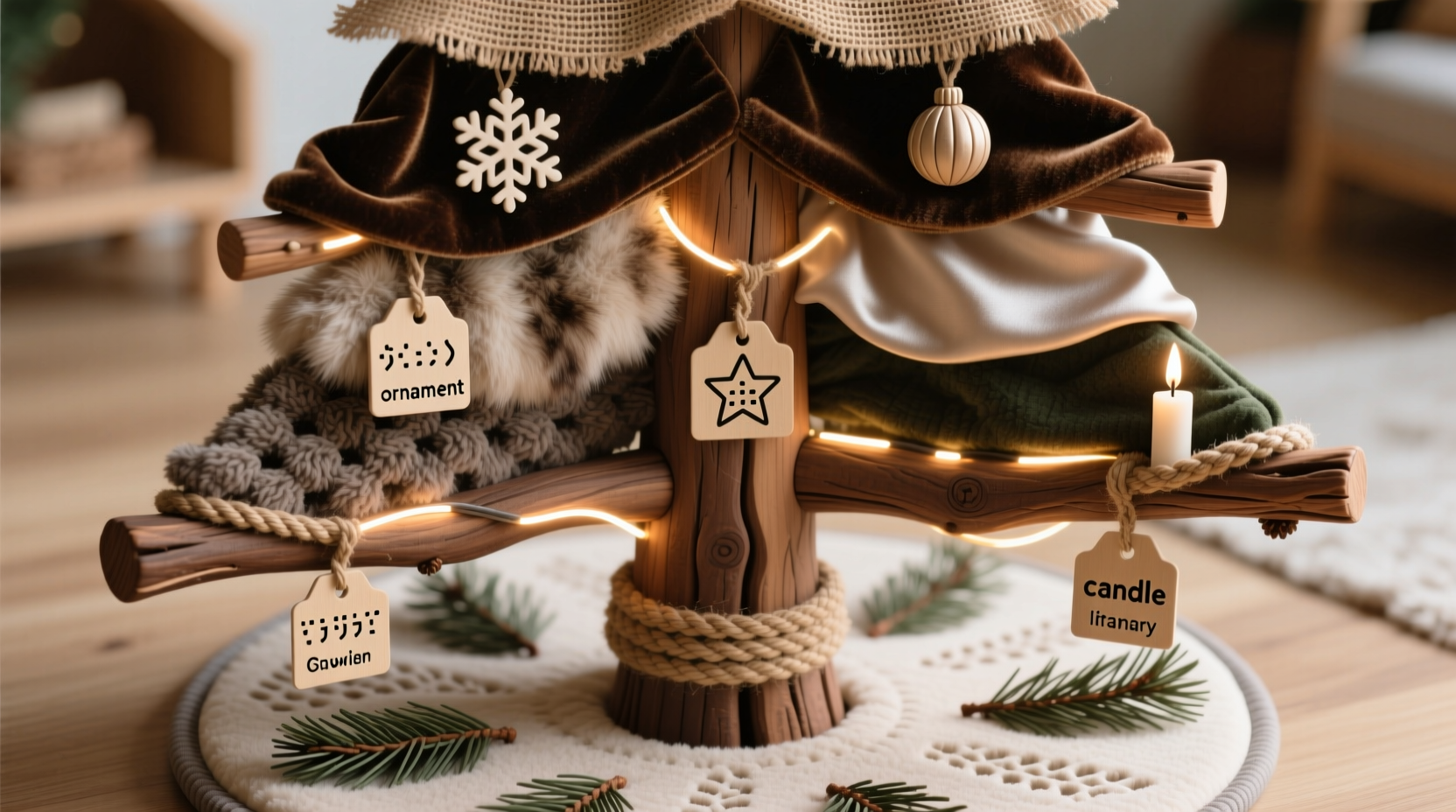
A tactile Christmas tree uses texture, shape, temperature, scent, and braille labeling to convey meaning and joy through touch. It’s not just about accessibility—it’s about belonging. When every ornament tells a story through feel, the tree becomes more than decoration; it becomes a shared narrative, co-created by all members of the family.
Why Tactile Trees Matter
For people who are blind or have low vision, exclusion from visual holiday traditions can lead to feelings of isolation. A 2022 report from the American Foundation for the Blind found that over 60% of visually impaired adults felt “left out” during family holiday gatherings due to inaccessible activities. Creating a tactile tree directly addresses this gap.
Tactile engagement stimulates memory, emotional connection, and cognitive processing. When someone can run their fingers over a bumpy star, a soft fabric angel, or a cool metal bell, they’re not just feeling objects—they’re experiencing stories, memories, and cultural meaning.
“Touch is not a substitute for sight—it’s a complete sensory language. When we design for touch, we honor another way of knowing the world.” — Dr. Lena Patel, Sensory Inclusion Researcher, National Center for Accessible Holidays
Step-by-Step Guide to Building Your Tactile Tree
Creating a tactile Christmas tree requires planning, creativity, and attention to sensory detail. Follow this structured process to ensure your tree is both meaningful and safe.
- Choose the Right Tree Base: Opt for a small artificial tree (3–4 feet tall) with sturdy branches that can support textured ornaments. Avoid live trees—the needles may shed and pose a slipping hazard. A stable base is essential for safety when guests explore the tree by touch.
- Select Texturally Distinct Ornaments: Each ornament should offer a unique tactile signature. Use materials like felt, sandpaper, velvet, wood, rubber, tinsel, pom-poms, ribbons, seashells, or even dried citrus slices. Aim for at least 8–10 different textures so each item feels distinct.
- Incorporate Braille Labels: Attach small, durable braille tags to each ornament. These can be purchased online or made using a braille label maker. Include the name of the ornament (e.g., “Star,” “Snowman”) and optionally, a short message (“Made by Emma, 2020”).
- Add Dimension with Shape and Weight: Vary not just texture but also form. Use flat discs, round balls, elongated icicles, and 3D figures. Heavier items like wooden cutouts contrast well with lightweight foam shapes, helping users distinguish between them.
- Include Scented Elements (Optional): Attach natural scents to certain ornaments—cinnamon sticks on a gingerbread man, pine sprigs on a forest deer, vanilla pods on a stocking. This enhances memory recall and deepens immersion.
- Organize with Spatial Logic: Place similar items together or follow a theme: top = stars and angels, middle = family ornaments, bottom = animals and snowflakes. Consistency helps users build a mental map of the tree.
- Test Accessibility: Have a visually impaired friend or family member explore the tree while wearing a blindfold. Ask them to identify ornaments by touch alone. Adjust textures or labels based on feedback.
Material Selection: Do’s and Don’ts
Not all textures are equally effective or safe. Some materials may be too sharp, fragile, or confusing when touched. The table below summarizes recommended choices.
| Material | Do | Don’t |
|---|---|---|
| Felt | Use for soft animals, stockings, Santa hats | Avoid thin, fraying edges |
| Sandpaper | Great for “rough” elements like tree bark or dinosaurs | Don’t use coarse grades—can scratch skin |
| Metal | Cool-to-touch bells, stars, icicles | Avoid sharp edges or points |
| Plastic | Smooth globes, durable shapes | Don’t use brittle types that crack easily |
| Natural Items | Pinecones, shells, cinnamon sticks | Avoid mold-prone or insect-infested items |
Braille Integration: Practical Tips
Braille labels turn a tactile object into an informative one. Even if your family member isn’t fluent in braille, learning a few words like “star,” “heart,” or “love” can become part of the holiday ritual.
- Purchase pre-made braille stickers or use a portable braille embosser.
- Attach labels securely using clear plastic sleeves or laminated paper loops tied with string.
- Pair braille with print text so sighted family members can learn alongside.
- Update tags annually to reflect new meanings—e.g., “Our First Christmas Together.”
Real Example: The Thompson Family’s Tactile Tradition
The Thompsons of Portland, Oregon, began building a tactile tree five years ago when their grandmother, Martha, lost her vision to macular degeneration. Initially hesitant, she admitted feeling “like a spectator” during Christmas Eve celebrations.
Her granddaughter Lily, then 10, suggested making a tree she could “see with her hands.” They gathered materials: a velvet angel from an old costume, a wooden star carved by Lily’s father, jingle bells wrapped in ribbon, and a miniature knitted stocking. Each was labeled in braille with help from a local teacher of the visually impaired.
On Christmas Eve, Martha explored the tree independently for the first time in years. She identified seven of ten ornaments correctly and teared up when she found the stocking labeled “For Grandma.” “I can finally be part of this again,” she said.
Now, the tactile tree is the centerpiece of their celebration. New ornaments are added each year, always with texture and tag. The tradition has expanded to include neighbors and friends with visual impairments, turning a personal project into a community event.
Checklist: Building Your Tactile Tree
Use this checklist to stay organized and ensure no detail is missed.
- ☐ Choose a stable, medium-sized artificial tree
- ☐ Gather at least 8 different textured materials (felt, wood, metal, etc.)
- ☐ Designate categories (top, middle, bottom) for spatial consistency
- ☐ Create or order braille labels for each ornament
- ☐ Pair textures with meaningful items (e.g., fuzzy lamb = shepherd)
- ☐ Add optional scents safely (secured, non-allergenic)
- ☐ Test the tree with a blindfolded user for feedback
- ☐ Host a “touch unveiling” on Christmas Eve
- ☐ Take notes for next year’s improvements
- ☐ Store ornaments separately with labels intact
Frequently Asked Questions
Can I convert my existing tree into a tactile one?
Yes, but selectively. Identify which current ornaments have strong textures and add braille tags. Replace smooth glass balls with tactile versions. You don’t need to start over—evolve your tree gradually.
What if no one in my family knows braille?
That’s okay. Start simple. Use online braille generators to print labels, and learn one or two letters each year. Many visually impaired individuals recognize common holiday words by touch even without fluency. The effort itself sends a powerful message of inclusion.
Are there safety concerns with textured materials?
Always prioritize safety. Avoid sharp edges, small detachable parts, toxic glues, or allergens. Supervise young children and mobility-impaired users. Ensure the tree is anchored firmly to prevent tipping during exploration.
Conclusion: A Tree That Everyone Can Share
A Christmas tree should never be a one-sense experience. By incorporating texture, braille, and intentional design, you transform a decorative object into a bridge of connection. This isn’t about charity or accommodation—it’s about reimagining tradition so everyone can participate as equals.
The tactile tree is more than an adaptation. It enriches the experience for all: sighted family members learn to appreciate texture and subtlety, children develop empathy and creativity, and visually impaired loved ones regain agency in a season often defined by visuals.




 浙公网安备
33010002000092号
浙公网安备
33010002000092号 浙B2-20120091-4
Comments
No comments yet. Why don't you start the discussion?