
Every holiday season, millions of homes light up with the glow of Christmas trees adorned in ornaments, tinsel, and sentiment. But while enthusiasm for festive decor is admirable, there’s a fine line between charmingly thematic and unintentionally garish. A themed tree can be one of the most expressive centerpieces in your home—if done thoughtfully. The key lies not in avoiding themes altogether, but in executing them with restraint, cohesion, and an eye for design.
A truly successful themed tree doesn’t shout its concept from across the room. Instead, it whispers elegance through curated details, balanced color palettes, and a sense of narrative flow. Whether you're drawn to vintage glamour, Nordic minimalism, or botanical elegance, the goal is to create a tree that feels intentional, refined, and timeless—not like a novelty display from a theme park gift shop.
Understand the Difference Between Thematic and Kitschy
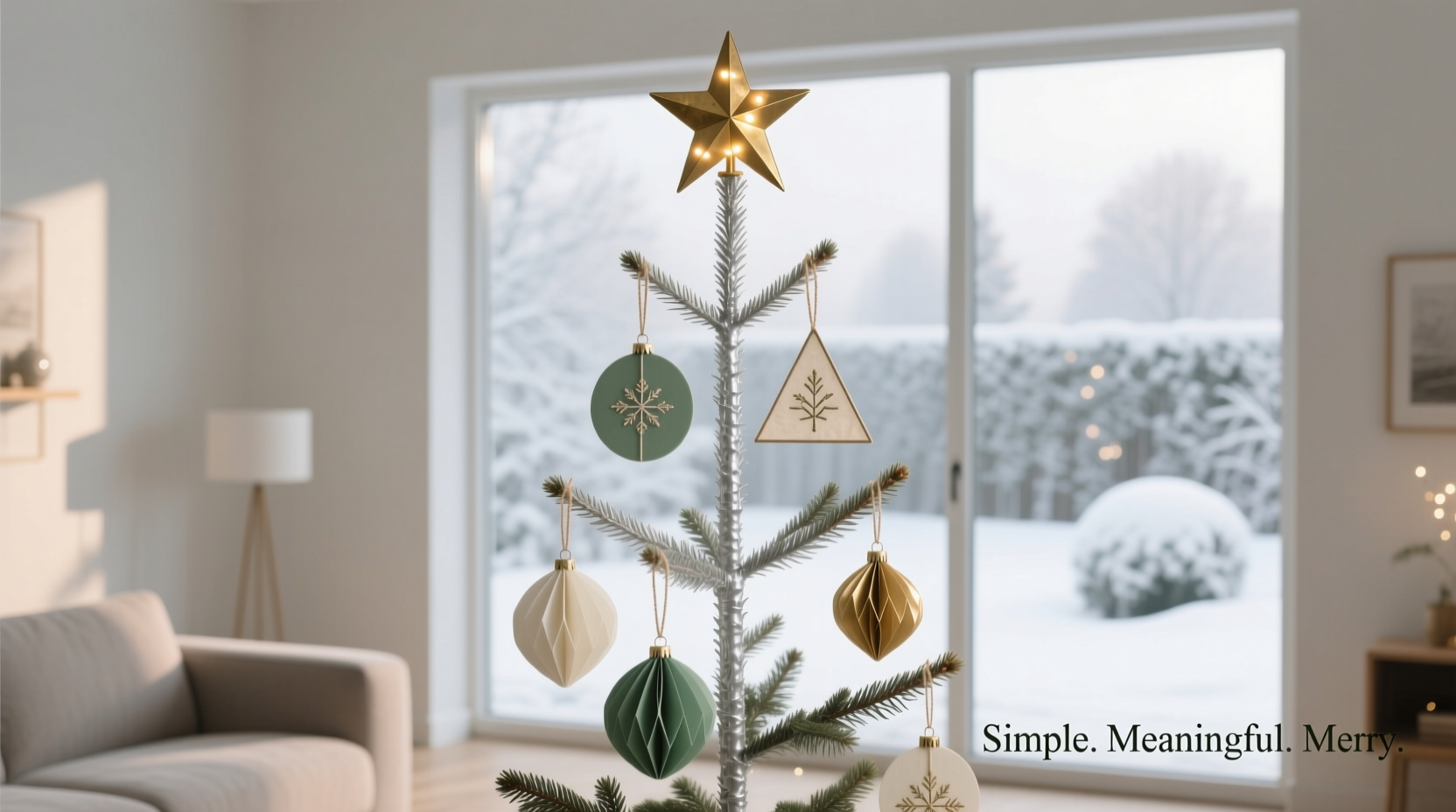
The word “kitsch” often carries judgment, but it simply refers to art or objects that are overly sentimental, mass-produced, or lacking in subtlety. When applied to Christmas trees, kitsch tends to emerge when too many competing ideas collide: mismatched colors, clashing textures, excessive ornamentation, or themes so literal they border on costume-like.
A themed tree, by contrast, operates under a clear design framework. It has a central idea—say, \"forest frost\" or \"mid-century modern\"—that informs every choice, from branch density to ribbon width. The theme isn't just about what you hang on the tree; it's about how those elements work together to evoke a mood or memory.
“Theming is storytelling. The best trees don’t display a checklist of ornaments—they tell a quiet story through texture, tone, and rhythm.” — Clara Nguyen, Interior Stylist & Holiday Design Consultant
Kitsch happens when the story gets lost in noise. To avoid this, treat your tree like any other piece of interior design: consider scale, proportion, repetition, and negative space. These principles keep the theme coherent and visually calming, even when the concept itself is playful or nostalgic.
Build Your Theme Around Mood, Not Objects
Most people start with objects when creating a themed tree: snowmen, reindeer, nutcrackers, or miniature Santas. But beginning with physical items limits creativity and increases the risk of clutter. A more effective approach is to begin with atmosphere.
Ask yourself: What feeling do I want this tree to evoke? Peaceful? Whimsical? Luxurious? Nostalgic? Once you’ve defined the emotional core, choose a palette and materials that reflect it. For example:
- Tranquil Winter: Soft whites, frosted silver, matte glass, birch branches, linen ribbons
- Vintage Hollywood Glamour: Deep emerald, gold leaf, crystal drops, velvet bows, candle-style lights
- Rustic Cabin: Burnt orange, pinecones, burlap, antler shapes, warm white lights
- Art Deco: Black and chrome, geometric shapes, mirrored balls, satin streamers
By anchoring your theme in mood rather than literal representations, you allow room for abstraction and sophistication. A “winter forest” tree doesn’t need plastic deer or cartoon owls—it can be suggested through layered greens, wood-toned beads, and delicate icicle picks.
Case Study: The Minimalist Alpine Tree
Sophie R., a graphic designer in Portland, wanted a tree that reflected her love of mountain hikes without becoming a cliché of moose figurines and plaid ribbons. She started by defining her desired mood: serene, crisp, and grounded.
She chose a narrow, dense Fraser fir for its natural symmetry, then decorated using only three materials: matte white ceramic orbs, hand-dipped beeswax candles, and foraged dried eucalyptus stems. Lights were kept to a minimum—just 50 warm-white LEDs strung vertically to mimic sunrise through pines.
The result was a tree that felt deeply thematic yet understated. Guests described it as “like standing in a snowy grove at dawn.” No single ornament screamed “theme,” but together, they created a unified impression. Sophie avoided kitsch not by rejecting tradition, but by editing rigorously and prioritizing feeling over literalism.
Follow the Five-Step Curation Process
Creating a non-kitschy themed tree requires discipline. Use this step-by-step method to refine your vision and execution.
- Define your theme in one sentence. Example: “A 1950s ski lodge after a fresh snowfall.” This keeps decisions aligned.
- Select a limited color palette—three colors maximum. Include neutrals (e.g., cream, charcoal, wood) as part of the count.
- Choose two dominant materials and one accent. For instance: felt (dominant), wood (dominant), copper wire (accent).
- Edit ruthlessly. Lay out all intended decorations. Remove anything that doesn’t align with the mood, color, or material list.
- Test at night. Turn off overhead lights. Observe how shadows, reflections, and glows interact. Adjust spacing or brightness as needed.
Do’s and Don’ts: Avoiding Common Pitfalls
Certain habits consistently push themed trees into kitschy territory. Use this guide to sidestep them.
| Do | Don’t |
|---|---|
| Use repetition to create rhythm (e.g., repeating a shape every 12 inches) | Scatter similar items randomly without spacing |
| Limit themed ornaments to 30% of total decor | Fill the tree entirely with character ornaments (elves, snowmen, etc.) |
| Incorporate handmade or artisanal pieces for authenticity | Rely solely on mass-market sets from big-box stores |
| Vary ornament sizes but maintain visual weight balance | Cluster all large ornaments at eye level |
| Use lighting as a unifying layer (e.g., warm white throughout) | Mix colored bulbs with white LEDs or multicolored strings |
One of the most overlooked missteps is over-personalization. While family heirlooms and handmade kid crafts have deep sentimental value, placing too many on a themed tree disrupts cohesion. Consider rotating them seasonally or dedicating a separate “memory tree” elsewhere in the home.
Create a Balanced Ornament Strategy
Ornaments are the vocabulary of your tree’s language. A well-edited selection speaks clearly; a crowded mix creates noise. Follow this checklist to ensure harmony.
- ✅ 50% solid-color spheres in primary palette
- ✅ 20% textured or matte-finish pieces (wood, fabric, paper)
- ✅ 15% specialty ornaments that reflect the theme (e.g., tiny skis, feather quills)
- ✅ 10% statement pieces (larger, metallic, or handcrafted focal points)
- ✅ 5% open for personal touches (one child-made star, one vintage heirloom)
This ratio ensures that the theme remains legible without sacrificing warmth or individuality. For example, a “Victorian library” tree might feature deep burgundy and brass tones, with 50% matte ruby baubles, 20% book-shaped felt ornaments, 15% miniature brass keys, and 10% oversized gilt-framed mirrors. The remaining 5% could include a great-grandmother’s blown-glass teardrop.
Distribution matters as much as quantity. Place larger ornaments deeper in the branches to create depth, and use smaller ones toward the tips. Rotate directional ornaments—like birds or stars—so they face outward, not inward or upside-down.
FAQ: Common Concerns About Themed Trees
Isn’t any theme inherently kitschy?
Not at all. Themes become kitschy when executed without restraint. A theme rooted in mood, material consistency, and thoughtful curation can be deeply elegant. Think of it like fashion: a full leopard-print ensemble might feel excessive, but a single silk scarf in the same pattern can elevate an outfit.
How do I include kids’ crafts without ruining the theme?
Incorporate them strategically. Choose one or two high-quality handmade pieces that align with the color scheme. Hang them at lower levels where children can admire them, and frame them with complementary solid ornaments to integrate them visually. Alternatively, designate a small secondary tree for handmade items.
Can I mix multiple themes?
Proceed with caution. Combining themes—like “nautical Christmas” or “space Santa”—often amplifies kitsch because it introduces conceptual dissonance. If you’re committed to a hybrid idea, ground it in a strong unifying element, such as a consistent color palette or material (e.g., all-metallic finishes or all-natural fibers).
Final Touches That Elevate the Design
The top of the tree and the base are often afterthoughts, but they complete the narrative. Resist the urge to cap the tree with a flashy star or angel unless it aligns with your theme. Alternatives include:
- A sculptural finial made of woven twigs or stacked crystals
- A cascading vine or ribbon spiral
- A cluster of dried florals in theme-appropriate hues
The tree skirt should function as an extension of the design, not a cover-up. Options include:
- A tailored fabric skirt in a palette-matching linen or velvet
- A rustic wooden tray holding pine boughs and stones
- A vintage quilt folded into a circular base
Finally, consider scent. A subtly scented diffuser nearby—pine, amber, or clove—can deepen immersion without overwhelming. Avoid artificial sprays or plug-ins that clash with the tree’s aesthetic integrity.
Conclusion: Design with Intention, Not Impulse
A themed Christmas tree doesn’t have to be a parade of novelties to feel meaningful. In fact, the most memorable trees are often the quietest—the ones where every detail feels considered, where the air hums with atmosphere rather than shouting with decoration. By shifting focus from objects to emotion, from abundance to balance, you create a tree that honors both tradition and taste.
This holiday season, resist the temptation to buy into pre-packaged themes or fill every branch with sparkle. Instead, ask yourself: What story do I want my tree to tell? Then edit, refine, and trust that less can indeed be more. A well-designed tree isn’t just seen—it’s felt.




 浙公网安备
33010002000092号
浙公网安备
33010002000092号 浙B2-20120091-4
Comments
No comments yet. Why don't you start the discussion?