
Themed Christmas trees have become the quiet benchmark of holiday intentionality—not as status symbols, but as reflections of personal story, seasonal rhythm, or shared memory. Yet most tutorials assume access to boutique ornaments, custom garlands, and curated color palettes priced like limited-edition sneakers. The truth? A compelling theme isn’t defined by price tags—it’s anchored in consistency, repetition, restraint, and resourcefulness. This isn’t about compromise; it’s about curation with clarity. In fact, the most memorable themed trees I’ve styled over 12 years as a holiday design consultant weren’t the ones with $300 ornament sets—they were the ones built from thrifted books, dried citrus, hand-dyed fabric scraps, and family heirloom buttons. What follows is a field-tested, budget-conscious framework—not just for saving money, but for deepening meaning.
1. Start with Theme First—Not Ornaments
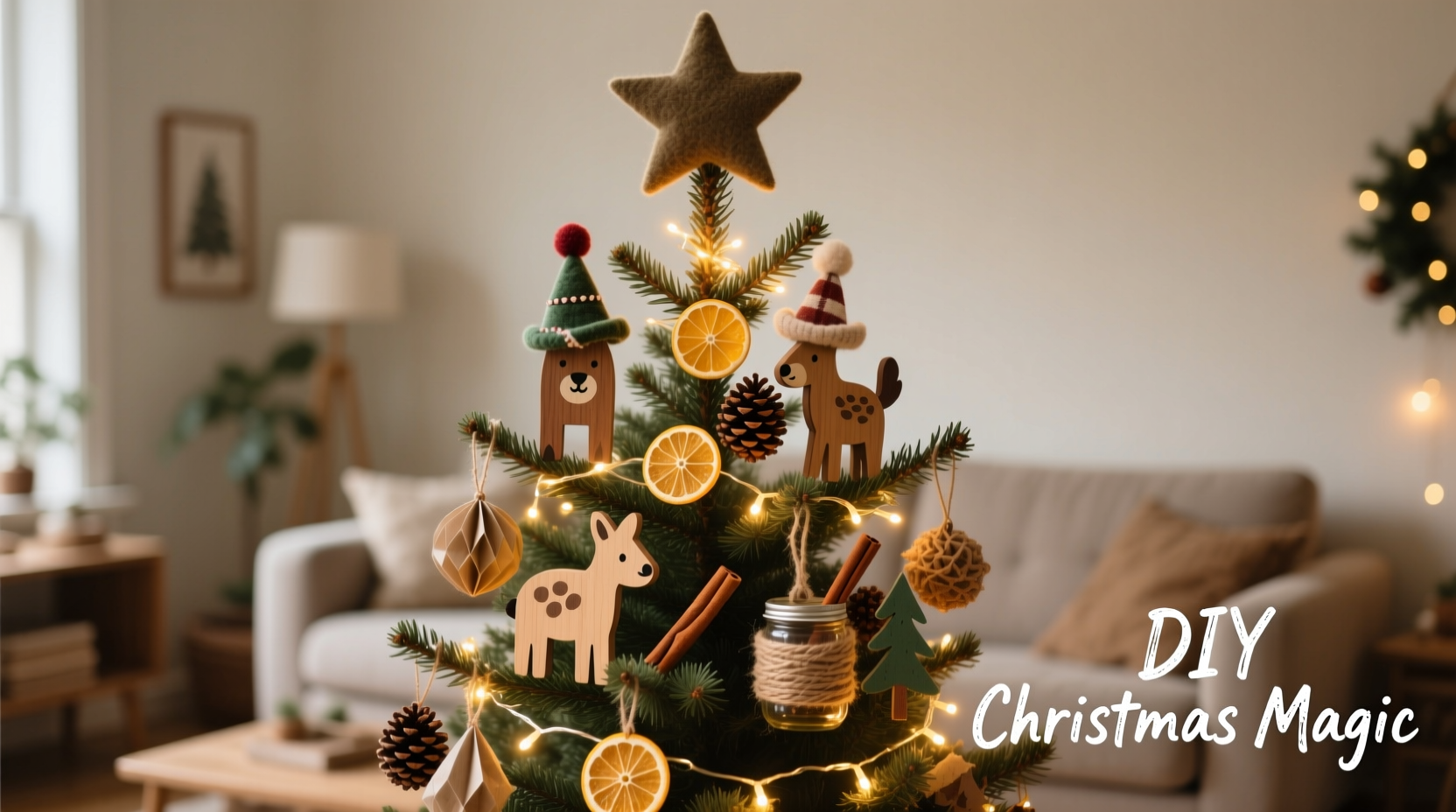
Most people begin with what they already own—or worse, with a sale at a big-box store—and then try to force coherence. That path leads to visual noise: three red glass balls, a glittery reindeer, a ceramic snowman, and a tinsel star that doesn’t match anything. A strong theme emerges not from accumulation, but from constraint. Ask yourself three questions before buying or gathering a single item:
- What feeling do I want the tree to evoke? (e.g., hushed woodland calm, vintage library warmth, coastal winter stillness)
- What materials already exist in my home that support that feeling? (e.g., unfinished wood shelves, linen napkins, seashell collections, old sheet music)
- What natural elements are accessible to me right now? (e.g., pinecones from a local park, cinnamon sticks from the pantry, birch branches from a fallen limb)
Theme isn’t color alone—it’s texture, scale, origin, and narrative. “Nordic forest” isn’t just green and white; it’s matte finishes, asymmetrical branch placement, foraged moss, and ornaments made from bark or unglazed clay. “Grandmother’s attic” leans into patina, handwritten tags, mismatched porcelain, and soft, diffused lighting—not glossy gold or uniform baubles.
2. Build Your Palette Using the 3-3-3 Rule
Every effective theme rests on a disciplined palette—not three colors, but three categories of material. This prevents visual fatigue and creates instant cohesion, even when sourcing from disparate places. Use this structure:
| Category | Purpose | Budget-Friendly Sources |
|---|---|---|
| Natural Base (e.g., wood, dried citrus, pinecones, wool, burlap) | Provides grounding texture and organic shape; absorbs light softly | Backyard foraging, grocery store produce section ($1–$3 for whole oranges), craft store remnant bins ($0.50/yard for burlap) |
| Reclaimed Accent (e.g., vintage buttons, old keys, sheet music pages, book pages, embroidery floss) | Adds history, contrast, and tactile interest; tells a subtle story | Thrift stores ($0.25–$2 per box), garage sales, your own junk drawer, free community “swap shelves” |
| Handmade Highlight (e.g., salt dough ornaments, dyed yarn pom-poms, pressed flower frames, folded paper stars) | Offers focal points and personal signature; ensures uniqueness | Flour + salt + water = ornaments under $2 total; food coloring + yarn = pom-poms under $1.50 |
This system eliminates decision fatigue. If you’re making a “coastal winter” tree, your Natural Base might be bleached driftwood slices and dried sea lavender; Reclaimed Accents could be vintage nautical charts and brass fishing lures; Handmade Highlights might be rope-wrapped starfish or sea glass–inspired resin drops (using clear glue and blue food dye). No two trees will look alike—but all will feel resolved.
3. The Step-by-Step Tree Styling Timeline (Under 3 Hours)
Forget last-minute panic. A thoughtful tree takes time—not because it’s complex, but because pacing allows intention to settle. Follow this realistic timeline, adaptable whether you’re styling solo or with kids:
- Day 1, Evening (30 min): Gather & Sort
Collect all potential items—natural, reclaimed, handmade. Lay them on a large sheet or table. Discard anything chipped, frayed, or emotionally neutral. Group remaining pieces by category and tone. Keep only what passes the “one glance test”: if you can’t instantly see how it belongs in your theme sentence, set it aside. - Day 2, Morning (45 min): Prep & Assemble
Cut citrus slices (¼ inch thick), bake at 200°F for 2 hours until leathery. String pinecones with jute twine. Fold paper stars or roll salt dough ornaments. Label each batch with a small tag noting its role (“Natural Base – Citrus,” “Handmade – Star”). Do not hang yet—let everything cool, dry, and settle. - Day 2, Afternoon (60 min): Light First, Then Layers
String lights evenly *before* adding any ornaments—warm white LED micro-lights ($8–$12) are ideal. Next, drape garlands: twist together eucalyptus stems and dried lavender, or braid strips of leftover linen. Avoid symmetry; let garlands pool naturally at the base and cascade asymmetrically. - Day 2, Late Afternoon (45 min): Place Ornaments by Weight & Scale
Start heavy (wood slices, large pinecones) at the bottom third. Move to medium (buttons, folded stars) in the middle. Finish light (dried orange wheels, tiny pom-poms) near tips. Hang in clusters of three or five—not singly—to create rhythm. Leave 30% of branches visibly bare; negative space is where theme breathes. - Day 3, Morning (15 min): Final Edit & Intention Check
Step back. Does the tree feel unified—or like a collection? Remove *three* items, no matter how charming. Replace one with a single meaningful object: a child’s first handprint ornament, a sprig of rosemary (for remembrance), or a tiny framed photo tucked behind a branch. That’s your anchor.
4. Real Example: “The Library Tree” on a $47 Budget
When Maya, a high school English teacher in Portland, asked for help creating a tree that reflected her love of stories—without tapping her classroom supply fund—we worked strictly within her parameters: $50 max, no online shipping delays, and zero new plastic. She had three existing resources: a box of discarded hardcover books from her school’s library purge, a bag of vintage brass book clasps from her grandmother’s writing desk, and a stack of old typewriter ribbons she’d kept for years.
We began by deconstructing the books: removing covers (keeping cloth spines and embossed titles), cutting pages into uniform 3-inch squares, and folding them into origami cranes. The covers became rustic ornaments—hot-glued to twine loops. Pages became layered “snow” beneath the tree skirt. Book clasps were wired onto pinecones for weight and shine. Typewriter ribbons were cut into 6-inch strips and knotted around branch tips like miniature banners.
Total spent: $12.50 (for 5 yards of natural jute twine, $3.50; a bag of cinnamon sticks for scent and texture, $4; and a small bottle of archival glue, $5). The rest was repurposed. Her students later told her it was the “most peaceful tree ever”—not because it was expensive, but because every element carried voice, history, and care. As interior stylist Lena Chen observes:
“A themed tree succeeds not when it looks ‘designed,’ but when it feels like a quiet continuation of the room—and the life—that holds it.” — Lena Chen, Author of The Uncluttered Holiday
5. Common Pitfalls—and How to Avoid Them
Even with the best intentions, budget-themed trees can veer into clutter or cliché. Here’s what to watch for—and how to course-correct:
- Pitfall: “Theme Drift”
Adding one “fun” ornament that breaks the palette (e.g., a glittery Santa on a minimalist linen tree). Solution: Assign a “theme guardian”—a small notebook or sticky note taped to your tree stand listing your three-category palette. Before adding anything, ask: “Which column does this belong in?” If it fits none, it stays in the box. - Pitfall: Over-Ornamentation
Trying to fill every inch because “it’s Christmas.” Solution: Use the “Rule of Thirds”: place 70% of ornaments on the lower two-thirds of the tree; leave the top third intentionally lighter. Visual weight anchors the theme. - Pitfall: Ignoring Scale Contrast
Using only small ornaments makes the tree recede; using only large ones overwhelms. Solution: Maintain a 1:3:5 ratio—e.g., one large wood slice (4\"), three medium buttons (1.5\"), five small paper stars (¾\"). Repetition with variation builds harmony. - Pitfall: Forgetting Light Quality
Using cool-white or multicolor lights undermines warm, natural, or vintage themes. Solution: Warm white micro-lights (2200K–2700K color temperature) cost under $10 and mimic candlelight. Wrap them tightly around inner branches first—then build outward. Light is your most powerful thematic tool.
FAQ
Can I mix real and artificial greenery?
Absolutely—if done intentionally. Tuck fresh cedar or eucalyptus tips into an artificial tree’s outer branches to add scent, texture, and biodegradable depth. The key is ensuring the artificial base has a matte, non-shiny finish (avoid “frosted” or metallic tips) so the real elements don’t look grafted on. Many designers use high-quality artificial trees precisely for their structural reliability—then layer authenticity on top.
How do I store themed ornaments so they stay usable year after year?
Use rigid, compartmentalized boxes—not flimsy plastic tubs. Line each section with acid-free tissue paper (available at art supply stores for ~$4/100 sheets). Store natural elements like dried citrus separately in breathable cotton bags (old pillowcases work perfectly) to prevent moisture transfer. Label each container with your theme name and year—this builds a living archive you’ll enjoy expanding, not replacing.
What if my family hates the theme I chose?
Invite collaboration—not veto power. Instead of presenting a finished concept, share your theme sentence and ask: “What’s one thing from our home or history that fits this?” A child might choose a favorite seashell; a partner might offer a pocket watch from his grandfather. When people contribute meaning, resistance dissolves into ownership. Themes deepen when they’re co-authored.
Conclusion
A themed Christmas tree isn’t a luxury reserved for those with designer budgets or inherited collections. It’s an act of attention—a deliberate slowing down to ask: What matters right now? What textures soothe me? What stories do I want to hold gently in this season? You don’t need hundreds of dollars to answer those questions. You need curiosity, a pair of scissors, a willingness to repurpose, and the quiet confidence that beauty lives in repetition, restraint, and resonance—not retail markup.
Your tree won’t be perfect. Some salt dough ornaments may crack. A pinecone might fall. A page crane may unfurl. And that’s where the humanity lives—in the slight imperfection, the visible hand, the evidence of care. That’s what makes it yours.




 浙公网安备
33010002000092号
浙公网安备
33010002000092号 浙B2-20120091-4
Comments
No comments yet. Why don't you start the discussion?