
The holiday season often brings sensory overload—bright lights, bold colors, and constant activity. For those seeking a more peaceful, intentional celebration, a zen Christmas tree offers a refreshing alternative. Rooted in minimalism, mindfulness, and natural aesthetics, this style emphasizes serenity over spectacle. By using neutral tones, organic textures, and soft lighting, you can transform your tree into a quiet sanctuary that invites calm and contemplation. This guide walks through the philosophy, materials, and techniques to craft a tree that feels both festive and restorative.
The Philosophy Behind a Zen Holiday Aesthetic
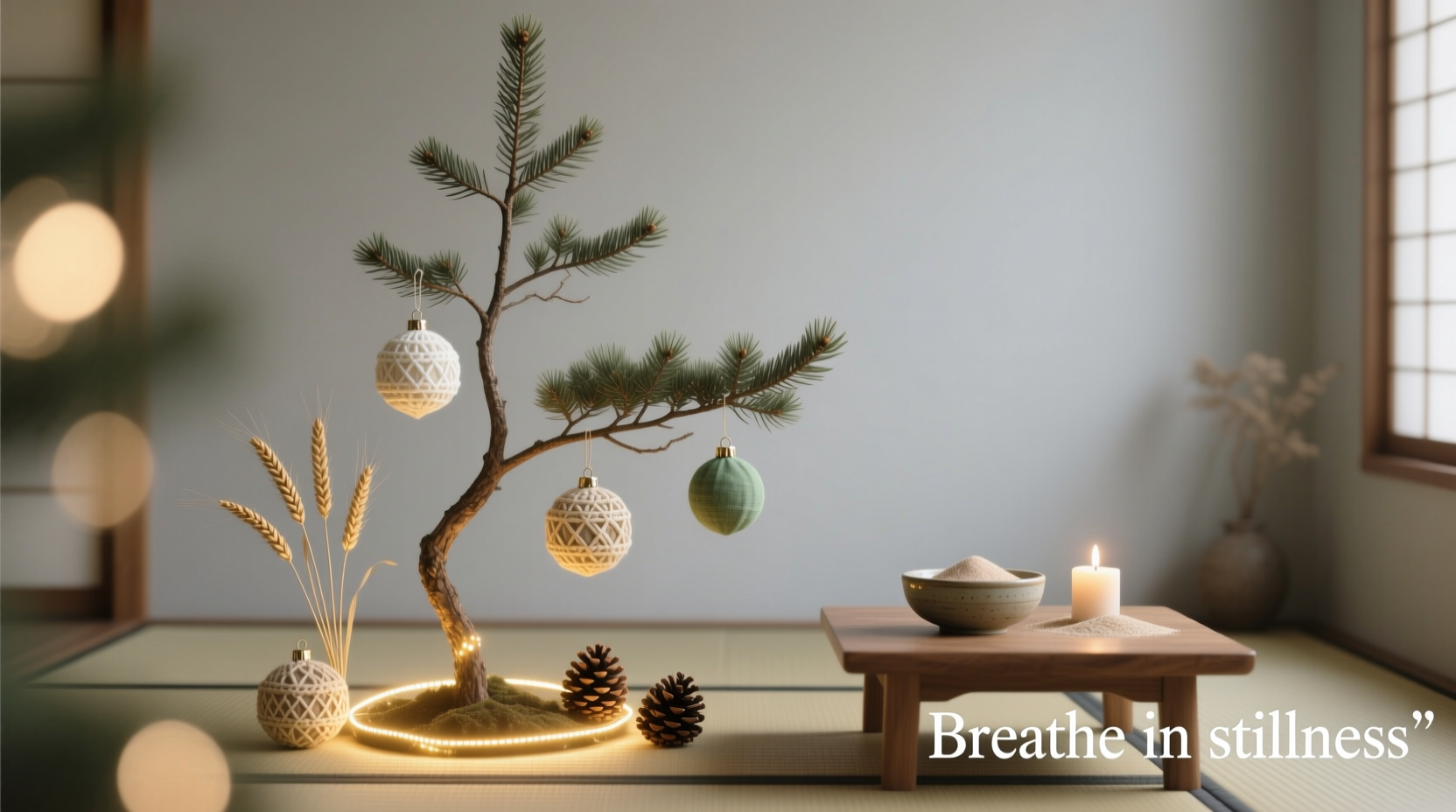
A zen Christmas tree isn’t just about appearance—it’s an extension of mindful living. Drawing from Japanese design principles like wabi-sabi (the beauty of imperfection) and ma (the use of negative space), this approach values simplicity, balance, and authenticity. Instead of aiming for visual saturation, the goal is harmony. The tree becomes less of a display and more of a focal point for stillness during a busy time of year.
This aesthetic aligns with growing cultural shifts toward slow holidays and sustainable traditions. Many people now prioritize meaningful experiences over excessive decor, choosing quality over quantity. A neutral-toned tree supports this mindset by reducing visual clutter and creating room for presence. It also tends to be more inclusive, avoiding overtly religious or commercial symbols in favor of universal themes like light, growth, and renewal.
“Designing with restraint doesn’t mean sacrificing beauty—it means deepening it. A single pinecone placed with intention can speak louder than a hundred glittering baubles.” — Naomi Tanaka, Interior Designer & Author of *Calm Spaces*
Selecting the Right Tree and Base Palette
The foundation of any zen Christmas tree is the tree itself. While tradition favors evergreens like fir or spruce, the key is selecting one with a natural, unforced shape. Avoid trees that are overly dense or artificially shaped. Look for subtle asymmetry, slight variations in branch length, and a sense of organic flow. If using an artificial tree, choose a model with realistic texture and a slightly irregular silhouette to avoid sterility.
Color sets the tone. Neutral palettes rely on earthy, desaturated hues: ivory, oatmeal, warm gray, sand, moss green, and soft taupe. These tones reflect natural light gently and blend seamlessly with other elements in the room. Avoid pure white or jet black—they can feel too stark. Instead, opt for off-whites and charcoal grays that carry warmth.
Recommended Neutral Tones and Their Emotional Effects
| Color | Hex Code (approx.) | Psychological Effect |
|---|---|---|
| Oatmeal | #D9CBB3 | Warmth, comfort, stability |
| Mist Gray | #C4C7CB | Calm, clarity, openness |
| Sandstone | #C2B2A3 | Groundedness, resilience |
| Moss Green | #8A9B6C | Balanced energy, renewal |
| Ivory | #FFFFF0 | Purity, softness, elegance |
Curating Decorations with Intention
Less is more when it comes to zen decoration. Choose ornaments that emphasize texture, form, and craftsmanship rather than flashiness. Materials should feel tactile and authentic—wood, linen, ceramic, dried botanicals, and hand-blown glass. Each piece should serve a purpose, whether visual balance, symbolic meaning, or sensory interest.
Ornaments don’t need to match exactly. In fact, slight variation enhances the wabi-sabi effect. A mix of handmade clay stars, knotted jute balls, sliced driftwood rounds, and dried orange slices adds depth without chaos. Hang items sparingly, allowing branches to show through. Aim for clusters of three in different heights rather than uniform spacing.
Natural elements bring life to the design. Pinecones lightly dusted with chalky white paint, bundles of cinnamon sticks tied with twine, or small nests with faux robin eggs add seasonal relevance without cliché. Even bare branches adorned only with looped linen ribbon can feel complete when styled with confidence.
Zen Ornament Checklist
- Hand-carved wooden shapes (stars, moons, animals)
- Linen or cotton fabric ornaments in cream or gray
- Dried citrus slices or eucalyptus garlands
- Unfinished ceramic beads or pebbles
- Recycled paper snowflakes with irregular edges
- Miniature woven baskets with tiny crystals or moss
Mastering Soft Lighting Techniques
Lighting is where the zen tree truly comes alive. Harsh LEDs or multicolored mini-lights defeat the purpose. Instead, use warm, dimmable illumination that mimics candlelight or twilight. Opt for bulbs with a color temperature between 2200K and 2700K—this range emits a golden glow that feels inviting without glare.
String lights should be woven deeply into the branches, not wrapped around the perimeter. This creates a glowing core effect, as if the light is emanating from within. Use fewer bulbs per foot (e.g., 25-count instead of 100-count) to maintain subtlety. LED fairy lights with a “twinkle” setting should be avoided; steady glow preserves tranquility.
For added dimension, incorporate secondary light sources near the tree. A floor lamp with a linen shade, a salt rock lamp, or a cluster of real (or flameless) candles on the mantle can enhance ambient brightness without drawing focus from the tree.
Lighting Do’s and Don’ts
| Action | Do | Don't |
|---|---|---|
| Bulb Temperature | 2200K–2700K (warm white) | Cool white (5000K+) |
| Placement | Weave into inner branches | Wrap around outer edges only |
| Intensity | Dimmable, low-lumen output | Bright, non-adjustable strings |
| Motion | Steady glow | Flashing, twinkling, or chasing effects |
| Power Source | Battery-operated for flexible placement | Overloaded outlets or tangled cords |
“Light should feel like a whisper, not a shout. On a zen tree, you shouldn’t see the bulbs—you should see their effect.” — Julian Reed, Lighting Designer & Architectural Consultant
Step-by-Step Guide to Building Your Zen Tree
Creating a serene Christmas tree is a deliberate process. Follow these steps to ensure cohesion and calm throughout assembly.
- Prepare the space: Clear the area around the tree stand. Turn off overhead lights and use a floor lamp to simulate evening ambiance.
- Set up the tree: Secure the trunk in the stand and fluff branches starting from the bottom up. Rotate as you go to maintain balance.
- Add string lights: Begin at the base and weave upward, tucking wires beneath layers. Plug in temporarily to check coverage, then disconnect.
- Layer in natural garlands: Drape loosely coiled eucalyptus, ivy, or cotton stems around the middle third. Let ends hang naturally.
- Hang primary ornaments: Place larger pieces first, focusing on visual weight distribution. Use clear fishing line for invisible suspension.
- Incorporate texture accents: Add linen pouches, wooden slices, or ceramic pendants in open areas.
- Final lighting test: Turn on lights in a darkened room. Adjust any glaring spots or dark zones.
- Add base decor: Surround the stand with neutral-wrapped gifts, stacked books, or a sheepskin rug for grounded warmth.
A Real-Life Example: Sarah’s Apartment Transformation
Sarah, a yoga instructor in Portland, Oregon, used to dread decorating for Christmas. Her small studio felt overwhelmed by her old red-and-gold tree, which clashed with her minimalist décor and left her feeling anxious. Last year, she decided to try a zen approach after attending a workshop on mindful living.
She chose a slim Fraser fir from a local farm, appreciating its natural taper. She strung it with 50 warm-glow LED bulbs spaced deep within the branches. Her ornaments included hand-thrown clay stars from a craft fair, bundles of dried lavender tied with hemp, and vintage linen napkins folded into origami cranes.
The change was immediate. Guests commented on the peaceful energy of the room. Sarah began her mornings sitting cross-legged in front of the tree, sipping tea and journaling. “It stopped being something I looked at,” she said, “and became part of my daily ritual.”
Frequently Asked Questions
Can I still include sentimental ornaments on a zen tree?
Absolutely. Sentimental pieces can be integrated thoughtfully. Select one or two meaningful items—like a child’s first ornament or a travel souvenir—and place them prominently but simply. Surround them with neutral elements to prevent visual competition. The key is curation, not elimination.
Is a zen tree appropriate for families with children?
Yes, with adaptation. Children can participate by making ornaments from natural materials—painting pinecones with edible flour-glue, stringing popcorn in neutral dyes, or crafting felt stars. The tree can remain calm while still honoring family involvement. Consider placing kid-made items on lower, accessible branches.
How do I maintain the look without it feeling dull?
Variety within restraint keeps the design dynamic. Mix matte and slightly reflective surfaces (like frosted glass or brushed metal). Introduce gentle movement with lightweight linen ribbons or hanging feathers. Scent also helps—lightly mist the tree with a blend of cedar, vanilla, and bergamot essential oils to engage another sense.
Conclusion: Cultivate Calm, Not Clutter
A zen Christmas tree is more than a design choice—it’s an invitation to slow down, reconnect, and celebrate with presence. In a world that often equates festivity with excess, choosing neutrality and soft light becomes a quiet act of resistance. It allows space for reflection, gratitude, and genuine connection.
You don’t need a full redesign to begin. Start with one element: replace bright lights with warm LEDs, swap out one garland for dried eucalyptus, or introduce a single handmade ornament. Over time, build a tradition that reflects peace, not pressure.




 浙公网安备
33010002000092号
浙公网安备
33010002000092号 浙B2-20120091-4
Comments
No comments yet. Why don't you start the discussion?