
The holiday season often brings sensory overload—bright colors, loud music, endless decorations. For many, this energy can feel more stressful than celebratory. A growing number of people are turning toward minimalist, nature-inspired alternatives that prioritize peace over pageantry. One of the most powerful ways to cultivate calm during the holidays is by creating a Zen Christmas tree: a serene centerpiece defined by neutral tones, soft lighting, and intentional simplicity. This approach isn’t about stripping away tradition; it’s about redefining it with mindfulness, elegance, and warmth.
A Zen tree doesn’t shout for attention. It invites quiet reflection. By focusing on texture, tone, and tranquility, you can design a tree that feels both festive and restorative—a sanctuary in your living space. Whether you live in a small apartment or a spacious home, this style adapts beautifully, offering visual harmony without clutter. The result is a holiday aesthetic that supports emotional well-being as much as it enhances interior design.
Why Choose a Zen-Inspired Christmas Tree?
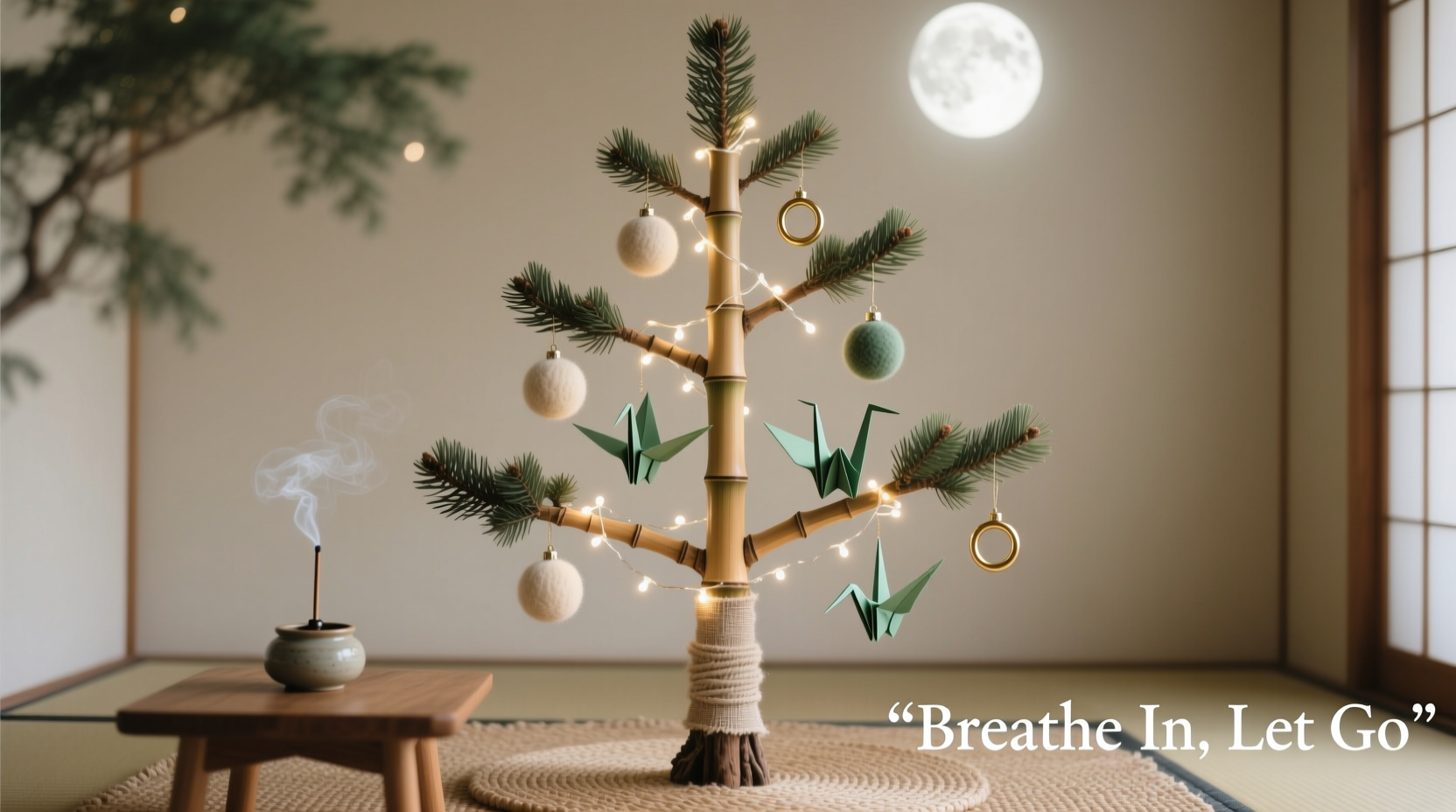
In recent years, interior designers and wellness experts have emphasized the connection between environment and mental state. Cluttered, overly stimulating spaces can elevate stress hormones like cortisol, while calm, organized environments support lower anxiety and improved focus. A Zen Christmas tree aligns with these principles by reducing visual noise and promoting relaxation.
This style draws from Japanese design philosophies such as wabi-sabi—the appreciation of imperfection, transience, and natural materials—and ma, the concept of intentional emptiness. These ideas encourage us to value what is simple, authentic, and meaningful. Applied to a Christmas tree, they translate into a design that breathes rather than overwhelms.
“Minimalism in holiday decor isn’t about having less—it’s about making room for what truly matters. A neutral-toned tree becomes a vessel for presence, not distraction.” — Lena Park, Interior Designer & Mindful Living Advocate
Additionally, a Zen tree is highly sustainable. Neutral palettes and reusable natural ornaments reduce reliance on mass-produced plastic decorations. Many elements can be repurposed year after year, stored easily, and combined with seasonal greenery from your garden or local forager.
Step-by-Step Guide to Building Your Zen Christmas Tree
Creating a Zen tree is a deliberate process. Each step should reflect intentionality, from selecting the tree to placing the final ornament. Follow this sequence to build a cohesive, calming display.
- Choose the Right Tree
Select a species with soft, feathery foliage like Nordmann fir, white pine, or blue spruce. These varieties hold their needles well and have a gentle silhouette. If using an artificial tree, opt for one labeled “natural-looking” with varied branch lengths and muted green tones. Avoid trees with built-in lights or pre-decorated elements—they conflict with the minimalist ethos. - Set the Base with Neutral Tones
Begin with a color palette grounded in earthy neutrals: ivory, beige, taupe, warm gray, and soft sage. These hues evoke snow-dusted branches, forest moss, and stone. Use solid-colored ribbons (linen or cotton), plain baubles in matte finishes, and unpainted wooden shapes. Avoid metallics unless they’re brushed brass or unlacquered copper—shiny gold or silver disrupts serenity. - Incorporate Natural Materials
Integrate textures found in nature: dried citrus slices, cinnamon sticks tied with twine, pinecones gathered from walks, birch bark rolls, and handmade paper stars. These elements add depth without visual weight. Handcrafted items also carry emotional resonance, especially when made with family or friends. - Layer Soft, Warm Lighting
Replace traditional multicolored or bright white LED strings with warm white fairy lights. Look for bulbs with a color temperature below 2700K—these emit a candle-like glow. Drape lights loosely, allowing some branches to remain dark for contrast. Consider battery-operated string lights with timers to automate the ambiance each evening. - Add Intentional Ornaments
Limit ornament quantity. Aim for one focal piece per square foot of tree surface. Choose symbolic items: a single glass dove for peace, a linen pouch filled with handwritten wishes, or a small ceramic bell. Hang them at varying heights to encourage slow visual movement through the tree. - Ground the Tree with a Thoughtful Skirt
Instead of a fabric tree skirt, use a woven seagrass mat, a slab of reclaimed wood, or a bed of moss-covered stones. Place a few scattered pinecones or smooth river rocks around the base to extend the organic theme.
Do’s and Don’ts: Designing with Balance
To maintain the Zen aesthetic, certain choices enhance harmony while others undermine it. Refer to this table when shopping or styling.
| Do | Don’t |
|---|---|
| Use matte-finish ornaments in clay, wood, or unglazed ceramic | Use glossy, reflective, or mirrored surfaces |
| Incorporate handmade or vintage pieces with subtle imperfections | Prioritize uniformity or perfection in decoration |
| Opt for warm white or amber-toned lights only | Use cool white, colored, or flashing lights |
| Leave generous negative space between decorations | Cover every visible branch with ornaments |
| Include scents subtly—like a cinnamon stick bundle or a nearby beeswax candle | Use strong artificial fragrances or plug-in diffusers near the tree |
Real Example: A Zen Tree in a City Apartment
Sophie, a graphic designer in Portland, Oregon, wanted her first solo holiday season to feel peaceful after years of chaotic family gatherings. Her studio apartment had limited space and large windows facing west, which filled the room with golden hour light in December. She chose a slim, potted Norfolk Island pine—small enough to fit in the corner but full enough to serve as a focal point.
She wrapped warm white micro-lights around the trunk and inner branches, letting them peek through like distant stars. Her ornaments were all handmade: felted wool spheres in oatmeal and charcoal, a few hand-blown glass icicles in smoky gray, and three origami cranes folded from rice paper printed with haiku verses. At the base, she placed a round rattan tray layered with eucalyptus stems and dried lavender.
Each evening, she turned on the lights at dusk and sat nearby with tea. “It wasn’t about being festive in the traditional sense,” she said. “It was about creating a ritual of stillness. That tree became my daily reset button.”
Essential Checklist for Your Zen Tree Project
Before you begin, gather the following items to ensure a smooth, mindful decorating experience.
- ✔️ A natural or high-quality artificial tree in soft green tones
- ✔️ Warm white fairy lights (preferably with timer function)
- ✔️ Neutral-colored garland (linen ribbon, cotton rope, or dried lemon slices)
- ✔️ Natural-material ornaments (wood, clay, paper, pinecone)
- ✔️ Matte-finish baubles in ivory, gray, or sage
- ✔️ Non-reflective tree topper (fabric star, knitted angel, or simple bow)
- ✔️ Organic tree skirt alternative (woven basket, wooden slice, moss pad)
- ✔️ Scissors, floral wire, and twine for securing decorations
- ✔️ A quiet afternoon or evening to decorate without rush
Frequently Asked Questions
Can I include any color beyond neutrals?
Yes, but sparingly. A single deep evergreen ornament or a hint of dusty rose in a dried flower can add dimension without breaking the calm. Think of color as accent, not foundation. The goal is subtlety, not contrast.
How do I keep the tree looking fresh without overwatering?
If using a real tree, check the water reservoir daily. Use room-temperature water and avoid additives unless recommended by your tree supplier. Keep the tree away from heating vents and fireplaces. For artificial trees, dust lightly with a microfiber cloth once a week to prevent buildup.
Is it okay to mix modern and rustic elements?
Yes, if done thoughtfully. A Zen tree can include both sleek ceramic orbs and rough-hewn wood slices—as long as the finish and color palette remain consistent. Focus on tactile harmony. When in doubt, touch the materials: if they feel cohesive in your hand, they’ll likely look cohesive on the tree.
Final Thoughts: Let the Tree Breathe
A Zen Christmas tree is not just a decoration—it’s an invitation to slow down. In a season that often glorifies excess, choosing simplicity is a radical act of self-care. Every element you select should serve a purpose: to comfort, to inspire, or to remind you of the quiet beauty inherent in winter.
Remember, there is no “perfect” Zen tree. Imperfections are part of its charm. A slightly lopsided ornament, a gap where light spills through, a crooked branch—these are not flaws. They are evidence of human touch, of presence, of a moment captured without pretense.
As you stand back and admire your creation, let it be more than a centerpiece. Let it be a daily reminder to return to stillness, to honor the quiet, and to celebrate the season on your own terms.




 浙公网安备
33010002000092号
浙公网安备
33010002000092号 浙B2-20120091-4
Comments
No comments yet. Why don't you start the discussion?