
Ambient lighting sets the tone of a space—soft glows invite relaxation, warm layers encourage conversation, and subtle illumination can transform a sterile rental into a sanctuary. For tenants bound by lease agreements that prohibit drilling, rewiring, or structural modifications, achieving this atmosphere might seem out of reach. But with thoughtful planning and modern alternatives, you don’t need to own your space to shape its soul. The key lies in layering light sources strategically while respecting the boundaries of temporary living.
The goal isn’t just visibility; it’s emotional resonance. Ambient lighting diffuses harshness, reduces shadows, and adds depth to flat walls and basic fixtures. Whether you’re in a studio apartment with builder-grade ceiling lights or a shared house with outdated lamps, there are accessible, non-invasive methods to craft a cozy, intentional glow. This guide walks through practical strategies, product recommendations, and design principles that allow renters to elevate their environment—no permits required.
Understanding Ambient Lighting: Beyond Overhead Bulbs
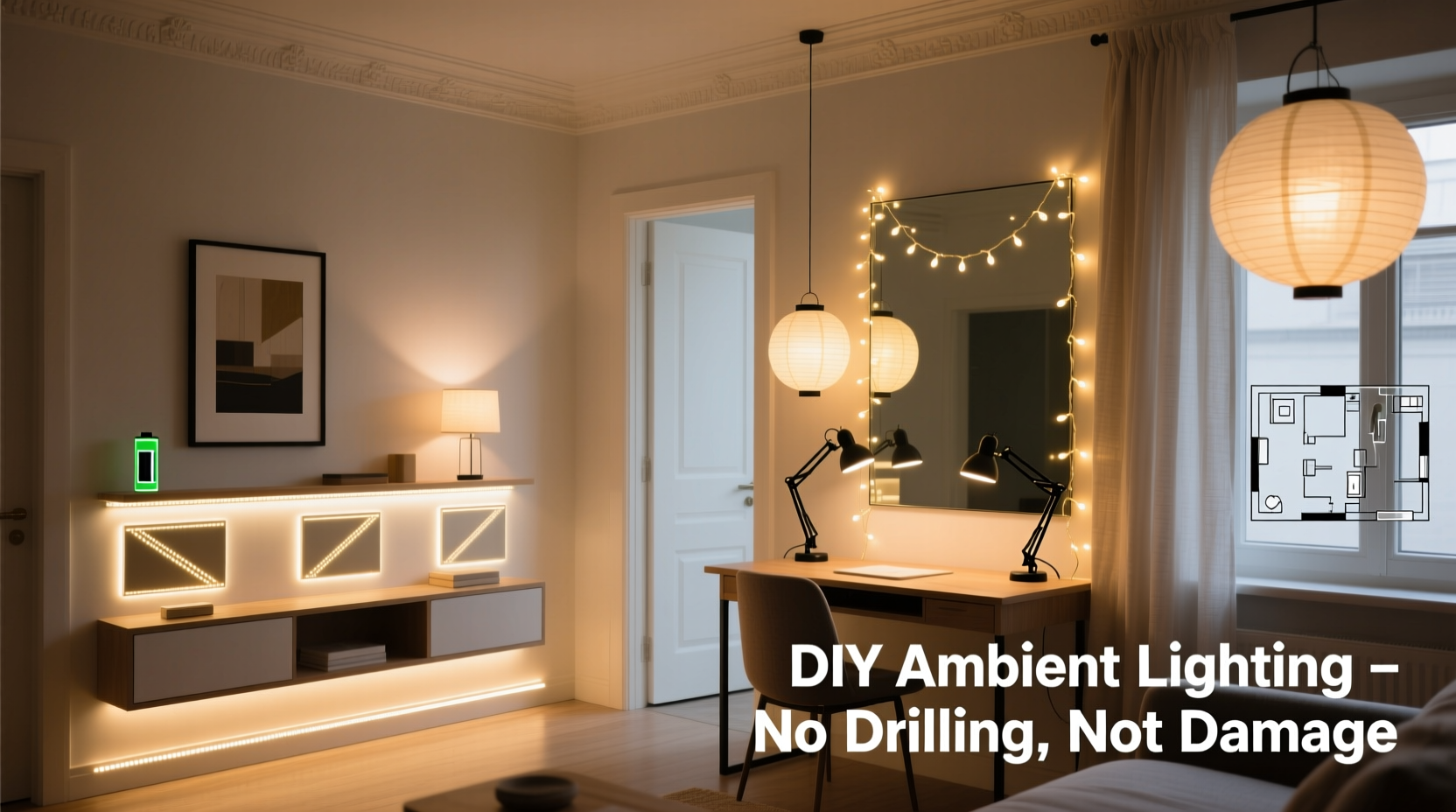
Ambient lighting, often called \"general lighting,\" provides overall illumination to a room without creating glare or stark contrasts. It’s not task lighting (like a desk lamp) or accent lighting (such as artwork spotlights), though it works best when combined with both. In rentals, overhead fixtures are typically fixed and unflattering—cool white, overly bright, or poorly positioned. Relying solely on them flattens the space and drains warmth.
The solution? Introduce indirect light sources that bounce off surfaces rather than shining directly into the eyes. Think of candlelight flickering across a wall or a floor lamp casting a soft halo behind a sofa. These effects are achievable without altering wiring or installing new fixtures. By focusing on placement, color temperature, and diffusion, renters can simulate professional-level ambiance.
Layering Light Sources for Depth and Comfort
One-dimensional lighting creates fatigue. Layering involves combining multiple types of light at different heights and intensities to build visual interest and functional flexibility. In a rental, this means working around existing infrastructure while introducing mobile or adhesive-based additions.
Base Layer: Start with what you have. If your ceiling fixture is too harsh, dim it with a plug-in remote dimmer (compatible with most lamps) or cover it with a removable fabric shade that clips or hangs over the existing fixture.
Secondary Layer: Add floor and table lamps. Position them in corners, behind furniture, or near seating areas to cast light upward and sideways. Uplighting—directing light toward the ceiling or walls—is especially effective for softening edges and expanding perceived space.
Tertiary Layer: Incorporate string lights, LED strips, or battery-powered fixtures to highlight architectural details like shelves, crown molding, or window frames. These elements don’t require power outlets and can be repositioned daily.
“Lighting is the makeup of interior design. Without proper layering, even the best-decorated room feels unfinished.” — Lena Torres, Interior Stylist & Renter Advocate
Non-Permanent Lighting Solutions That Work
Renters often assume they must choose between bland utility and damaging deposits. But innovation in lighting technology has produced tools designed specifically for temporary use. Here are proven options that leave no trace:
- Floor and Table Lamps: Portable, stylish, and instantly transformative. Look for designs with adjustable arms or shades that direct light where needed.
- Battery-Powered LED Candles: Safer than real flames and available in flickering varieties that mimic natural movement. Group them on mantels, windowsills, or dining tables.
- Adhesive LED Strip Lights: Peel-and-stick strips with low heat output can go under cabinets, along baseboards, or behind TVs. Use warm white or tunable RGB versions for customizable moods.
- Plug-In Wall Sconces: These attach to outlet-mounted brackets and extend outward like traditional sconces—no wiring needed. Some models include built-in USB ports.
- Command Hooks + String Lights: Use damage-free adhesive hooks to drape fairy lights across walls, headboards, or bookshelves. Opt for copper wire strands for a delicate, vintage look.
| Solution | Installation Time | Removal Trace? | Best For |
|---|---|---|---|
| LED Strip Lights (adhesive) | 5–10 minutes | No (if removed properly) | Kitchens, bedrooms, under shelves |
| Plug-in Sconces | 2 minutes | No | Bedside reading, hallways |
| Battery Candles | Instant | No | Dining areas, bathrooms |
| Command Hook String Lights | 10–15 minutes | No (with proper removal) | Accent walls, ceilings, alcoves |
| Freestanding Torchières | None | No | Living rooms, large spaces |
Step-by-Step Guide: Transform Your Living Room in One Evening
You don’t need weeks or major purchases to see results. Follow this timeline to refresh your main living area using only renter-safe methods:
- Evening Prep (15 min): Clear surfaces where lamps or lights will go. Gather materials: one floor lamp, string lights, adhesive LED strips, warm-bulb replacements.
- Swap Bulbs (10 min): Replace any cool-white bulbs in existing lamps with warm 2700K LEDs. Ensure brightness (lumens) suits the space—800lm for side tables, 1500lm for floor lamps.
- Install Floor Lamp (5 min): Place a torchiere-style lamp in a corner to bounce light off the ceiling. Avoid blocking pathways.
- Apply LED Strips (10 min): Stick a warm-white LED strip under a media console or shelf. Angle it toward the wall for indirect glow.
- Hang String Lights (10 min): Use Command Picture Hanging Strips to secure fairy lights above a sofa or along an empty wall. Drape loosely for organic flow.
- Final Adjustments (5 min): Turn off overhead lights. Test all new sources together. Adjust positions for balance. Use a smart plug to schedule on/off times if desired.
Total time: Under one hour. Total cost: $70–$120, depending on existing inventory. Result: A layered, welcoming environment that feels curated, not temporary.
Real Example: Sarah’s Studio Apartment Glow-Up
Sarah moved into a 500-square-foot studio in downtown Portland with track lighting that buzzed and cast a hospital-like sheen across her space. Her lease prohibited electrical changes, but she wanted a calming retreat after long workdays.
She began by replacing all bulbs with dimmable warm LEDs. Next, she added a tall arc floor lamp behind her sofa to serve as both ambient and accent lighting. Under-cabinet LED strips illuminated her kitchenette without glare. Along her largest wall, she used clear Command Hooks to hang copper-wire fairy lights in a gentle wave pattern. Finally, she placed three flameless candles on her coffee table and set them to flicker in the evenings.
The transformation wasn’t just aesthetic—it affected her routine. She found herself reading more, hosting friends comfortably, and feeling less stressed at home. When her landlord visited for an inspection, he complimented the “cozy yet clean” atmosphere, unaware none of it was permanent.
Common Mistakes to Avoid
Even well-intentioned efforts can backfire. Watch for these pitfalls:
- Overloading outlets: Using multiple plug-in devices on one circuit can trip breakers. Use a surge protector with individual switches.
- Ignoring scale: Too many small lights compete visually. Stick to 2–3 focal points per room.
- Choosing cold tones: Blue-heavy whites (above 3500K) feel clinical. Reserve them for workspaces, not lounging areas.
- Forgetting controls: Without dimmers or timers, lights stay “on” even when mood shifts. Smart plugs or remote-controlled strips solve this.
- Skipping removal prep: Always document original conditions with photos. Keep packaging for resale or return.
FAQ
Can I paint or spray-paint existing light fixtures?
Only if allowed by your lease and done carefully. Use matte spray paint designed for plastics/metals, apply in thin coats, and avoid covering sockets or vents. Always remove the fixture from power first. However, painting may void fire safety compliance—check local regulations. A safer alternative is to drape removable fabric shades over fixtures.
Will adhesive lights damage my walls?
High-quality peel-and-stick products (like 3M Command or Nanogrip tapes) are designed for smooth surfaces and should leave no marks when removed properly. Avoid using them on textured, freshly painted, or porous walls. To remove, pull the tab slowly downward at a 180-degree angle. If residue remains, use a small amount of rubbing alcohol on a cloth.
How do I create ambient lighting in a room with no outlets?
Battery-powered and solar-rechargeable options are ideal. Consider LED floor lamps with rechargeable batteries (lasting 6–10 hours), motion-sensor puck lights, or solar string lights placed near windows during the day. Alternatively, use extension cords routed safely along baseboards (secured with cord clips) from nearby rooms—never run them under rugs or across walkways.
Lighting Checklist: Renters’ Quick Setup Guide
Use this checklist before moving in or refreshing your space:
- ☐ Audit existing lighting: Identify harsh or inadequate fixtures
- ☐ Purchase warm-white (2700K–3000K) LED bulbs for all lamps
- ☐ Add at least two portable light sources (e.g., floor + table lamp)
- ☐ Install adhesive LED strips under shelves or behind TV
- ☐ Hang string lights with damage-free hooks for accent glow
- ☐ Include flameless candles for soft, flickering texture
- ☐ Use dimmers or smart plugs for control and automation
- ☐ Take “before” photos for security deposit protection
Conclusion
Ambient lighting isn’t a luxury reserved for homeowners or high-end renovations. It’s a fundamental aspect of comfort—one that shapes how we feel in our surroundings every day. As a renter, you have more power than you think to influence the atmosphere of your space. With strategic layering, smart product choices, and respect for lease terms, you can craft a home that breathes warmth and intention.
Start small: replace one bulb, add a single floor lamp, or drape a strand of lights above your bed. Notice how the room responds. Then build from there. Your environment doesn’t need permanence to hold meaning. Every glow you introduce is a quiet act of ownership—a way to say, “This space matters, even if I’m just passing through.”




 浙公网安备
33010002000092号
浙公网安备
33010002000092号 浙B2-20120091-4
Comments
No comments yet. Why don't you start the discussion?