
A well-structured school schedule is more than just a list of classes and times—it’s a foundation for academic success, mental well-being, and efficient time management. Whether you're a student trying to balance coursework and extracurriculars or an educator designing a curriculum for a classroom, the way time is allocated directly impacts engagement, retention, and performance. Poorly planned schedules lead to burnout, missed deadlines, and disengagement. A thoughtful one fosters consistency, focus, and progress.
This guide walks through the essential steps to build a functional, flexible, and sustainable school schedule. From assessing priorities to incorporating breaks and review periods, each element plays a role in creating a rhythm that supports long-term achievement.
Step 1: Assess Your Priorities and Responsibilities
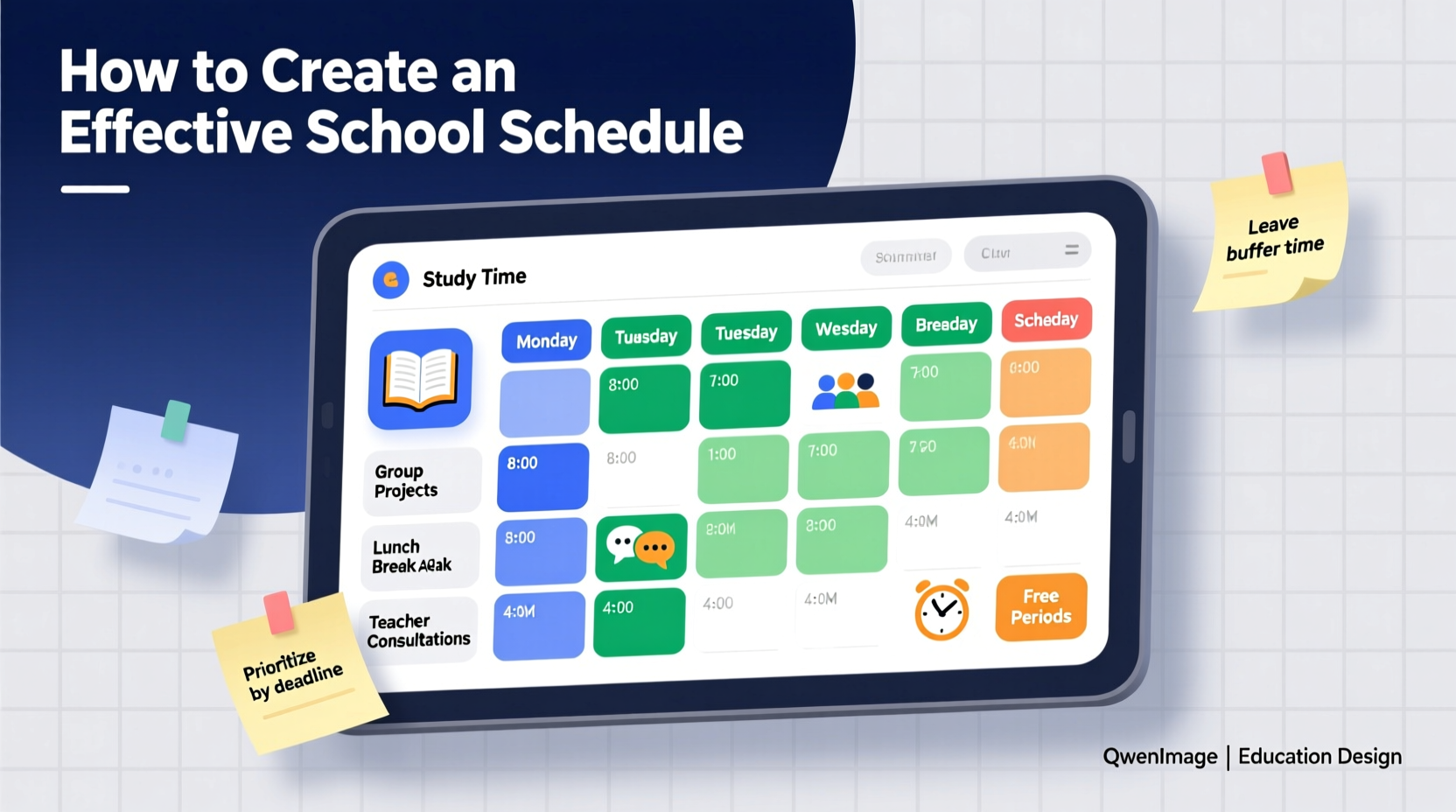
Before assigning time blocks, take stock of all academic and personal commitments. Students must account for classes, homework, study sessions, part-time jobs, sports, and social obligations. Educators need to consider teaching hours, lesson planning, grading, staff meetings, and professional development.
Start by listing every recurring task and estimating how much time each requires weekly. For example:
- 6 hours of math lectures
- 4 hours of lab work
- 10 hours of self-study
- 3 hours of club activities
- 5 hours of grading (for teachers)
Prioritize tasks based on urgency, importance, and energy requirements. High-focus subjects like calculus or writing should be scheduled during peak alertness times, typically morning for most people. Lower-intensity tasks, such as reviewing flashcards or administrative work, can fill afternoon slots.
Step 2: Choose the Right Scheduling Framework
Different scheduling models suit different needs. The best choice depends on age group, learning style, institutional policies, and personal rhythms.
| Model | Best For | Pros | Cons |
|---|---|---|---|
| Traditional Block (8–3 with fixed periods) | High schools, standardized environments | Predictable, easy to coordinate | Rigid; limits deep focus |
| Rotating Block Schedule | Mixed-subject pacing | More in-depth class time; avoids daily monotony | Harder to maintain routine; gaps between sessions |
| Modular (Flexible Time Blocks) | Project-based learning, older students | Encourages autonomy and deep work | Requires strong self-discipline |
| Homeschool/Personalized Schedule | Independent learners, tutors | Tailored to energy peaks and goals | Lacks external accountability if not monitored |
Educators may adapt institutional frameworks, but students can still personalize within constraints. For instance, even with a fixed class timetable, study blocks can be optimized using modular principles during free periods.
Step 3: Design the Daily and Weekly Structure
Now that you have a framework, map out your week. Begin with non-negotiables: class times, work shifts, family duties. Then layer in academic responsibilities and personal goals.
- Block high-focus tasks early. Schedule demanding subjects or creative work in the morning when cognitive function is highest.
- Group similar tasks. Cluster reading, writing, or problem-solving to reduce mental switching costs.
- Include transition buffers. Allow 10–15 minutes between major blocks to reset, hydrate, or move locations.
- Limit passive time. Avoid back-to-back lectures without active processing periods like note review or discussion.
- Plan review cycles. Dedicate short sessions at week’s end to consolidate learning.
For educators, this phase includes aligning lesson plans with assessment timelines and ensuring adequate spacing between tests to prevent student overload. Spiral curricula benefit from distributed practice, so avoid clustering major exams.
Step 4: Build in Breaks and Recovery Time
One of the most overlooked aspects of scheduling is rest. The brain learns during downtime, not just during study. Without recovery, attention wanes, retention drops, and motivation erodes.
Incorporate these elements:
- Micro-breaks: 5–10 minutes every 50 minutes of focused work (Pomodoro method).
- Lunch & movement: At least 30 minutes away from screens, ideally with physical activity.
- Weekly reset: One half-day free from academic tasks to recharge mentally.
- Sleep alignment: Ensure the schedule respects natural sleep cycles—no late-night cramming as a default.
“Students who take structured breaks show 30% better recall and lower stress markers than those who push through fatigue.” — Dr. Lena Torres, Cognitive Psychologist, University of Michigan
Teachers should also guard their own recovery time. Grading marathons after school lead to diminishing returns. Instead, spread evaluation across multiple shorter sessions with clear endpoints.
Step 5: Monitor, Adjust, and Optimize
No schedule works perfectly from day one. The key is iteration. After two weeks of implementation, evaluate effectiveness using a simple checklist:
Weekly Schedule Review Checklist
- Were deadlines consistently met?
- Did I feel overwhelmed at any point?
- Was there enough time for revision before quizzes?
- Did I stick to planned study blocks?
- Was there time for meals, exercise, and social connection?
- Did my energy levels remain stable throughout the week?
If three or more items are flagged, adjust the next week’s plan. Maybe shift study hours later, reduce workload in one subject, or add a midweek buffer block.
Real Example: Maria’s Turnaround
Maria, a 10th-grade student, struggled with late assignments and low quiz scores despite studying nightly. After auditing her time, she realized she was doing math homework at 10 PM—when her focus was lowest. She switched to tackling it right after school, used mornings for vocabulary review, and added a Sunday evening 30-minute planning session. Within three weeks, her grades improved, and she reported feeling less anxious.
Frequently Asked Questions
How do I handle last-minute changes to my schedule?
Build in “flex blocks”—unscheduled time reserved for unexpected tasks or overflow. Even 30 minutes twice a week can absorb disruptions without derailing the entire plan.
What if my school uses a rotating schedule?
Create a master template for each rotation day (e.g., Day A, Day B). Color-code subjects and attach a mini-agenda for each, including post-class review reminders. This maintains consistency despite variability.
Can younger students benefit from detailed scheduling?
Yes, but simplify. Use visual charts with icons for homework, play, and bedtime. Focus on routines rather than minute-by-minute planning. As children grow, gradually introduce time estimation and prioritization skills.
Conclusion: Take Control of Your Time, Improve Your Results
An effective school schedule isn’t about packing every minute with tasks—it’s about designing a rhythm that supports learning, growth, and well-being. By thoughtfully assessing demands, choosing the right structure, and building in flexibility, both students and educators can reduce stress and increase productivity.
The effort invested in crafting a personalized, realistic schedule pays dividends in confidence, performance, and balance. Start small, test your system, and refine it weekly. Over time, intentional scheduling becomes second nature—and the results speak for themselves.




 浙公网安备
33010002000092号
浙公网安备
33010002000092号 浙B2-20120091-4
Comments
No comments yet. Why don't you start the discussion?