
Creating an ad that actually works—driving clicks, conversions, and sales—is not about luck or flashy design. It’s about strategy, clarity, and understanding your audience. For beginners, the process can seem overwhelming: Where do you start? What should the message say? Who should see it? The truth is, effective advertising follows a repeatable framework. By mastering the fundamentals, even newcomers can produce high-performing ads across platforms like Facebook, Google, Instagram, or LinkedIn.
1. Define Your Goal and Audience
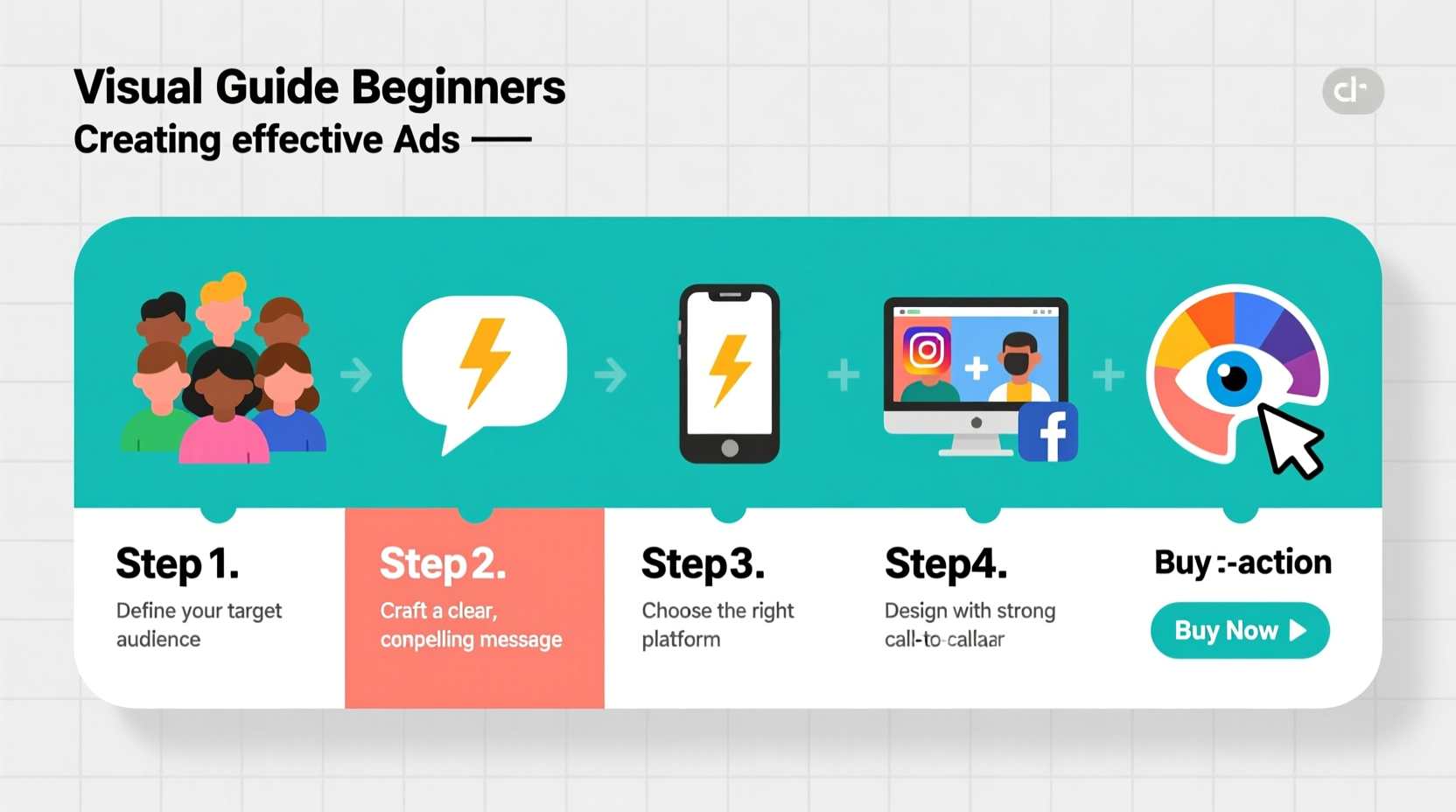
Every successful ad begins with two critical decisions: what you want the ad to achieve and who it’s meant for. Without these, even the most creative copy will fall flat.
Common advertising goals include:
- Generating leads (email signups, contact forms)
- Driving website traffic
- Promoting a product launch
- Increasing brand awareness
- Boosting event registrations
Equally important is defining your target audience. Ask yourself: Who benefits most from your offer? What are their pain points, desires, and behaviors?
“Ads don’t sell products—they sell solutions to problems people already have.” — Rand Fishkin, Founder of SparkToro
2. Craft a Compelling Message Using the PAS Formula
The structure of your ad copy determines whether someone stops scrolling or keeps going. One of the most reliable frameworks for persuasive writing is PAS: Problem, Agitation, Solution.
- Problem: Identify a specific issue your audience faces.
- Agitation: Amplify the emotional impact of that problem.
- Solution: Introduce your product or service as the answer.
Example:
Problem: “Struggling to get clients as a freelance designer?”
Agitation: “You’re talented, but without visibility, your inbox stays empty.”
Solution: “Our proven portfolio template helped 2,300 designers land their first client in under two weeks.”
This formula taps into emotion, builds tension, and offers resolution—all within a few lines.
Checklist: Elements of High-Converting Ad Copy
- Clear headline that speaks directly to the audience
- Specific benefit, not just features
- Strong call-to-action (e.g., “Get Your Free Guide,” “Start Today”)
- Urgency or scarcity (e.g., “Only 5 spots left”)
- Trust indicators (testimonials, guarantees, social proof)
3. Choose the Right Platform and Format
Not all platforms work the same way. Each has its strengths based on audience behavior and ad format.
| Platform | Best For | Ad Format Tips |
|---|---|---|
| Facebook & Instagram | Brand awareness, lead gen, e-commerce | Use eye-catching visuals, short videos, and clear CTAs in first 3 seconds |
| Google Search Ads | High-intent traffic (people actively searching) | Focus on keyword relevance and strong value proposition in headlines |
| B2B services, professional courses, recruitment | Use formal tone, highlight expertise, and speak to career outcomes | |
| TikTok & YouTube Shorts | Youth audiences, viral reach, entertainment-based offers | Start with a hook, use trending audio, keep text minimal |
Select the platform where your ideal customers spend time—and tailor both message and format accordingly.
4. Design That Supports, Not Distracts
Visuals matter, but they should enhance your message, not overpower it. A cluttered image or hard-to-read font can ruin even the best copy.
Key principles for effective ad design:
- Use high-contrast text (dark on light or vice versa)
- Limit fonts to one or two max
- Include only essential information—avoid cramming too much into one frame
- Show real people when possible (stock photos feel impersonal)
- Ensure mobile readability (most ads are viewed on phones)
5. Launch, Monitor, and Optimize
Great ads aren’t born—they’re built through testing and refinement. After launching your campaign, track key metrics such as:
- Click-Through Rate (CTR): Percentage of viewers who click your ad
- Conversion Rate: Percentage of clicks that result in desired action (e.g., purchase, signup)
- Cost Per Click (CPC): How much you pay for each click
- Return on Ad Spend (ROAS): Revenue generated per dollar spent
Run A/B tests by changing one element at a time: headline, image, CTA, or audience segment. After 3–7 days of data, pause underperforming versions and scale what works.
Mini Case Study: Local Fitness Studio Gains 89 New Members
A small yoga studio in Portland wanted to fill its beginner classes. Their initial ad showed a serene image of a woman meditating with the headline “Find Peace Through Yoga.” It had low engagement.
They revised the approach using PAS:
- Problem: “Feeling stressed and overwhelmed?”
- Agitation: “Long days, no energy, and no time to recharge.”
- Solution: “Join our 4-week beginner program—start tonight, no experience needed.”
They paired this with a video of real students sharing how yoga improved their sleep and focus. Targeted at women aged 28–45 within 10 miles, the new ad achieved a 4.2% CTR (well above average) and brought in 89 new signups in three weeks—with a cost per acquisition under $12.
Frequently Asked Questions
How much should I budget for my first ad campaign?
Start small. Many platforms allow daily budgets as low as $5–$10. Use this to test messaging and audience response before scaling. Focus on learning, not immediate ROI.
Can I run effective ads without a big following?
Absolutely. Paid ads don’t rely on your existing audience. They reach new people based on interests, behaviors, and search intent. In fact, many successful brands started with zero followers and grew through targeted advertising.
How long should I wait before deciding an ad isn’t working?
Give it at least 3–5 days to gather meaningful data, especially if your audience is narrow. Avoid making changes too quickly—consistency allows algorithms to optimize delivery.
Conclusion: Start Simple, Think Strategically
Creating effective ads doesn’t require a marketing degree or a huge budget. It requires clarity of purpose, empathy for your audience, and a willingness to test and improve. Begin with a single goal, write one strong message, choose one platform, and launch. Then measure, learn, and refine.
Every expert advertiser was once a beginner who clicked “publish” on their first uncertain ad. Yours might not be perfect—but it could be the start of something powerful.




 浙公网安备
33010002000092号
浙公网安备
33010002000092号 浙B2-20120091-4
Comments
No comments yet. Why don't you start the discussion?