
Holiday lighting should evoke warmth, cheer, and visual harmony—even when the materials at hand aren’t perfectly matched. Many homeowners face the challenge of working with leftover or inherited Christmas light strands that vary in length, color temperature, bulb size, and brightness. Rather than hiding them away or buying entirely new sets, it’s possible to achieve a cohesive and symmetrical display by applying strategic planning and design principles. With thoughtful placement, pattern repetition, and attention to balance, mismatched lights can blend seamlessly into a festive, polished look.
Understanding Visual Symmetry in Holiday Lighting
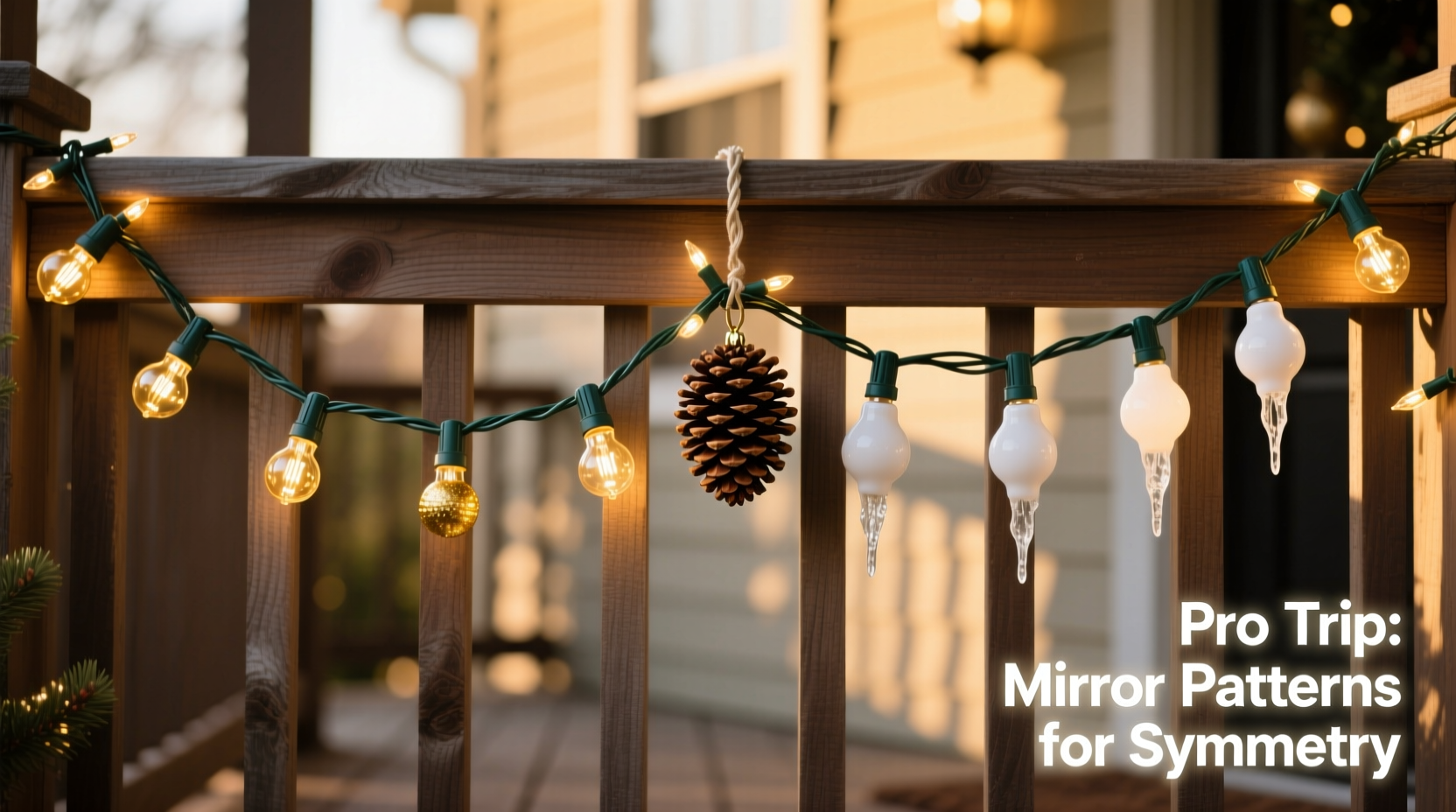
Symmetry in decoration doesn’t require perfect duplication. Instead, it relies on perceived balance—how evenly visual weight is distributed across a space. In the context of Christmas lights, this means managing differences in brightness, density, and rhythm so that no single area appears heavier, brighter, or more chaotic than another.
There are two primary types of symmetry applicable to outdoor lighting:
- Bilateral symmetry: Mirroring patterns on either side of a central axis, such as windows flanking a front door or eaves on both sides of a roof peak.
- Rhythmic symmetry: Repeating intervals or sequences (e.g., spacing, clusters, or color transitions) that create a predictable, pleasing cadence even if individual elements differ.
Mismatched strands often vary in bulb count, length, and light output. The key is not to eliminate these differences but to manage them so they don’t disrupt the eye’s ability to perceive order.
Step-by-Step Guide to Balanced Light Placement
Creating symmetry begins long before the first strand is hung. A methodical approach ensures that variations in your light strands are accounted for and used intentionally.
- Inventorize your light strands. Lay them out and record each one’s length, number of bulbs, color temperature (warm, cool, multicolor), and condition. Note any flickering sections or broken sockets.
- Map your display area. Sketch a simple diagram of your home’s exterior—focusing on eaves, windows, railings, trees, and entryways. Mark architectural features that naturally divide the space into symmetrical halves.
- Assign zones based on light type. Use warmer-toned or brighter strands for focal areas like porches and entrances. Reserve cooler or dimmer strands for secondary areas like side eaves or shrubs.
- Plan repeating patterns. Decide on a spacing interval (e.g., 6 inches between clips) and maintain it consistently, even when switching between strands.
- Test before final installation. Plug in each strand as you go to ensure continuity and check for color consistency from a distance.
- Adjust for visual weight. If one side has a longer strand, balance it by adding a decorative cluster or spiral wrap on the opposite side using a shorter strand.
The goal is not uniformity, but equilibrium. A slightly shorter warm-white strand on one side can be visually balanced by grouping mini-lights more densely, creating equal luminosity without matching lengths.
Do’s and Don’ts When Mixing Light Strands
Even with careful planning, certain missteps can undermine symmetry. The following table outlines best practices and common pitfalls.
| Do | Don’t |
|---|---|
| Use consistent clip spacing (e.g., every 6–8 inches) | Vary clip distances, creating uneven rhythm |
| Group similar color temperatures together | Mix warm and cool whites on the same line |
| Balance brightness with density adjustments | Place the brightest strand where it draws disproportionate attention |
| Use extension cords of matching color to minimize visibility | Allow tangled cords or mismatched plug styles to clutter the view |
| Label strands after use for future reference | Store mixed strands without organization |
Real Example: Balancing Mismatched Lights on a Two-Story Porch
Sarah, a homeowner in Portland, inherited a collection of Christmas lights from her parents—some vintage C9 bulbs, others modern mini-lights, and a few strands with fading LEDs. Her front porch had two columns flanking the door, a gabled roofline, and dual windows on the second floor. She wanted symmetry but didn’t want to buy all new lights.
She began by sorting the strands: three 25-foot warm-white mini-light strands, two 15-foot cool-white strands, and four 10-foot C9 strands with amber-tinted bulbs. She decided to use the warm mini-lights along the roofline and upper windows—areas most visible from the street. The C9s, though shorter, were brighter and more nostalgic, so she used them spiraled around the porch columns, placing one on each side to maintain bilateral symmetry.
To compensate for the shorter C9 strands, she added a ring of mini-lights at the top of each column, creating a layered effect. The cool-white strands were used along the side eaves, where they wouldn’t compete with the entrance. By maintaining consistent clip spacing and avoiding mixing color temperatures on the same plane, her display appeared unified despite the varied hardware.
Visitors remarked on the “professional” look of her lights—none guessed they were cobbled together from decades of holiday storage.
Expert Insight: Designing with Imperfect Materials
“Perfect symmetry isn’t about identical parts—it’s about intentional repetition. When working with mismatched lights, treat each difference as a design choice, not a flaw.” — Marcus Tran, Landscape Lighting Designer & Holiday Display Consultant
Taking cues from professional installers, amateur decorators can elevate their displays by thinking like designers. Tran emphasizes that rhythm and alignment matter more than exact replication. “A gap filled with care is better than a crowded corner masked by brightness,” he says.
Checklist for a Symmetrical Mismatched Display
Before climbing the ladder, run through this checklist to ensure your setup supports visual balance:
- ✅ All light strands have been tested and grouped by type
- ✅ A sketch of the display area shows planned zones and symmetry points
- ✅ Clip spacing is marked or measured for consistency
- ✅ Extension cords are rated for outdoor use and color-matched where possible
- ✅ Brighter or larger bulbs are placed symmetrically (e.g., one on each side of the door)
- ✅ Backup bulbs or spare strands are on hand for last-minute fixes
- ✅ Power sources are mapped to avoid overloading circuits
- ✅ A nighttime test is scheduled before finalizing placement
Advanced Techniques for Color and Brightness Matching
When dealing with noticeable differences in brightness or hue, consider these techniques:
- Diffuse brightness with layering: Combine a dimmer strand with a denser wrap (e.g., double-looping around a railing) to increase its visual presence.
- Use timers and dimmers: Some smart plugs allow brightness adjustment. Slightly dimming a very bright strand can help it blend with softer neighbors.
- Add uniform accents: Incorporate standalone elements like net lights on bushes or path markers that repeat across the yard, tying disparate areas together.
- Leverage shadows and depth: Place brighter strands farther back (e.g., under eaves) so their glow reflects softly, while using subtler lights in foreground areas.
For multicolor strands that clash, limit them to one centralized location—like a tree or wreath—rather than spreading them across multiple zones. This contains the visual complexity and prevents competition with white-light symmetry.
Frequently Asked Questions
Can I mix LED and incandescent lights safely?
Yes, but be cautious. LEDs consume less power, so mixing them on the same circuit is generally safe. However, avoid connecting them in series (daisy-chaining too many strands) due to differing voltage requirements. Always check manufacturer guidelines for maximum load.
How do I hide the fact that my strands are different lengths?
Use architectural features to your advantage. Start and end strands at corners, behind downspouts, or near trim lines where breaks are less noticeable. You can also terminate shorter strands with small decorative pieces—like star-shaped outlet covers or faux snowflakes—to give them intentional endpoints.
What if I only have one long strand and several short ones?
Use the long strand along the most prominent line (e.g., main roofline) and deploy shorter ones in repetitive applications—such as wrapping columns, outlining steps, or decorating shrubs. Repetition of short strands creates rhythm that balances the singular long run.
Final Thoughts: Embrace Imperfection with Intention
A symmetrical holiday display doesn’t demand uniformity. In fact, some of the most memorable decorations come from resourceful combinations of old and new, bright and soft, large and small. The secret lies in intentionality—knowing where each strand goes, why it fits there, and how it contributes to the whole.
By treating mismatched Christmas lights not as a limitation but as a creative opportunity, you craft a display that feels personal, balanced, and thoughtfully composed. Whether you’re working with hand-me-down strands or combining this year’s finds with last decade’s favorites, symmetry is within reach with careful planning and attention to visual flow.




 浙公网安备
33010002000092号
浙公网安备
33010002000092号 浙B2-20120091-4
Comments
No comments yet. Why don't you start the discussion?