
Curling short hair doesn’t require a closet full of styling tools or expensive salon visits. In fact, avoiding heat altogether can be better for the health and longevity of your hair. Whether you have a pixie cut, bob, or shoulder-length layers, there are numerous effective, gentle, and creative ways to add soft waves and defined curls—using items you likely already have at home.
The key is working with your hair’s natural texture and structure while minimizing stress on the strands. Heat-free curling not only prevents dryness and breakage but also encourages more resilient, shiny results over time. With a little patience and consistency, you can achieve voluminous, bouncy curls that last for days—without turning on a single appliance.
Why Avoid Heat When Curling Short Hair?
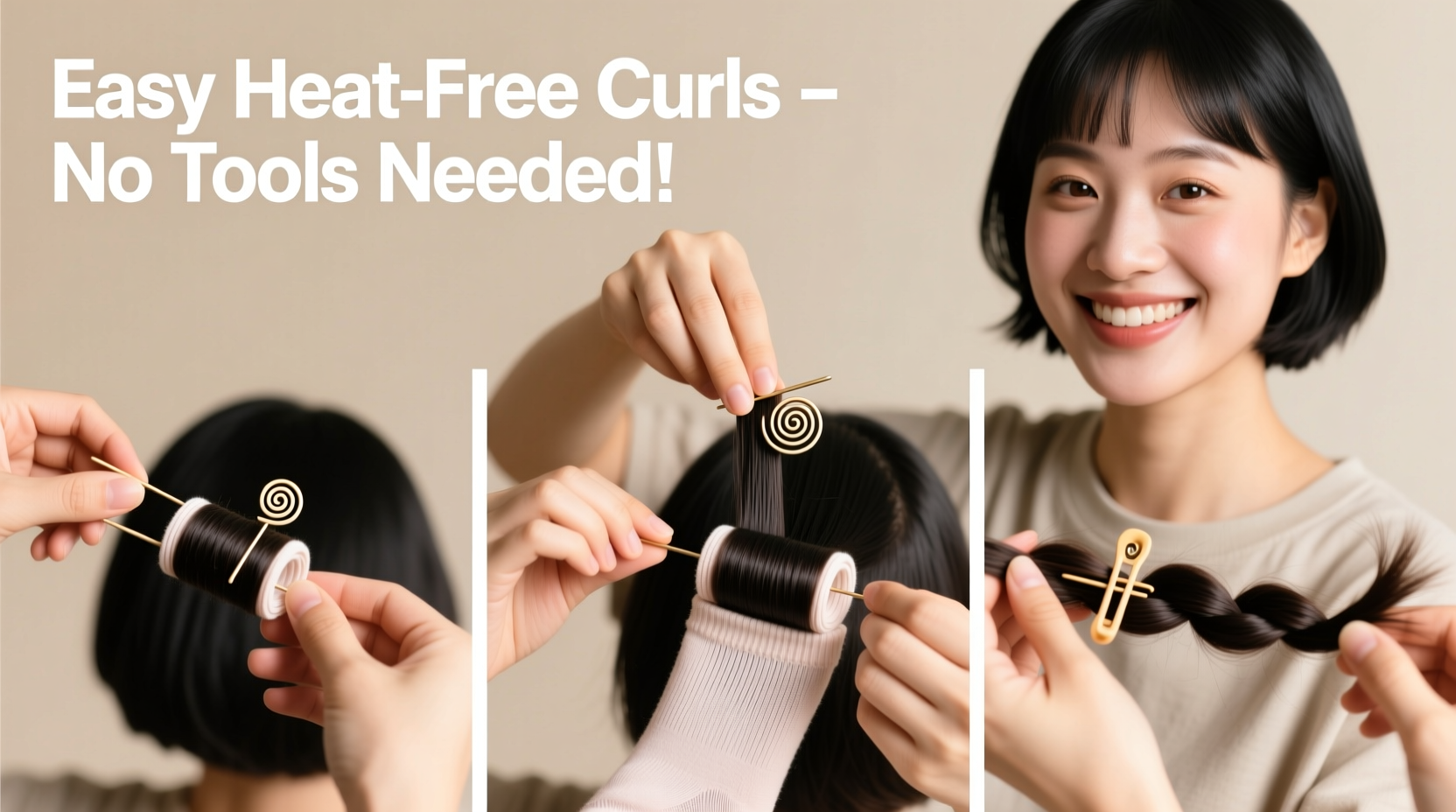
Short hair is often more delicate due to frequent trims, layering, and exposure to environmental factors. Applying heat repeatedly—even at low temperatures—can lead to:
- Frayed ends and split tips
- Loss of natural shine
- Increased frizz, especially in humid conditions
- Reduced elasticity, making hair prone to snapping
Heat-free methods preserve moisture, enhance curl memory, and support healthier growth patterns. They’re also ideal for people with fine, thin, or chemically treated hair, which tends to be more vulnerable to thermal damage.
“Letting hair air-dry in a curled position trains the cuticle to remember the shape over time, reducing dependency on products and tools.” — Lila Monroe, Trichologist & Natural Hair Specialist
Braiding Techniques for Soft Waves and Defined Curls
Braiding is one of the most accessible and customizable heat-free curling methods. The size, tightness, and duration of the braid determine the final curl pattern. It works best on damp (not soaking wet) hair, allowing it to dry completely before unraveling.
1. Two-Strand Twist Method
Ideal for chin-length bobs and layered cuts, this technique creates spiral curls with excellent definition.
- Wash and towel-dry your hair until damp.
- Apply a lightweight curl-enhancing product or leave-in conditioner.
- Divide your hair into two sections: left and right.
- Take a small subsection from one side and split it into two strands.
- Twist them around each other tightly from root to tip.
- Secure the end with a mini scrunchie or hair clip.
- Repeat across all sections.
- Sleep overnight or let dry during the day.
- Unravel gently and fluff with fingers.
2. French Braid or Dutch Braid Overnight Curl
For looser, beachy waves, try braiding larger sections before bed. The result mimics a just-back-from-the-beach look with minimal effort.
- Start with slightly damp hair.
- Braid from the crown down, incorporating all hair.
- Use a satin pillowcase to prevent friction.
- Unbraid in the morning and shake out with fingers.
Rag Rolling: A Vintage-Inspired Approach
Rag rolling revives a classic 1950s method using fabric strips to create retro-inspired curls. It's particularly effective on short hair because it allows precise shaping around the face and nape.
What You’ll Need:
- Clean cotton strips (old t-shirts work perfectly)
- Scissors
- Damp hair
- Light mousse or gel
Step-by-Step Rag Roll Guide:
- Cut fabric into 1-inch wide and 12-inch long strips (about 8–10 pieces).
- Apply a curl-defining product evenly through damp hair.
- Take a 1-inch section of hair near the temple.
- Place the center of a rag strip under the section, close to the roots.
- Wrap both ends of the rag upward, rolling the hair toward the scalp.
- Tie the ends securely at the top.
- Repeat around the head, focusing on areas where you want volume.
- Leave in for 6–8 hours or overnight.
- Remove rags carefully and separate curls with fingers.
For tighter ringlets, use narrower strips and smaller sections. For looser waves, go wider and looser with the wrapping.
| Braiding/Rolling Method | Best For | Hold Time | Resulting Curl Type |
|---|---|---|---|
| Two-Strand Twists | Chin-length to shoulder | 6–8 hours | Spiral, defined curls |
| French Braid | Layered bobs | Overnight | Beachy, tousled waves |
| Rag Rolls | Face-framing styles | 6+ hours | Vintage pin curls |
| Pineapple Sock Bun | Curly/wavy textures | Overnight | Volume-boosted roots + soft bends |
Hair Donut and Sock Methods for Volume and Bend
Even if you don’t have naturally curly hair, you can simulate curl movement by drying your hair in a lifted, rounded position. This method enhances body and creates subtle bends at the ends—perfect for short styles that tend to lie flat.
DIY Sock Bun Curler Technique:
- Roll a clean sock into a doughnut shape (cut the foot off a tube sock and roll the leg inward).
- Gather your damp hair into a high ponytail.
- Slide the sock ring over the ponytail base.
- Spread hair evenly around the ring, covering the sock completely.
- Pin any loose ends with bobby pins.
- Let hair dry fully (overnight recommended).
- Gently remove the bun and break up the shape with fingers.
This method lifts roots and adds bounce to the mid-lengths and ends—ideal for inverted bobs or blunt cuts. It won’t give tight curls, but it transforms limp hair into dynamic, movement-rich styles.
Flexi Rods and Foam Rollers – No Heat, Maximum Hold
Flexible foam rods or bendable plastic rollers offer salon-quality shaping without electricity. They come in various sizes and are reusable, making them a sustainable option for regular styling.
How to Use Flexi Rods on Short Hair:
- Wash and condition hair; gently squeeze out excess water.
- Apply a light curl activator or mousse.
- Part hair into 4–6 sections.
- Starting at the ends, wrap a 1–2 inch section around a rod, gliding it up to the roots.
- Secure the rod’s ends by tucking them into the coil.
- Repeat until all hair is rolled.
- Allow hair to dry completely (use a hooded dryer on cool setting if needed).
- Remove rods gently and reshape curls with fingertips.
Smaller rods create tighter curls; larger ones produce loose waves. For short hair, mini flexi rods (6” length, ½” diameter) are ideal.
“Flexi rods are my go-to for clients with short, resistant hair. They set beautifully and maintain shape even after brushing lightly.” — Derek Lin, Celebrity Stylist
Mini Case Study: Transforming a Blunt Bob Without Heat
Maya, a 29-year-old graphic designer, had a sharp, chin-length bob that looked sleek when straight but fell flat when she wanted volume. She avoided heat due to past chemical damage and was skeptical about achieving curls without tools.
She tried the two-strand twist method three nights a week. Each night, she divided her damp hair into eight sections, applied a coconut-based curl cream, and twisted tightly from root to tip. After five consecutive uses, she noticed her hair began to “remember” the wave pattern, requiring fewer twists to hold shape.
Within two weeks, Maya could achieve soft spirals using only four twists on the lower half of her hair. Her confidence grew, and she reduced styling time from 30 minutes (with a flat iron) to 10 minutes of nighttime prep. Most importantly, her hair felt stronger and looked shinier.
Checklist: Your Heat-Free Curling Routine
- ✅ Wash hair with sulfate-free shampoo to retain moisture
- ✅ Towel-dry gently or use a microfiber cloth
- ✅ Apply a curl-enhancing product (mousse, gel, or cream)
- ✅ Choose your method: braids, rags, rods, or buns
- ✅ Set on damp (not wet) hair for optimal hold
- ✅ Allow full drying time before removing
- ✅ Finger-fluff curls; avoid brushing
- ✅ Refresh next day with water + spritz of leave-in
Frequently Asked Questions
Can I curl very short hair (pixie cut) without heat?
Absolutely. While tight curls may not form on extremely short lengths, you can enhance texture using tiny bobby pins to twist and set small sections overnight. Sea salt spray also adds grit and lift for a tousled, wavy effect.
How long do heat-free curls last?
Depending on hair type and method, curls can last 2–4 days. Fine hair may need touch-ups, while coarse or wavy hair retains shape longer. To extend wear, sleep on a satin pillowcase and refresh with a water-mist combo.
What if my hair won’t hold a curl?
If your hair resists curling, it might be product buildup or excessive oil weighing it down. Try clarifying once a week. Also, ensure you're setting curls on damp—not dry—hair, as moisture helps the cuticle reshape.
Final Tips for Best Results
- Consistency matters: Repeating the same method nightly for a week helps train your hair to hold the pattern.
- Choose the right product: Lightweight gels or mousses work better than heavy creams on short hair.
- Don’t rush drying: Air-drying preserves curl integrity. If in a hurry, use a cool-air fan or blow dryer on no-heat setting.
- Preserve curls overnight: Wrap hair in a silk scarf or use a satin bonnet to reduce friction.
Conclusion: Embrace Healthy, Effortless Curls
Curling short hair without heat isn’t just safer—it’s often more effective in the long run. These DIY methods work with your hair’s natural rhythm, enhancing its strength and beauty over time. From bedtime braids to fabric rolls and flexible rods, each technique offers a unique way to express your style without compromise.
Start tonight. Pick one method, gather what you have at home, and let your hair transform while you sleep. Over time, you’ll discover which approach suits your texture, routine, and aesthetic best. And when you do, you’ll wonder why you ever reached for the curling iron.




 浙公网安备
33010002000092号
浙公网安备
33010002000092号 浙B2-20120091-4
Comments
No comments yet. Why don't you start the discussion?