
The Find My app is one of Apple’s most powerful tools for keeping track of your devices, loved ones, and even frequently visited places. While it automatically detects and labels certain locations—like “Home” or “Work”—many users don’t realize they can manually rename and organize these spots for faster recognition and smoother navigation. Customizing location names turns generic map pins into meaningful, personalized markers that make monitoring simpler and more intuitive.
Whether you're managing a family’s shared locations, tracking a lost device, or just want to identify your favorite coffee shop with a custom label, mastering location naming in Find My can save time and reduce confusion. This guide walks through everything you need to know about editing, organizing, and maintaining custom location names across your Apple ecosystem.
Why Custom Location Names Matter
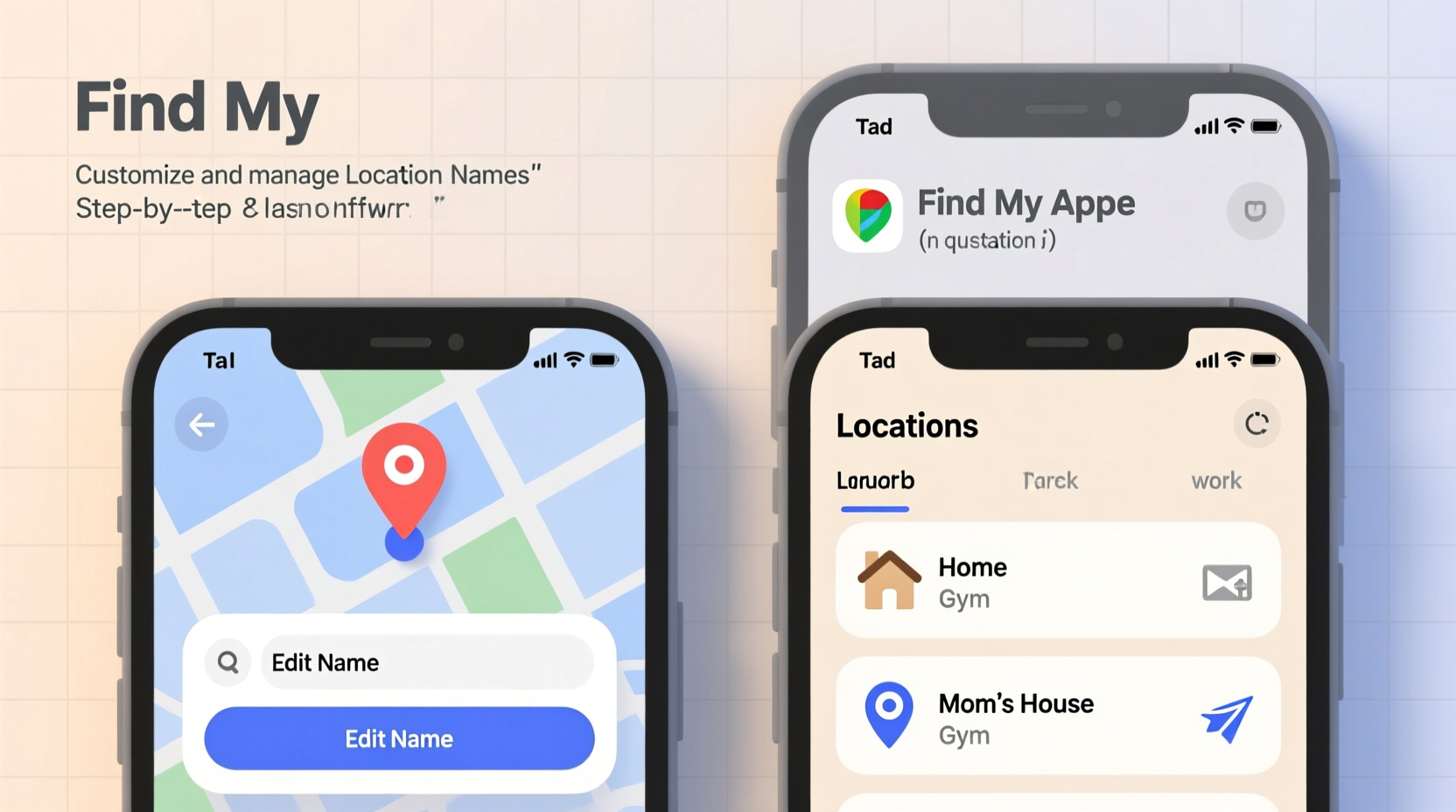
By default, the Find My app pulls location data from Apple Maps and assigns names based on GPS coordinates. However, these auto-generated names are often vague—like “Near Main Street” or “Apple Store.” That lack of specificity becomes problematic when you’re trying to quickly identify where someone or something is.
Custom naming transforms ambiguous entries into clear, actionable information. For example, renaming “123 Oak Ave” to “Mom’s House” makes it instantly recognizable, especially when checking locations under stress—such as when a device goes missing or a family member is running late.
“Personalized location labels reduce cognitive load and improve response time during urgent tracking scenarios.” — Dr. Alan Torres, UX Researcher at Mobility Insights Group
Beyond clarity, custom names also support better organization. If you regularly monitor multiple properties, vehicles, or dependents, consistent naming conventions help avoid mix-ups and streamline communication within families or teams.
How to Rename a Location in the Find My App
Renaming a location is straightforward and can be done directly from your iPhone or iPad. Follow this step-by-step process:
- Open the Find My app on your iOS device.
- Tap the People or Devices tab, depending on what you’re tracking.
- Select the contact or device whose current location you want to rename.
- When the map appears, tap the blue information button (i) next to their name or device label.
- Under the Location section, tap the current place name (e.g., “Downtown” or “Near Park St”).
- In the pop-up screen, select Rename.
- Enter your preferred name—such as “Sarah’s School” or “Office – Downtown Tower.”
- Tap Done to confirm.
The new name will now appear every time that location is displayed. This change syncs across all your iCloud-connected devices, so if you rename a spot on your iPhone, it will show up the same way on your iPad or Mac.
Managing Multiple Custom Locations: Best Practices
If you're tracking several people or devices, establishing a consistent naming system prevents confusion. Consider the following strategies:
- Use categories: Prefix names with identifiers like “Home – Dad,” “Car – SUV,” or “Work – Emily.”
- Include relationships: Labels such as “Kid – School” or “Parent – Residence” clarify context at a glance.
- Leverage emojis (sparingly):strong> Adding a 🏠 or 🚗 can make entries visually distinct without cluttering text.
- Update seasonally: If someone is traveling or staying somewhere temporarily, update the label accordingly—e.g., “Vacation Cabin – July” or “Summer Camp.”
Keep in mind that while custom names enhance usability, they don’t alter the actual GPS data. They exist purely as display labels within the Find My interface.
Do’s and Don’ts of Location Naming
| Do’s | Don’ts |
|---|---|
| Use clear, recognizable names (e.g., “Dad’s Apartment”) | Use vague terms like “That Place” or “Over There” |
| Keep names short enough to display fully in alerts | Name locations after nicknames only you understand |
| Update names when someone moves or changes routines | Leave outdated labels like “Old Office” without clarification |
| Synchronize naming across family members for consistency | Create duplicate names for different places (e.g., two “Home” entries) |
Real-World Example: Managing Family Logistics
Consider Maria, a working parent of two, who uses the Find My app to coordinate pickups and monitor her children’s after-school activities. Her son attends soccer practice at a community field not officially named in maps, which Apple labels as “Near River Trail.” She renamed it to “Soccer Field – Tues/Thurs” to distinguish it from other weekend games at a different venue.
She also customized her daughter’s school pickup zone to “Middle School Back Gate,” since that’s where buses arrive. When she gets a notification that her daughter has arrived, she knows exactly where to go. These small adjustments have reduced late pickups and miscommunications with her kids.
Maria even taught her teenagers how to set their own custom names, empowering them to contribute to the family’s digital coordination system.
Troubleshooting Common Issues
Sometimes, renamed locations revert or fail to save. Here are common causes and fixes:
- Sync delays: Changes may take a few minutes to appear across devices. Ensure iCloud syncing is active under Settings > [Your Name] > iCloud > Find My.
- No rename option available: Some public locations (e.g., airports) may not allow renaming due to map restrictions. In such cases, consider adding a note in Contacts instead.
- Name resets after reboot: Check that your device is updated to the latest iOS version, as bugs in older versions occasionally cause data loss.
- Location accuracy issues: Poor GPS signal can cause incorrect labeling. Wait until the device shows a precise blue dot before renaming.
Frequently Asked Questions
Can I rename locations for friends who share their location with me?
Yes, you can rename any location you see in your Find My app—even if it belongs to someone else. The change only affects your view; it won’t alter what they see or notify them of the edit.
Will my custom location names appear in notifications?
Absolutely. When a person or device arrives at or leaves a renamed location, the alert will use your custom name. For example: “John left Home – Mountain Cabin.” This makes push notifications much more useful.
Do custom names work with third-party apps or CarPlay?
Not universally. While some Apple-integrated features (like Reminders based on location) may recognize custom names, most third-party apps rely on raw GPS coordinates or official map data. Custom labels are primarily effective within Apple’s native ecosystem.
Final Checklist: Optimize Your Find My Experience
Before wrapping up, ensure you’ve taken these key actions:
- ✅ Renamed at least three frequently visited locations (e.g., home, work, school).
- ✅ Verified that custom names appear correctly on all your devices.
- ✅ Shared naming conventions with family members using shared location features.
- ✅ Reviewed and cleaned up any outdated or duplicate location labels.
- ✅ Tested arrival/departure notifications to confirm custom names are used.
Take Control of Your Digital Awareness
Customizing location names in the Find My app is a simple yet transformative habit. It turns abstract coordinates into meaningful landmarks, helping you stay informed with less effort. Whether you're ensuring a child’s safe arrival at dance class or locating a misplaced AirTagged backpack, clear labels make all the difference.
Start today by renaming just one location. Then expand the practice across your network. Over time, you’ll build a personalized spatial awareness system that works seamlessly with your lifestyle. And remember—small tweaks in digital organization often lead to significant gains in peace of mind.




 浙公网安备
33010002000092号
浙公网安备
33010002000092号 浙B2-20120091-4
Comments
No comments yet. Why don't you start the discussion?