
Fashion isn’t about following trends blindly—it’s about expressing yourself in a way that feels authentic and confident. One of the most powerful tools in building that confidence is understanding how to tailor clothing to your individual silhouette. Every body is different, and what looks balanced on one person may overwhelm or distort another. The key lies not in changing your shape, but in using design principles to highlight your strengths and create harmony.
With thoughtful customization—whether through tailoring, strategic styling, or smart shopping—you can wear any trend while still honoring your proportions. This guide breaks down actionable methods to adapt styles so they enhance, rather than hide, who you are.
Understand Your Body Shape Fundamentals
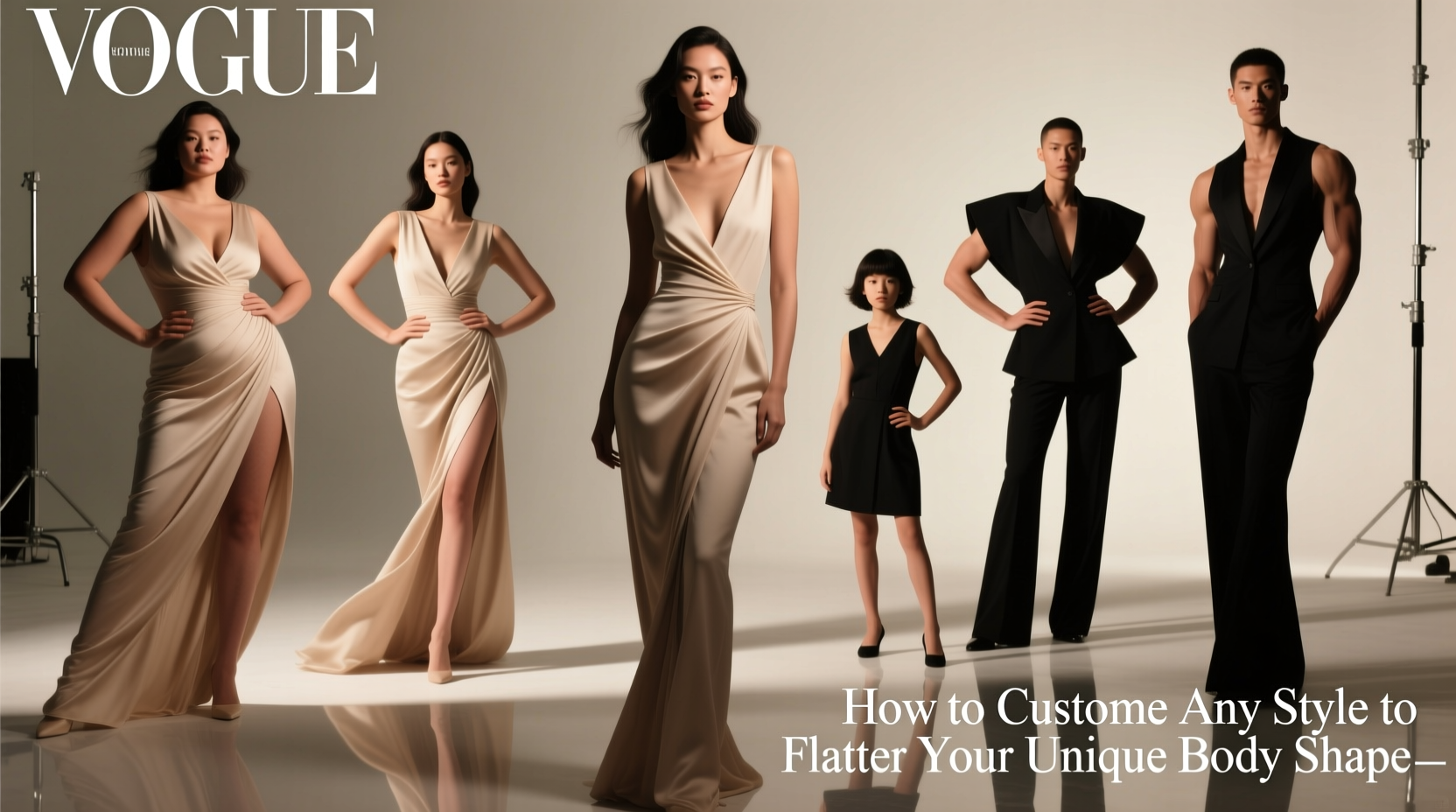
Before customizing anything, recognize your natural structure. While countless subtypes exist, most bodies fall into five primary categories: hourglass, pear, apple, rectangle, and inverted triangle. Knowing where your weight naturally distributes helps determine which silhouettes will balance and elongate your form.
| Body Shape | Distinguishing Features | Natural Balance Point |
|---|---|---|
| Hourglass | Bust and hips aligned, defined waist | Waist emphasis enhances symmetry |
| Pear (Triangle) | Hips wider than shoulders | Draw attention upward with tops |
| Apple (Round) | Broad shoulders, fuller midsection | Elongate torso with vertical lines |
| Rectangle (Straight) | Minimal waist definition | Create curves with layering and belts |
| Inverted Triangle | Shoulders broader than hips | Add volume below the waist |
It's important to note that these categories aren't rigid boxes. Many people blend characteristics across types. What matters most is identifying your dominant proportions and working with them—not against them.
“Flattery comes from proportion, not size. A well-placed seam or hem can shift visual weight more effectively than any diet.” — Lena Torres, Celebrity Stylist & Fit Consultant
Customize Cuts and Proportions for Visual Harmony
Once you understand your frame, adjust garment dimensions to create ideal balance. Even off-the-rack pieces can be modified with small tweaks that make a dramatic difference.
- V-necklines elongate shorter necks and draw eyes downward, ideal for apple shapes.
- A-line skirts gently flare from the waist, balancing wider hips or adding curve to rectangles.
- Cropped jackets should hit at or above the hip to avoid cutting the torso awkwardly—especially beneficial for petite frames.
- High-waisted pants raise the waistline, creating longer legs and defining the waist for pears and apples alike.
Step-by-Step Guide: Adjusting Length and Fit at Home
- Assess movement: Put on the garment and sit, walk, and raise your arms. Note tightness, pulling, or excess fabric.
- Pin before cutting: Use fashion pins to temporarily alter hems, sleeves, or waists. Try different lengths and tucks.
- Mark your changes: With chalk or washable marker, outline new seams or hems while wearing the piece.
- Shorten sleeves or hems: Fold and sew a clean double-hem for durability. For jeans, consider cuffing instead of cutting.
- Taper wide legs: Take in side seams by ½ inch per leg for slimmer silhouettes without losing comfort.
- Reinforce stress points: Add bar tacks at pocket corners or belt loops if adjusting waistbands.
This process empowers you to treat clothing as malleable—not fixed. Over time, you’ll develop an eye for what works before even trying items on.
Leverage Color, Pattern, and Texture Strategically
Visual weight isn’t just about cut—it’s also influenced by color and detail. Darker tones recede; lighter ones advance. Large patterns expand space; fine textures add depth without bulk.
- Use **darker colors** on areas you want to minimize (e.g., deep navy on hips).
- Place **lighter shades or prints** where you want attention (shoulders, face-framing collars).
- Avoid horizontal stripes across the midsection—they widen the torso.
- Vertical details like buttons, seams, or pinstripes lengthen the body.
“A monochrome outfit from head to toe adds up to ten inches of perceived height. It’s one of the simplest illusions in fashion.” — Marcus Lee, Menswear Designer & Proportion Expert
Real Example: Transforming a Trendy Look for a Pear Shape
Sophia, 34, loved the oversized blazer trend but felt overwhelmed when wearing boxy versions. Her hips were noticeably wider than her shoulders, making structured shoulders appear disproportionate.
Instead of abandoning the style, she customized it:
- Chose a blazer with soft shoulders and no padding.
- Opted for a slightly cropped length ending just below the hip bone.
- Wore it open with a bright silk camisole to draw focus upward.
- Paired it with straight-leg trousers instead of wide-leg to maintain balance.
- Added a slim belt over the blazer at the natural waist to define her center.
The result? She captured the editorial edge of the trend while keeping her silhouette harmonious. By modifying only three elements—structure, length, and focal point—she made the look work for her, not against her.
Action Checklist: Customize Any Outfit to Your Shape
- ✔ Identify your dominant body shape and balance point
- ✔ Choose necklines that elongate or soften your upper body
- ✔ Alter sleeve or pant lengths to improve proportion
- ✔ Use color blocking to shift visual weight intentionally
- ✔ Add or remove waist definition with belts and tucking
- ✔ Prioritize fabrics with moderate drape—avoid stiffness or clinginess
- ✔ Test outfits in motion to ensure comfort and function
Frequently Asked Questions
Can I wear bodycon dresses if I have an apple shape?
Yes—with modifications. Opt for styles with ruching or diagonal seaming near the waist to create illusionary definition. Pair with a long cardigan or open jacket to break up vertical lines. Avoid high necklines that compress the torso; opt for V-necks instead.
How do I make my legs look longer?
Wear heels or shoes with ankle straps that match your skin tone. Choose pants with a higher rise and minimal break at the ankle. Monochromatic lower halves (same color pants and shoes) extend the leg line. Avoid low-rise cuts and excessive fabric pooling at the shoe.
Is tailoring worth the cost?
Absolutely. A $120 dress altered to fit perfectly often looks more expensive than a $300 ready-to-wear piece that gapes or sags. Simple fixes like hemming, taking in sides, or adjusting shoulders typically range from $15–$50 and dramatically increase wearability and confidence.
Final Thoughts: Style Is Personal, Not Prescriptive
There’s no universal “flattering” look—only what flatters you. The most compelling style statements come from individuals who’ve learned to work with their anatomy, not fight it. Customization isn’t about conforming to ideals; it’s about reclaiming agency over how you present yourself to the world.
Start small: take in a blouse that billows, roll sleeves to expose your wrists, or swap out a belt to redefine your waist. Each adjustment teaches you more about your preferences and proportions. Over time, you’ll build a wardrobe that doesn’t just fit—but resonates.




 浙公网安备
33010002000092号
浙公网安备
33010002000092号 浙B2-20120091-4
Comments
No comments yet. Why don't you start the discussion?