
In today’s competitive fashion and lifestyle market, creating a signature product line can set your brand apart. Private label watches offer an accessible entry point into the world of horology—without the need for in-house engineering or manufacturing. By partnering with established suppliers, entrepreneurs and designers can focus on branding, design, and customer experience. The key lies in customization: turning a standard watch into a symbol of your identity. This guide walks you through every stage of developing a private label watch collection that reflects your vision and resonates with your audience.
Step 1: Define Your Brand Identity and Target Audience
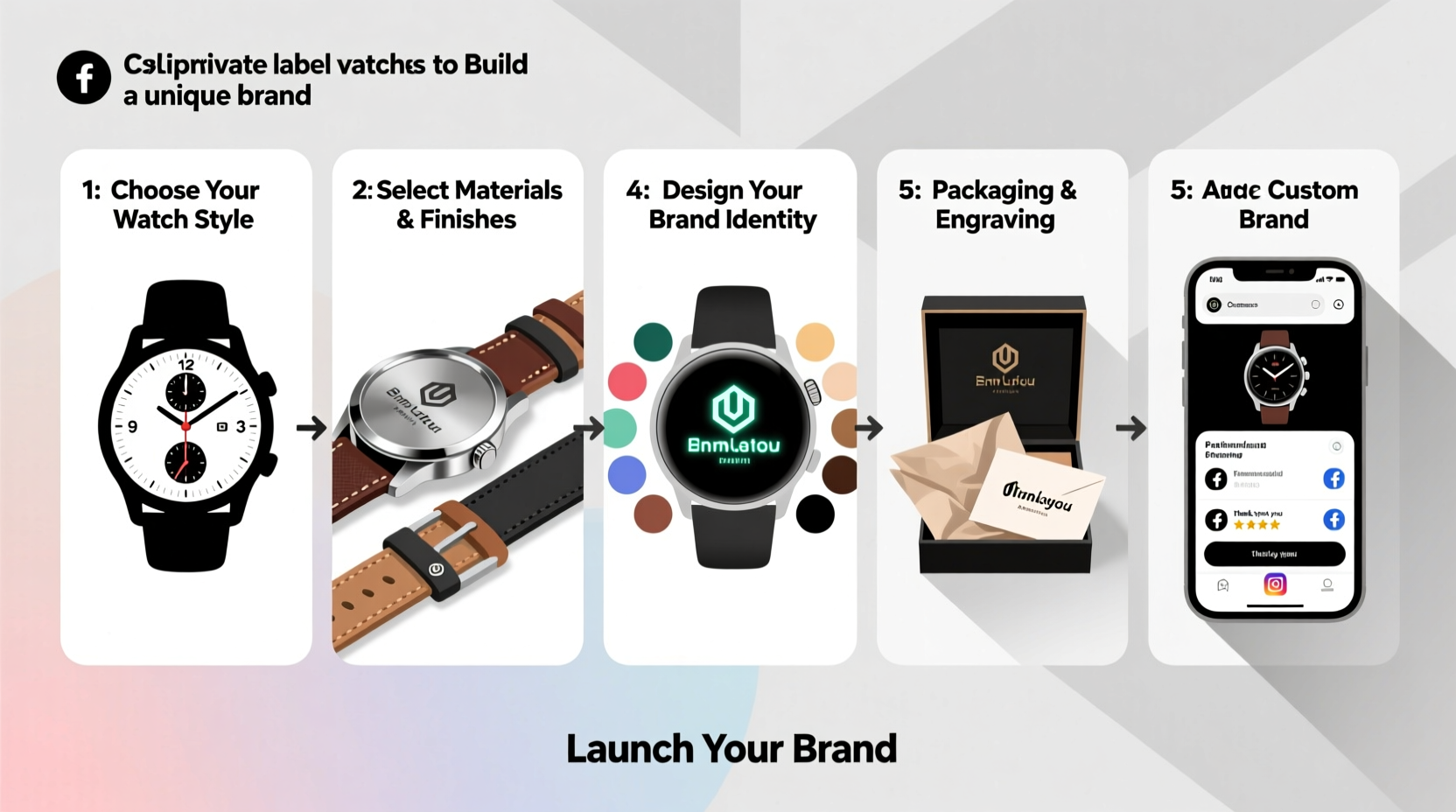
Before selecting dials or case finishes, establish the foundation of your brand. Who are you designing for? What values does your brand represent? Luxury, minimalism, adventure, sustainability? These questions shape every decision moving forward.
A strong brand identity includes:
- A clear mission statement
- Defined visual language (colors, fonts, tone)
- Target demographic (age, income level, lifestyle)
- Differentiators from competitors
For example, if your audience is eco-conscious millennials, your watches might feature recycled materials, earth-tone palettes, and packaging made from biodegradable components.
Step 2: Choose a Reliable Private Label Manufacturer
Not all manufacturers offer the same quality or flexibility. Research suppliers who specialize in private labeling and have experience working with startups or niche brands. Key factors to evaluate include:
| Factor | What to Look For |
|---|---|
| Minimum Order Quantity (MOQ) | Startups benefit from low MOQs (50–100 units per model) |
| Customization Options | Case engraving, dial design, strap materials, logo placement |
| Production Timeline | Typically 6–12 weeks; confirm lead times early |
| Certifications | ISO standards, water resistance ratings, movement type (quartz vs. automatic) |
| Communication & Support | Responsive teams with English-speaking representatives |
Platforms like Alibaba, ThomasNet, or specialized B2B trade shows such as Baselworld or Hong Kong Watch & Clock Fair can help connect you with vetted suppliers.
“Working with a manufacturer that allows small-batch runs gives new brands the freedom to test designs without overcommitting.” — Daniel Park, Product Development Consultant, Timepiece Partners LLC
Step 3: Design Your Watch with Intention
This is where creativity meets strategy. A well-designed watch balances aesthetics, functionality, and brand alignment. Most private label providers allow customization across several key elements:
- Case Shape and Material: Round, square, or tonneau styles in stainless steel, titanium, or PVD-coated finishes.
- Dial Design: Color, texture, markers (Arabic numerals, indices), sub-dials, date windows.
- Hands: Style (dauphine, sword, baton) and color matching.
- Crystal: Sapphire (scratch-resistant) or mineral glass (cost-effective).
- Strap/Bracelet: Leather, silicone, metal mesh, NATO, or recycled fabrics.
- Logo Placement: Crown, dial, case back, clasp, or even laser-engraved movement rotor.
Work closely with the supplier’s design team to create mockups. Request digital proofs before approving production.
Real Example: Launching “Terra Chrono”
Sophia Lee, a sustainable fashion designer, wanted to expand her brand into accessories. She partnered with a Swiss-based private label manufacturer offering eco-certified movements and recycled ocean plastic straps. Her target audience valued durability and environmental responsibility.
She customized minimalist dials with sand-textured faces, subtle leaf motifs near the 6 o’clock mark, and engraved case backs reading “Crafted for Earth.” Each purchase included a tree planted via a partnership with One Tree Planted. Within six months, Terra Chrono sold out its initial run of 300 units and gained features in green lifestyle magazines.
Step 4: Develop Packaging and Unboxing Experience
The unboxing moment shapes first impressions. Custom packaging reinforces brand value and elevates perceived quality—even for mid-range watches.
Consider these elements:
- Box material (matte black cardboard, soft-touch leatherette, bamboo)
- Interior lining (velvet, felt, molded foam)
- Branding (foil-stamped logo, personalized thank-you note)
- Additional inserts (care guide, warranty card, QR code linking to brand story)
Some manufacturers offer full packaging solutions; others may require coordination with a separate print vendor.
Checklist: Pre-Launch Branding Essentials
- Finalize logo and brand colors
- Create high-resolution artwork files (CMYK, 300dpi)
- Confirm font licensing for dials and packaging
- Design user manual and warranty documentation
- Set up serial numbering or limited edition tracking (optional)
Step 5: Build Your Sales and Marketing Strategy
Even the most beautifully crafted watch won’t sell without visibility. Position your brand where your audience spends time.
Effective strategies include:
- E-commerce Platform: Shopify or WooCommerce with professional product photography.
- Social Media: Instagram and TikTok storytelling showing behind-the-scenes design, customer testimonials, and styling tips.
- Influencer Collaborations: Micro-influencers in fashion, travel, or fitness niches.
- Email Marketing: Launch sequences, exclusive previews, and loyalty rewards.
- Retail Partnerships: Boutique consignment or pop-up events for local exposure.
Highlight what makes your watches different. Is it the craftsmanship? The story behind the design? The ethical sourcing? Lead with authenticity.
Do’s and Don’ts of Watch Brand Marketing
| Do | Don't |
|---|---|
| Show real people wearing your watch in everyday settings | Use generic stock photos |
| Be transparent about materials and origin | Overstate luxury claims without proof |
| Offer a clear return and warranty policy | Hide terms in fine print |
| Engage with comments and DMs personally | Automate all customer interactions |
Frequently Asked Questions
Can I trademark my watch brand name?
Yes. Register your brand name and logo with the United States Patent and Trademark Office (USPTO) or your country’s equivalent intellectual property office. This protects against copycats and strengthens resale value.
How much does it cost to start a private label watch line?
Costs vary based on customization and volume. A small batch (100 units) with moderate personalization typically ranges from $8,000 to $25,000, including tooling, production, shipping, and packaging. Higher-end materials or automatic movements increase the price.
Are private label watches considered authentic?
Absolutely. While not \"in-house\" manufactured like Rolex or Omega, private label watches are fully functional, quality timepieces. Many reputable fashion brands use this model. Authenticity comes from honest branding and consistent delivery of value.
Conclusion: Start Small, Think Long-Term
Building a watch brand isn’t about replicating legacy giants—it’s about expressing a distinct point of view through thoughtful design and meaningful connection. With private labeling, you gain access to expert craftsmanship while retaining creative control. Begin with a focused collection, listen to customer feedback, and iterate thoughtfully. Over time, your brand can evolve from a single watch into a recognized symbol of style, purpose, and precision.




 浙公网安备
33010002000092号
浙公网安备
33010002000092号 浙B2-20120091-4
Comments
No comments yet. Why don't you start the discussion?