
Cutting ginger into thin, uniform slices is a foundational kitchen skill that affects both flavor release and texture in dishes. Whether you're infusing broths, pickling for sushi, or preparing stir-fries, the way you slice ginger determines how its pungent, citrusy heat disperses during cooking. Unlike chopping or grating, slicing preserves structure while allowing controlled infusion—making it ideal when subtlety matters. Mastering this technique ensures consistency across recipes and prevents overpowering bites. With the right tools, preparation method, and attention to grain and shape, even novice cooks can achieve restaurant-quality results.
Definition & Overview
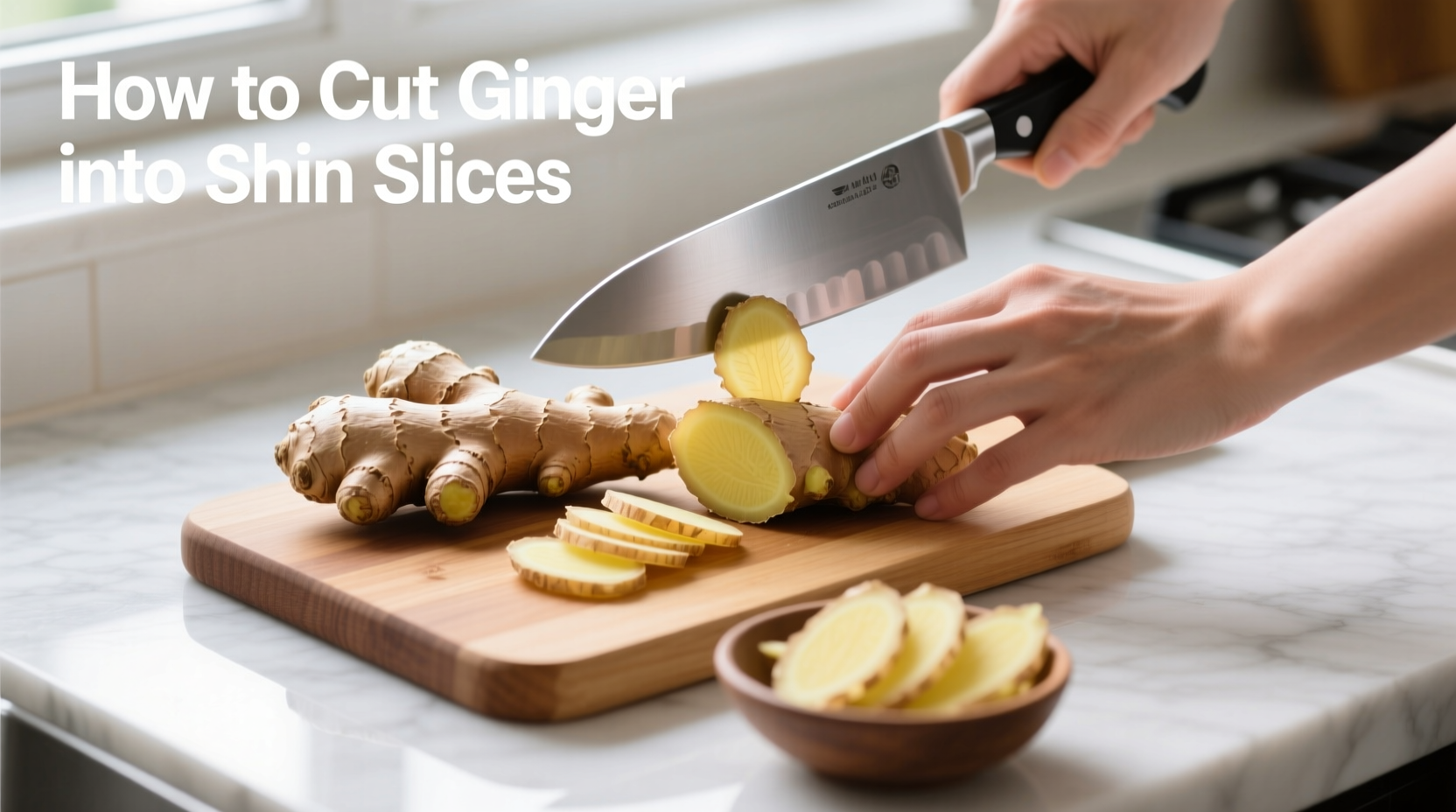
Ginger (Zingiber officinale) is a flowering plant whose rhizome—commonly called ginger root—is widely used as a spice and medicinal herb. Despite being referred to as a \"root,\" it is technically an underground stem, characterized by knobby protrusions and a tan to light brown skin. Native to Southeast Asia, ginger has become a global culinary staple due to its warm, spicy-sweet aroma and versatility across sweet and savory applications.
When sliced thinly, fresh ginger imparts a bright, aromatic heat without overwhelming other ingredients. These slices are often used temporarily in cooking—removed before serving—or preserved through pickling or drying. The thickness of the slice directly influences potency: thinner cuts increase surface area, releasing more volatile oils quickly, while thicker pieces offer milder, sustained flavor.
Key Characteristics
| Attribute | Description |
|---|---|
| Flavor Profile | Warm, peppery, slightly sweet with citrus and pine notes; becomes sharper when raw, mellower when cooked. |
| Aroma | Pungent, zesty, with camphorous top notes from gingerol and zingiberene compounds. |
| Color/Form | Pale yellow interior, fibrous texture; beige to brown outer skin. Grows in irregular branching clusters called “hands” or “fingers.” |
| Heat Level | Moderate (5/10 on spice scale); heat builds gradually and lingers on the palate. |
| Culinary Function | Flavor base, digestive aid, tenderizer, natural preservative, anti-inflammatory agent. |
| Shelf Life (Fresh) | Up to 3 weeks refrigerated in a paper towel inside a sealed container; up to 6 months frozen. |
Practical Usage: How to Use Thin Ginger Slices in Cooking
Thin ginger slices serve multiple roles depending on preparation and application. In home and professional kitchens, they appear in three primary ways:
- Infusion Only: Added at the beginning of cooking to broth, rice, sauces, or braises and removed before serving. This method extracts flavor without introducing fibrous texture.
- Eaten Whole: Used in Japanese cuisine (e.g., pickled gari), Chinese stir-fries, or Indian curries where tender-cooked slices are meant to be consumed.
- Preparation Step: Thin slices act as a precursor to julienning, mincing, or crushing for pastes and marinades.
For example, in a classic Thai coconut curry, two or three paper-thin rounds of ginger simmered in the broth provide depth without dominating the lemongrass and galangal. Conversely, in Cantonese steamed fish, long diagonal slices laid over the fillet melt slightly during steaming, leaving behind delicate threads of warmth.
Recommended Pairings
- Proteins: Chicken, pork, salmon, tofu, shellfish
- Vegetables: Carrots, bok choy, mushrooms, green beans, cabbage
- Grains & Starches: Rice, noodles, congee, potatoes
- Liquids: Coconut milk, chicken stock, soy sauce, vinegar, tea
- Spices & Herbs: Garlic, scallions, turmeric, star anise, cilantro, mint
Portion Guidelines
The intensity of ginger means quantity should be adjusted carefully. As a general rule:
- 1 teaspoon grated ginger ≈ 1-inch thin slice (about 1–2 mm thick)
- For subtle background flavor: 1–2 slices per quart of liquid or serving for four
- For bold presence: 3–4 slices, especially if eaten whole
Pro Tip: Always taste-test early in cooking. Remove excess slices if the ginger flavor becomes too pronounced. Remember, heat intensifies over time—especially in slow-cooked dishes.
Step-by-Step Guide: How to Cut Ginger into Thin Slices
Follow these precise steps to produce clean, consistent slices suitable for any recipe.
- Select Fresh Ginger: Choose firm, smooth knobs with tight skin. Avoid shriveled, moldy, or soft patches. Young ginger (paler, thinner skin) is easier to slice thinly and less fibrous.
- Wash and Peel (Optional): Rinse under cool water to remove dirt. Use a spoon to scrape off skin gently—this preserves more flesh than peeling with a knife. For very young ginger or aesthetic purposes (e.g., transparent pickles), leave skin on if cleaned thoroughly.
- Stabilize the Piece: Trim a thin slice from one side to create a flat surface. This prevents rolling and improves control during slicing.
- Position Across the Grain: Identify the direction of the fibers (they run lengthwise along each finger). Slice crosswise—perpendicular to the grain—for shorter fibers and more tender bites.
- Use a Sharp Knife: A chef’s knife or santoku blade works best. Dull blades crush rather than cut, bruising the tissue and releasing uneven oils.
- Slice Evenly: Hold the ginger firmly on the cutting board. Make smooth, downward motions, aiming for 1–2 mm thickness. Consistency ensures even cooking and flavor distribution.
- Stack and Re-Slice (Optional): For julienned strips, stack several slices and cut lengthwise into matchsticks.
Alternative Method – Mandoline Slicer: For ultra-thin, translucent slices (ideal for garnishes or quick-pickling), use a mandoline set to 1–2 mm. Always use the hand guard—ginger’s small size increases slip risk.
Variants & Types of Ginger
Ginger appears in various forms, each suited to different culinary goals. Understanding these helps determine whether slicing fresh rhizomes is necessary or appropriate.
| Type | Description | Best For | Can Be Sliced? |
|---|---|---|---|
| Fresh Mature Ginger | Dense, fibrous, strong-flavored with thick beige skin. Most common in supermarkets. | Slicing, grating, infusions, stir-fries | Yes — ideal for thin slicing |
| Young Ginger | Paler pink tips, tender texture, thinner skin, milder taste. Available seasonally (spring/early summer). | Pickling, eating raw, salads, delicate broths | Yes — requires no peeling |
| Candied Ginger | Preserved in sugar syrup, chewy texture, intense sweetness with lingering heat. | Baking, desserts, trail mixes | Yes — slice thinner for even distribution |
| Crystallized Ginger | Dried ginger coated in sugar crystals. More concentrated flavor. | Garnishes, chocolate pairings | Yes — best minced or shaved |
| Dried Ground Ginger | Dehydrated and powdered. Earthier, less vibrant than fresh. | Baking, spice blends, mulled drinks | No — not applicable |
| Preserved (in Vinegar or Sherry) | Jarred, pink-tinted slices, tangy and mild. Common in Middle Eastern and fusion cuisines. | Charcuterie boards, salad toppings | Already pre-sliced |
Comparison with Similar Ingredients
Ginger is often confused with related botanicals, but key differences affect usage and slicing techniques.
| Ingredient | Similarity | Difference | Slicing Advice |
|---|---|---|---|
| Galangal | Also a rhizome used in Southeast Asian cooking | Harder, woodier texture; sharper, pine-like flavor; less juicy | Requires sharper knife; may need longer cooking; slices hold shape better |
| Turmeric | Bright orange flesh; similar knobby appearance | Earthy, bitter, staining yellow pigment; milder heat | Slice thinly but wear gloves—stains hands and surfaces permanently |
| Horseradish | Pungent, sinus-clearing heat when raw | Belongs to brassica family; flavor fades rapidly after grating | Rarely sliced; usually grated fresh just before use |
| Greater Cardamom (Black Cardamom) | Used in spice blends and warming dishes | Smoky, camphoraceous pods contain seeds; not a rhizome | Pods cracked open; seeds ground—not sliced like ginger |
\"In Thai kitchens, we never rush ginger prep. Taking five minutes to slice evenly means the dish balances perfectly. One thick piece can ruin the harmony.\" — Chef Niran Raksachart, Bangkok-based culinary instructor
Practical Tips & FAQs
Q: Should I peel ginger before slicing?
A: Not always. If the skin is thin (as with young ginger), thorough washing suffices. For mature ginger with tough, papery skin, peeling improves texture and appearance. A spoon is more efficient than a peeler—it removes only the outer layer without wasting flesh.
Q: How thin should ginger slices be?
A: Aim for 1–2 millimeters. That’s about the thickness of a nickel coin. Thinner slices work well for pickling or garnishing; thicker ones (3 mm) suit long-cooked stews where some bite remains desirable.
Q: Can I slice frozen ginger?
A: Yes—and it's often easier. Freezing breaks down cell walls slightly, making dense ginger softer to cut. However, avoid thawing completely, as it becomes soggy. Partially frozen works best. Alternatively, grate directly from frozen for maximum convenience.
Q: What’s the best way to store sliced ginger?
A: Store unpeeled whole ginger in the refrigerator wrapped in a paper towel inside an airtight container for up to three weeks. Once sliced, submerge in dry sherry or neutral oil and refrigerate for up to 10 days. For longer storage, freeze slices on a tray, then transfer to a bag—they’ll keep six months and can be added directly to hot pans or liquids.
Q: Is there a tool better than a knife for slicing ginger?
A: A sharp vegetable peeler can create wafer-thin ribbons for salads or tea. A mandoline offers precision but demands caution. For high-volume kitchens, a commercial slicer saves time, though home cooks rarely need one.
Q: Why does my ginger taste woody or stringy?
A: Older ginger develops long fiber bundles running through each finger. Cutting against the grain minimizes chewiness. If your slices feel tough, try younger ginger or switch to grating/pureeing for sauces and soups.
Q: Can I eat ginger slices after cooking?
A: Yes, if properly prepared. In many Asian dishes—like ginger-scallion lobster or braised beef with ginger—thinly sliced ginger is intended to be eaten. Slow cooking softens fibers significantly. Just ensure slices are cut uniformly so none remain unpleasantly tough.
Storage Hack: Freeze whole unpeeled ginger. When needed, grate it frozen (skin falls away easily) or slice partially thawed. No peeling required, and it resists mold far longer than fresh-stored ginger.
Summary & Key Takeaways
Cutting ginger into thin slices enhances flavor control and elevates dish quality. Proper technique begins with selecting fresh, firm rhizomes and using a sharp knife to make clean, cross-grain cuts between 1–2 mm thick. Whether used for infusion, consumption, or further processing, consistent slicing ensures balanced seasoning and professional results.
Key points to remember:
- Always stabilize the ginger by trimming one side flat before slicing.
- Cut perpendicular to the grain for more tender results.
- Peel only when necessary—spoon-scraping reduces waste.
- Store whole ginger in the fridge or freeze for long-term use.
- Use young ginger for raw or pickled applications requiring tenderness.
- Substitute wisely: dried or preserved forms behave differently than fresh.
Mastery of this simple task opens doors to authentic flavors across global cuisines—from Japanese miso soup to Jamaican jerk marinades. With practice, slicing ginger becomes second nature, transforming an everyday ingredient into a powerful tool for culinary expression.
Challenge Yourself: Next time you cook, try slicing ginger into three different thicknesses (1 mm, 3 mm, 5 mm) and add them to separate portions of broth. Taste after 10 and 30 minutes to observe how extraction rate varies. It’s a revealing exercise in precision cooking.




 浙公网安备
33010002000092号
浙公网安备
33010002000092号 浙B2-20120091-4
Comments
No comments yet. Why don't you start the discussion?