
A well-made bed is more than just an aesthetic choice—it’s a foundation for restful sleep and personal comfort. While mattresses and pillows often steal the spotlight, the role of bed sheets is quietly pivotal. Among the most common decisions in bedding: whether to use flat sheets, fitted sheets, or both. This choice influences everything from sleep temperature to ease of maintenance and even long-term durability. Yet many people default to habit rather than intention when selecting their sheet setup. Understanding the functional differences, lifestyle implications, and evolving trends can help you make a deliberate, personalized decision that enhances your nightly routine.
The Functional Differences Between Flat and Fitted Sheets
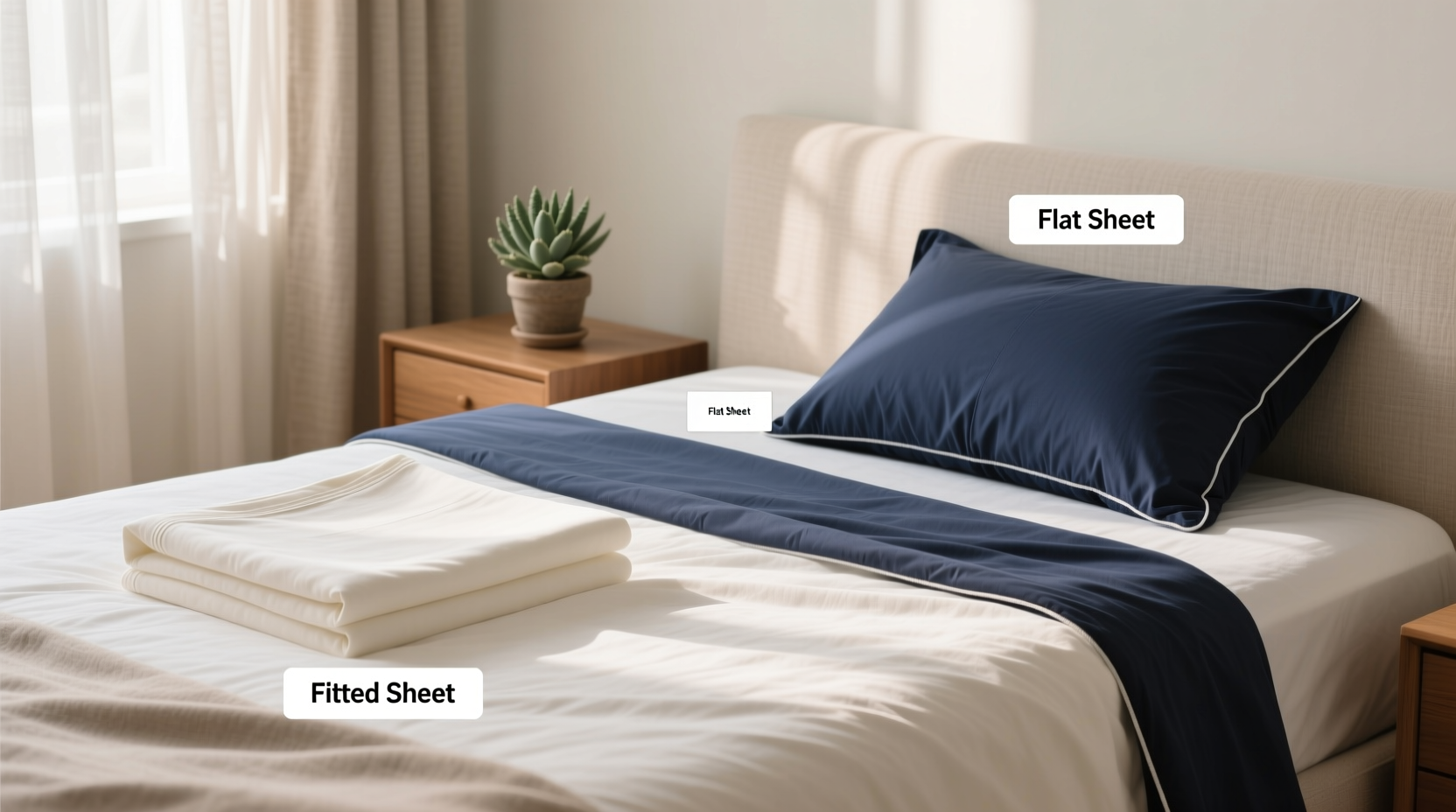
Flat sheets and fitted sheets serve distinct purposes. A flat sheet is a rectangular piece of fabric without elastic, traditionally placed between the sleeper and the duvet or blanket. It acts as a protective layer, absorbing body oils and sweat while offering a breathable barrier. Historically, it was also used to reduce direct contact with heavier blankets, especially in cooler climates.
In contrast, a fitted sheet has elasticized corners designed to hug the mattress securely. Its primary function is to stay in place, preventing slippage during sleep. Modern fitted sheets often come with deep pockets to accommodate thicker mattresses, including those with pillow tops or hybrid constructions.
While some view the flat sheet as outdated—especially in regions where minimalist bedding is trending—others maintain that it contributes to hygiene and comfort. The key is recognizing that neither option is universally superior; each aligns better with specific needs and preferences.
Climate and Seasonal Considerations
Your local climate plays a significant role in determining the ideal sheet configuration. In hot, humid environments, fewer layers mean better airflow and reduced moisture retention. Many people in tropical regions opt for just a fitted sheet paired with a light blanket or no cover at all. Lightweight cotton or linen fitted sheets are particularly effective in these conditions.
In colder areas, layering becomes practical. A fitted sheet secures the base layer, while a flat sheet adds insulation and can be easily removed if you warm up during the night. Wool or flannel flat sheets are sometimes used in winter for added warmth without heaviness.
Seasonal rotation is a smart strategy. Switching between setups allows you to adapt to changing temperatures while extending the life of your linens by reducing year-round wear on any single set.
“Layering with a flat sheet gives you micro-control over your sleep environment. You can adjust warmth without completely remaking the bed.” — Dr. Lena Patel, Sleep Environment Researcher at the National Rest Institute
Comfort, Movement, and Sleep Habits
How you sleep matters. Tossing and turning can cause flat sheets to twist, bunch, or end up on the floor by morning—frustrating for those who value a tidy bed. Fitted sheets, by design, resist displacement, making them ideal for restless sleepers.
Conversely, some people find flat sheets liberating. Without being tucked in or constrained by elastic, they enjoy unrestricted leg movement. This is especially true for individuals who prefer loose bedding or “burrito-style” sleeping, where the top sheet is wrapped loosely around the body.
Couples may face additional challenges. Differing preferences—such as one partner liking a tucked-in flat sheet and the other disliking confinement—can lead to compromise. In such cases, eliminating the flat sheet altogether simplifies the setup and reduces friction (literally and figuratively).
Checklist: Choosing Based on Your Sleep Behavior
- Do you kick off covers frequently? → Fitted sheet only may suffice.
- Do you like a crisp, hotel-style bed? → Include a flat sheet for that layered look.
- Do you wake up sweaty? → Skip the flat sheet in warmer months.
- Are you sensitive to fabric against your skin? → Choose a soft flat sheet as a barrier.
- Do you share the bed with a pet or child? → Fitted sheet + flat sheet provides extra protection.
Hygiene and Maintenance Factors
From a cleanliness standpoint, flat sheets offer a distinct advantage: they act as a removable shield between your body and heavier bedding. Changing flat sheets more frequently than duvets or blankets helps maintain hygiene without excessive laundering of larger items.
However, adding a flat sheet increases laundry volume. For households prioritizing efficiency, using only a fitted sheet reduces wash loads and drying time. High-performance fabrics like percale or sateen cotton blends now offer moisture-wicking and antimicrobial properties, reducing the need for an additional protective layer.
It’s worth noting that hospital and hospitality industries have largely moved away from top sheets. Major hotel chains like Westin and Four Seasons now use layered duvets without flat sheets, citing guest preference for simplicity and breathability. This shift reflects broader cultural changes in bedding norms.
| Factor | Fitted Sheet Only | Fitted + Flat Sheet |
|---|---|---|
| Laundry Frequency | Lower | Higher |
| Breathability | High | Moderate (depends on fabric) |
| Bed-Making Time | 2–3 minutes | 5–7 minutes |
| Hospitality Standard | Common | Declining |
| Skin Protection | Minimal | High (barrier layer) |
Real-Life Scenario: The Minimalist Bedroom Upgrade
Sarah, a software engineer from Austin, Texas, struggled with overheating at night. Her bed included a deep-pocket fitted sheet, a flat sheet, a quilt, and a throw blanket. Despite using lightweight cotton, she consistently woke up sweating. After tracking her sleep habits for two weeks, she realized she never used the flat sheet—it ended up bunched at the foot of the bed every morning.
She decided to remove the flat sheet entirely and switch to a moisture-wicking TENCEL™ fitted sheet. She paired it with a bamboo blend duvet cover for softness and temperature regulation. Within a week, her nighttime awakenings decreased by 60%, and she reported feeling more refreshed. The simplified setup also made weekly laundry faster and bed-making effortless.
Sarah’s experience illustrates how removing unnecessary layers can improve comfort without sacrificing style or hygiene.
Step-by-Step Guide to Optimizing Your Bed Setup
- Assess your sleep environment: Note room temperature, humidity, and seasonal changes.
- Evaluate your current bedding: Identify which layers you actually use versus those left untouched.
- Test a fitted-sheet-only setup: Remove the flat sheet for one week and monitor comfort and temperature.
- Observe your habits: Do you tuck in sheets? Kick them off? Wake up hot or cold?
- Adjust seasonally: Reintroduce the flat sheet in colder months if needed.
- Choose high-performance fabrics: Prioritize breathable, durable materials regardless of layer count.
Frequently Asked Questions
Is it unhygienic to skip the flat sheet?
Not necessarily. If you shower before bed and wash your fitted sheet weekly, hygiene remains adequate. Using a duvet cover instead of a comforter also helps protect inner layers. However, if you sweat heavily or go to bed with unwashed skin, a flat sheet adds a beneficial barrier.
Can I mix and match sheet types?
Absolutely. Many people use a fitted sheet year-round and add a flat sheet only in winter. Others use flat sheets as lightweight summer covers without a top blanket. There’s no rule against customizing based on comfort.
Why do hotels no longer use flat sheets?
Modern hotels prioritize speed, simplicity, and guest preference. Eliminating the flat sheet reduces labor costs during housekeeping and aligns with a growing trend toward uncluttered, low-maintenance bedding. Most guests now expect a clean fitted sheet and a fresh duvet cover as sufficient.
Final Thoughts: Design Your Bed for Real Life
The choice between flat and fitted sheets isn’t about following tradition or chasing trends—it’s about designing a sleep environment that supports your body, habits, and home. Whether you embrace minimalism with a single fitted sheet or enjoy the ritual of a perfectly tucked flat sheet, the goal is consistent comfort and ease.
Start by observing how you actually use your bed. Make small adjustments, test them over time, and refine based on results. The perfect bed setup isn’t dictated by convention; it’s shaped by awareness and intention.




 浙公网安备
33010002000092号
浙公网安备
33010002000092号 浙B2-20120091-4
Comments
No comments yet. Why don't you start the discussion?