
Garages often become emotional storage units—overflowing with holiday decorations, childhood memorabilia, old tools from a parent’s workshop, and boxes labeled “maybe later.” Unlike kitchen cabinets or closets, the garage holds decades of accumulated life. That’s why traditional decluttering advice like “just toss it” rarely works here. The real challenge isn’t space—it’s sentiment.
Decluttering a garage filled with meaningful objects requires more than organization systems. It demands emotional intelligence, patience, and a structured approach that honors your memories while reclaiming usable space. This guide walks you through a realistic, step-by-step method to clear your garage without guilt, grief, or regret.
Create Emotional Distance Before You Begin
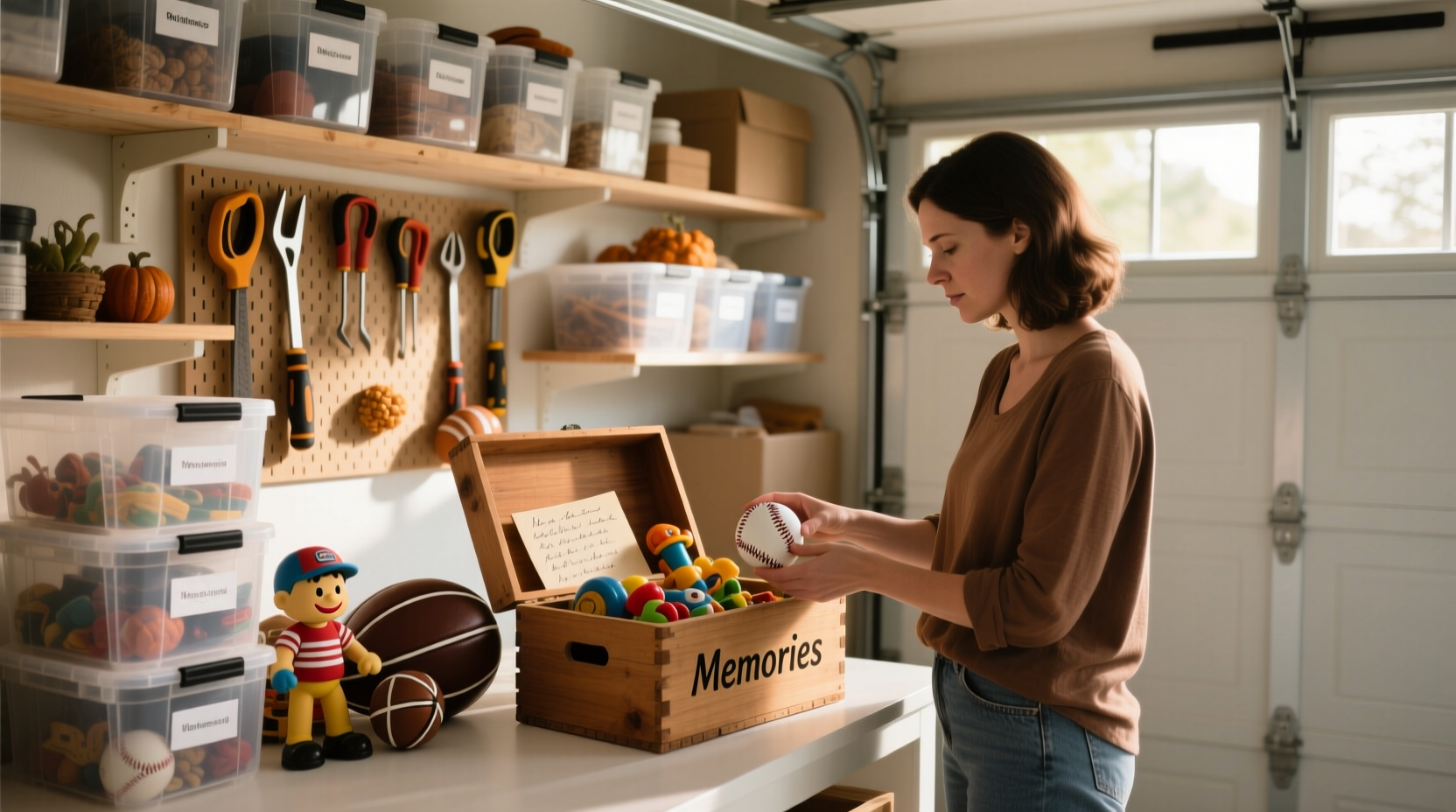
The first mistake most people make is diving into sorting on an emotional day—after a family gathering, during a nostalgic photo session, or right after a loss. When emotions run high, decision-making suffers. Instead, treat this project like emotional landscaping: prepare the ground before planting new habits.
Begin by setting a date for your decluttering work—at least one week out. Use the waiting period to mentally disengage. Avoid opening memory boxes or revisiting old photos. Journal briefly about what you expect to find and how you might feel. Naming emotions in advance builds resilience when they surface.
Adopt the Three-Box Method (With a Sentimental Twist)
The classic “keep, donate, trash” system fails in garages because it doesn’t account for items tied to identity, love, or loss. A better model adds nuance:
- Keep (Functional or Essential): Items used regularly or necessary for safety, such as tools, seasonal gear, or emergency supplies.
- Honor (Sentimental, Limited Retention): Objects with deep meaning but no daily use. These get preserved thoughtfully—not stored haphazardly.
- Release (Let Go With Intention): Everything else. The key is not discarding carelessly, but releasing with purpose.
The “Honor” category changes everything. It reframes keepsakes not as clutter, but as heirlooms needing curation. For example, instead of keeping all 14 boxes of your child’s artwork, select three standout pieces to scan and frame. The rest can be photographed, shared with relatives, then let go.
“Sentimental clutter isn’t about holding onto things—it’s about fearing we’ll forget if we let go. Our job is to create rituals that preserve memory without preserving mass.” — Dr. Lena Patel, Clinical Psychologist & Author of *The Space Between Memory and Letting Go*
Step-by-Step Timeline: A 4-Week Garage Reset
Rushing leads to regret. Spreading the process over four weekends allows time for reflection and reduces burnout. Here’s a sustainable timeline:
Week 1: Survey & Sort by Zones
- Divide the garage into 4–5 zones (e.g., tool wall, sports equipment, holiday storage, personal memorabilia).
- Photograph each zone before touching anything.
- Label temporary bins: “Keep,” “Honor,” “Release,” and “Undecided.”
Week 2: Tackle Low-Sentiment Zones First
- Start with areas least tied to emotion—lawnmower parts, camping gear, broken electronics.
- Apply standard decluttering rules: Is it broken? Unused for 18 months? Duplicated?
- Dispose responsibly—recycle, donate, or sell.
Week 3: Process the “Honor” Zone Mindfully
- Open only boxes marked with personal significance.
- For each item, ask: “Does this represent a person, moment, or value I still want to carry forward?”
- If yes, decide how to honor it: digitize, display, pass on, or store intentionally.
Week 4: Organize, Store, and Celebrate
- Install shelves, pegboards, or clear bins for remaining items.
- Store “Honor” items in labeled, acid-free containers with a note explaining their story.
- Host a small ritual—light a candle, play a meaningful song, or invite a trusted friend to witness your progress.
Smart Storage Solutions for Sentimental Keepsakes
Once you’ve decided what to keep, how you store it determines whether it stays cherished or becomes future clutter. Avoid stacking boxes in corners where they’re forgotten. Instead, design a “memory zone” with accessibility and dignity.
| Item Type | Best Storage Method | Avoid |
|---|---|---|
| Children’s Artwork | Scan at 300dpi; print a mini-book; store originals in flat portfolio | Leaving loose in cardboard boxes exposed to moisture |
| Old Letters & Cards | Digitize and store in password-protected cloud folder; keep 1–2 physical mementos | Keeping entire stacks under garden tools or near concrete floor |
| Family Tools or Uniforms | Clean thoroughly; display on shadow board or in glass case | Burying in tool chest with grease and dust |
| Sports Memorabilia | Frame jerseys; store trophies on open shelf; photograph bulky items | Piling in dark corners where they degrade unseen |
The goal isn’t minimalism at any cost—it’s intentional preservation. When a keepsake is visible, protected, and remembered, it stops being clutter.
Real Example: How the Morales Family Reclaimed Their Garage
The Morales family in Portland had turned their garage into a time capsule. After 27 years in the same home, it held Christmas decorations from their children’s infancy, soccer trophies, a retired bicycle with training wheels, and dozens of paint-stained buckets from home renovations.
When Maria Morales decided to convert part of the garage into a yoga space, she faced resistance—not from logistics, but emotion. Her husband couldn’t part with his father’s wrench set, even though rust had eaten through the metal. Their daughter cried when asked to discard handmade Valentine cards from first grade.
They adopted the “Honor” method. The wrenches were cleaned, photographed beside a framed black-and-white picture of her father-in-law, and displayed on a small mounted shelf with a plaque: “Tools of a Builder, Legacy of Love.” The Valentine cards were scanned, compiled into a digital slideshow set to piano music, and shared at a family dinner. Only five physical cards were kept—in a shadow box next to her daughter’s bed.
In four weekends, they cleared 60% of the garage. More importantly, they transformed clutter into connection. Today, the yoga mats roll out beside a wall of memory—not buried beneath it.
Checklist: Declutter Your Garage Without Emotional Burnout
Use this checklist to stay grounded and focused throughout the process:
- ☐ Set a start date at least one week away
- ☐ Divide garage into 4–5 manageable zones
- ☐ Prepare bins: Keep, Honor, Release, Undecided
- ☐ Start with non-sentimental zones (tools, sports gear, hardware)
- ☐ Limit “Honor” category to 1–2 containers max
- ☐ Digitize photos, letters, and artwork before storing or releasing
- ☐ Label every container with contents AND story (“Dad’s fishing hat – Alaska trip, 1998”)
- ☐ Schedule disposal/donation within 48 hours of sorting
- ☐ Designate a visible “memory zone” for display items
- ☐ Celebrate completion with a symbolic act (meal, walk, lighting a candle)
Frequently Asked Questions
What if I’m not ready to let go of something but know I should?
Place it in the “Undecided” bin and set a deadline—60 or 90 days. If you haven’t opened it by then, release it without guilt. Often, not needing an item confirms it wasn’t essential.
How do I handle family conflict over keepsakes?
Invite family members to participate in the sorting process. Give them ownership: let each person choose 3–5 items to honor. Compromise isn’t about keeping everything—it’s about ensuring everyone feels seen.
Can I keep sentimental items but still have an organized garage?
Absolutely. Organization isn’t the absence of sentiment—it’s the presence of intention. Use clear bins, labels, and designated display areas so keepsakes are curated, not concealed.
Final Thoughts: Decluttering Is an Act of Care
Decluttering a garage full of sentimental items isn’t about erasing the past. It’s about making space for your present to breathe. Every object you release isn’t a betrayal of memory—it’s a choice to stop letting the weight of yesterday define today’s possibilities.
You don’t need to empty the garage completely. You just need to restore balance. When tools hang neatly on a wall, holiday lights are coiled and labeled, and a single box holds the stories you most want to carry forward, you’ve succeeded. Not because the space is perfect, but because it serves you now.
Start small. Be kind to yourself. And remember: the most valuable thing you’re organizing isn’t your garage—it’s your peace of mind.




 浙公网安备
33010002000092号
浙公网安备
33010002000092号 浙B2-20120091-4
Comments
No comments yet. Why don't you start the discussion?